


- How do I expose for bright sunsets and dark streets
- What camera settings work best for golden hour street photos
- How do I avoid motion blur when shooting handheld at dusk
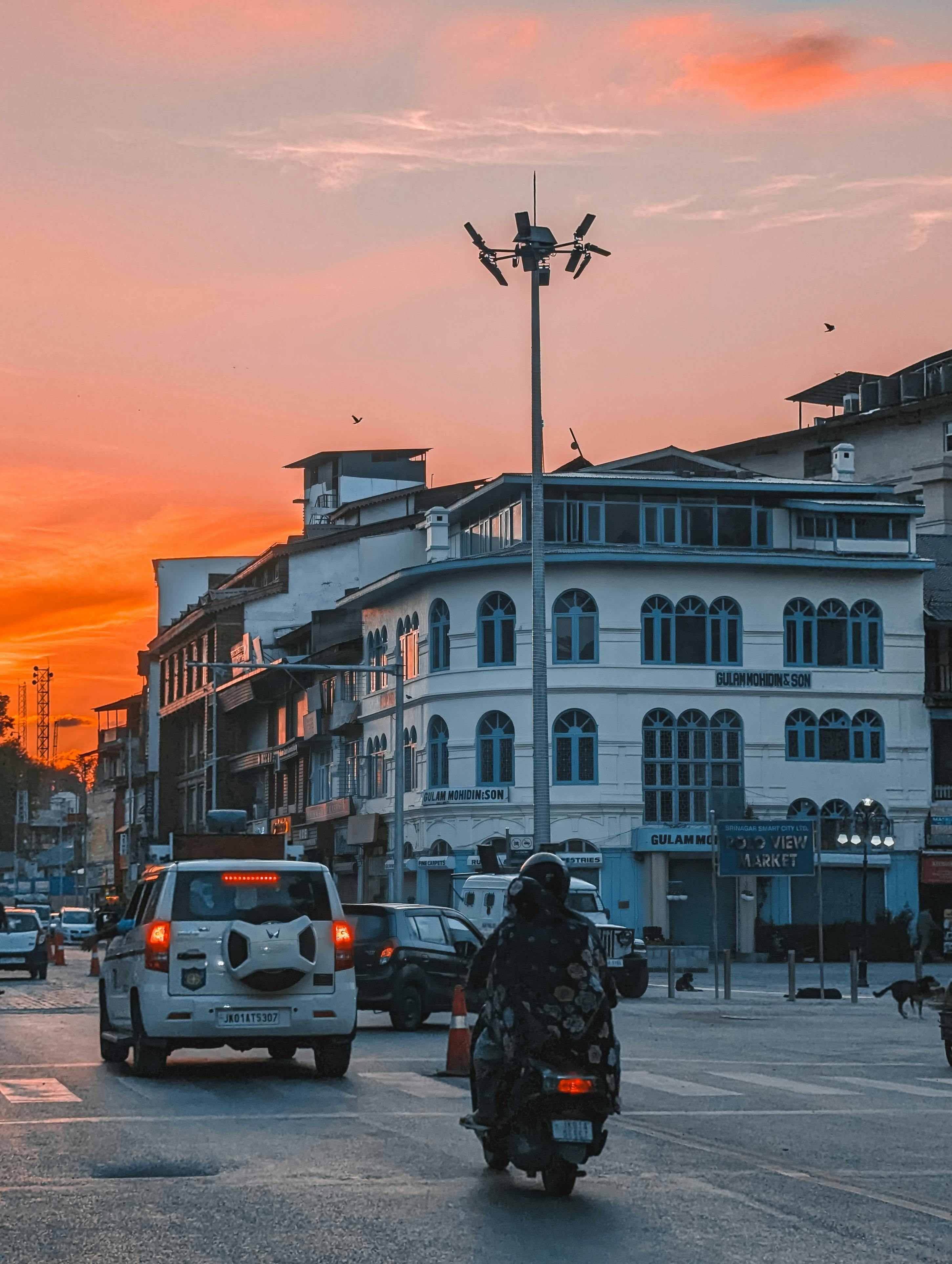
Summer trips often end in the day’s most flattering light. At sunset, ordinary streets can take on a warm, layered look. Still, that same light can quickly overexpose bright skies, reflective windows, and pale walls.
Shop the setup

- Regular price
-
€42 - Regular price
-
€44 - Sale price
-
€42
By choosing the Camstrap strap, you are opting for a high-quality product designed to meet the needs of the most demanding photographers.
- Developed by a physiotherapist to relieve neck and back pain.
- Fast delivery with tracking by the Post Office 🚚
- Can be used as a shoulder strap or hands-free harness

- Regular price
-
€36 - Regular price
-
€42 - Sale price
-
€36
Free shipping included
That is why sunset street photos benefit from a straightforward approach. The challenge is to preserve detail in the brightest areas while keeping the street’s atmosphere intact. With a few reliable camera habits, you can create stronger sunset images without added stress.
Why sunset street photos fail in bright summer light
Sunset light shifts quickly. One moment the street feels calm; the next, the sky becomes intensely bright. If you frame the entire scene and rely on auto mode, the highlights can easily wash out.

Often, the camera tries to lift the darker street too much. As a result, the sky, sunlit walls, or shop windows lose texture. So the real objective is not even brightness across the frame. Instead, protect the highlights first.
The main problem: bright highlights and dark streets
Street scenes at sunset usually contain a wide tonal range. The sky can be several stops brighter than the sidewalk. During summer, that difference can feel even greater because the sun stays intense for longer.
That can leave a photo feeling flat or uneven. The sky goes white while the street remains too dark. Strong sunset photos need balance, not equal lighting.
How to expose for bright sunsets and dark streets
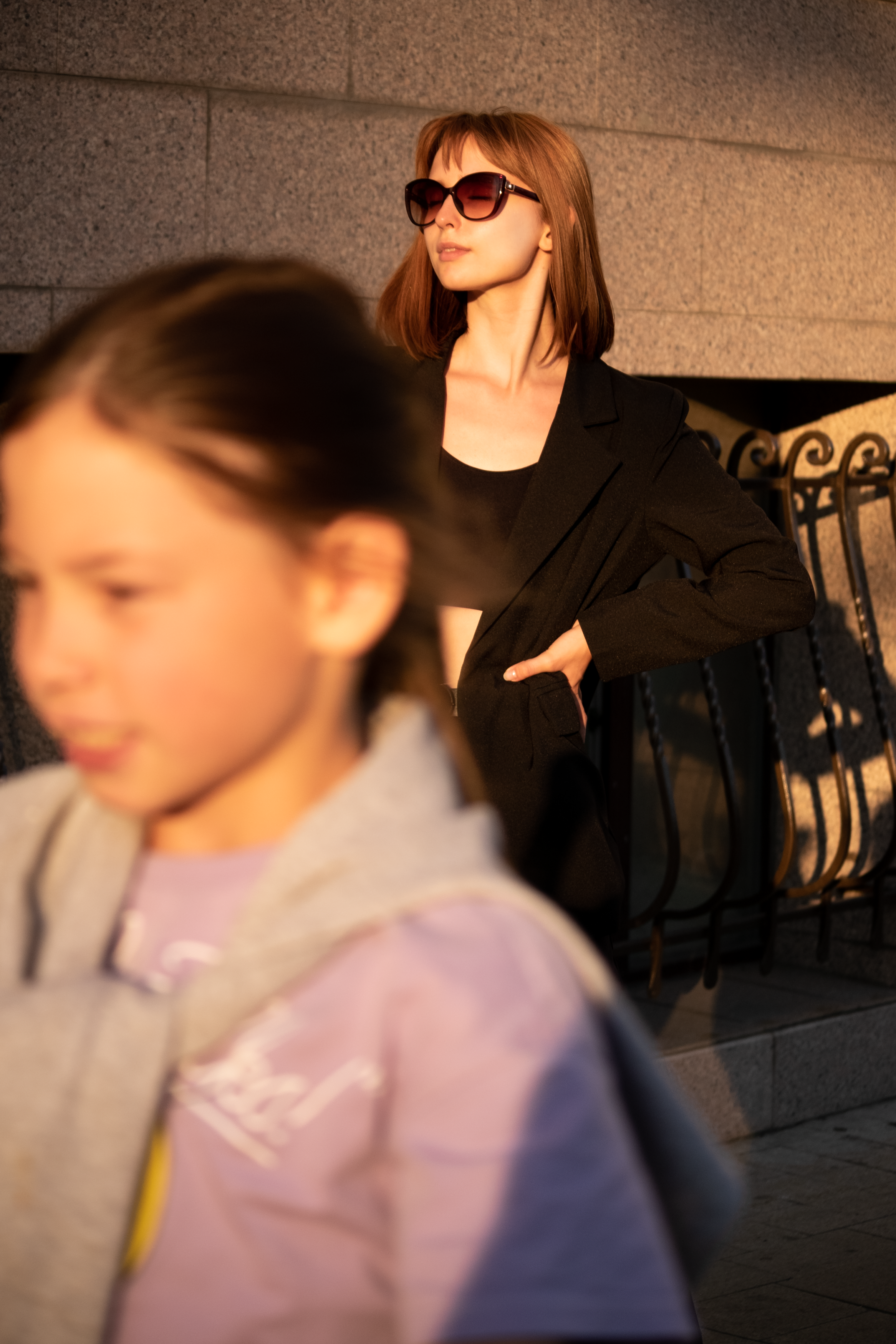
The simplest rule is to expose for the bright areas. In practice, that means protecting the sky, sunlit faces, and reflective surfaces. If you shoot RAW, you can bring up the shadows afterward.
RAW files are valuable because they retain more image data. That extra latitude gives you more room to recover shadow detail in post. It is one of the most effective ways to avoid blown highlights on summer trips.
Use spot metering and dial back exposure
Spot metering lets you measure a single bright area instead of the entire frame. Aim it at the brightest section, such as a street light, a lit window, or a bright cloud edge. Then reduce exposure slightly so the camera does not push the highlights too far.
You can make that adjustment with exposure compensation or manual mode. In manual, lower ISO or increase shutter speed. That small change can keep the sunset sky from clipping.
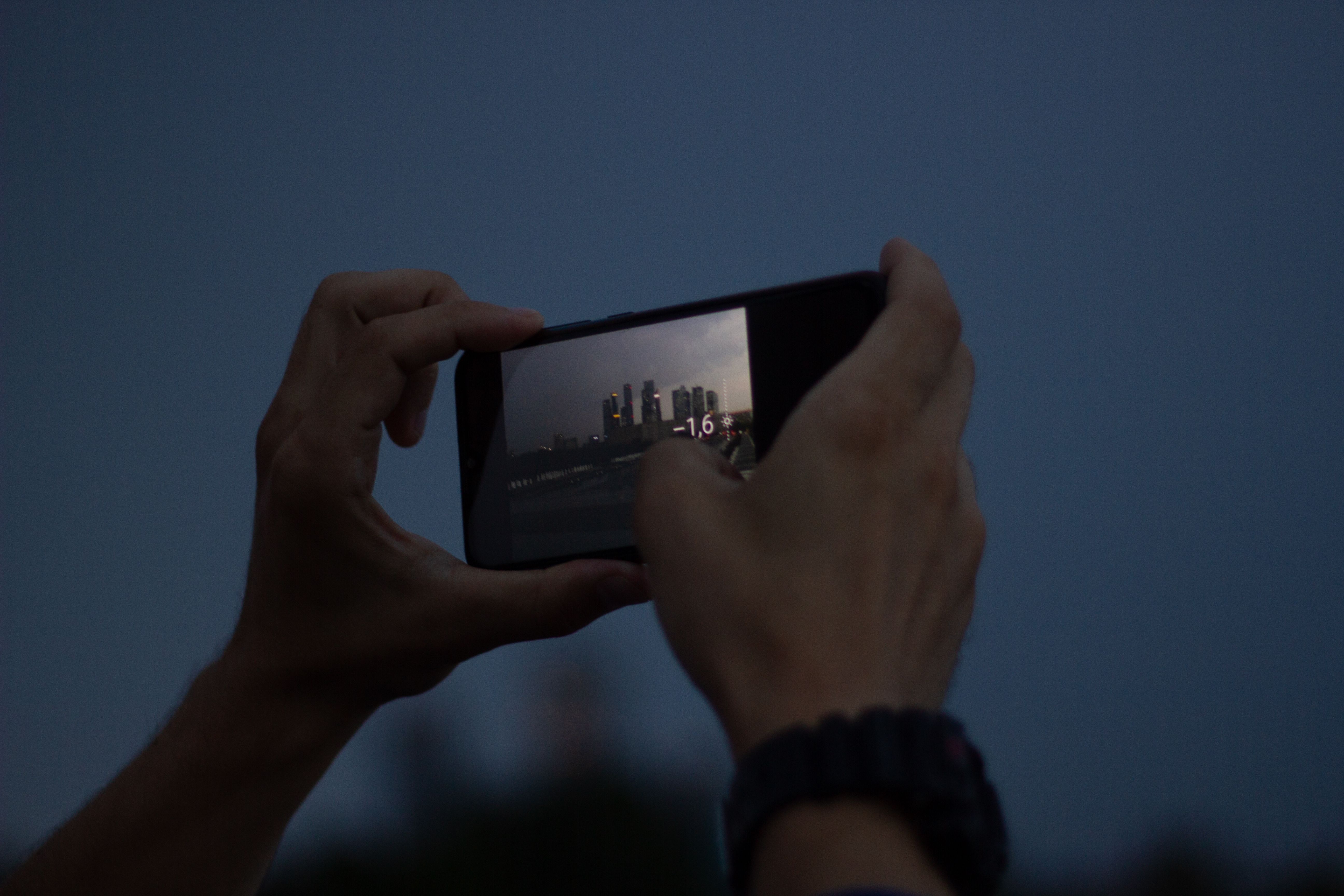
Try a few test settings
If you want a quick field test, keep the aperture fixed and vary only one setting. A simple test is ISO 100, 400, and 800 at f/8 with a shutter speed of 1/500s. This lets you see how exposure shifts without changing depth of field.
You can also test ISO 100 with f/2, f/4, and f/8 at 1/500s. That shows how aperture affects brightness and subject sharpness. Another useful test is 1/125s, 1/500s, and 1/1000s at ISO 100 and f/8. It helps you see how shutter speed protects sunset highlights.
Keep the sun behind you or off to the side
When the sun sits behind you, it lights the subject more evenly. That reduces harsh glare and helps prevent blown highlights from direct light hitting the lens. It is one of the easiest ways to improve sunset street photos.

You can also place the subject at an angle to the sun. This keeps the face in softer shade while adding a subtle rim light to hair and shoulders. That small shift often makes summer street photos look cleaner and more natural.
Best camera settings for golden hour street photos
Golden hour passes quickly, so your settings should be easy to adjust. A 50mm to 85mm lens works well for people and street details. These focal lengths help isolate a subject without losing the feel of the street.
For a bright sunset scene, begin with aperture priority or manual mode. A solid starting point is f/2.8 to f/5.6, ISO 100 to 400, and a shutter speed around 1/250s to 1/1000s. The exact combination depends on the light, but these settings provide a strong foundation.
Choose aperture with your subject in mind

Wide apertures like f/2 or f/2.8 admit more light. They also soften the background, which works well for portraits and tighter street scenes. However, they can make focus more difficult when people are moving quickly.
Smaller apertures like f/8 keep more of the street in focus. They also help when you want signs, buildings, and people sharp at the same time. If the light is still strong, f/8 can also help preserve sunset detail.
Use ISO as low as you can
Begin at ISO 100 while the light is still bright. That keeps noise low and leaves you with cleaner files for editing later. Raise ISO only as the scene darkens.
At dusk, ISO 400 or ISO 800 can help you maintain a faster shutter speed. That matters when you are moving through summer streets and want to avoid blur. Keep an eye on the highlights as you increase ISO, because they can clip quickly.
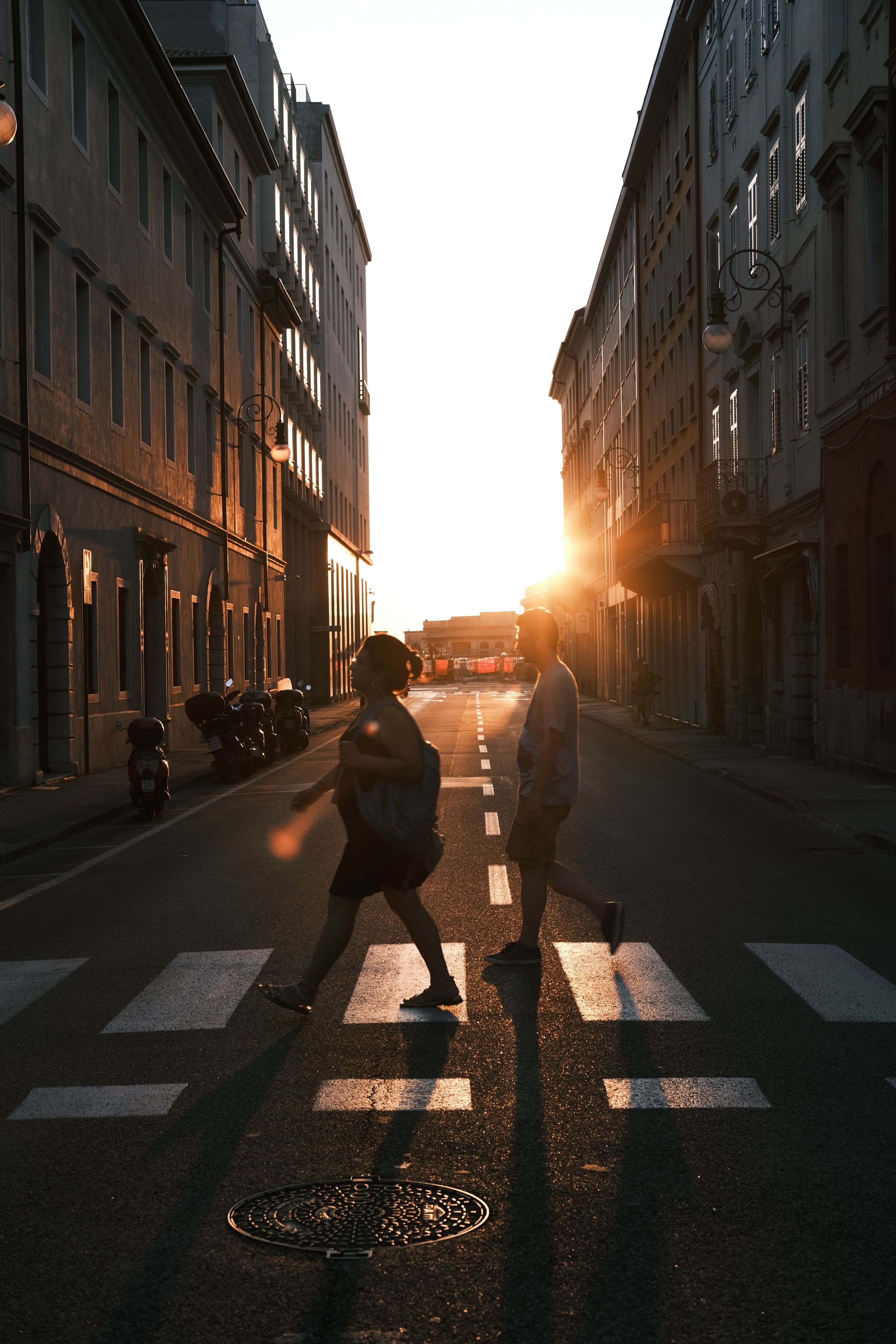
How to avoid motion blur when shooting handheld at dusk
As the sun drops, motion blur becomes a bigger concern. People move, cars pass, and your hands may be less steady after a long day. A stable grip helps, but shutter speed matters even more.
A practical rule is to keep shutter speed high enough for the subject. For walking street scenes, try 1/250s or faster. For moving people, 1/500s is often the safer choice.
Hold the camera steady and stay ready
Use both hands and keep your elbows tucked in. Take a breath, then press the shutter gently. These small habits can reduce blur without any extra gear.
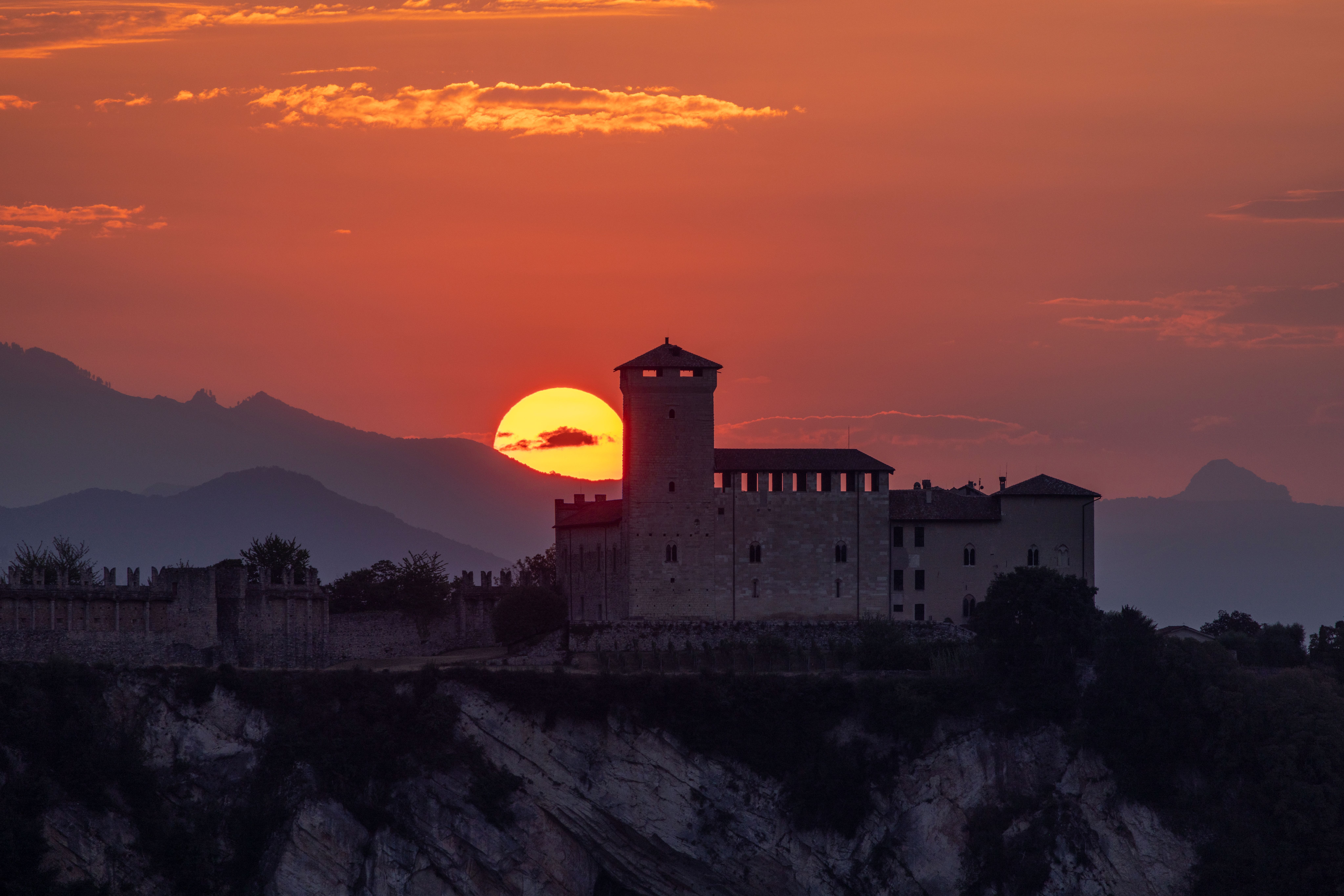
A comfortable strap also makes a big difference on summer trips. A camera you can carry easily is a camera you can use quickly. That is where a product like the Camstrap Voyager, Camstrap Explorer, or Camstrap Nomad can serve as one practical option. A good strap keeps the camera ready while you walk city streets at golden hour.
Pick shutter speed based on the scene
If your subject is still, 1/125s may be sufficient. If the street is busy, move up to 1/500s. For fast motion or quick candid shots, 1/1000s can help freeze action more effectively.
Keep in mind that a faster shutter lets in less light. So you may need a higher ISO or a wider aperture. That tradeoff is normal in sunset street photos.
Smart ways to keep sunset detail in post
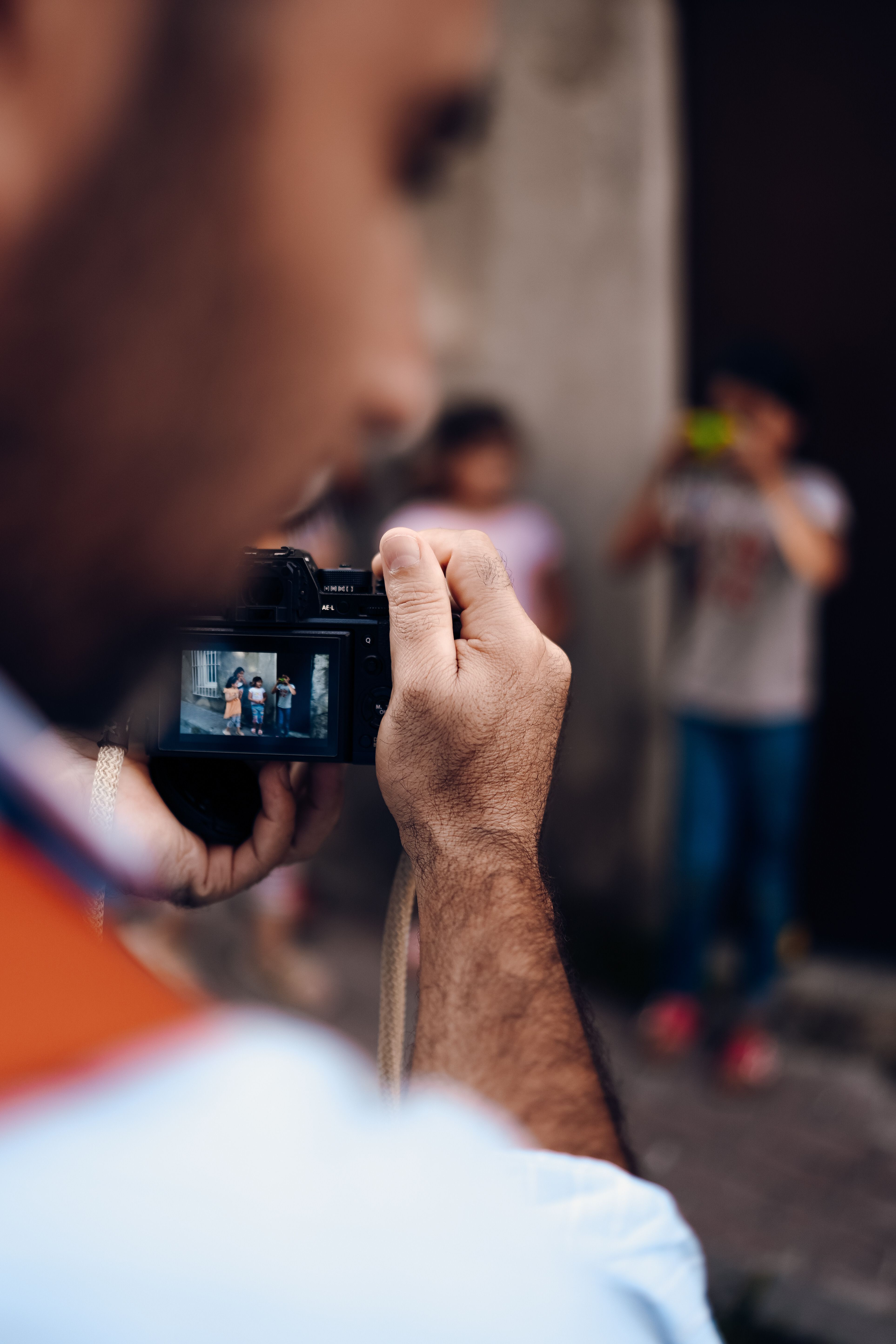
Good editing starts before you leave the scene. If you protect the highlights and shoot RAW, you can recover shadow detail later. It is one of the most dependable ways to keep summer sunset photos from looking flat or blown out.
RAW files also give you more control over white balance, tone, and recovery. They are not a cure-all, but they do leave room to correct small mistakes. That extra data matters when the sky is bright and the street is dark.
Blend bracketed shots when the range is too wide
Exposure bracketing helps when a single frame cannot handle the full scene. Take three shots: one underexposed, one overexposed, and one normal. Then blend them in Photoshop or a similar editor.
In many scenes, this approach can recover about 2 stops of shadow detail. It works especially well for bright sunset streets with dark buildings or deep shade. You still need careful shooting, but bracketing adds a useful margin of safety.
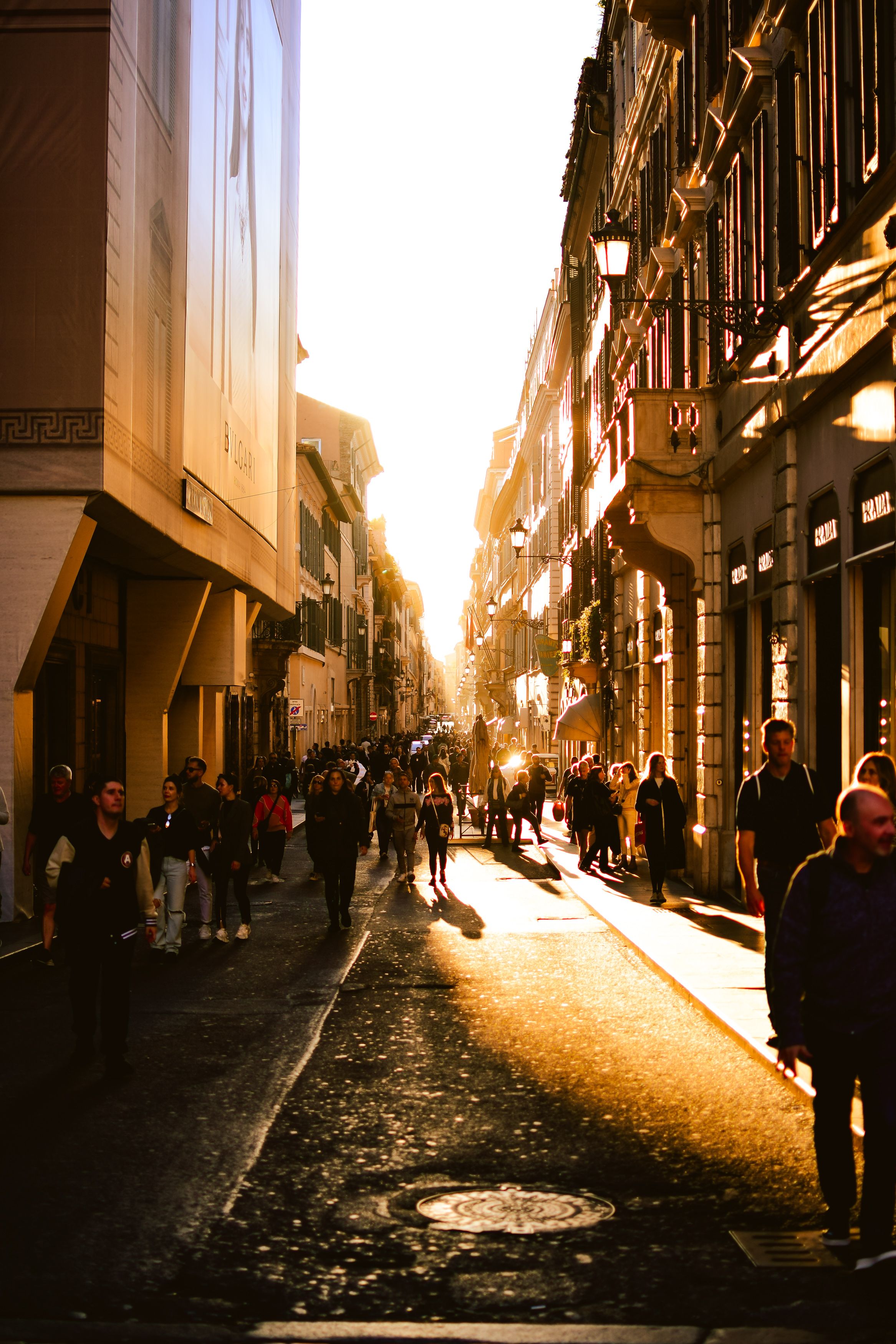
Make small edits, not heavy fixes
Try to keep your edits subtle. Pull down the highlights first, then lift the shadows gradually. If you push too far, the image can start to look artificial and noisy.
Use white balance to preserve the natural warmth of sunset. Then add a touch of contrast if the street feels too soft. The strongest edits still look true to the moment.
Easy field checklist for summer sunset streets
When the light is changing quickly, a simple checklist helps. You do not need many rules. You just need a repeatable process that protects highlights and keeps your shots sharp.

- Set RAW capture if your camera allows it.
- Use spot metering on the brightest area.
- Underexpose a little if the sky is very bright.
- Start around ISO 100 to 400.
- Use f/2.8 to f/8 based on the scene.
- Keep shutter speed at 1/250s or faster for moving subjects.
- Place the sun behind you or at an angle.
- Bracket three shots when light changes fast.
This checklist keeps your workflow simple. It also helps you move more quickly while traveling. That matters when you only have a few minutes of strong sunset light.
Conclusion: make sunset street photos clean, warm, and sharp
Sunset street photos on summer trips can be striking when you protect the highlights. Expose for the bright areas, shoot RAW, and use spot metering when the light is difficult. Then lift the shadows later if needed.
Also, keep your shutter speed high enough to avoid blur, especially at dusk. Use a comfortable strap so your camera stays ready as you walk. A setup like Camstrap MagClip or the Camstrap Explorer can be one practical choice if you want quick access on the move.

In the end, the best sunset photos come from simple habits. Watch the light, move the subject, and keep your settings under control. Do that, and your summer street photos will keep the glow without blown highlights.
Frequently Asked Questions
How do I expose for bright sunsets and dark streets?
Expose for the brightest parts of the scene first, such as the sky, sunlit walls, or reflective windows, so they do not clip. Use spot metering on a bright area and dial exposure down slightly, then recover shadow detail later if you shoot RAW.
What camera settings work best for golden hour street photos?

A practical starting point is manual mode or exposure compensation with low ISO and a shutter speed fast enough to protect highlights, such as ISO 100 and 1/500s. Keep aperture fixed while testing settings like f/4 or f/8, and use RAW to give yourself more flexibility in post.
How do I avoid motion blur when shooting handheld at dusk?
Use a faster shutter speed, since dusk light can force slower exposures that blur handheld shots. Raise ISO if needed to maintain a shutter speed like 1/500s or faster, and keep your stance steady while shooting.


