


- What shutter speed should I use for hiking action shots
- How do I stabilise a camera while kayaking
- How can I protect my gear from moisture during action shoots
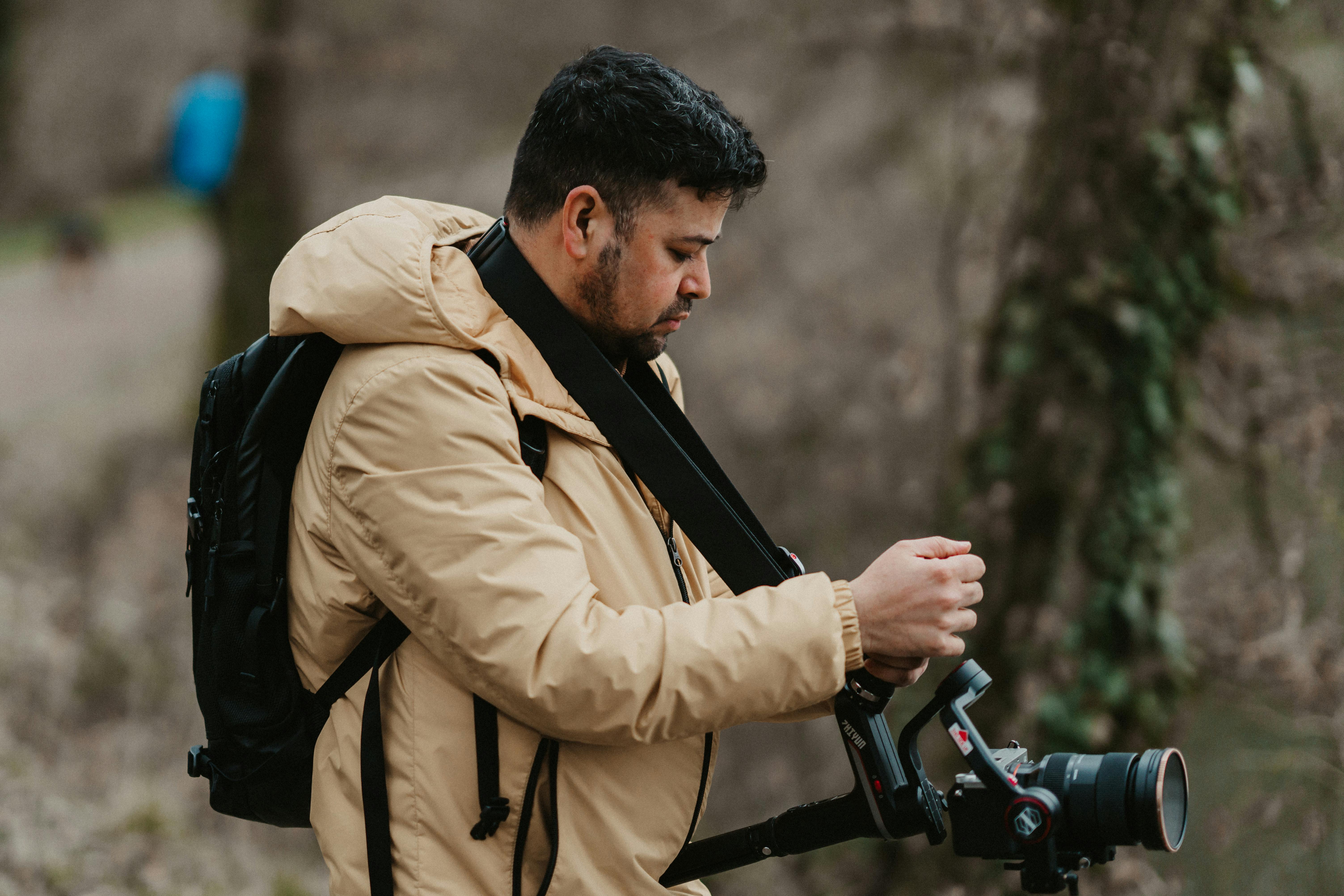
Summer is an excellent season for freezing fast-moving moments on the trail and on the water. A strong action photo can capture spray, speed, sweat, and excitement in a single frame. With the right settings and a few practical habits, you can get crisp shots without slowing your trip.
Shop the setup

- Regular price
-
€42 - Regular price
-
€44 - Sale price
-
€42
By choosing the Camstrap strap, you are opting for a high-quality product designed to meet the needs of the most demanding photographers.
- Developed by a physiotherapist to relieve neck and back pain.
- Fast delivery with tracking by the Post Office 🚚
- Can be used as a shoulder strap or hands-free harness

- Regular price
-
€36 - Regular price
-
€42 - Sale price
-
€36
Free shipping included
This guide keeps the process simple and genuinely useful. You will learn how to freeze motion on hikes, how to steady a camera in a kayak, and how to protect gear from heat and water. You will also see how a secure strap system can help you work faster and with less stress.
Freeze Summer Action: Start with the Right Mindset
Strong action photography starts before you lift the camera. Safety, timing, and quick access all matter. When gear is buried or hard to reach, you can easily miss the best freeze moment.
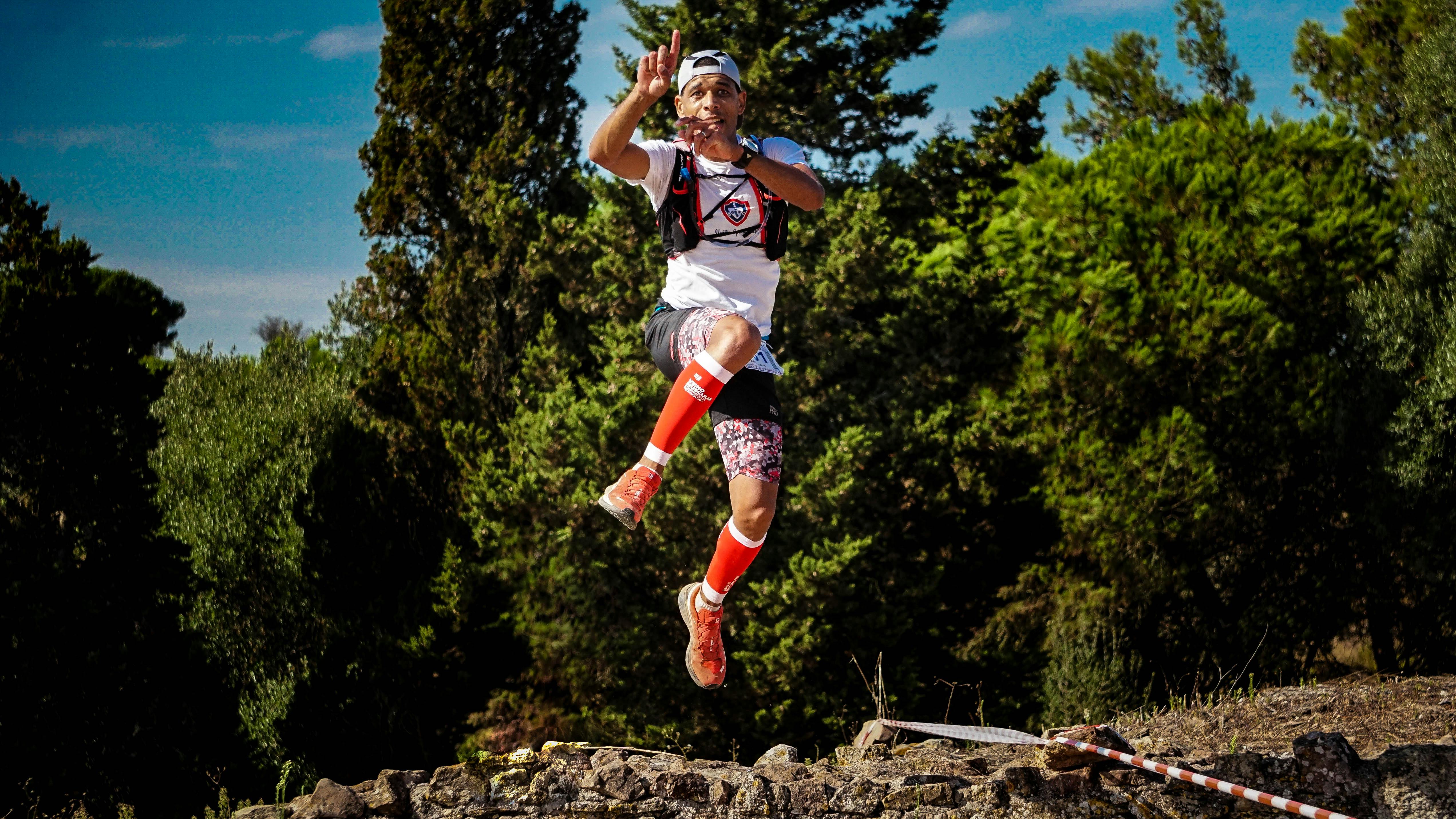
On hikes and kayak trips, the strongest shot may last only a second. For that reason, your setup should let you move quickly and keep both hands free when necessary. That is why a camera strap matters almost as much as the camera itself.
Plan for motion, not just still scenes
Many outdoor photos feel flat because the photographer waits too long. Instead, pay attention to steps, jumps, paddle strokes, waves, and turns. Those moments bring energy and help you freeze the story of the trip.
It also helps to think through your path before the action begins. Choose spots where you can stand safely and shoot without blocking the trail or the water route. A little planning saves time and leads to more clean shots.
Freeze Sharp Hikes with Fast Shutter Speed
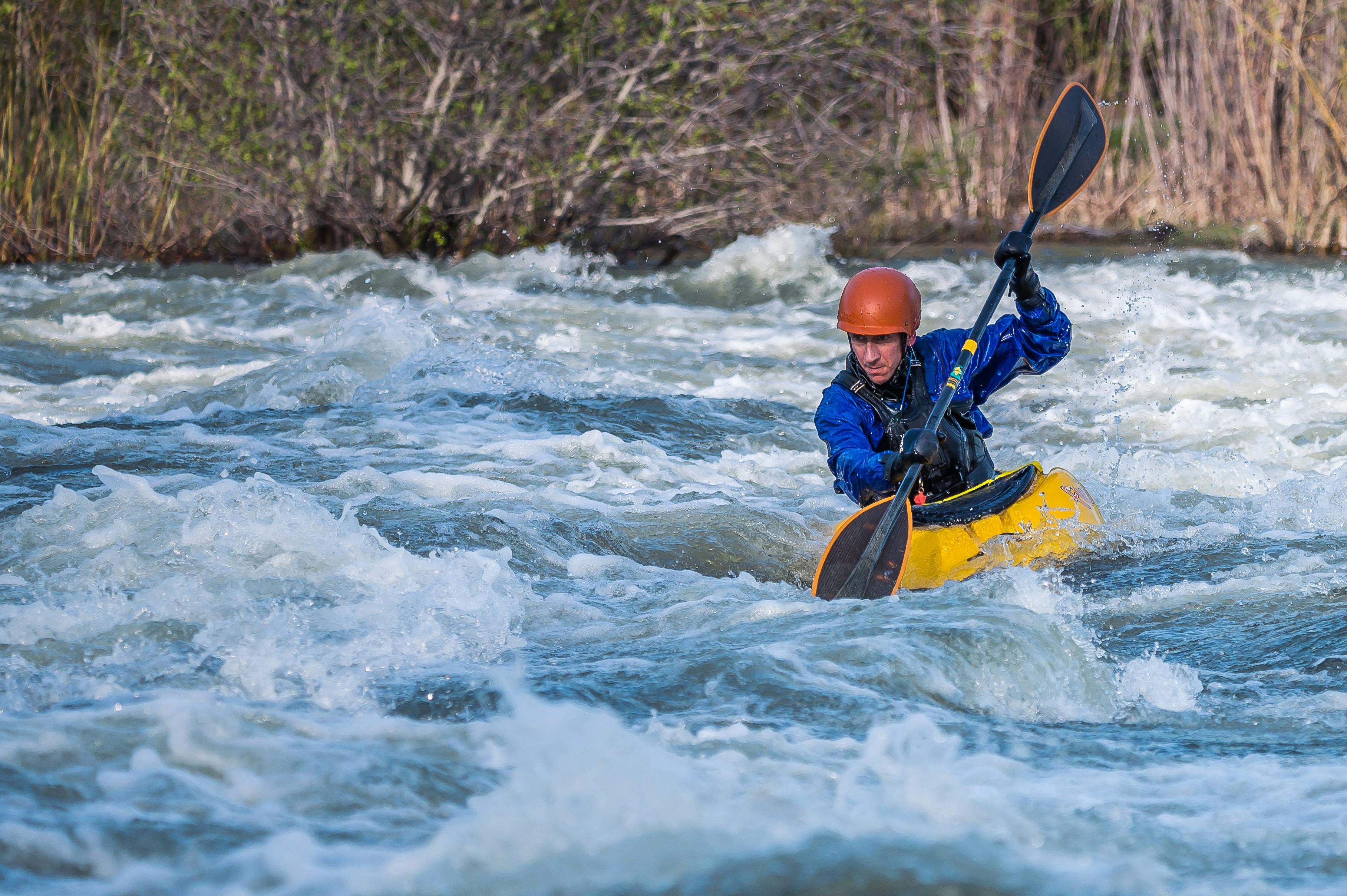
If you want to freeze hikers in motion, shutter speed is the first setting to check. For most trail action shots, start at 1/500s. When someone is running, jumping, or climbing quickly, increase it to 1/1000s or faster.
Still, slower movement does not always need maximum speed. A walking subject can look sharp at 1/250s if the light is bright and your hands are steady. Aim for the fastest speed that still leaves you enough light.
Simple camera settings that work well
- Shutter speed: 1/500s for general hiking action, 1/1000s for fast movement
- Aperture: f/2 to f/2.8 for a bright look and soft background
- ISO: Start near 100 to 400 in strong sun, then raise it if needed
- Focus mode: Use continuous autofocus for moving people
These settings give you a solid base for freeze shots. Even so, bright sunlight and dark woods call for different adjustments. Check your screen often and adapt as the scene changes.

Use burst mode for better timing
Burst mode makes it easier to catch the best frame in a brief movement. One step, one leap, or one pole plant can look very different from one image to the next. A short burst gives you more chances to freeze the peak moment.
So begin the burst just before the action starts. Do not wait until the subject has already moved past you. Even a small delay can cost the shot.
Freeze Kayak Motion with Better Stability
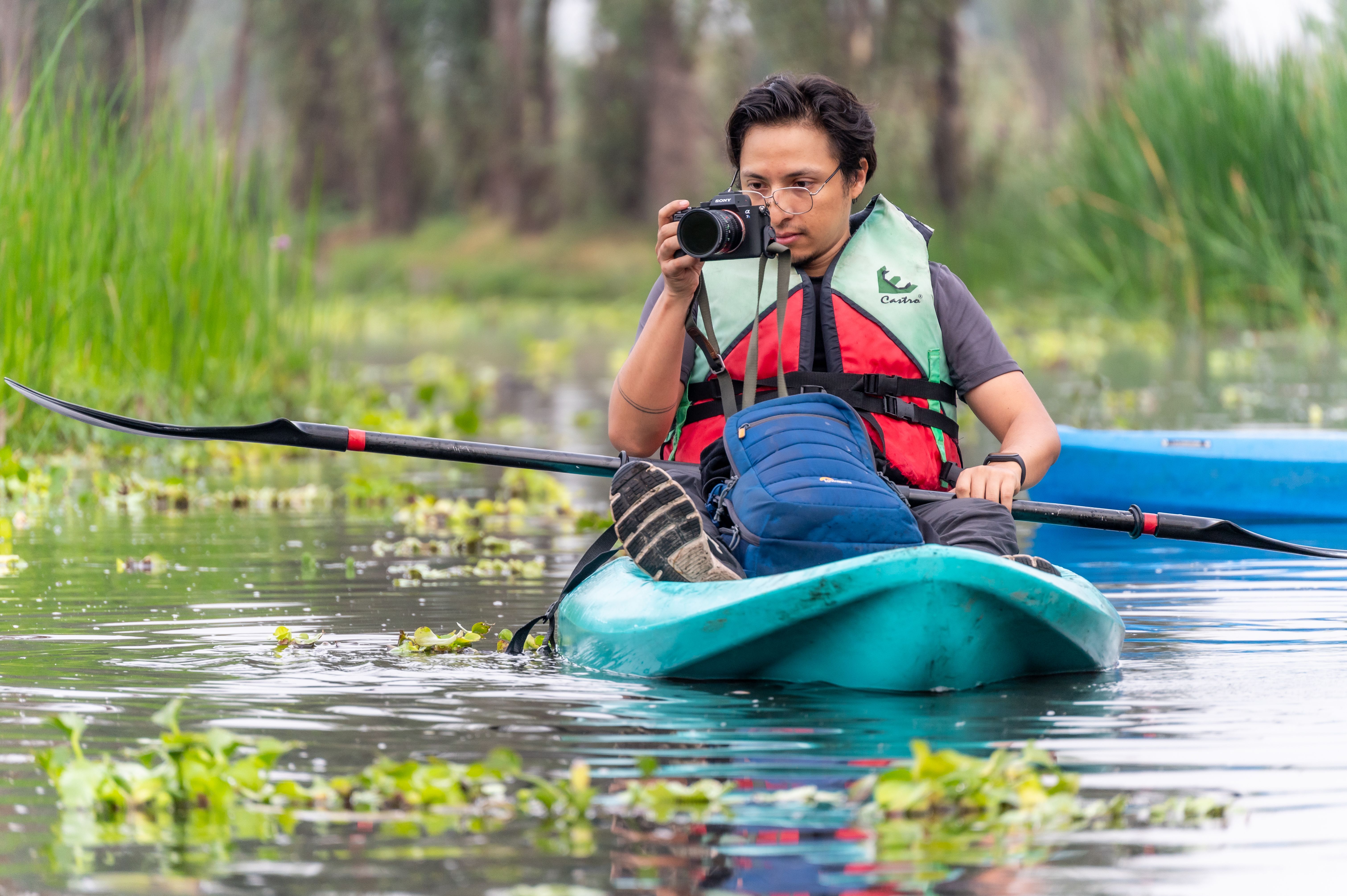
Kayak photography is thrilling, but the water never sits still. Your hands, boat, and subject all shift at once. To freeze clean action shots, you need a stable body, a secure camera, and a simple plan for shooting.
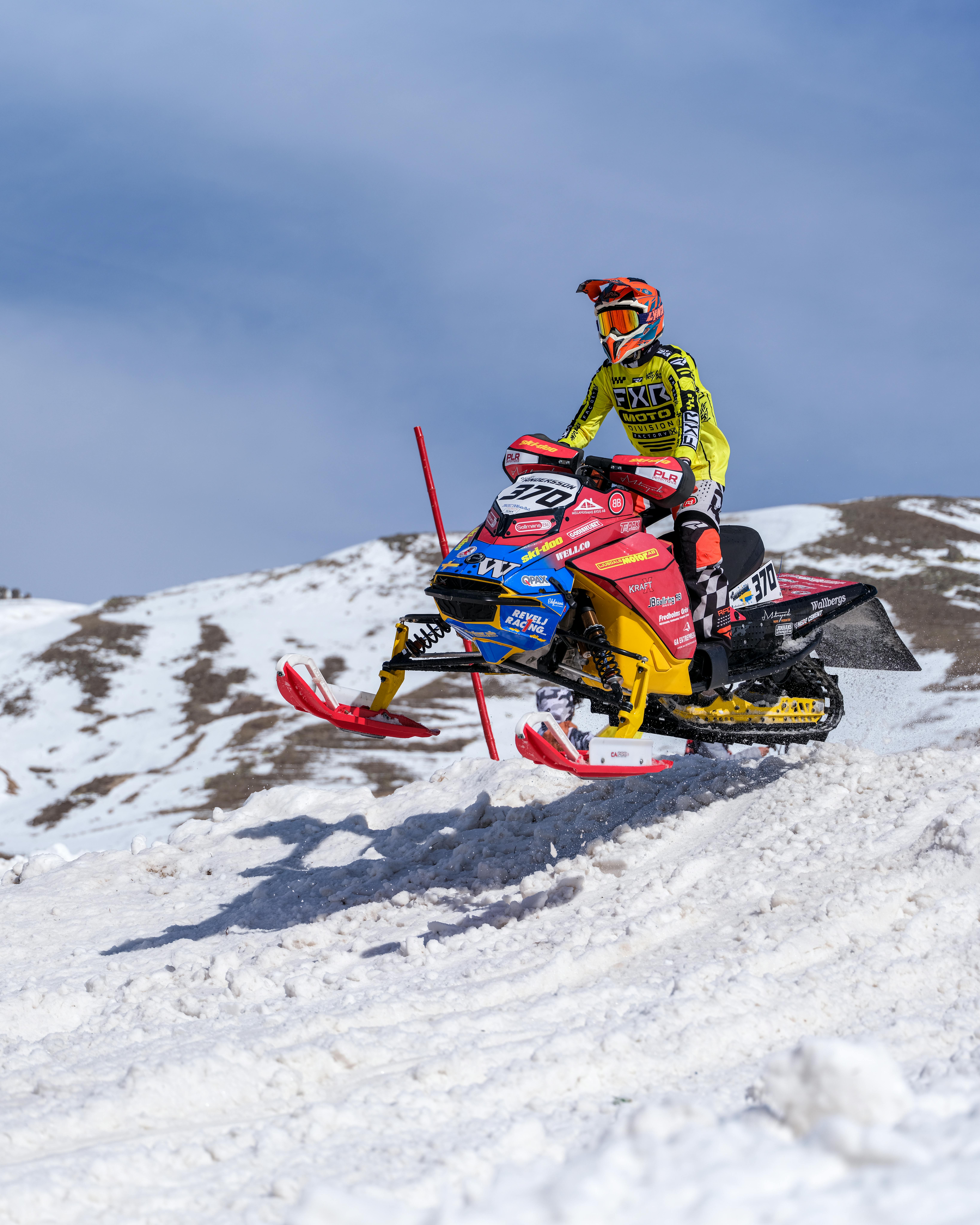
Stability begins with your seat. Sit tall, brace your core, and keep your elbows close to your sides. That reduces shake, even when the kayak rocks.
How to stabilize a camera while kayaking
Hold the camera with two hands when possible, and keep it close to your body. If the light is strong, try a faster shutter speed like 1/1000s. That will help freeze paddle splash and small boat movement.
In addition, use a strap that stays close and does not swing. A secure quick-release strap system can help because it keeps the camera fastened yet ready to use. Camstrap Explorer or Camstrap Voyager can fit this need well for active shooting, since they are built for outdoor use and quick access.
Shoot from a low and steady angle
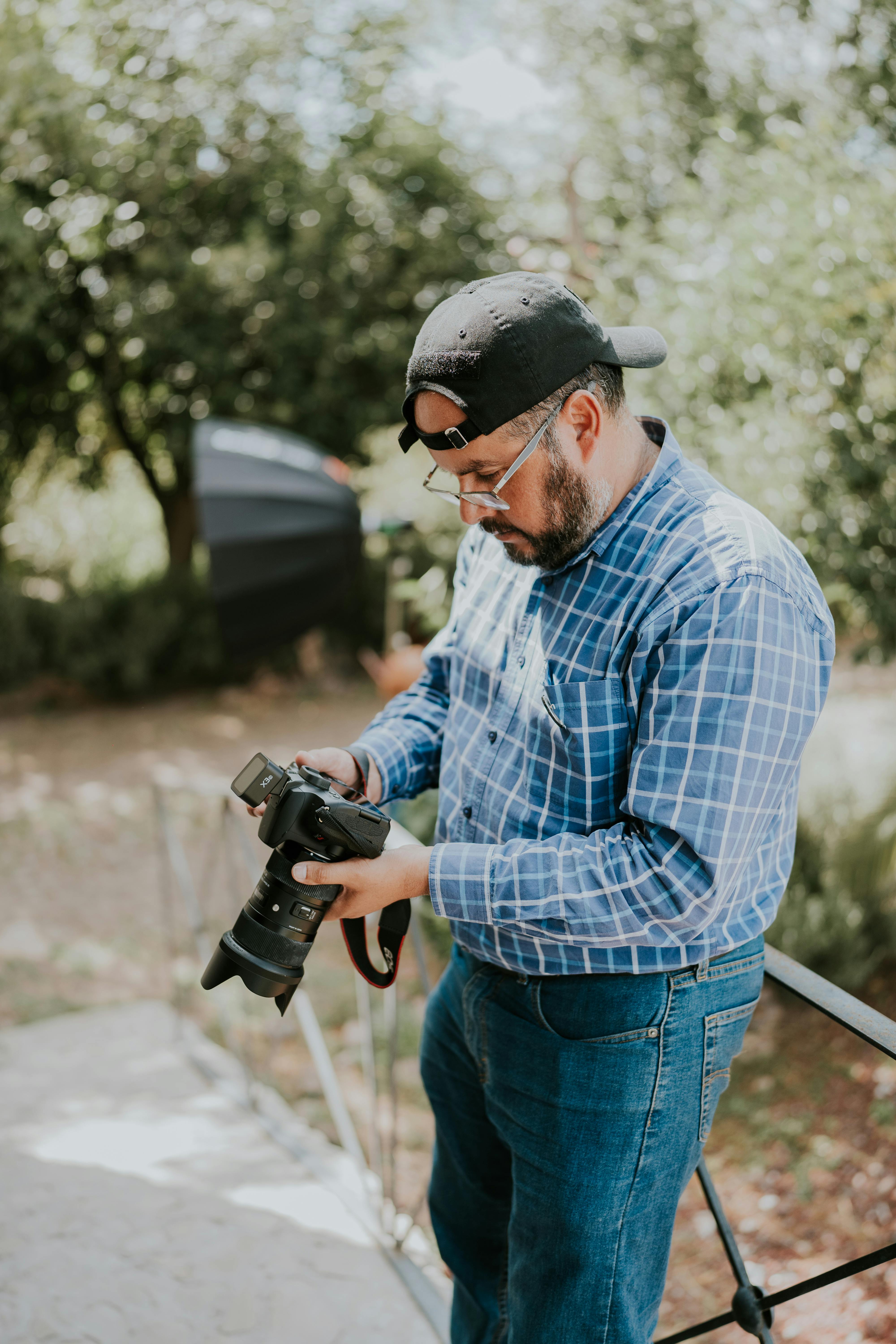
Low angles work especially well on the water. They can make paddle spray look larger and give the scene more power. Keep the camera low, but do not lean too far over the side.
If you can, shoot with a short lens or a zoom around 50mm to 85mm. This range works well for action scenes because it keeps the subject clear without forcing you to stand too close. It also speeds up framing when the boat is moving.
Freeze Gear Problems Before They Start
Summer action shoots bring heat, sweat, mist, and splash. Your camera can handle plenty, but your care routine still matters. If you protect gear early, you will spend more time shooting and less time solving problems.
Moisture is one of the biggest risks on hikes and kayaks. Water can land on the lens, the strap, the buttons, and the memory card door. Dust and sand can also cling to damp gear.
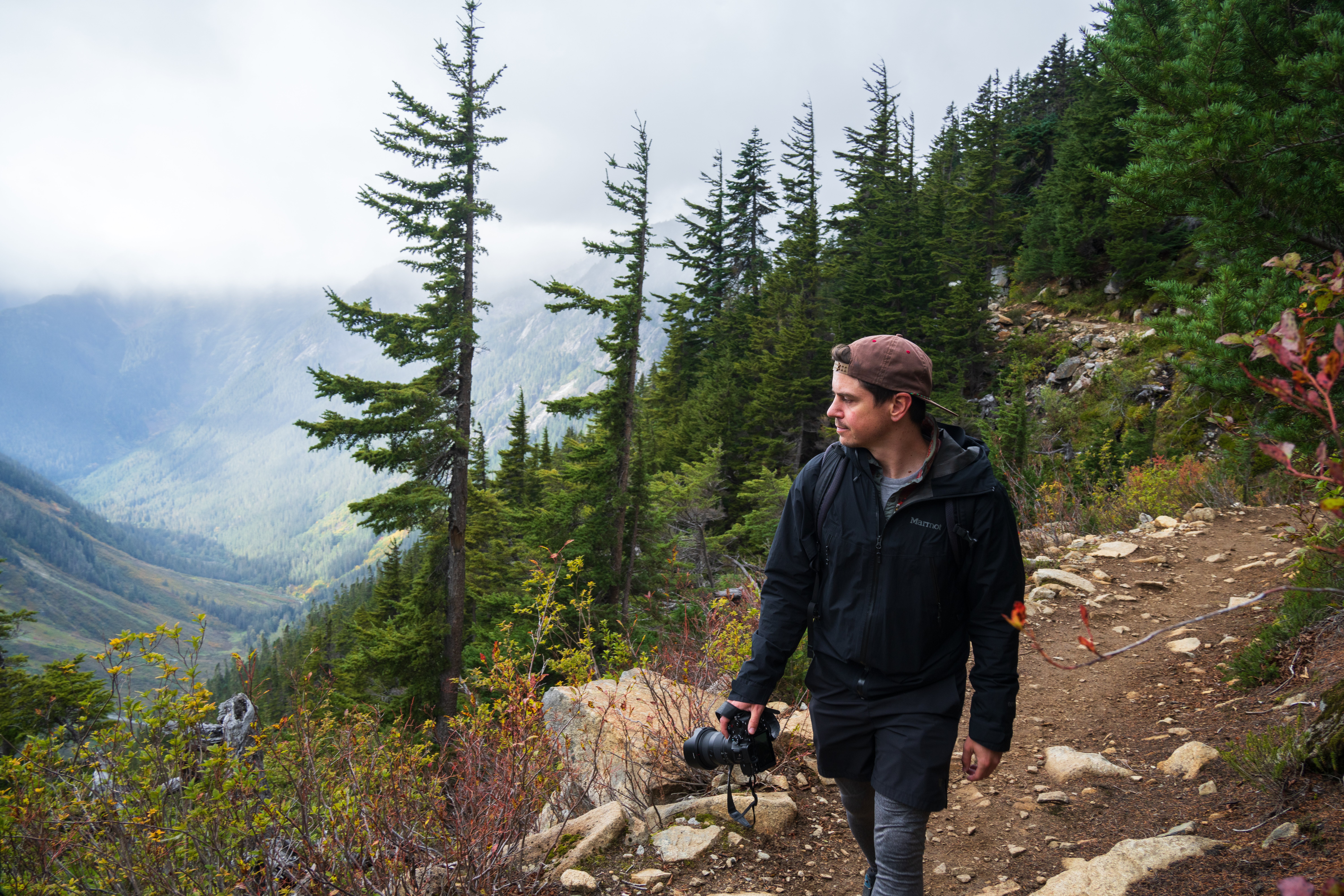
Protect your camera from moisture
- Use a rain cover or dry bag when weather changes fast.
- Keep a microfiber cloth in an easy pocket.
- Wipe the lens before each key shot.
- Store spare batteries in a dry pouch.
- Close all ports and card doors before you move near water.
These small steps are easy to follow, but they protect your gear. In fact, many outdoor shooters treat moisture care as part of the shot rather than an extra task. That habit makes freeze photography much safer.
Choose a strap that helps in wet conditions
A good strap should dry quickly and stay secure. It should also let you reach the camera without a long delay. That matters when a paddle splash or trail jump appears with little warning.
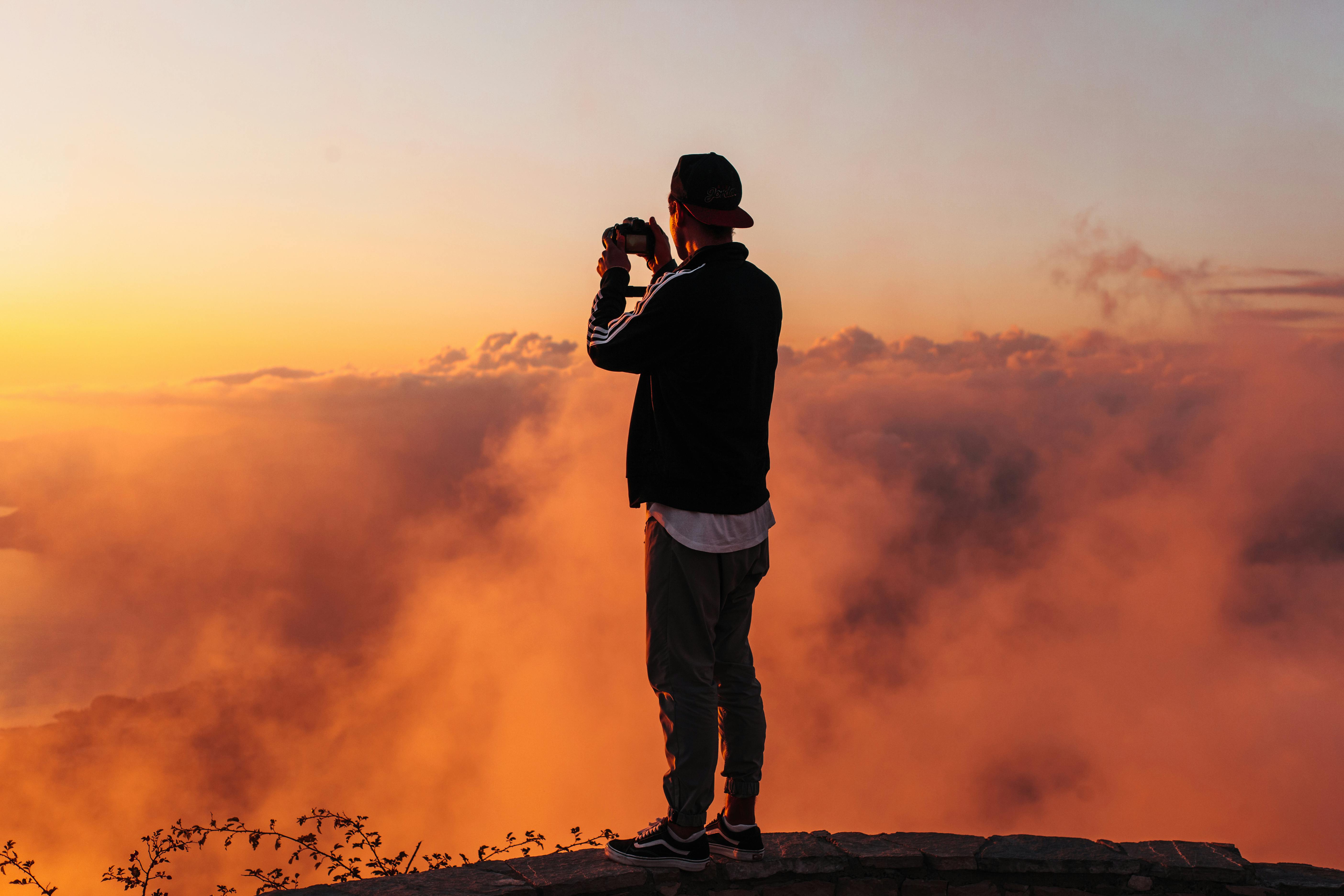
Camstrap Nomad is one option for photographers who want a lighter feel on longer walks. Camstrap MagClip can also help when quick access and a clean carry are priorities. The key is to choose a strap that holds firm while still letting you move fast.
Freeze Better Composition on the Move
Strong action photos need more than speed. They also depend on clean framing, good light, and a clear subject. When those elements come together, the photo feels sharp and alive.
Try placing the subject where the eye can follow the motion. Leave space in front of the hiker, runner, or kayak. That creates a natural feel and helps viewers sense movement.
Use light to add energy

Early morning and late afternoon light often work best. The sun sits lower, so shadows are softer and colors look richer. It also helps you keep a faster shutter speed without pushing ISO too high.
Midday light can still work, but be mindful of harsh shadows on faces. If you have to shoot then, use open shade or angle the subject so the light falls better. Simple light control can make your freeze shots much stronger.
Try these framing tips
- Leave space in the direction of travel.
- Keep the horizon level on water shots.
- Use rocks, trees, or river bends to frame the subject.
- Crop tight only when the action is clear and clean.
These small choices help viewers feel the pace of the moment. They also keep the image easy to read. For action photography, clear often beats busy.
Freeze Adventure with Simple Shooting Habits
The best outdoor photographers build habits that work every time. They check settings early, keep gear close, and stay ready for quick changes. Over time, those habits make freeze shots much easier.
One smart habit is testing your camera before the main action begins. Take a few frames of a friend walking, paddling, or stepping over a rock. Then review the image and adjust shutter speed, aperture, or ISO as needed.
A quick field routine for hikes and kayaks
- Check your strap and make sure the camera is secure.
- Set shutter speed to 1/500s or faster for moving subjects.
- Choose aperture near f/2 to f/2.8 if light is low.
- Switch to continuous autofocus.
- Keep a cloth ready for spray, sweat, or rain.

This routine takes very little time, yet it keeps you ready. It also helps you freeze action without fumbling for settings. As a result, you can focus more on the trip and less on the camera.
Use the right gear carry setup
Fast access matters when the moment arrives without warning. A strap that rides close to the body can keep the camera steady and ready. It also reduces the chance of swinging gear while you climb or paddle.
For some photographers, a rugged option like Camstrap Voyager works well on tougher routes. Others may prefer Camstrap Explorer for steady trail use or Camstrap MagClip for fast clip-on carry. Each supports the same goal: keep the camera safe, close, and easy to use.
Freeze Adventure: Final Thoughts for Summer Shoots

Freeze photography on summer hikes and kayaks is part skill and part habit. If you set a fast shutter speed, keep your camera stable, and protect your gear from moisture, you will get far better results. The more you practice, the easier it becomes to catch the peak moment.
Keep the basics in mind. Use 1/500s for most hiking action, move up to 1/1000s for faster motion, and keep your camera secure with a quick-access strap. If you stay ready, you can freeze the best parts of every summer adventure.
In the end, the goal stays simple. You want photos that feel alive, clear, and true to the day. With smart preparation and the right gear, your next freeze shot can tell the whole story.
Frequently Asked Questions
What shutter speed should I use for hiking action shots?

Start at 1/500s for general hiking action. For running, jumping, or climbing quickly, use 1/1000s or faster.
How do I stabilise a camera while kayaking?
Use a secure strap system so the camera stays controlled and accessible, especially when both hands are needed. Shoot with a steady posture and brace yourself against the kayak to reduce camera shake.
How can I protect my gear from moisture during action shoots?
Protect gear from heat and water with practical coverings and secure storage when not shooting. Keep equipment close, use a reliable strap, and be ready for spray and splashes so the camera is less exposed.


