


- Are hands-free camera straps better than neck straps for travel
- What is the best hands-free camera strap for mirrorless
- Can one strap carry a camera and binoculars
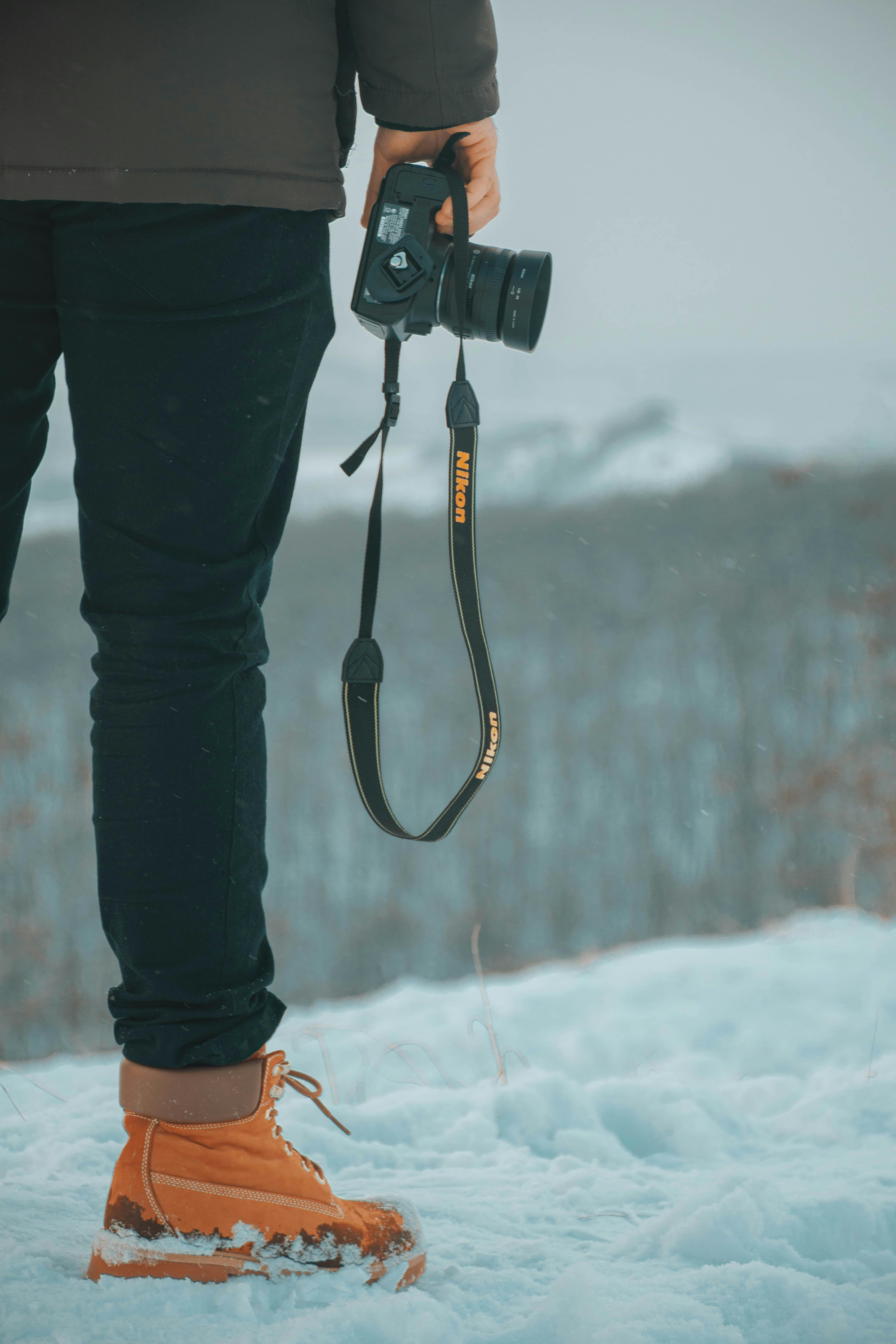
Travelers and photography enthusiasts want gear that frees their hands without sacrificing safety. A reliable hands-free camera strap simplifies movement and protects your equipment. In this guide, we review the best hands-free camera straps for travel in 2026. Coverage includes mirrorless setups, multi-gear solutions, and practical tips to help you pack light and shoot more effectively.
Shop the setup

- Regular price
-
€42 - Regular price
-
€44 - Sale price
-
€42
By choosing the Camstrap strap, you are opting for a high-quality product designed to meet the needs of the most demanding photographers.
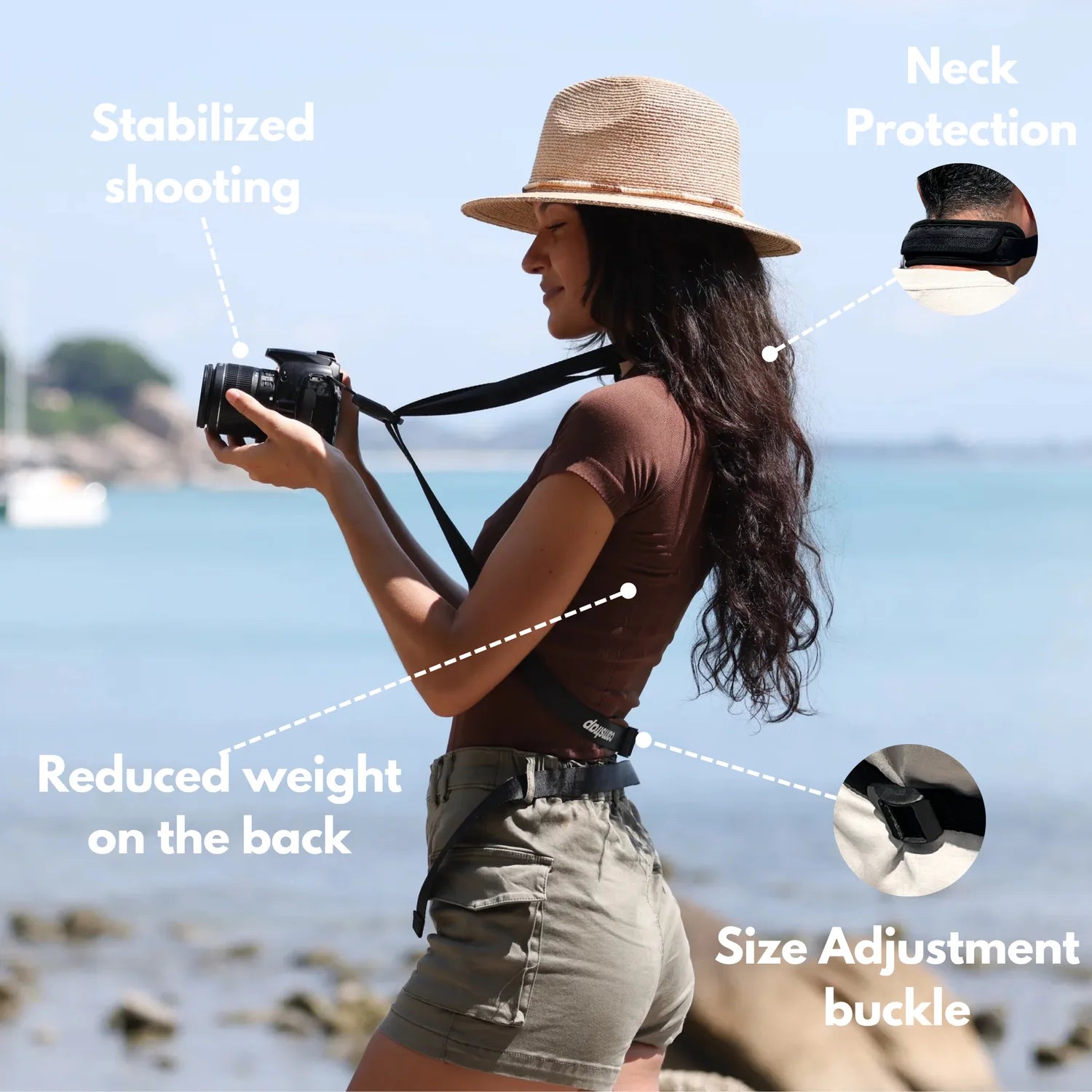
- Developed by a physiotherapist to relieve neck and back pain.
- Fast delivery with tracking by the Post Office 🚚
- Can be used as a shoulder strap or hands-free harness

- Regular price
-
€36 - Regular price
-
€42 - Sale price
-
€36
Free shipping included
Why choose hands-free camera straps for travel?
Hands-free straps let you move without clutching your camera, reducing neck strain and the risk of accidental drops. That comfort and security matter whether you’re hiking, cycling, or navigating crowded city streets.
They also speed up access to your camera. With the right setup you can register a shot at 1/500s or hold steady at 1/125s, helping you capture sharp images while remaining active on the go.
Best strap types and how to pick one
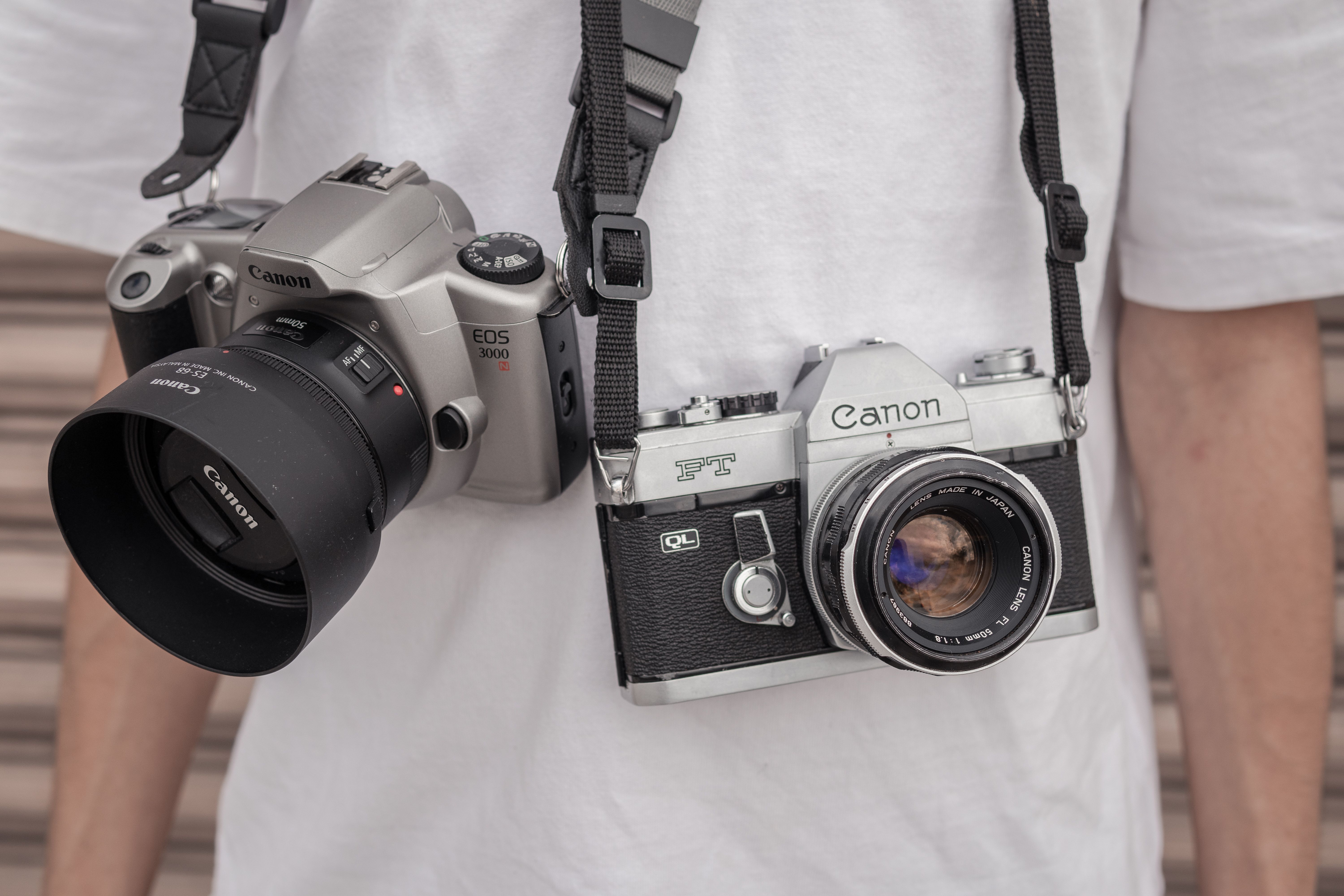
Sling, cross-body, chest, and wrist styles each have distinct advantages for travel. Match the design to the weight of your kit and the level of movement you expect on a trip.
Sling straps
Sling straps sit across the chest and rest on the hip, keeping the camera low and ready to slide into shooting position. They’re particularly well suited to 50mm–85mm primes and compact zooms.
Cross-body straps
Cross-body straps spread weight across the shoulder for improved stability on long walks. Heavier kits, including full-frame bodies and setups up to about 2 kg, benefit from this distribution.
Chest and harness systems
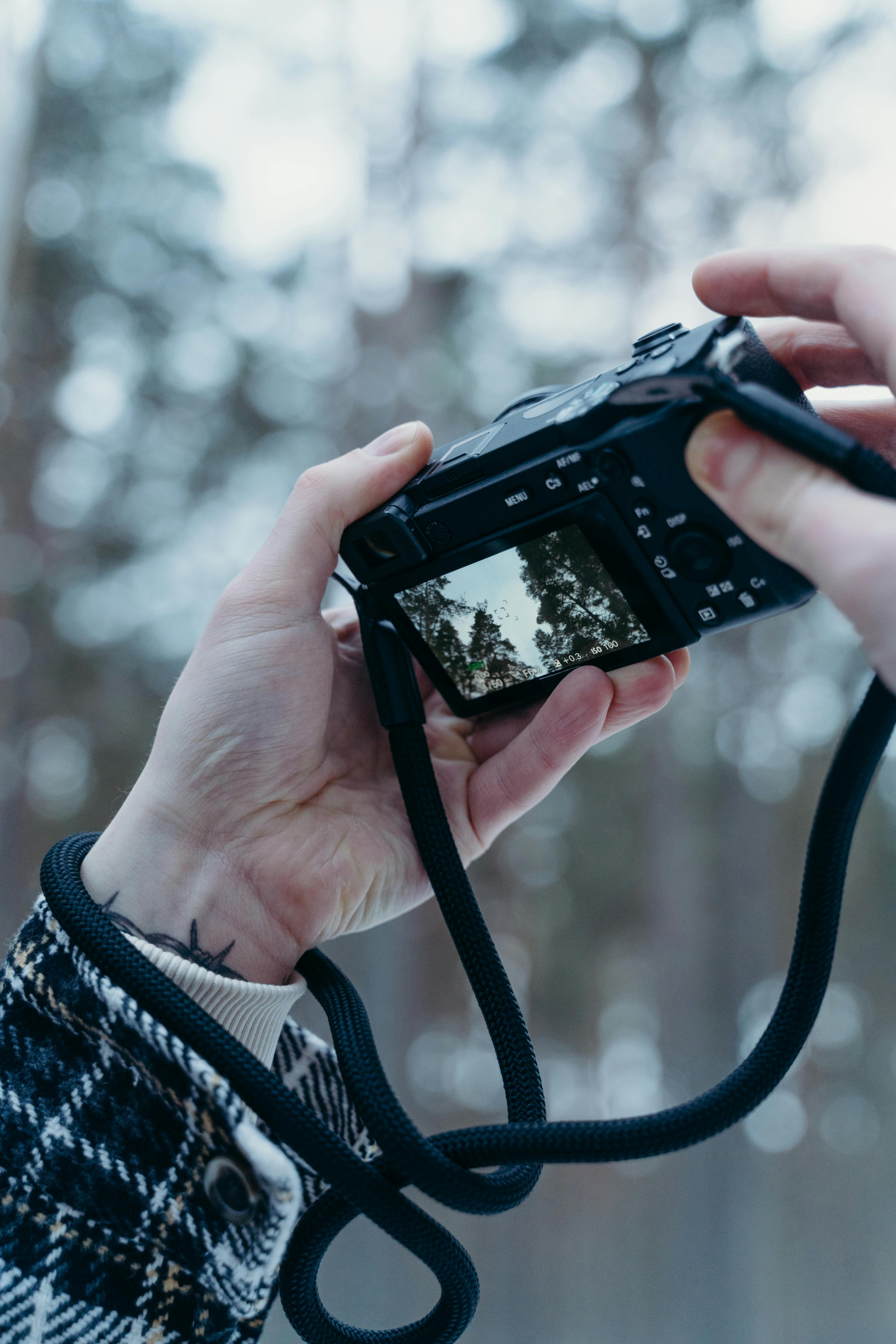
Chest harnesses and rig systems secure two devices at once and keep equipment from bouncing on rough trails. Adventure shooters and long-distance hikers often mount a camera and binoculars on these setups.
- Consider load: small mirrorless kits weigh about 400–800 g.
- Lens choice: f/2–f/2.8 lenses balance speed and size.
- Action needs: use a strap that locks well on bumps.
Best hands-free straps for mirrorless cameras
Mirrorless bodies are compact and quick to handle. The ideal hands-free strap for mirrorless gear stays slim, enables rapid access, and adds minimal bulk so you can shoot with a 35mm or 50mm lens without slowing down.
When selecting a strap for mirrorless cameras, prioritize quick-release hardware, generous padding, and a low profile for comfort and speed. Verify compatibility with your camera’s lug or tripod mount as well.
Top mirrorless picks and why they work

-
Sling strap with quick-release
Designed for rapid deployment, this style provides near-instant access to a mirrorless camera and handles 24–70mm kit lenses and primes with ease. Swapping to a 50mm is straightforward when a moment appears.
-
Thin cross-body strap
Low-profile cross-body straps cut bulk and hug the shoulder, making them ideal for 20–200mm walking shoots. They pair well with an f/2 lens for better low-light performance.
-
Magnetic quick-clamp connectors
Magnetic clamps let you attach and remove the camera almost instantly, useful for grabbing a frame at 1/500s and then stowing the body. Confirm the clamp locks securely under load before relying on it in the field.
For a balanced option, consider a strap like the camstrap voyager or camstrap explorer. These blend a slim profile with quick-release features. If you run heavier mirrorless rigs with larger lenses, the camstrap nomad offers more support, while the camstrap magclip speeds up mounting and dismounting in tight moments.
How to use straps to carry camera and binoculars
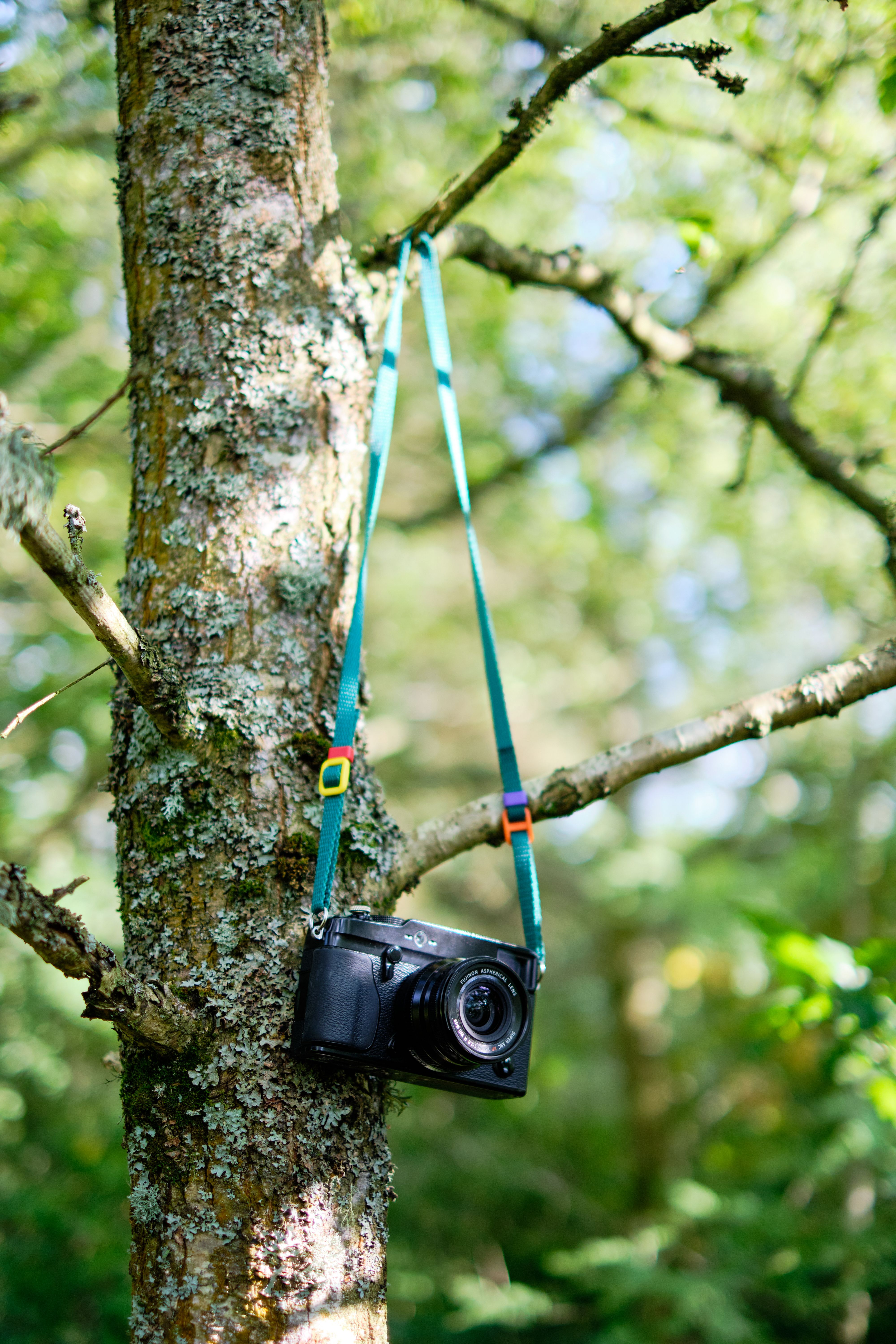
Travelers often wonder whether a single strap can carry both a camera and binoculars. The short answer is yes, provided you select a harness or dual-clip system designed for two attachments.
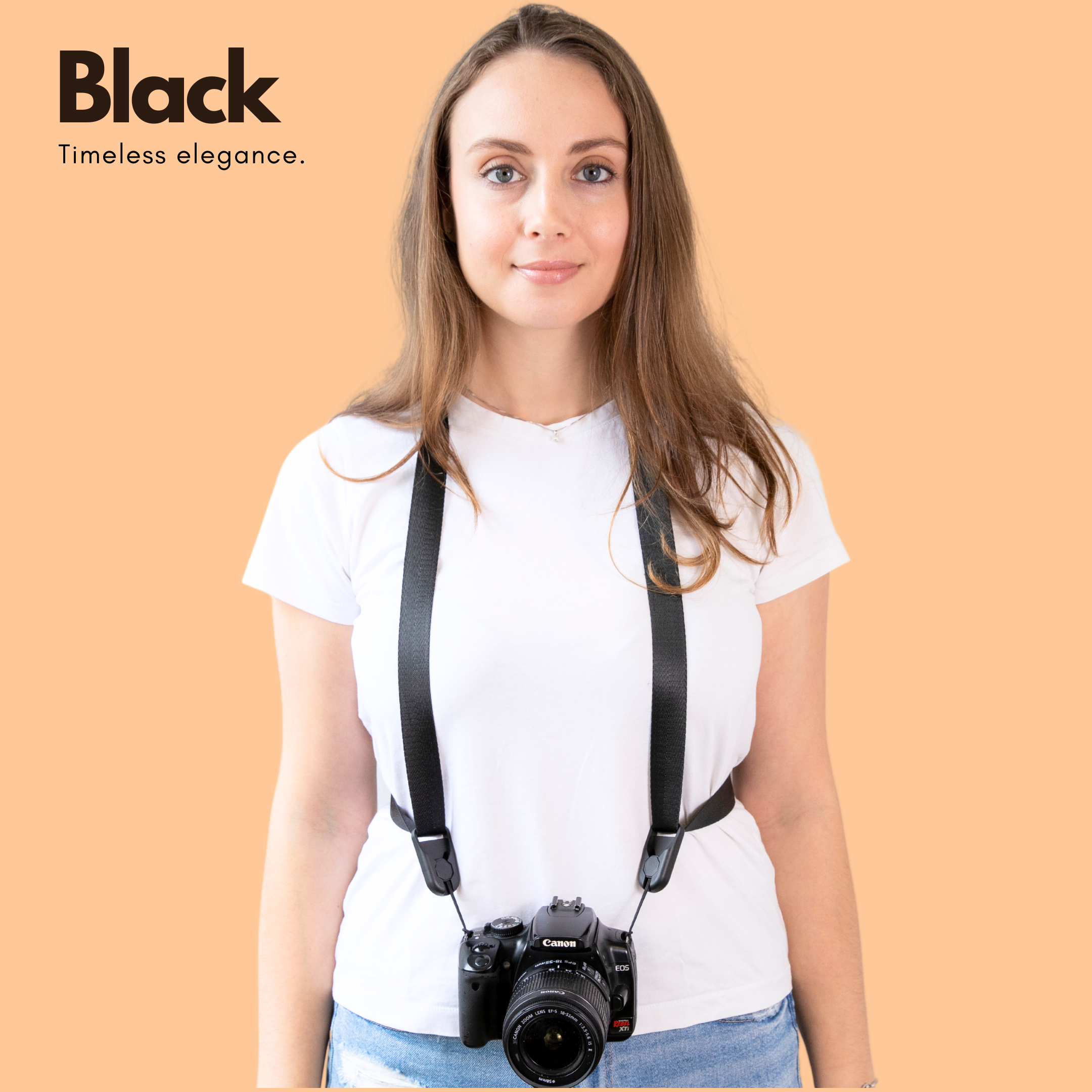
Seek a harness with two dedicated attachment points; chest rigs and dual slings are common solutions. Balancing weight left and right prevents undue neck or shoulder strain during long outings.
- Use a dual clip or chest harness to hold a camera and binoculars.
- Check combined weight; keep under 3.5 kg for day hikes.
- Adjust the straps to center the kit on your torso.
On rough terrain, lock the clips and use quick-release where you need fast access to a 50mm or compact zoom. This configuration is helpful for combined birding and landscape shooting during the same walk.
Top picks: tested hands-free camera straps in 2026
We evaluated a wide range of straps for comfort, speed, and build quality using common travel gear and mirrorless bodies. Tests included lenses such as 35mm, 50mm, and 24–70mm at f/2 and f/2.8 apertures.
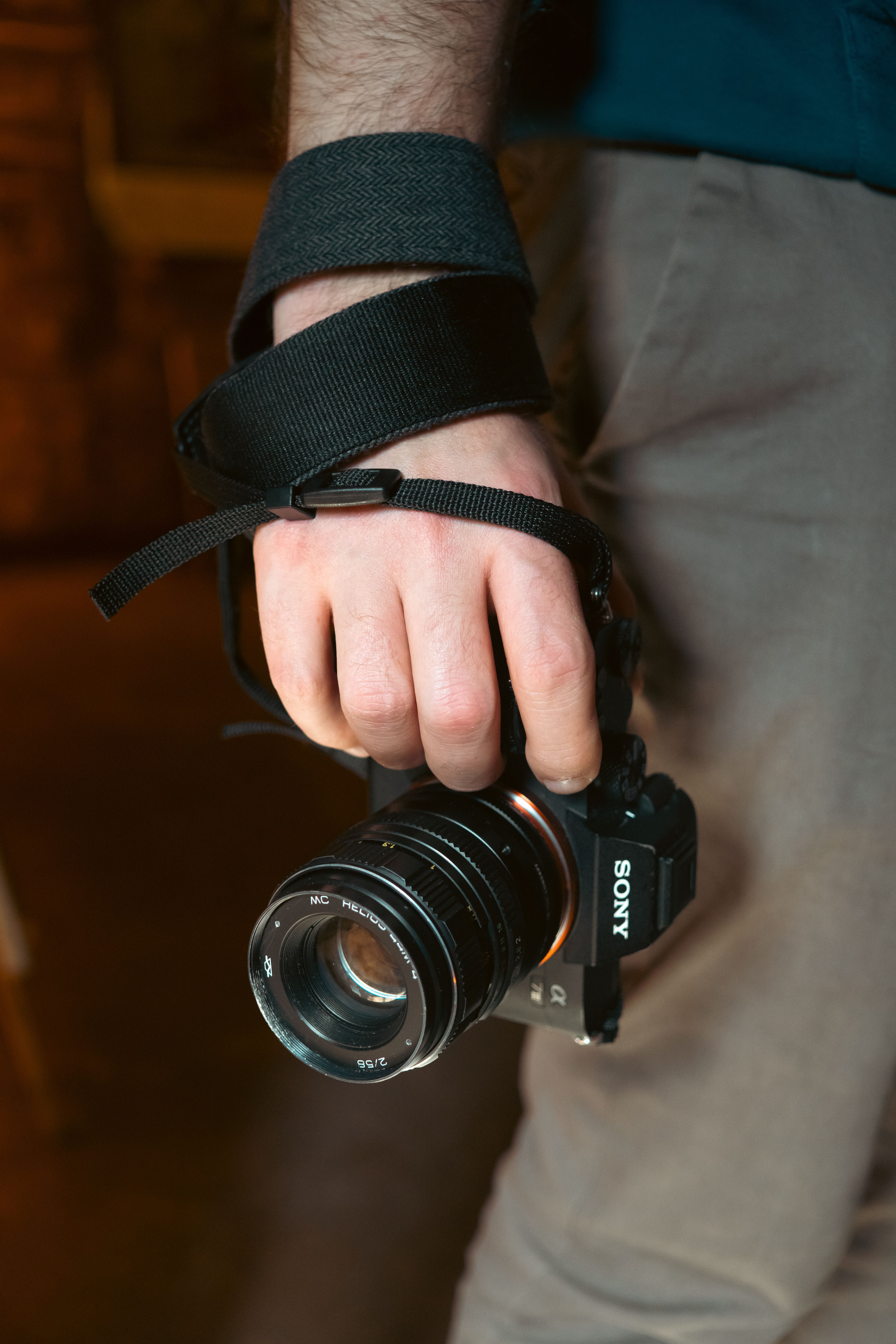
Below are the straps that stood out across different use cases. Each option suits a specific type of traveler or shooter; we’ve included pros and cons to simplify your choice.
Best all-round sling: camstrap voyager
The camstrap voyager strikes a pleasing balance between comfort and responsiveness. It glides up quickly, locks reliably, and performs well with a 50mm f/2 prime or a 24–70mm kit lens.
- Pros: smooth slide, wide padding, fast-release buckle.
- Cons: a bit bulky for ultra-light packs.
- Good for: travel enthusiasts who walk a lot.
Best for heavy kits: camstrap nomad
The camstrap nomad is built to support heavier mirrorless setups or small DSLRs, distributing weight effectively and remaining stable on challenging trails. It can accommodate longer telephoto use, including a 70–200mm at f/2.8 when required.
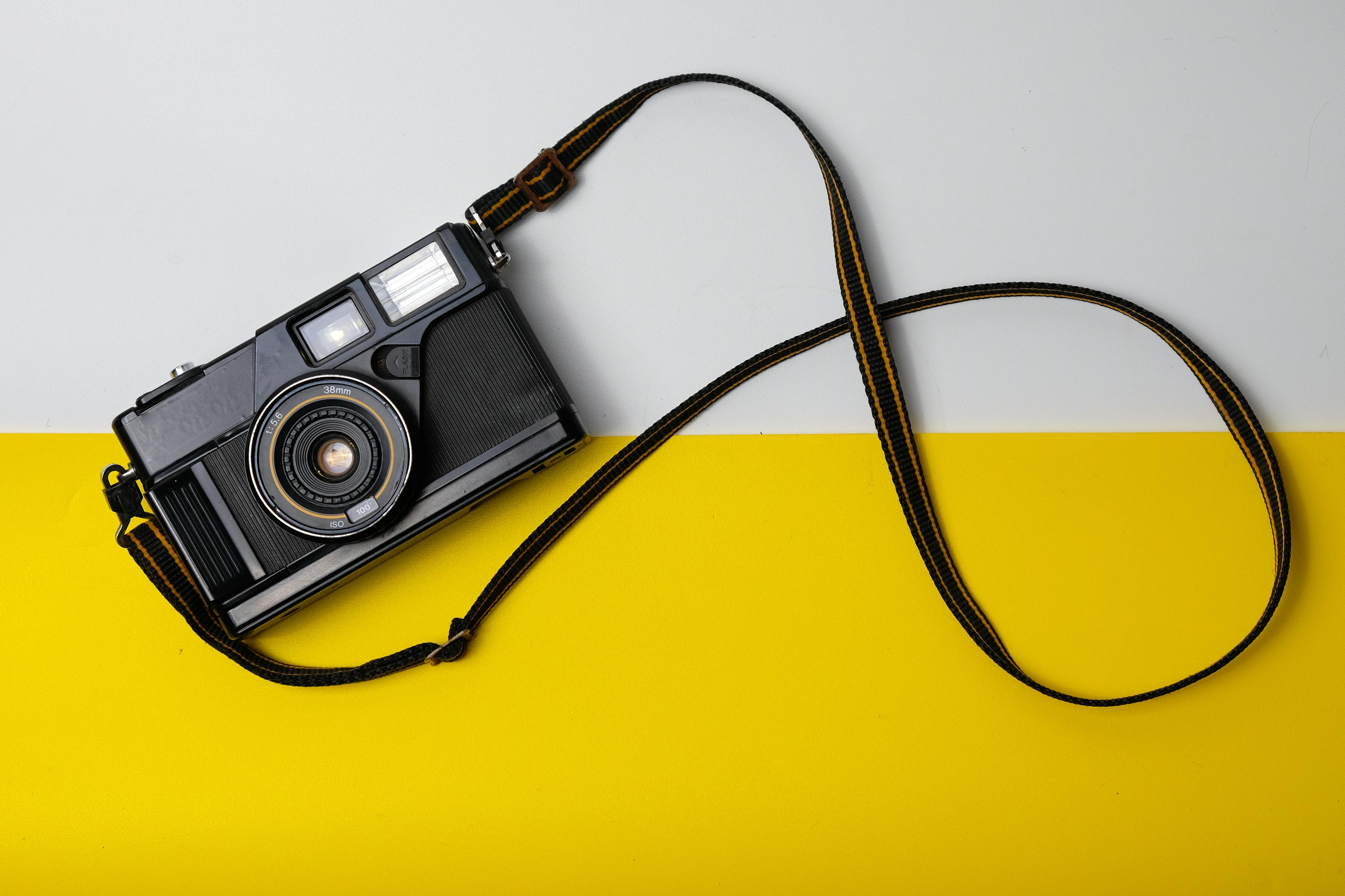
- Pros: strong anchors, padded shoulder, stable load.
- Cons: heavier than minimal straps.
- Good for: outdoor adventure photographers and heavy kits.
Best fast-mount: camstrap magclip
The camstrap magclip features a magnetic clamp for instant attachment and removal, speeding transitions to a tripod or into a bag. It’s ideal for small mirrorless bodies and compact zooms.
- Pros: super fast, low profile, neat look.
- Cons: check clamp rating for heavier glass.
- Good for: street photographers and travel bloggers.
Best budget pick: simple cross-body sling
For a low-cost solution, a basic cross-body sling offers comfortable carrying without bells and whistles. While padding and extras are minimal, it secures small mirrorless kits and light zooms effectively.
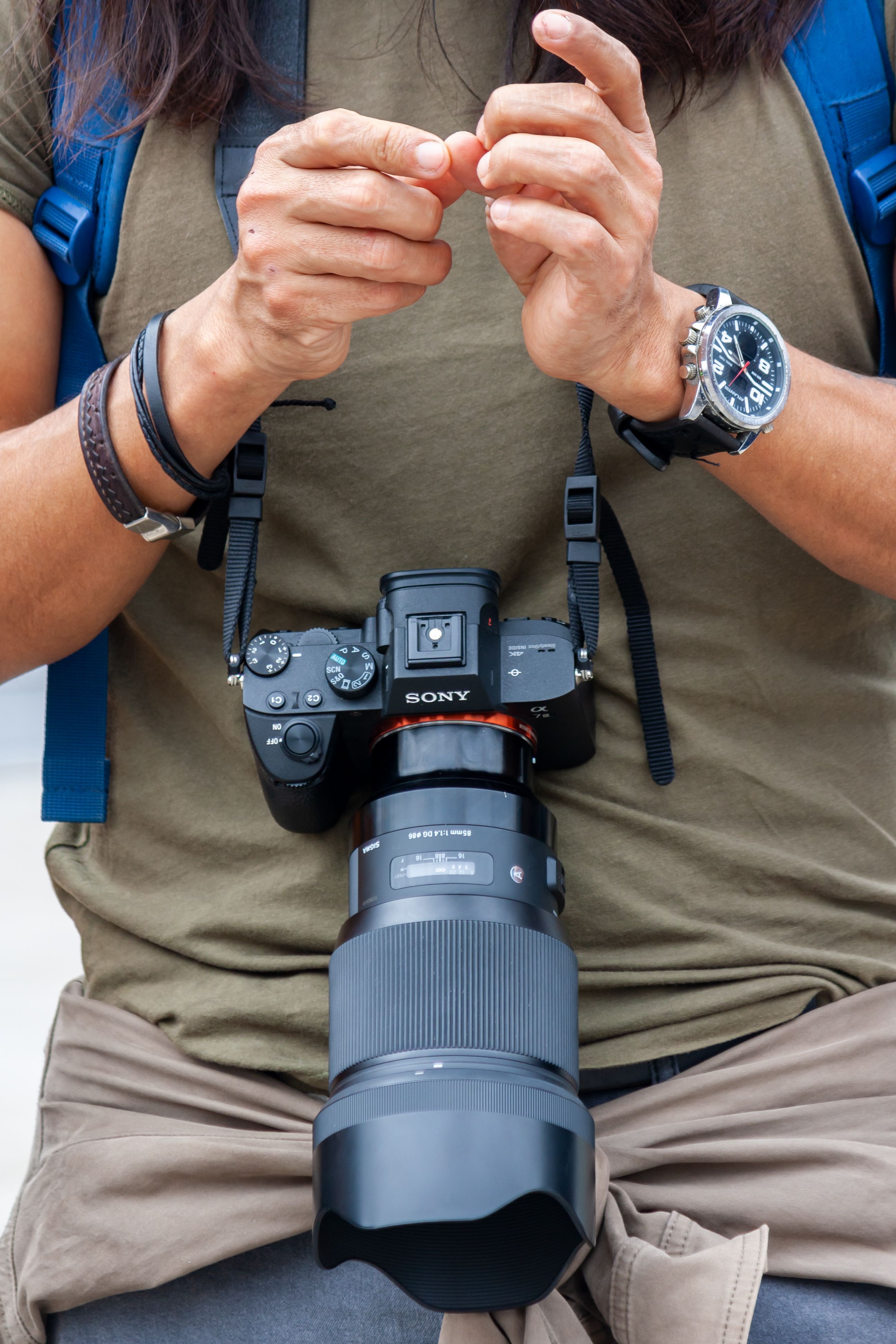
- Pros: cheap, light, easy to fit.
- Cons: fewer features, shorter warranty.
- Good for: amateur photographers on a budget.
Hands-free vs. neck straps: what’s better for travel?
Many photographers ask whether hands-free straps outperform neck straps for travel. In most cases, hands-free systems win on comfort and safety, easing neck load and allowing you to lower the camera when your hands are needed elsewhere.
Neck straps are simple and keep the camera close, which works well for short walks or controlled environments like studios. For long days on the road, however, hands-free options are usually the smarter choice.
- Hands-free pros: better weight spread and faster access on the hip.
- Neck strap pros: simple and quick to wear and remove.
- Best use: hands-free for day trips; neck strap for short shoots.
Key features to look for in the best hands-free camera straps

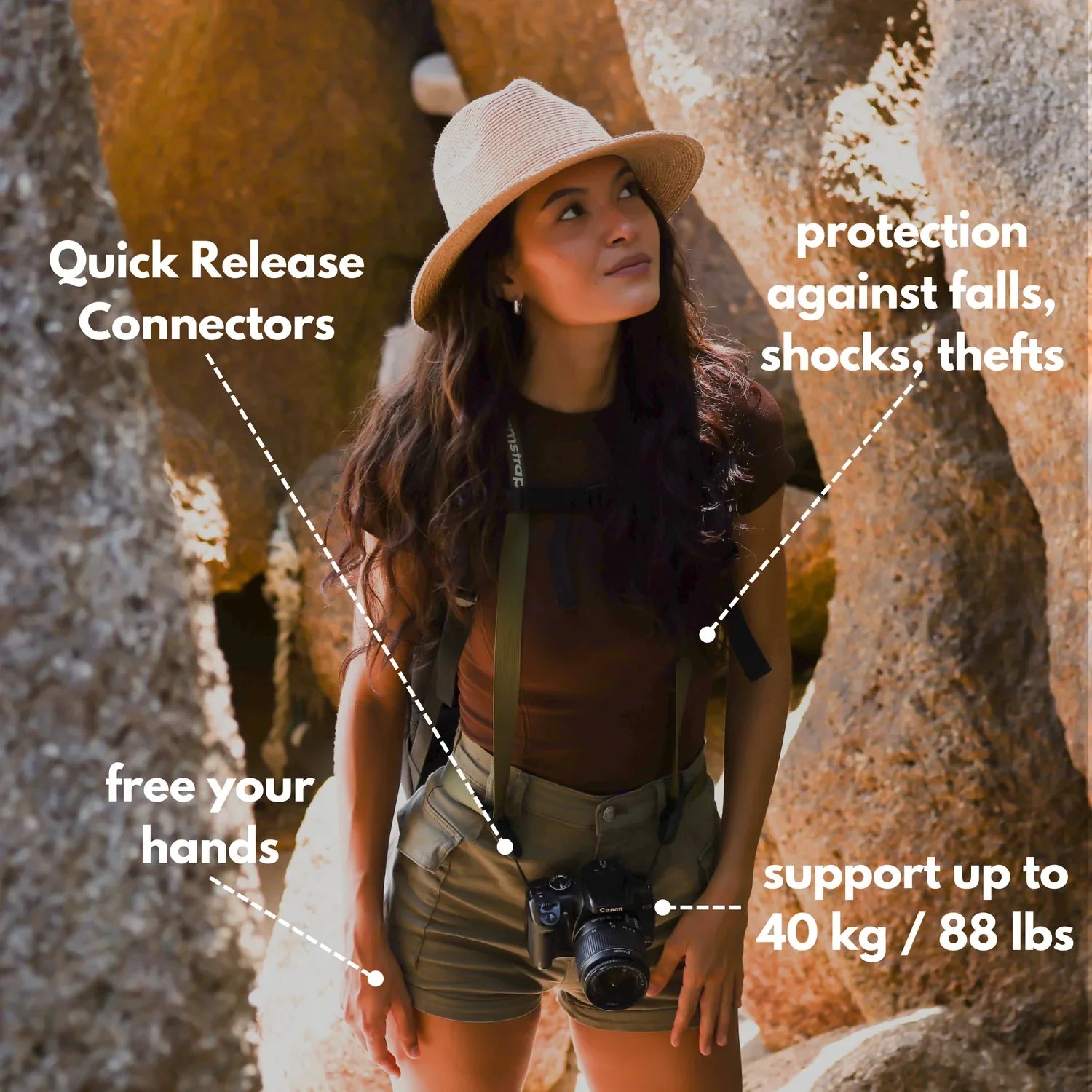
Select straps that match both your camera and travel habits. Prioritize quick-release mechanisms, padded shoulder supports, anti-slip backings, and robust connectors to keep gear secure while you move.
Also confirm load capacity and mounting style. Straps with 20–40 mm webbing and metal buckles are common specs that ensure heavier lenses stay safely attached during extended outings.
- Quick-release connectors: help you mount and unmount fast.
- Padded shoulder: improves comfort on long walks.
- Anti-slip material: stops the strap from sliding off your shoulder.
Security and weight limits
Always verify a strap’s rated load before use. Most reputable straps are rated to handle 5–10 kg, but you should test your specific setup—especially with a 70–200mm or heavier glass—before committing to long hikes.
How to set up your hands-free strap for quick shots

Begin setup by dialing in the correct length and tension so the camera sits low on your hip and is easy to draw. Rehearse bringing the camera up and returning it until the motion feels instinctive.
Add a safety tether for extra security on rough trails, and consider a pad to minimize bounce. With those measures in place you can comfortably shoot at 1/500s or steady slower handholds without undue blur.
- Adjust the strap so the camera rests at your hip.
- Practice pulling the camera up to eye level smoothly.
- Lock the quick-release when you are moving fast or climbing.
Maintenance and travel care for straps
After salty or wet trips, clean straps to preserve performance: wipe metal parts, air-dry webbing, and keep straps in a dry pouch to reduce corrosion and wear.
Inspect stitching and connectors before every trip. Replace any worn components or carry a backup strap when you spot wear to keep your gear protected on long journeys.
FAQs: quick answers for travelers
Are hands-free camera straps better than neck straps for travel?
Yes, hands-free straps are better for most travel scenarios. They reduce neck strain, protect the camera, and free your hands for other gear such as a day pack or water bottle.
What is the best hands-free camera strap for mirrorless?
The best hands-free option for mirrorless is lightweight, fast to access, and comfortably padded. A sling like the camstrap voyager or a magclip system often pairs well with mirrorless bodies—select what matches your lenses and shooting habits.
Can one strap carry a camera and binoculars?
Yes. Use a dual-clip sling or harness and balance attachments left-to-right to prevent strain. Keep total weight around or under 3.5 kg for day use.
Final tips to pick the best hands-free camera strap
Whenever possible, try a strap with your camera before buying. Walk a few blocks, test quick access, and note how it feels after 30 minutes on your shoulder.
Consider the lens you use most: a 50mm f/1.8 is lightweight and simple to carry, while a 70–200mm at f/2.8 demands a sturdier strap and secure mounting. Match your strap choice to the kit and itinerary.
Camstrap is a brand focused on redefining how photographers and adventurers carry cameras. The line—featuring options such as the camstrap voyager, camstrap explorer, camstrap nomad, and camstrap magclip—aims to fuse function with style across different needs.
Conclusion: choose the best for your travel needs
The right hands-free camera strap makes travel less tiring and more enjoyable by offering fast access to shots while protecting your gear. Select a strap that suits your camera, lenses, and trip style.
Mirrorless users should seek lightweight, quick, and stable designs like a sling or magclip, whereas those carrying heavy glass will benefit from padded cross-body straps or chest harnesses such as the camstrap nomad. Always test a strap with your kit and practice drawing the camera smoothly.
Ultimately, the best strap is the one you wear regularly. Try several options, verify load ratings, and consider how long you’ll be on foot—then you’ll find the hands-free camera strap that keeps you shooting more on every trip.
Frequently Asked Questions
Are hands-free camera straps better than neck straps for travel?
For most travel scenarios hands-free straps are preferable because they reduce neck strain, secure the camera against bumps, and allow faster access. However the best choice depends on kit weight and activity—heavier setups may still benefit from sturdier neck or cross-body solutions.
What is the best hands-free camera strap for mirrorless?
A sling strap with quick-release is typically the best choice for mirrorless gear because it stays low-profile, enables near-instant deployment, and comfortably handles 24–70mm kits and primes. Verify quick-release hardware and lug or tripod-mount compatibility with your camera.
Can one strap carry a camera and binoculars?
Yes; chest harnesses or dual-rig systems are designed to carry and stabilize two devices like a camera and binoculars simultaneously. Check load ratings and mounting options so the rig balances weight and prevents bouncing on trails.


