


Here is why compact cameras lead many travel kits in 2026. They give strong image quality in a small, light body.
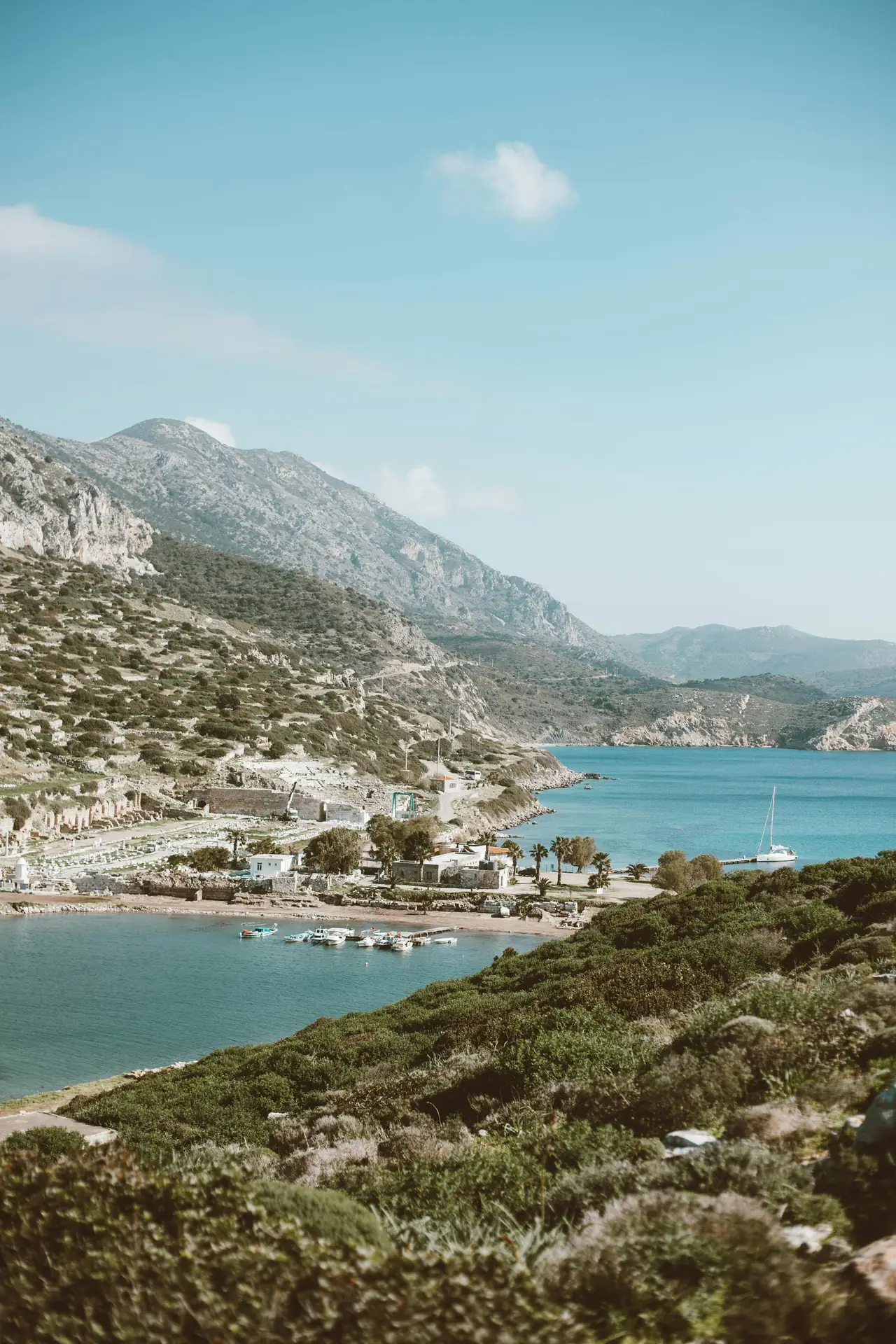
Travel photographers need gear that works and stays light. Compact cameras let you walk more and shoot more each day.
Translation missing: en.blog_cta.bundle_heading

- Regular price
-
€42 - Regular price
-
€44 - Sale price
-
€42
By choosing the Camstrap strap, you are opting for a high-quality product designed to meet the needs of the most demanding photographers.
- Developed by a physiotherapist to relieve neck and back pain.
- Fast delivery with tracking by the Post Office 🚚
- Can be used as a shoulder strap or hands-free harness

- Regular price
-
€36 - Regular price
-
€42 - Sale price
-
€36
Translation missing: en.blog_cta.free_shipping_included

The rise of compact cameras for travel and why they win
Camera makers put fast sensors and sharp lenses into small bodies. This made compact cameras match larger rigs for many shots.
People also want speed and ease when they travel. Compact gear helps you move fast, chase light, and grab moments.
Why size matters on the road
Smaller gear reduces weight and makes packing easier. You can bring a compact camera into cafes, markets, and hikes.
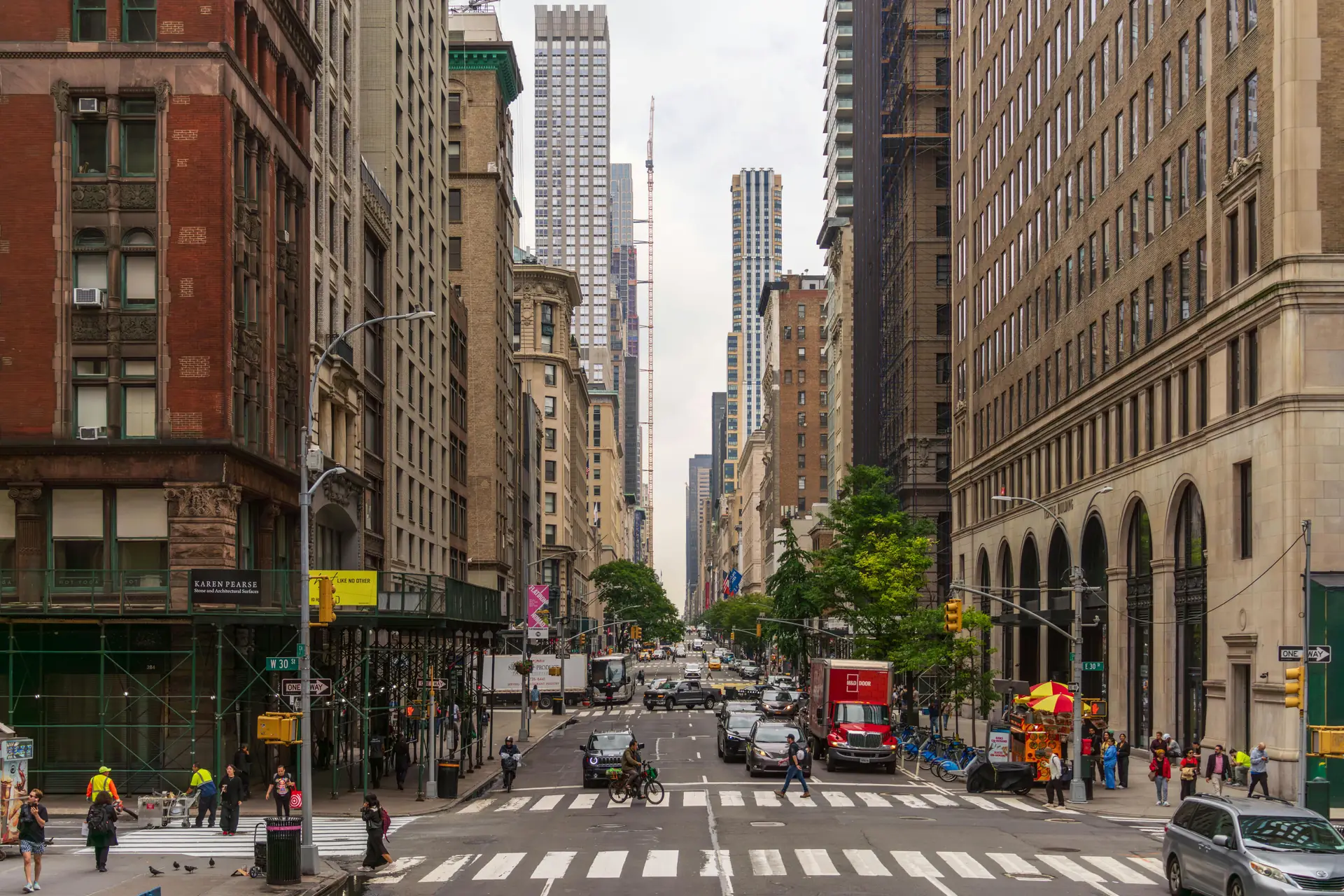
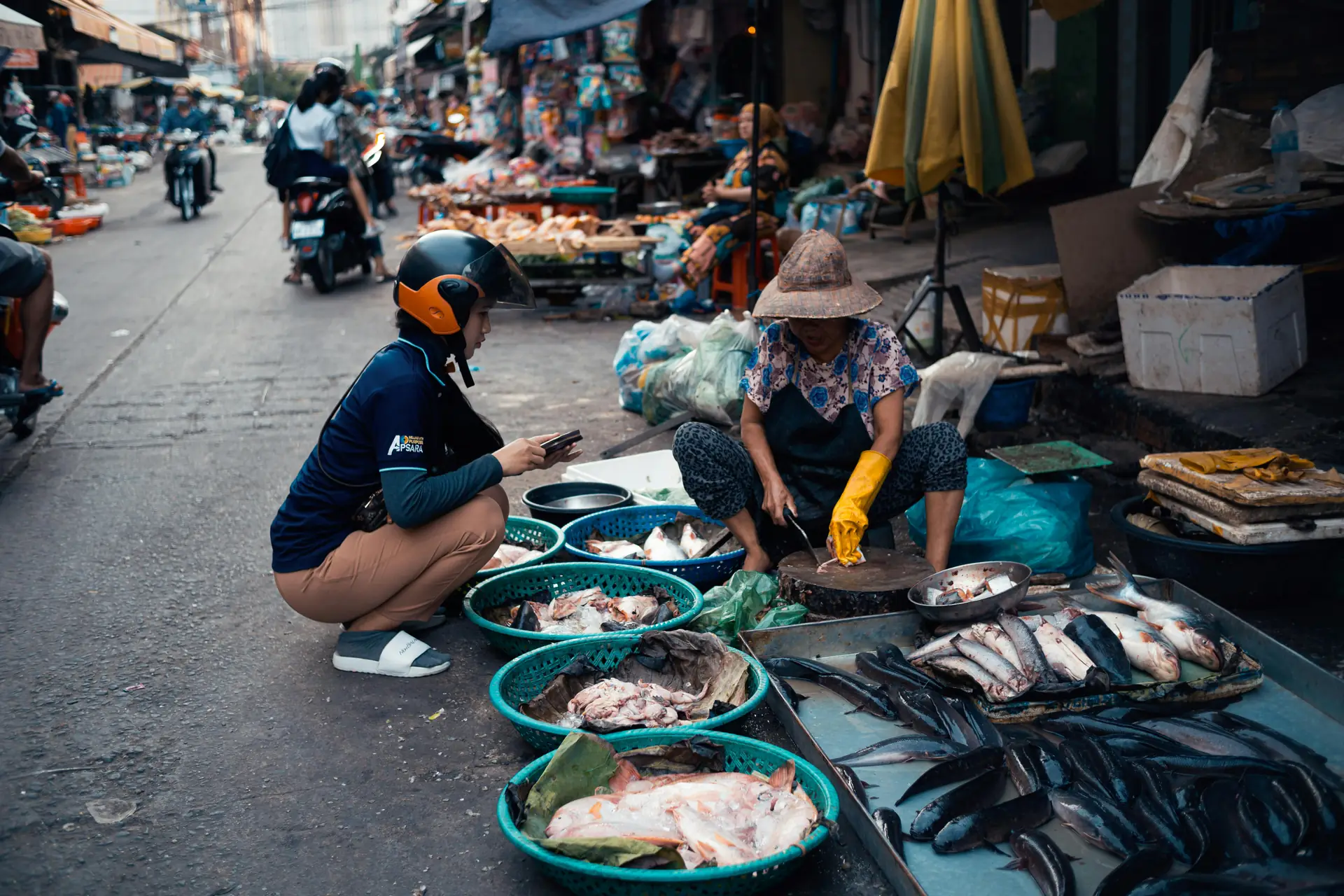
Small cameras also draw less attention in crowds. That helps street shooters in New York and Phnom Penh markets in Cambodia.
Gear that keeps compact shooters ready
Choose a fast lens and a reliable body to stay ready. Add smart accessories and you will shoot with less fuss.
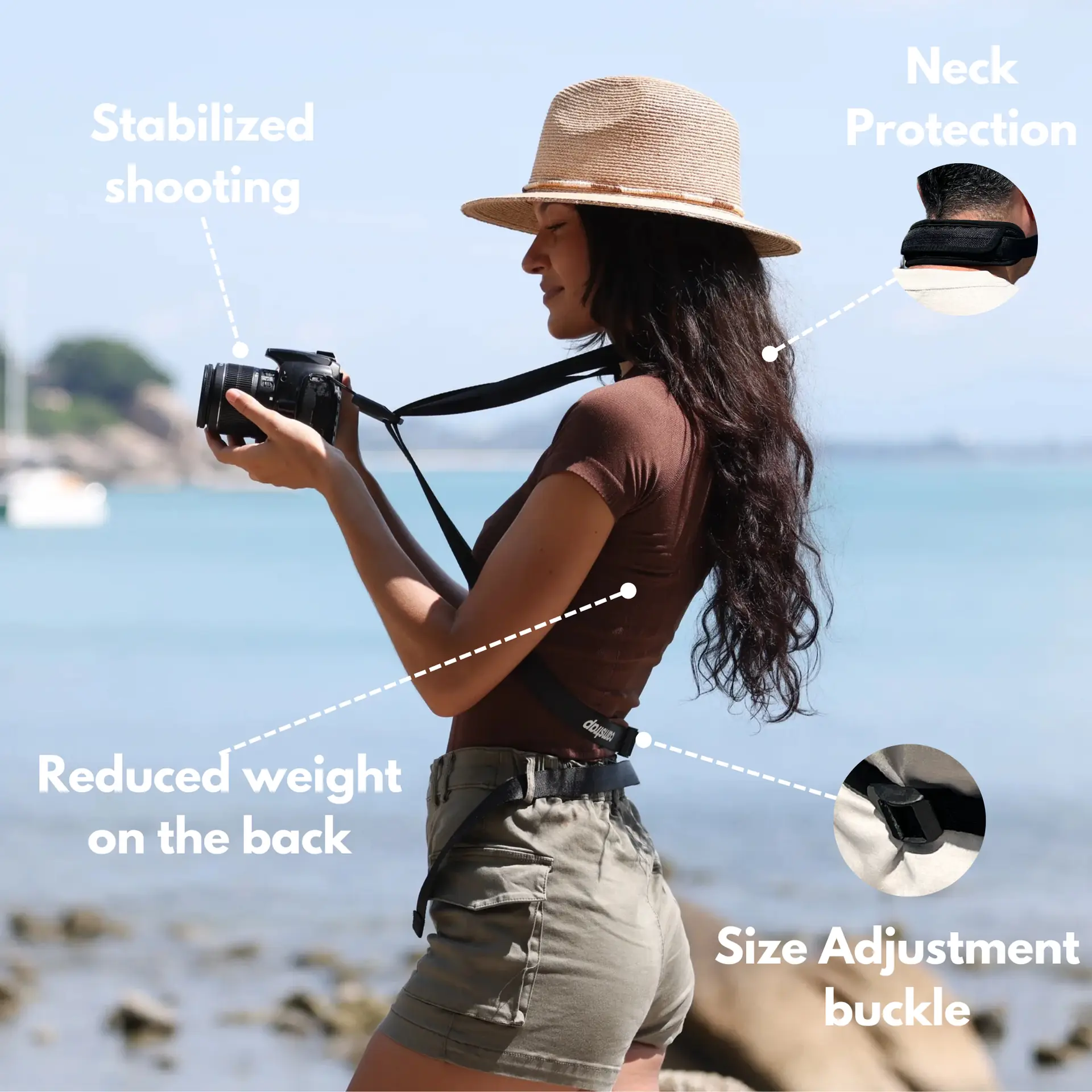
Many makers now build compact tools for travel. Models like the Canon EOS R6 and the Panasonic Lumix S5 II show hybrid power in small kits.
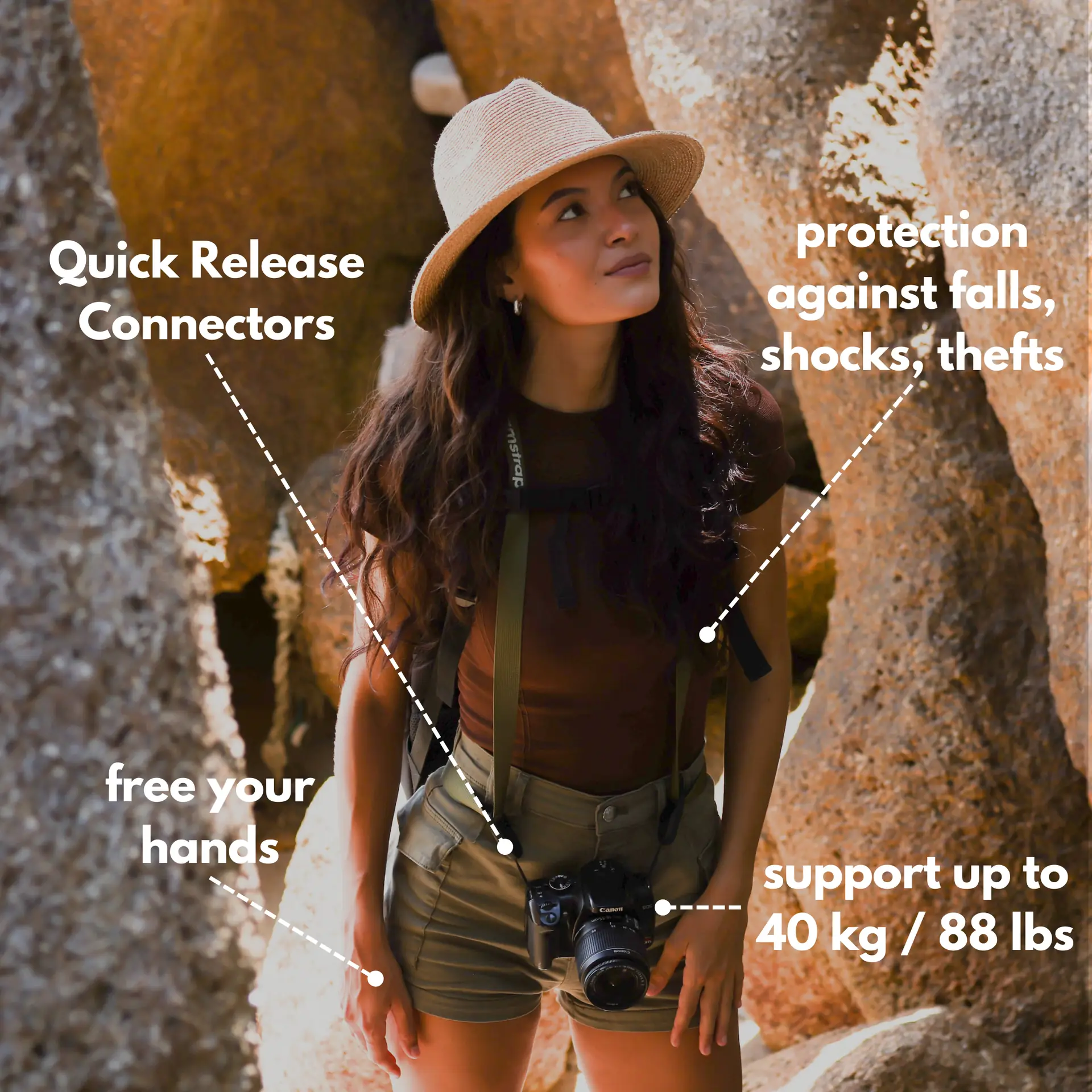
Core camera picks
- Canon EOS R6 — great autofocus and low-light control for travel.
- Panasonic Lumix S5 II — strong video and stills in a small body.
- Nikon Z9 — pro speed and quality when you need top performance.
- Nikon Zfc — a compact option with classic style for street shoots.
- DJI — use drones for aerial shots when your kit can include a small drone.
These picks show how brands push power into travel-friendly bodies. Pick a camera that fits your style and trip.
Lenses and add-ons
Bring one zoom and one fast prime to cover most scenes. A 24-70 or 24-105 zoom and a fast 35mm or 50mm work well.
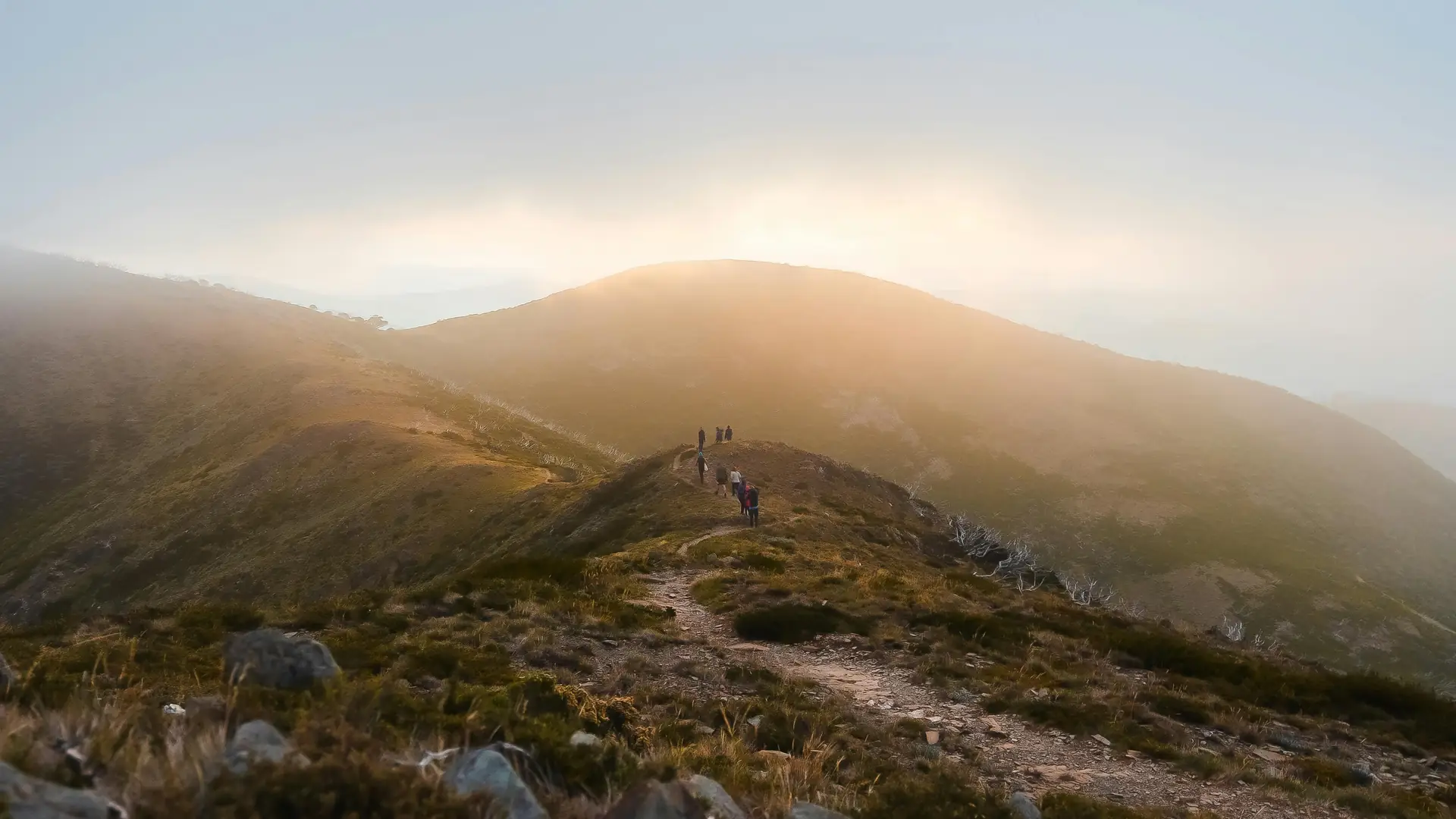
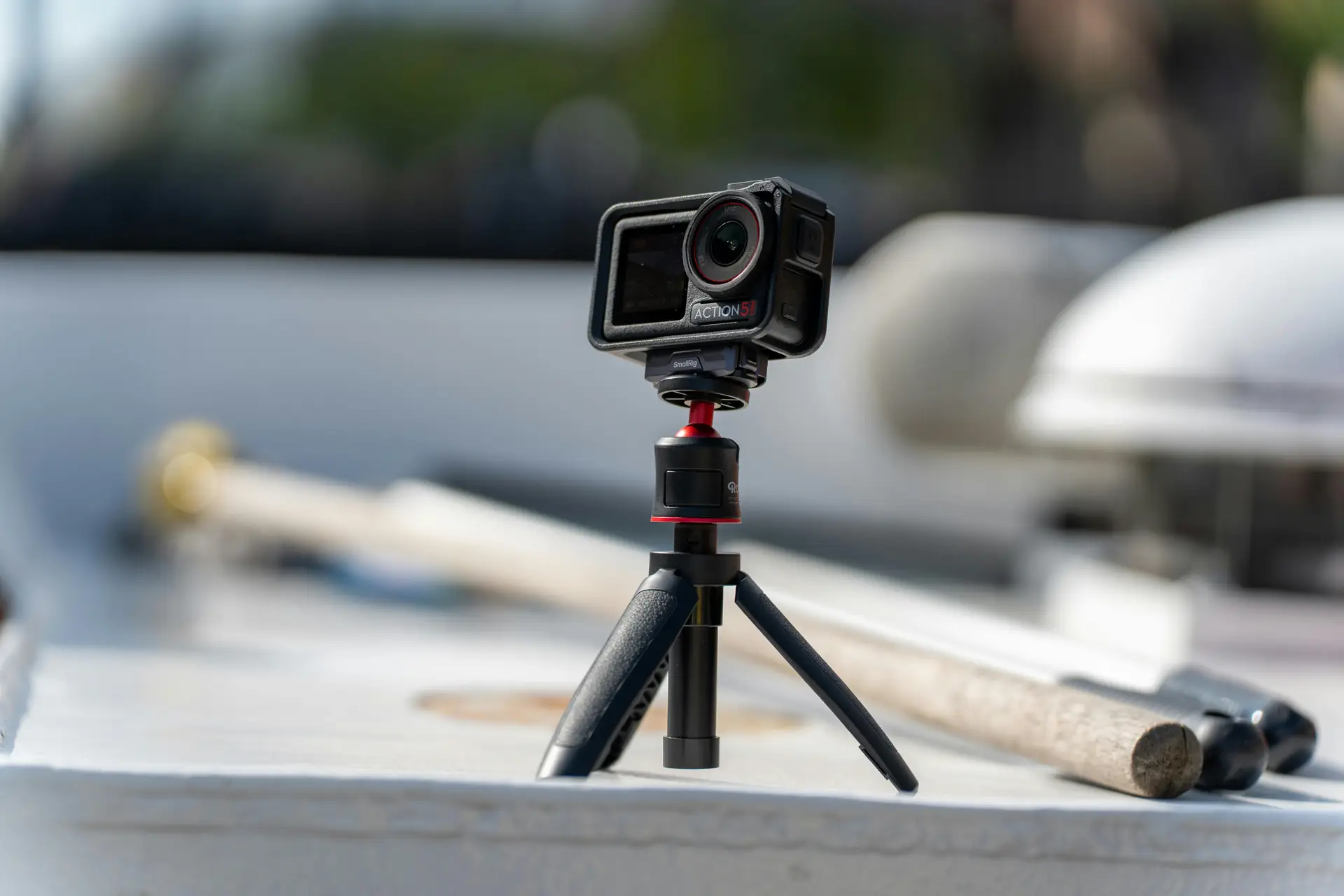
Also carry spare batteries, a fast card, and a small tripod. These items keep your shooting time high on long days in Queenstown or Namibia.
Best compact camera settings and workflow: why simple setups work
Use simple settings that match the scene. This speeds your work and helps you catch fleeting moments.
Shoot RAW for images you plan to edit. Set a sensible autofocus mode and a safe ISO limit for clean files.
Daytime travel settings
- Mode: Aperture priority for quick depth control.
- Aperture: f/5.6 to f/8 for groups and landscapes.
- ISO: Use auto ISO with a max near 3200.
- Shutter: Keep above 1/125s for steady hand-held shots.
These settings work well on city streets in New York. They also suit bright beach days and market scenes in Cambodia.
Low light and night tips
Open the aperture and raise ISO when light is low. Use a fast lens and a tripod for sharp night shots.
Shoot RAW and bracket exposures when the light varies. This helps save tricky scenes you find in Namibia or city nights.
Straps, carry, and security for compact kits: why they matter
Good straps keep your camera close and ready. They also cut neck strain and protect gear on long walks.
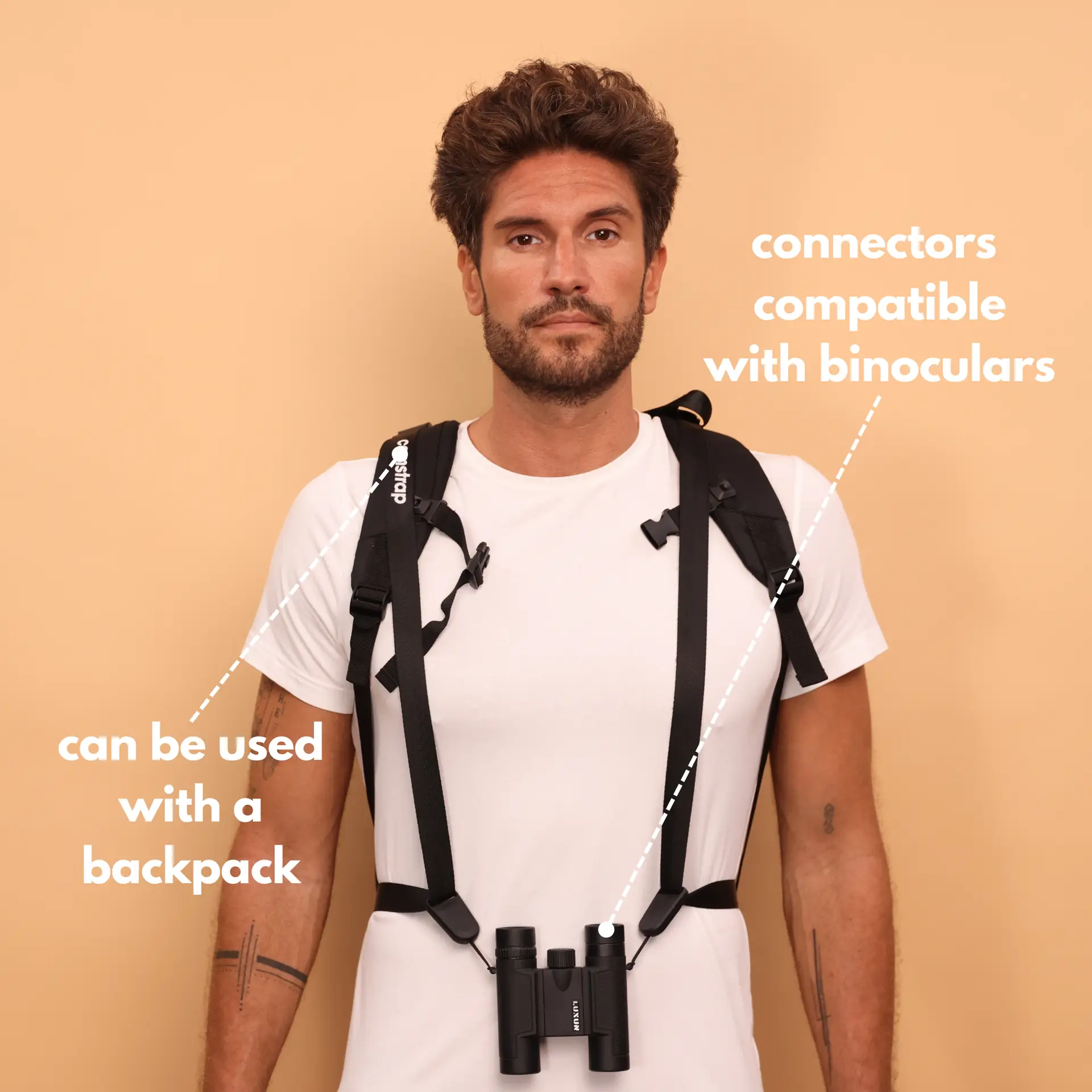
Camstrap blends function and style in its straps. Camstrap is a brand committed to changing how photographers and adventurers carry their cameras.
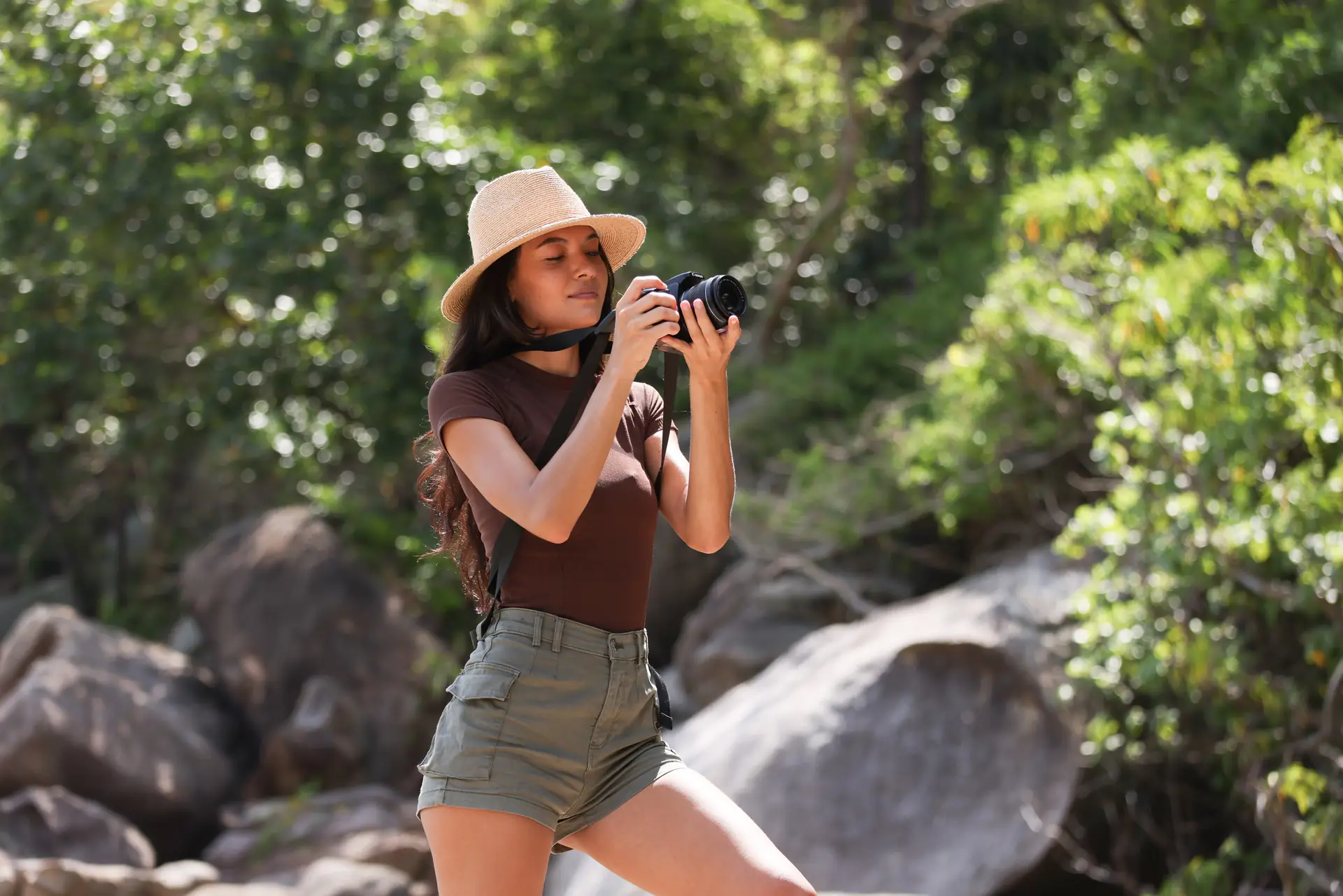
Which strap to choose
- Camstrap Voyager — light and tidy for city travel.
- Camstrap Explorer — built tough for long hikes and rough trails.
- Camstrap Nomad — slim and stylish for daily use.
- Camstrap MagClip — a magnetic quick-release for fast access and safe carry.
Each Camstrap strap fits a different travel need. The right strap makes your kit easier to use all day.
Carry tips for small kits
Use a small bag with a rain cover and soft dividers. Keep lenses and batteries in small pouches for quick reach.
Split your backup gear across two places. That way you do not lose everything if a bag gets lost or stolen.
Where compact cameras shine: real places and shoots
Compact cameras work well in many places and scenes. They suit street work, nature trips, and mountain hikes with light loads.
Shoot city light in New York with a compact mirrorless and a fast lens. Take a small kit to Namibia for wildlife and wide desert views.
Street and travel scenes
Street photography needs speed and a low profile. A compact camera helps you move through alleys and markets without fuss.
Compact gear also helps you blend in at cafes and plazas. This gets more natural shots while you travel.
Adventure and outdoor shoots
For outdoor work, pick a weather-sealed compact body and a tough strap. Pair it with the Camstrap Explorer for steady carry on hard trails.
Bring a fast lens and one spare battery for long days chasing light in Queenstown or remote parks.
How compact cameras fit different travel personas
Compact cameras match many travel types. They fit light travel, tough outdoor work, and learning photographers.
Travel Enthusiasts want easy gear that still makes great photos. Compact kits keep them moving and shooting through cities and hikes.
Outdoor Adventure Photographers need tough gear and quick access. Compact cameras with strong straps cut pack weight and speed up work.
Amateur Photographers want good results with simple tools. Compact cameras help hobbyists learn, try new things, and grow their skills.
Practical packing list when compact cameras dominate travel bags
Keep your kit small and spread weight smartly. A short list means less load and more time to shoot.
- Compact camera body with one fast zoom or prime.
- One extra lens such as a fast 35mm or 50mm.
- Two spare batteries and one charger.
- Small tripod or tabletop tripod.
- Memory cards and a small card wallet.
- Camstrap Voyager or Explorer plus a MagClip for fast access.
- Small cleaning kit and a multi-coated filter set.
- Compact bag with rain cover and soft dividers.
This list keeps weight low and your camera ready on any trip. It works for city trips and outdoor hikes.
Conclusion: why compact cameras still dominate travel in 2026
Compact cameras dominate travel bags because they mix power, size, and ease. They let you shoot more and carry less on long days.
Brands like Panasonic, Nikon Z9, Nikon Zfc, and Canon EOS R6 show strong options for travel shooters. Camstrap products, such as the Voyager and Explorer, help you carry gear with style and safety.
Choose a compact setup that fits your trip and skill level. Use simple settings, pick a good strap, and keep your kit light. That way, your camera stays close and your photos get better.


