


- Set continuous drive, track first, then fire short bursts at the peak moment.
- Burst mode shoots rapid frames in one press, improving your odds of a sharp keeper.
- Use burst mode to capture slight timing differences; one frame often lands cleaner than the rest.
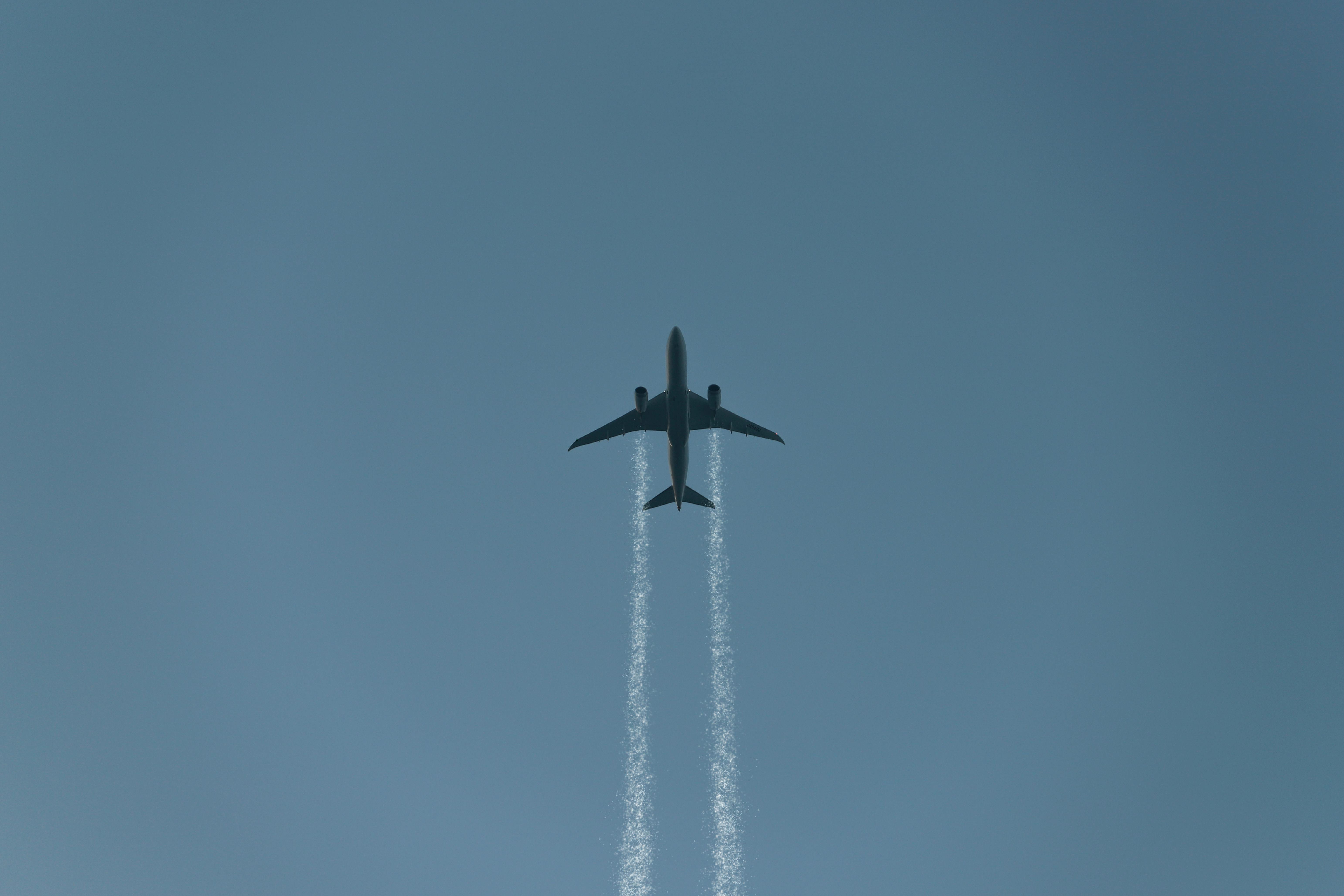
Burst mode lets you fire off a quick string of frames while a subject is still moving through the scene. From the fence line, it gives you a better shot at catching a jet at the cleanest point in its pass. I reach for it whenever the opening is tiny and the aircraft crosses the frame in a blink.
Shop the setup

- Regular price
-
€42 - Regular price
-
€44 - Sale price
-
€42
By choosing the Camstrap strap, you are opting for a high-quality product designed to meet the needs of the most demanding photographers.
- Developed by a physiotherapist to relieve neck and back pain.
- Fast delivery with tracking by the Post Office 🚚
- Can be used as a shoulder strap or hands-free harness

- Regular price
-
€36 - Regular price
-
€42 - Sale price
-
€36
Free shipping included
Air shows and runway edges offer close access, and they also compress the timing. A jet can climb, bank, or streak past before one frame feels fully right. With the setup sorted, you can keep the plane crisp and still react quickly.
Why fence-line jet shots are so hard
Jets move fast enough that even small mistakes show up immediately. A brief delay, loose focus, or uneven pan can turn a strong frame soft. The fence line adds another layer of difficulty because you may be shooting through gaps, over rails, or beside packed crowds.
Motion blur usually hits first. Focus slips next. Crooked body position follows, and it shows up more often than many people expect.
Choose the right shooting spot first
Pick a place with a clear view before the jet enters the frame. Room to swing the camera often matters more than a perfect background. If your feet can move, your track will be smoother.
Leave a little space between you and the fence if the rules allow it. That gap helps the lens clear the bars and gives you room to pan without knocking the rail. A hands-free strap, such as the Camstrap voyager, helps here because it keeps the camera close and ready between passes.
How do you use burst mode for photos?
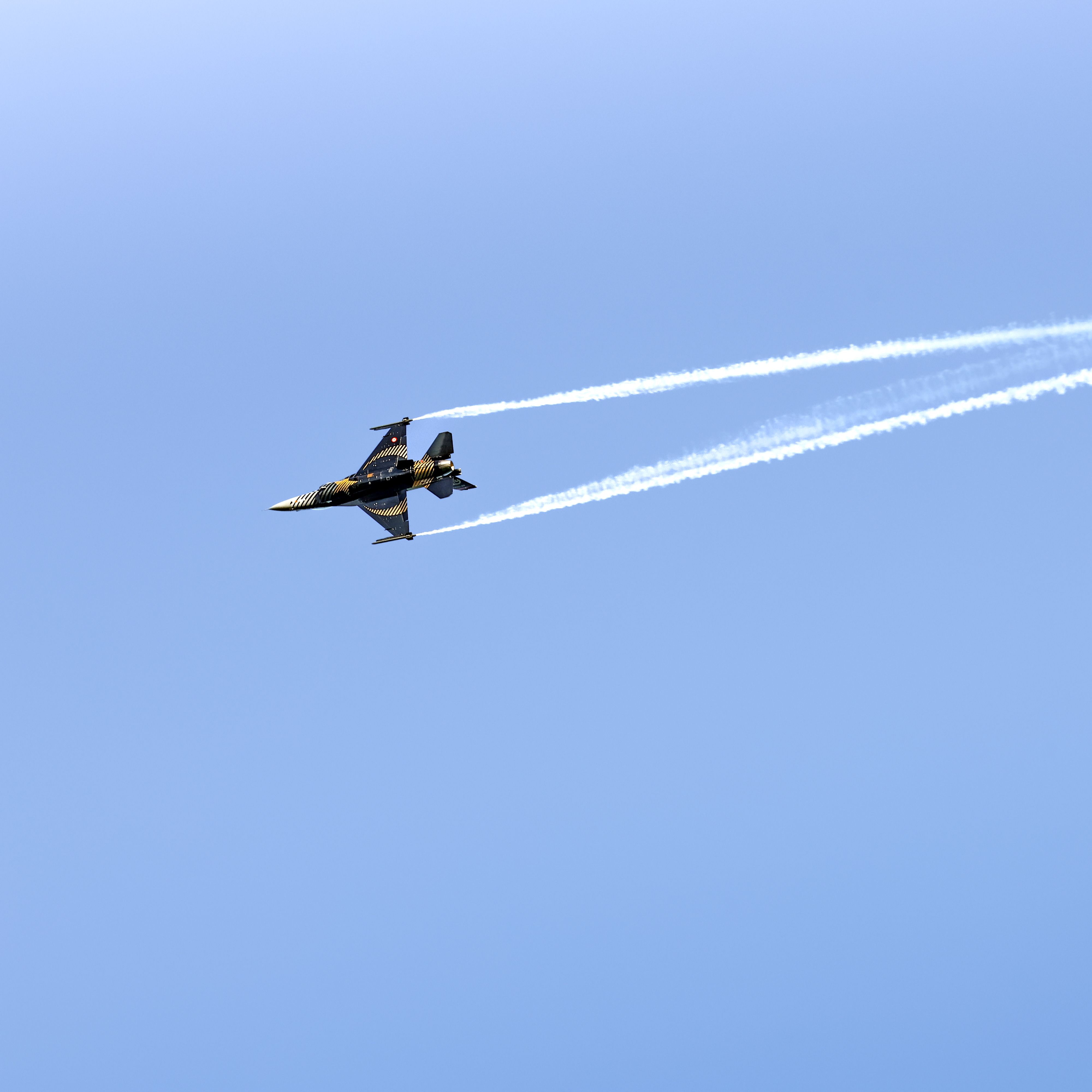
Set the camera to continuous drive, then hold the shutter in short runs as the jet reaches your target point. Continuous high suits most modern bodies, and many mirrorless cameras can shoot around 10 fps on the mechanical shutter or 20 fps and higher on the electronic shutter. Three to six frames is often enough for one pass, and a modern buffer will usually handle that without choking.
Use continuous AF and track the jet before you start the burst. On Sony, Canon, and Nikon bodies, that means AF-C or AI Servo with subject detection if the camera offers it. Back-button focus helps too, because it lets you keep focus set while your finger handles the burst.
A simple field setup
- Set the drive mode to continuous high.
- Choose AF-C or AI Servo.
- Pick a shutter speed of 1/1000s or faster for fast passes.
- Start tracking before the jet reaches your frame edge.
- Hold the shutter in short bursts at the key moment.
Newer bodies may offer pre-capture or pre-burst buffering. This tool saves frames from just before the full press, which is useful when the nose lines up for only a split second. A short delay often matters more than raw frame rate.
Sharpness depends on more than frame rate
Frame rate helps, but sharp jet photos still come down to shutter speed, focus, and your pan. A fast burst cannot rescue a slow lens or a late move. It only gives you more chances inside the same moment.
For head-on arrivals or clean side views, I usually start around f/2.8 to f/5.6, depending on the light. A 50mm to 85mm lens works well for close fence-line action, while longer glass helps when the runway edge sits farther out. If the light drops, ISO 800 to 3200 is often the smarter trade, since a slow shutter hurts more than a little grain.
Why some frames look better than others
The strongest frame in a burst is often the one where the nose, canopy, and landing gear line up cleanly. A slight wing tilt can make the jet feel more alive, but too much tilt hides detail. The best shot usually sits in the middle of the action, not at the start or the end.
Focus point choice matters too. A small cluster can work, but subject tracking with eye or subject detect is more useful when the jet changes angle fast. Keep the point on the cockpit or nose area, since that gives the system a clear target.
Does burst mode take better photos?
Burst mode can produce better action photos because it gives you more frames during one pass. The extra choice helps you catch the best wing angle, wheel position, or smoke trail, and it can save a shot when timing is tight. It does not make each frame better on its own.
The tradeoff is selection. A long run can leave you with more near-miss frames, and the real gain comes from faster culling afterward. I mark picks and rejects in Lightroom or Photo Mechanic, then keep the frames with the cleanest body line and sharpest canopy.
Where the technique wins and where it fails

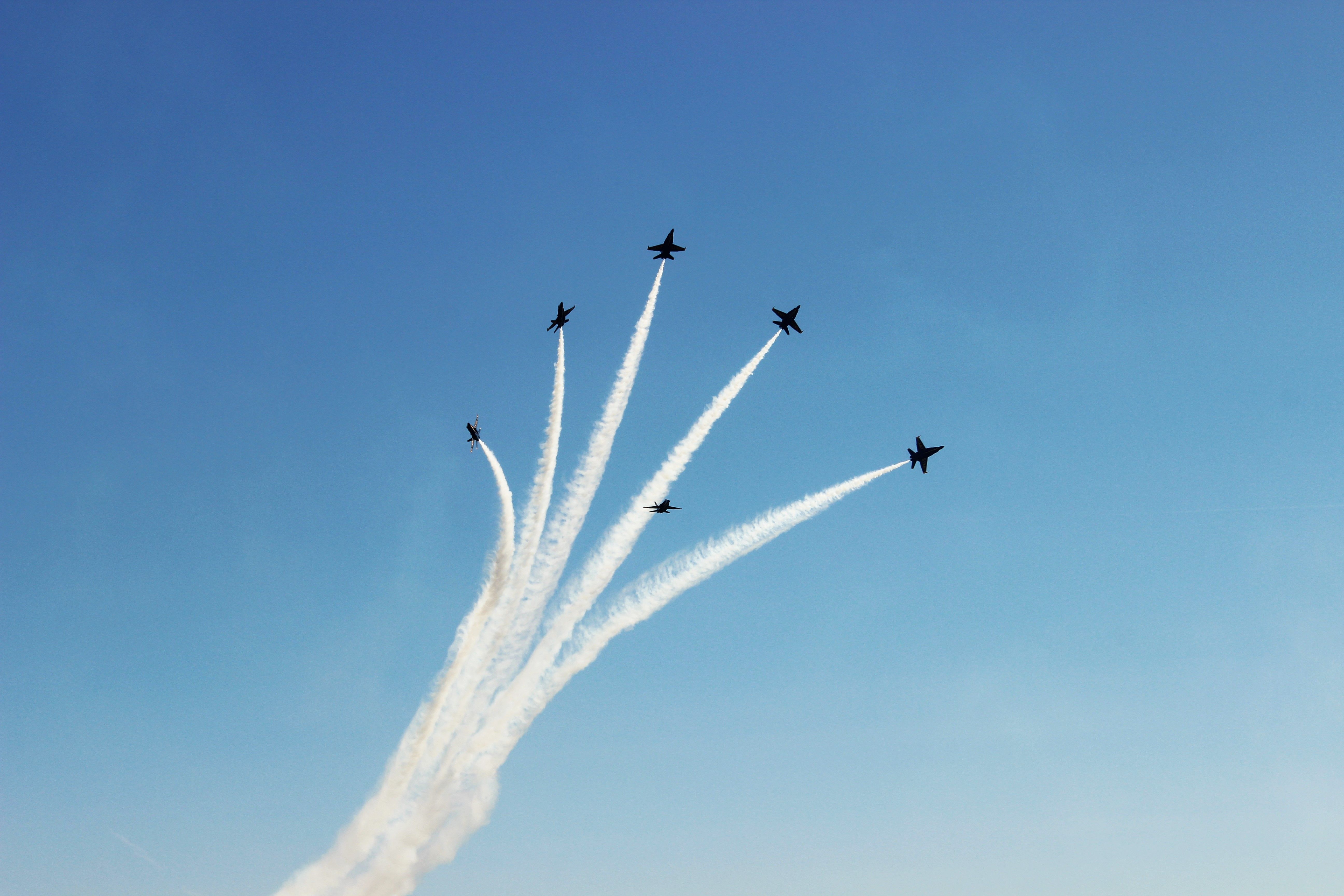
It works best when the jet moves across your frame in a clean path. Formation flybys, takeoffs, and turns near the runway benefit too. It loses usefulness when the light is weak and your shutter speed has to fall too far.
Rolling shutter can also matter on some mirrorless bodies. Very fast electronic bursts can bend props, skew wings, or twist lines under certain LED and fluorescent lights. In daylight, the issue is smaller, but it still matters if you shoot under shaded stands or mixed light.
What is a burst in photography?
A burst is a short series of photos taken one after another with one press of the shutter. It lets the camera record motion across a tiny time window, which is useful when the subject changes fast. For jets, that window may last only a few tenths of a second.
The value is straightforward. You get more chances to catch the clean pose, the best bank angle, or the exact wheel touch. One frame can still win, but the burst gives you options.

How this fits real shooting flow
Use the burst while you pan through the pass, not after the jet has already gone by. Keep your torso loose and turn from the waist, because stiff arms make the frame jump. If your camera slows after a longer run, the buffer has likely reached its limit, especially with RAW files.
Mid-tier bodies may hold roughly 20 to 40 RAW frames before slowing, while JPEG can stretch much longer. UHS-II V60 or V90 cards clear the buffer faster than UHS-I, and CFexpress is faster still. That speed matters most after repeated bursts, when the card has to keep pace with you.
Does burst mode drain the battery?
Burst shooting uses more battery because the camera works harder and wakes the sensor and processor often. On mirrorless bodies, the bigger drain usually comes from the always-on EVF or LCD and from image review, not from the shutter itself. High frame rates and pre-capture add some load too.
You can control that drain with a few simple moves. Lower screen brightness, shorten review time, and use the rear screen less when the light allows it. If your camera has a power-save mode, turn it on before the show starts.
Practical battery habits for long events
- Carry a spare battery in a pocket, not in the bag.
- Turn off image review after each frame.
- Use the EVF only when you need precise framing.
- Check battery level before the main flight slot begins.
A warm battery usually performs better than a cold one. In cool weather, keep the spare close to your body. That small habit can save a pass when the main battery gives out sooner than expected.
Gear choices that help you stay ready

The best gear for fence-line jet work is the gear that stays out of the way. A zoom in the 70mm to 200mm range covers many air show distances, while a strap that holds the camera close keeps your hands free. You want quick access, a fast lift, and less strain on your neck and arms.
Light support gear also improves your pan. A strap that spreads weight across the body makes it easier to keep the camera in place while you watch the sky. That matters during long waits between flybys, when the jet may appear with almost no warning.
One kit that makes sense
Here is the basic setup I would trust at the fence line:
- Camera with AF-C or AI Servo
- Lens in the 70mm–200mm range, or a similar zoom
- Drive mode set to continuous high
- Shutter speed around 1/1000s to 1/2000s
- Fast card, ideally UHS-II V60, V90, or CFexpress
- Spare battery

Keep the kit simple enough to move fast. The less you fumble, the easier it is to stay on the jet and keep the frame sharp. A clean setup also makes it easier to watch for the next pass.
A cleaner workflow after the show
Once the flight ends, cull with purpose. Start with the frames that show sharp cockpit lines, clear landing gear, and the best wing shape. Then mark the near misses and move them out fast.
Photo Mechanic and Lightroom both handle this step well. I use pick and reject flags, then narrow the set before any fine edits. That keeps the best image from getting buried in a huge burst folder.
Sharp fence-line jet work comes from good timing, steady hands, and the right camera settings. Burst shooting gives you more chances, but focus and pan still do the real work. Keep the camera ready, watch the pass early, and press in short runs when the jet reaches the best point in the frame.

With a solid strap, a fast card, and AF-C locked in, you can stay ready for the next flyby. The goal is simple: catch the jet cleanly, then be ready again before the crowd has time to blink.
Frequently Asked Questions
How to do burst mode on photos?
To do burst mode on photos, set the camera to continuous drive and hold the shutter in short runs as the jet reaches the target point. Use continuous autofocus such as AF-C or AI Servo, and start tracking before the subject enters the frame.
Does burst mode take better photos?

Burst mode does not automatically take better photos, but it increases the chances of catching the sharpest instant in a fast pass. Sharpness still depends on shutter speed, focus, and how smoothly the camera is panned.
What is a burst in photography?
A burst in photography is a quick string of frames captured while the shutter button is held down. Burst mode is used to photograph fast-moving subjects by giving more chances to catch the best moment.
Does burst mode drain the battery?
Burst mode uses more battery than single-shot shooting because the camera fires many frames in rapid succession. It also fills the buffer faster, so longer bursts can put more demand on both power and storage.


