


- Is a compact mirrorless camera good for summer travel
- Which lenses should I keep when travelling light
- How do I keep a small camera safe while exploring
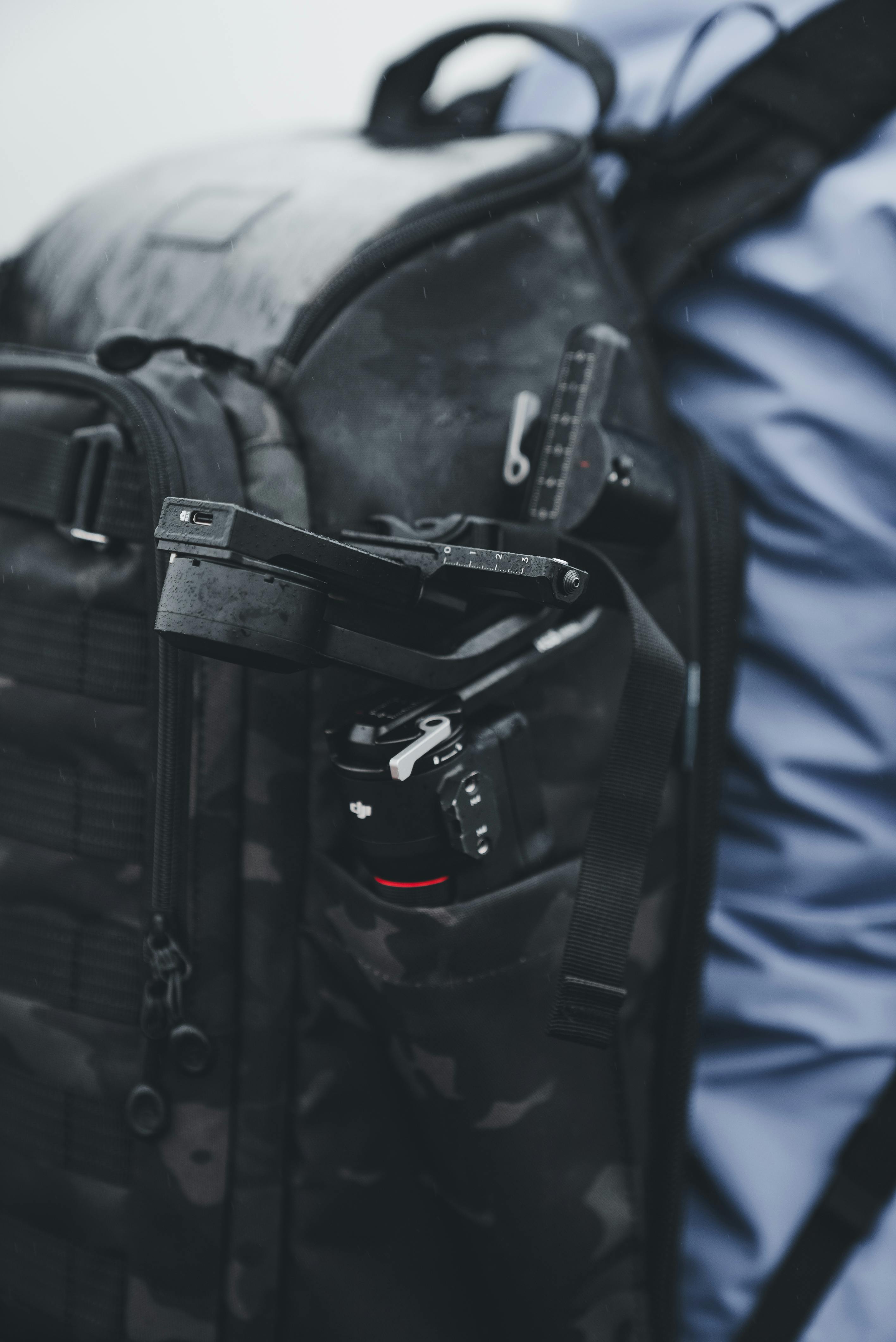
Summer trips feel better when your camera gear does not weigh you down. That is why so many travelers now rely on a compact mirrorless camera. It delivers excellent image quality while keeping your bag manageable.
Shop the setup

- Regular price
-
€42 - Regular price
-
€44 - Sale price
-
€42
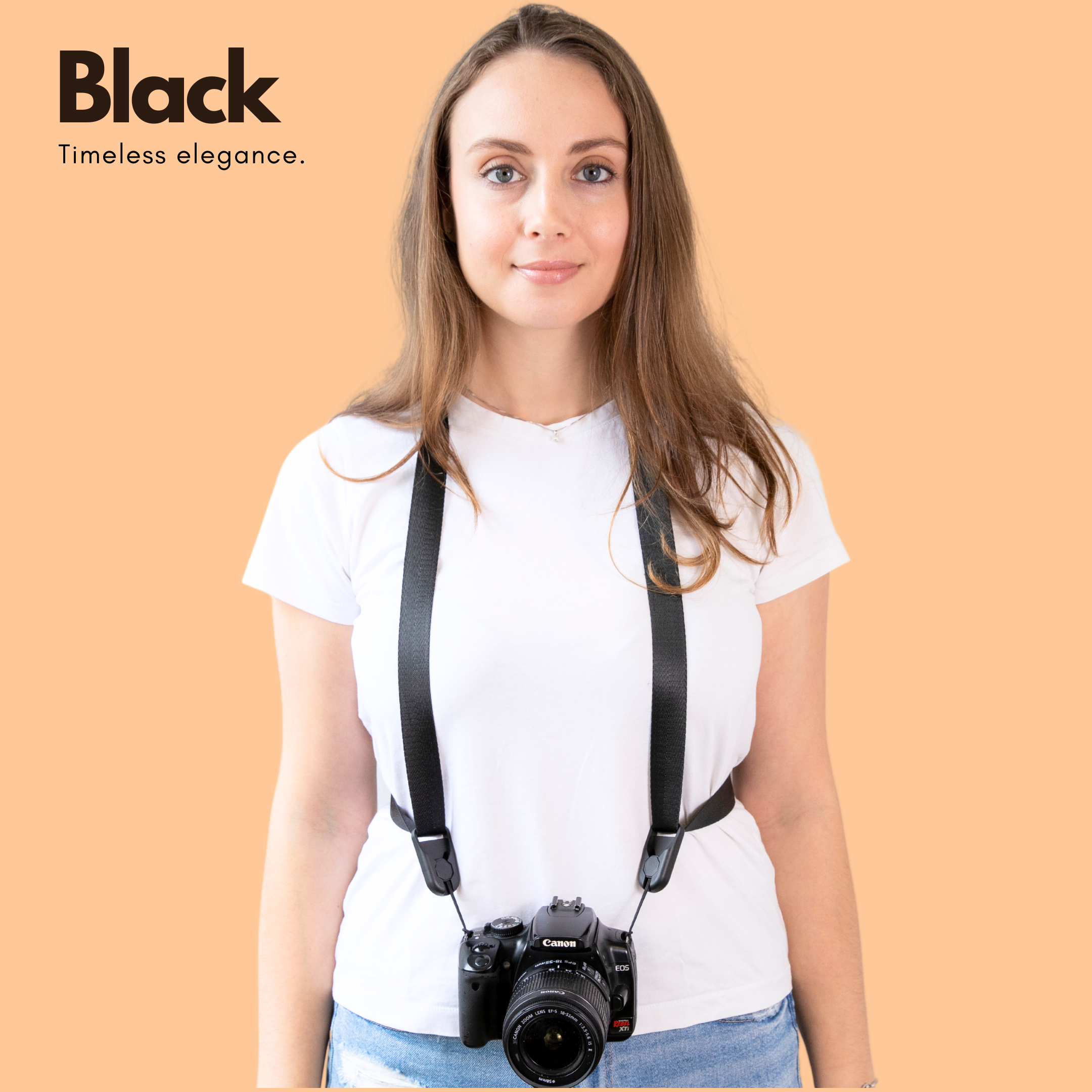
By choosing the Camstrap strap, you are opting for a high-quality product designed to meet the needs of the most demanding photographers.
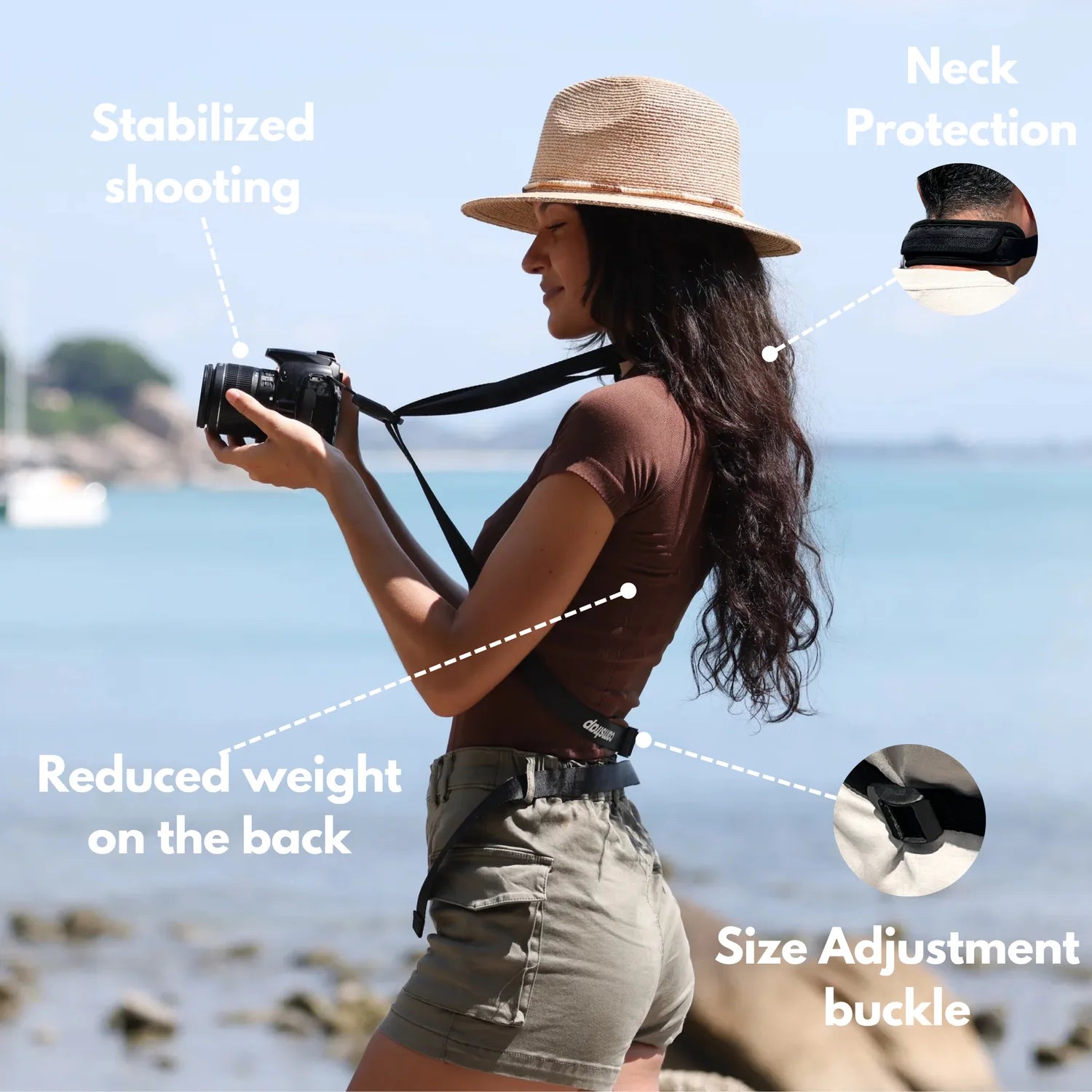
- Developed by a physiotherapist to relieve neck and back pain.
- Fast delivery with tracking by the Post Office 🚚
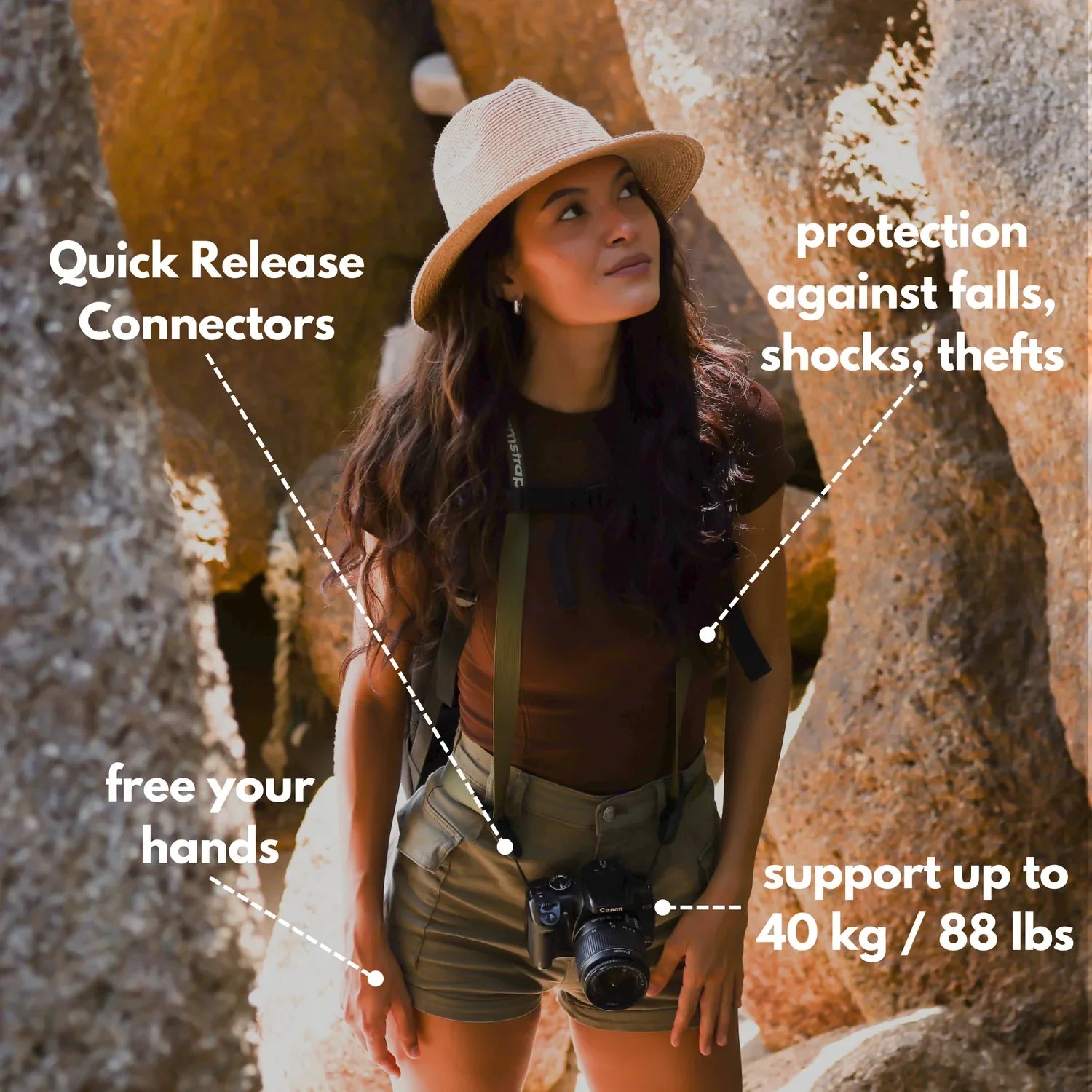
- Can be used as a shoulder strap or hands-free harness

- Regular price
-
€36 - Regular price
-
€42 - Sale price
-
€36
Free shipping included
By removing the mirror and optical viewfinder found in DSLRs, mirrorless cameras are usually smaller and lighter. Even so, they still work with a wide range of lenses. That combination makes them a practical fit for travel, city strolls, beach days, and long hikes.
In this guide, you will learn why a compact mirrorless camera suits summer travel so well. You will also find out which lenses are worth carrying, how to transport your gear, and how to protect it. As a result, you can pack less and still come home with great photos.
Why a compact mirrorless camera works so well for travel
A compact mirrorless camera is ideal for summer travel because it saves space. It is also easier to carry through long days on the move. When your gear feels light, you are far more likely to bring it along.

Most current mirrorless models also include helpful travel features. Many offer built-in Wi-Fi for quick sharing to a phone or tablet. Many also shoot 4K video, which is useful for trip clips, food shots, or family moments.
Small size, big payback
Mirrorless cameras still deliver the image quality people expect from a serious camera. At the same time, they shed a lot of bulk. That makes a real difference when you are moving through airports, train stations, or crowded streets.
They also let you capture both JPEG and RAW files. JPEG works well for fast sharing. RAW gives you more flexibility in editing later, which can be especially helpful under harsh summer light.
Good image quality without the heavy load
Many travelers want one camera that can handle just about anything. A mirrorless body gives you that versatility without the weight of a DSLR kit. Therefore, you can pay more attention to the trip and less to what is in your bag.

The Fujifilm X-T5 is often regarded as one of the best travel mirrorless cameras. It features a 40MP sensor, solid battery life, and a broad lens lineup. For many travelers, that balance is difficult to top.
Is a compact mirrorless camera good for summer travel?
Yes, a compact mirrorless camera is an excellent option for summer travel. It is light, flexible, and easy to pull out often. That matters when you want to shoot street scenes, food, sunsets, and family moments.
Summer also brings rapid shifts in light. You might go from bright sun to deep shade in just a few minutes. Mirrorless cameras handle those changes well, and many offer quick autofocus along with useful image tools.
Better for active days
Travel days often involve long walks and brief stops. In those moments, a lighter camera makes a big difference. You can keep it ready without feeling worn out.
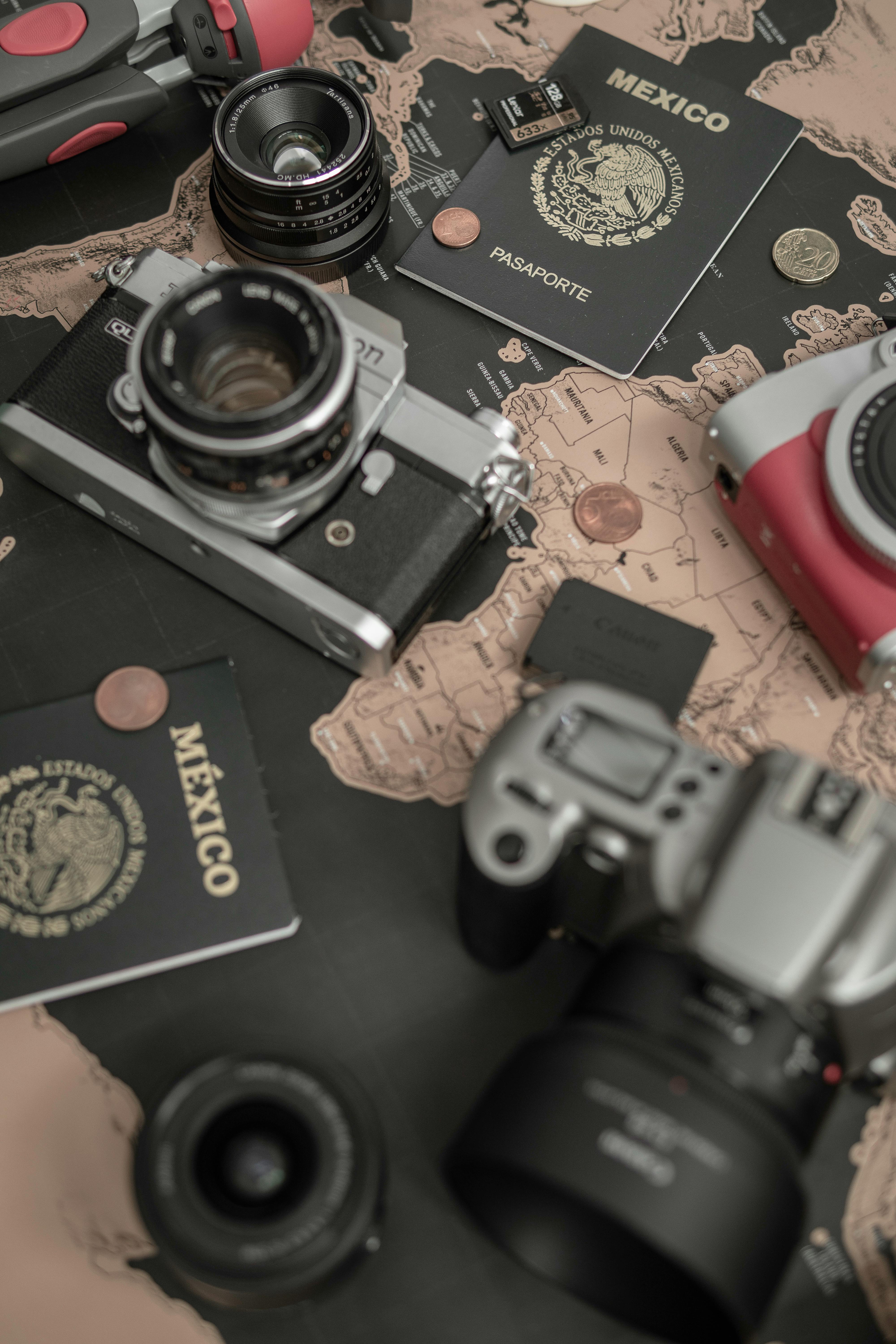
That is one reason many people gravitate toward the Sony a6700. It is a standout compact APS-C choice for all-around travel. It offers a strong blend of size, speed, and image quality.
Useful for photos and video
Many travelers want both still images and short video clips. Mirrorless cameras are built with that kind of use in mind. Panasonic Lumix models, for instance, are well known for excellent 4K video recording.
This makes them a smart fit for travel journals and social posts. You can photograph a sunset, then record a short clip of the same scene. So one small camera can handle both tasks.
Choosing the right mirrorless body for travel
The best camera depends on how you travel. Some people want the smallest body possible. Others care more about detail, low-light performance, or sensor size.
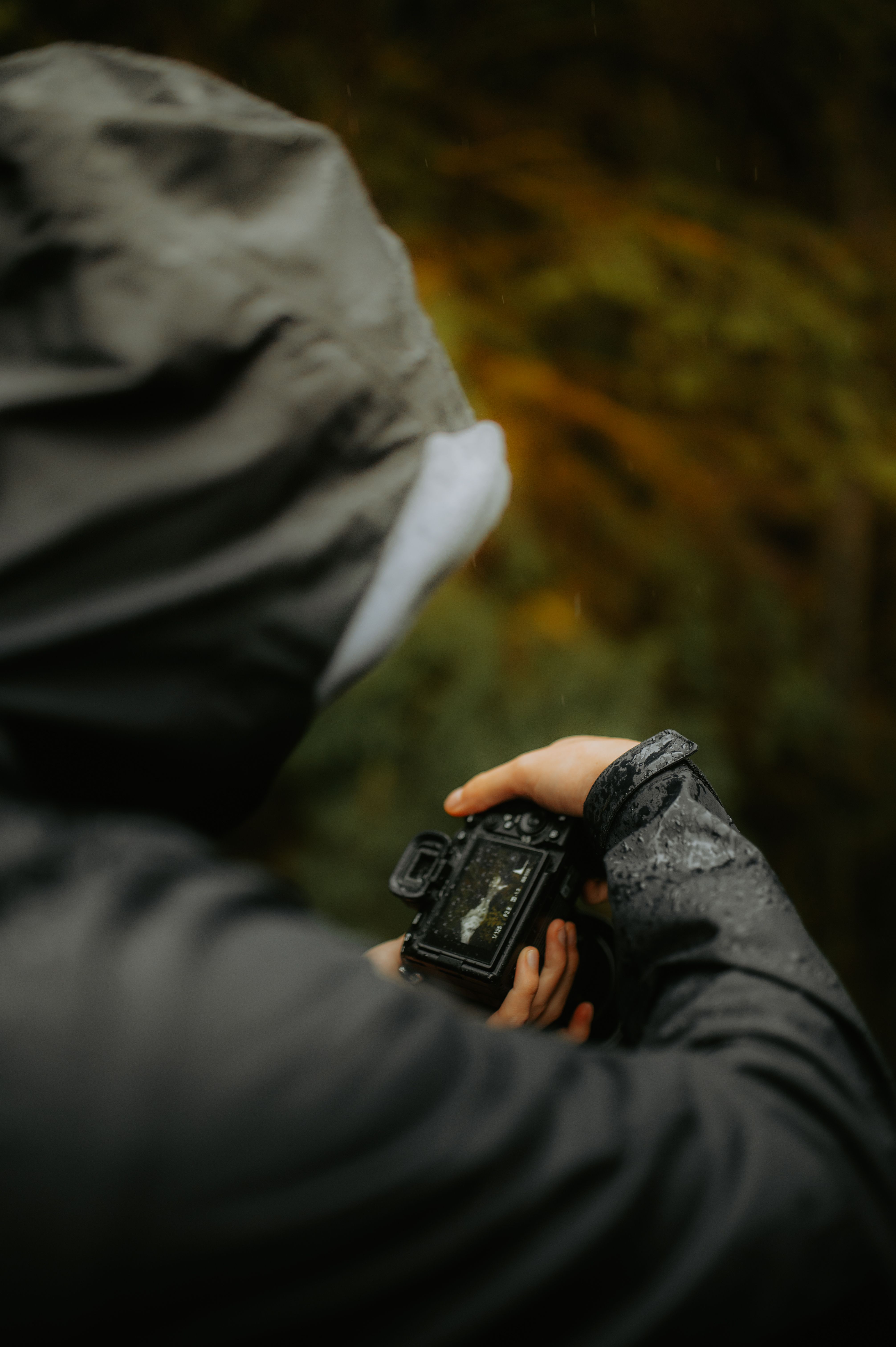
If you want a strong all-around option, the Fujifilm X-T5 stands out. It offers excellent image quality in a body that still feels travel friendly. Even so, there are other strong choices for different budgets and needs.
Strong options by budget and size
If you are looking for a beginner-friendly model, the Fujifilm X-T50 is worth considering. It uses a 40MP APS-C sensor and pairs nicely with the 16-50mm f/2.8-4.8 kit lens. That zoom range is very useful for travel.
For full-frame users who still want a compact body, the Sony a7CR is a smart pick. It includes a 61MP sensor and in-body image stabilization. That combination delivers excellent detail in a portable package.
If budget matters most, take a look at the OM E-M10 Mark IV, Sony a6400, or Fujifilm X-T30II. These models can often be found for under $1,000, not including lenses. So they are appealing for travelers who want good value.
What matters more than specs alone
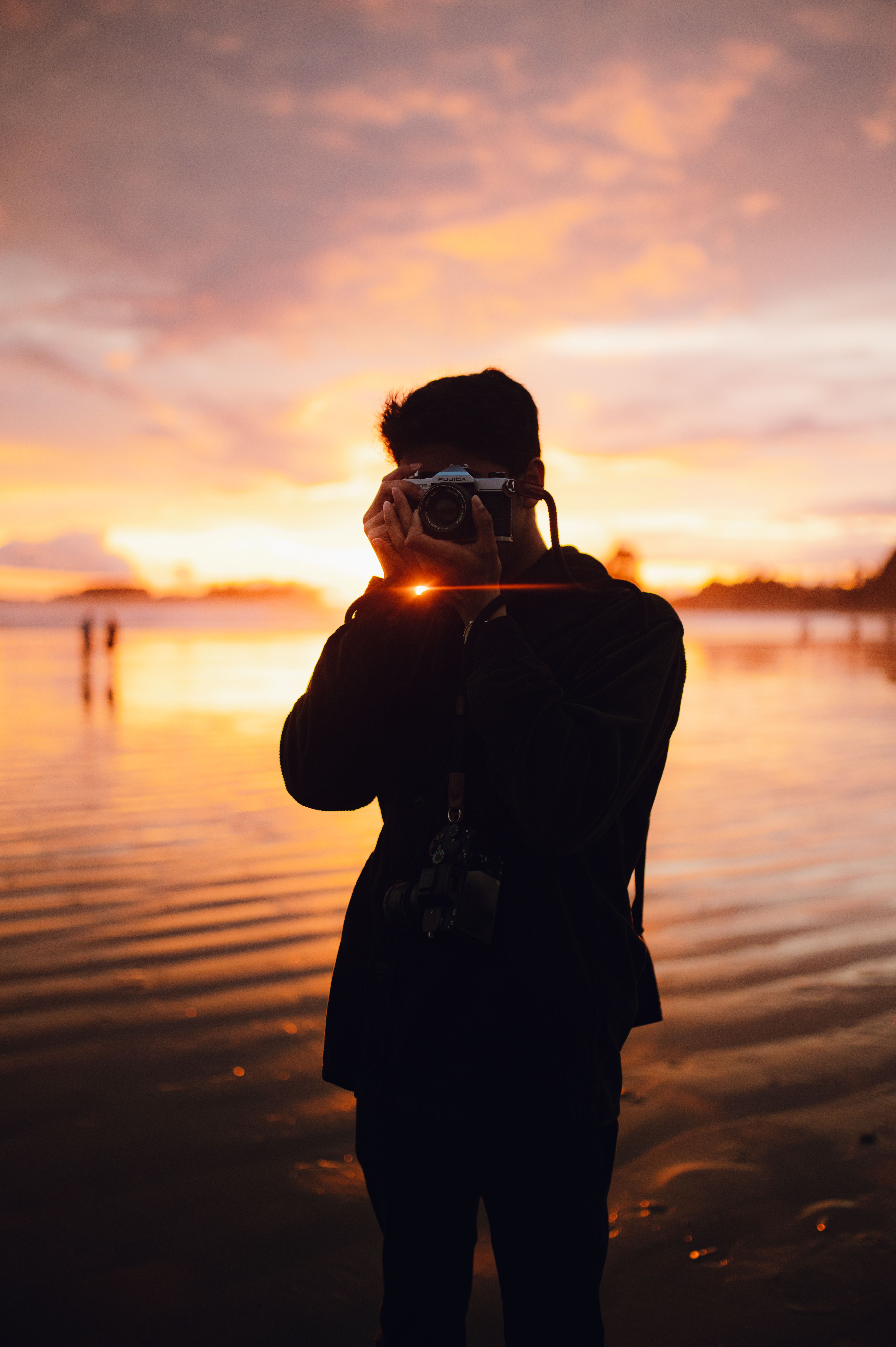
Specifications matter, but comfort does too. A camera that feels good in your hand tends to get used more. It also carries more comfortably when you wear it all day in hot weather.
Battery life, menu layout, and lens selection are also worth weighing. In addition, consider how you prefer to hold the camera. These small details can shape your entire travel experience.
Which lenses should I keep when travelling light?
When you travel light, fewer lenses usually work better. Most travelers do best with one zoom lens and one small prime lens. That keeps the kit straightforward and fast to use.
The aim is not to pack every lens you own. Instead, bring the ones that cover most travel situations. Therefore, look for lenses that handle your main needs without adding much weight.
A simple lens plan that works
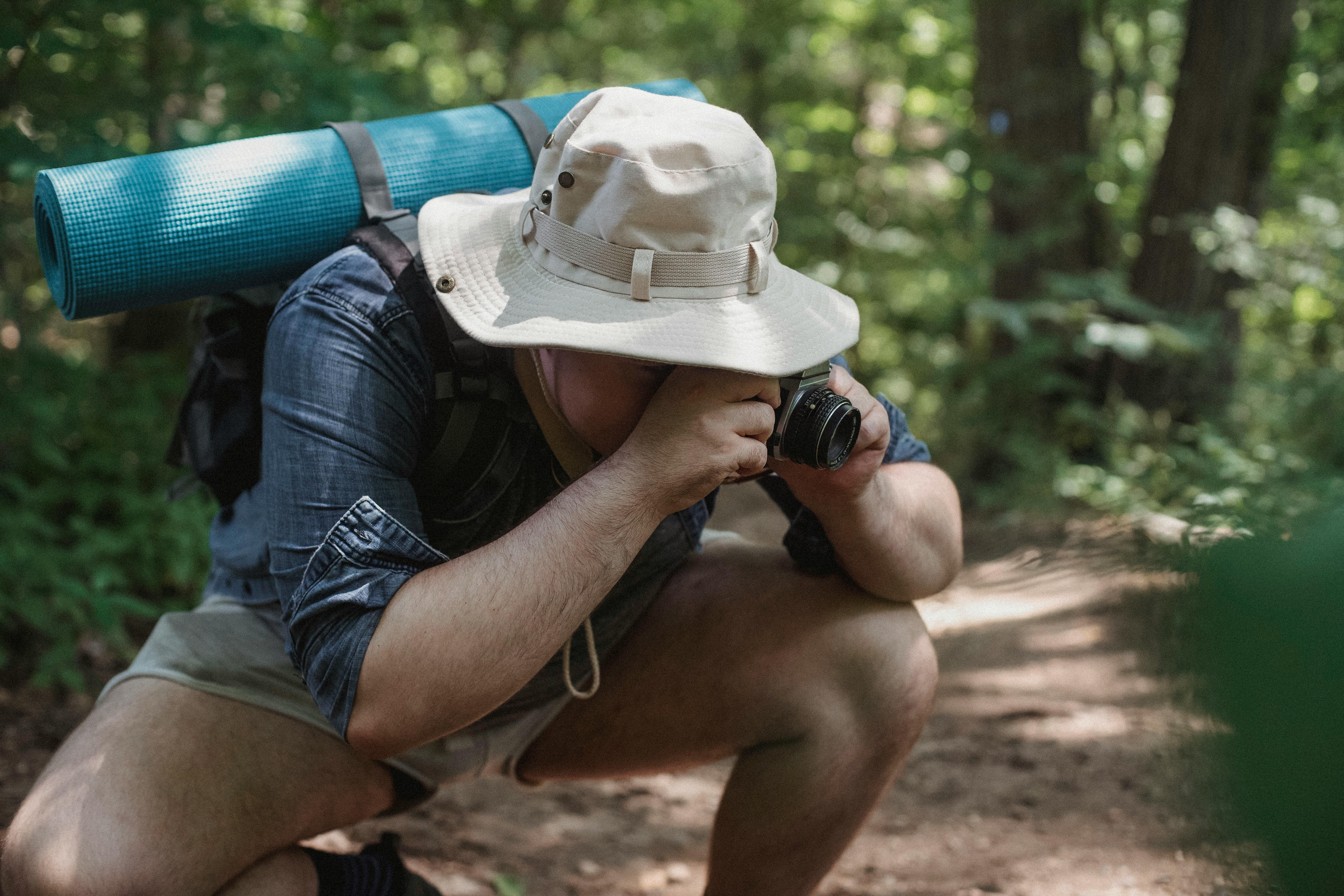
- One wide-to-normal zoom, such as 16-50mm or 24-70mm.
- One small prime lens, such as 23mm, 35mm, or 50mm.
- One telephoto only if you know you need it.
A zoom lens is ideal for most summer travel days. A 16-50mm lens handles food, streets, landscapes, and people with ease. If you shoot full-frame, a 24-70mm range is also extremely versatile.
A prime lens can be useful when the light gets low. A 35mm or 50mm lens is easy to carry and often produces a pleasing look. Many prime lenses also open up to f/1.8 or f/2, which helps in dim settings.
Best focal lengths for summer trips
For travel, 16mm to 24mm is helpful for wide views. That range works well for beaches, buildings, and sweeping landscapes. It also makes it easier to fit more into the frame.
For everyday scenes, 35mm or 50mm is often enough. These lenses feel natural for street photography and portraits. If you want extra reach, an 85mm lens is great for tighter portraits, but it is less essential for light travel.
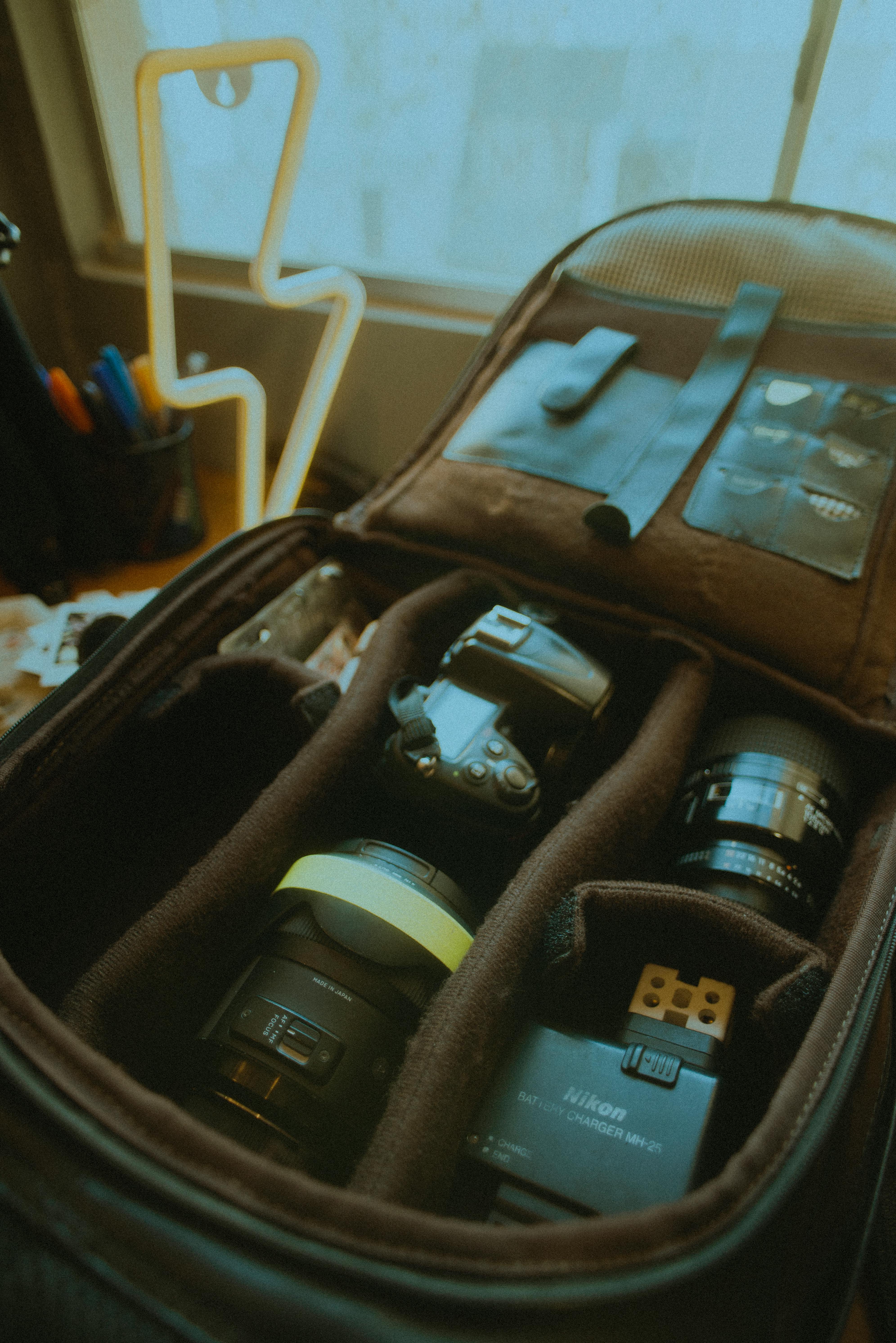
If you want to carry only one lens, a kit zoom can be enough. The Fujifilm X-T50 and its 16-50mm f/2.8-4.8 lens are a good example. It gives you a wide range without much bulk.
How to keep a small camera safe while exploring
A small camera is easier to carry, but it still needs protection. Summer travel can bring crowds, heat, dust, sand, and sudden rain. So smart carry habits matter.
Simple gear choices can make a big difference. A secure strap, a padded bag, and a small cloth can protect your camera while you move. Those steps are easy, yet they prevent problems later.
Use a strap that fits travel life
A lightweight camera works best with a lightweight strap. A bulky strap can add unnecessary weight and get in the way. That is why many travelers look for compact, comfortable carry solutions.
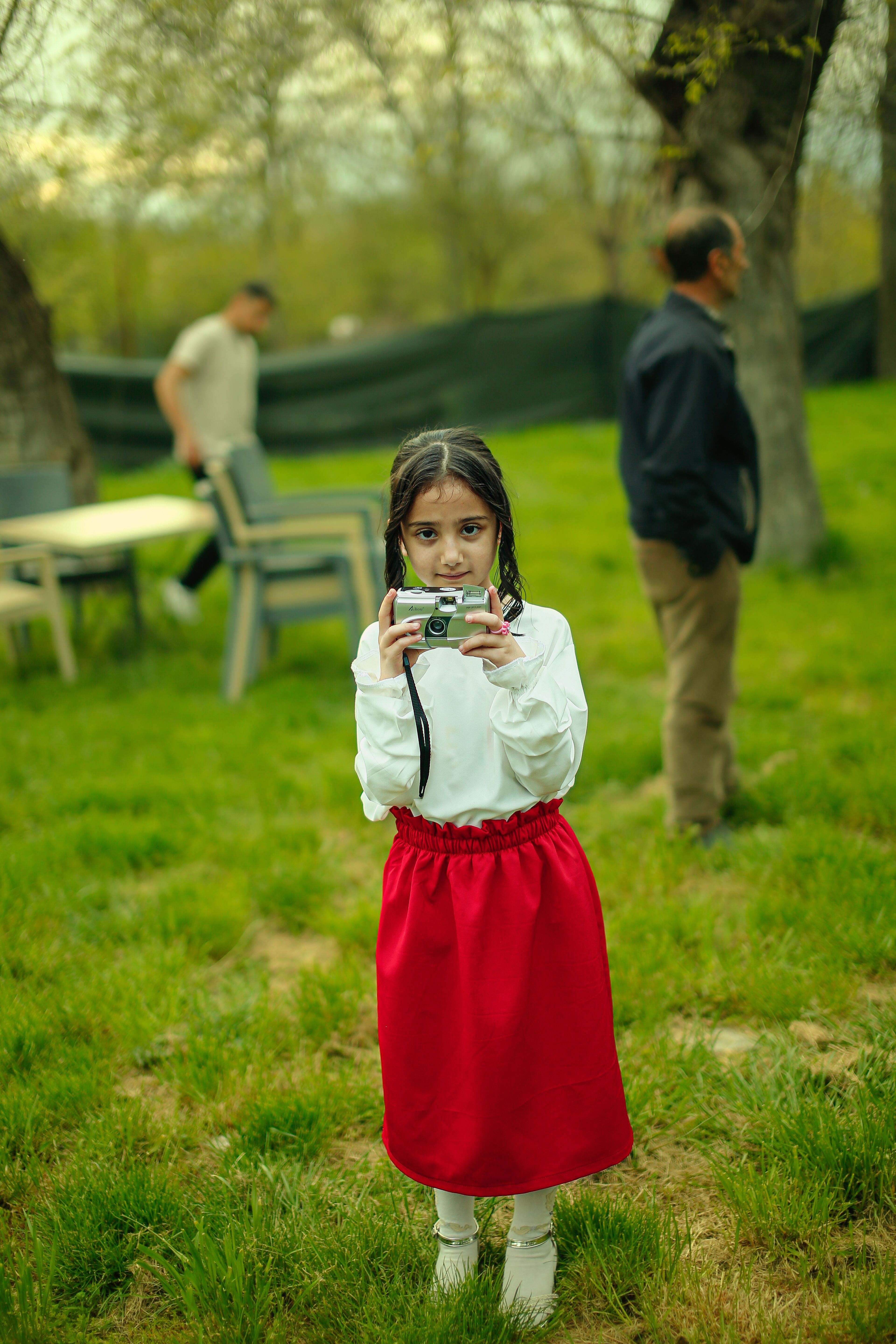
Camstrap offers compact-friendly designs intended to reduce bulk without sacrificing security. For example, the Camstrap Voyager, Camstrap Explorer, Camstrap Nomad, and Camstrap MagClip can suit different travel styles. They are one option for people who want a clean, low-profile setup.
Keep the camera close and ready
When you are moving through busy areas, keep the camera close to your body. This reduces the risk of bumps or snags. It also makes the camera easier to reach quickly.
Use a wrist strap or neck strap when it makes sense, and keep one hand near the camera in crowds. If you stop for a meal or a break, place the camera in a bag or at your feet. Small habits like these make a real difference.
Heat, sand, and water need extra care
Summer heat can drain batteries faster. It can also put stress on gear left in direct sunlight. So try to keep your camera out of hot cars and away from strong sun when possible.
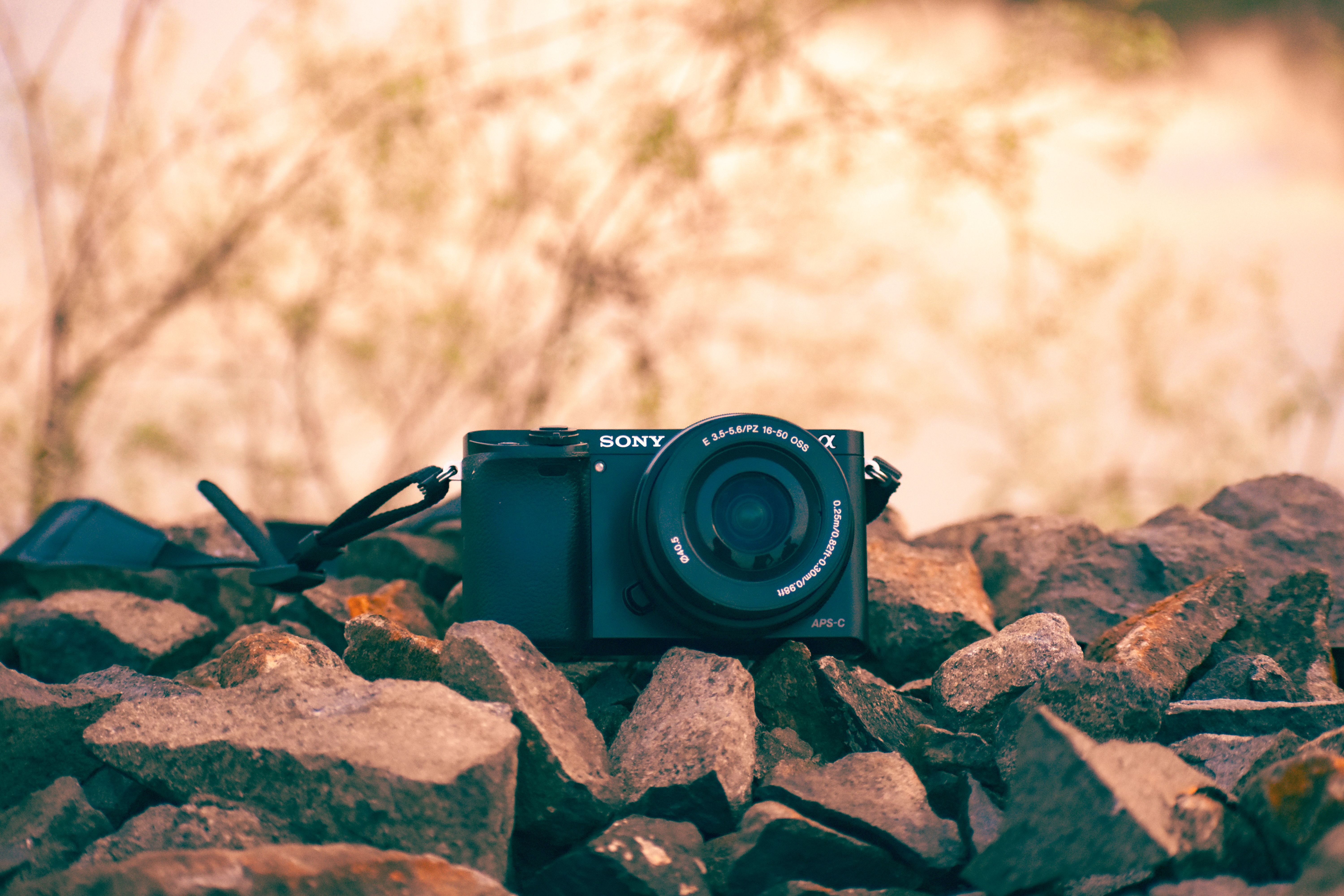
Sand and sea spray can create problems too. Change lenses in a clean area, and wipe the body with a dry cloth after use. If you are near water, a small rain cover or sealed bag is well worth carrying.
Simple travel photo habits that save space and time
Light gear works best when your photo habits stay simple too. You do not need a lot of tools to make strong travel images. You need a few good decisions and a steady routine.
Try to photograph in ways that suit your day. Keep your camera ready, review your settings often, and avoid packing more than you need. Therefore, your camera remains useful instead of becoming a burden.
Use a few settings that travel well
- Use Auto ISO when light changes fast.
- Set a shutter speed of at least 1/500s for walking shots.
- Use f/2 to f/2.8 when you want more background blur.
- Try RAW + JPEG if you plan to edit later.
These settings are simple, but they are effective. A fast shutter speed helps freeze motion during street scenes or beach play. A wider aperture helps in shade and during evening light.
Back up your files as you go
Many mirrorless cameras now connect to phones through Wi-Fi. That means you can transfer images during the day or share a few right away. It also gives you a backup option if you need one.
Summer travel often means a lot of moments packed into a short time. So do not wait until the end of the trip to organize your files. A quick daily backup can protect your best shots.
Travel light without missing the moments
Travel should feel free, not heavy. A compact mirrorless camera helps preserve that feeling. It gives you excellent image quality, strong video, and the ability to pack less.
If you want one camera for summer travel, a mirrorless body is a smart place to begin. The Fujifilm X-T5 offers an impressive balance. The Sony a7CR delivers full-frame detail in a small body. The Sony a6700 and Fujifilm X-T50 are also excellent travel choices.
Keep your lens kit simple, and carry your camera in a safe, comfortable way. A minimal strap setup, such as one of Camstrap’s compact-friendly options, can help cut down on bulk. Therefore, you can move more easily and shoot more often.
The best travel camera is the one you actually enjoy carrying. When your gear feels light, you take it everywhere. And when you take it everywhere, you capture more of the trip.
Frequently Asked Questions
Is a compact mirrorless camera good for summer travel?
Yes, a compact mirrorless camera is an excellent option for summer travel. It is light, flexible, and easy to carry on long days, while still delivering strong image quality and useful features like quick autofocus and 4K video.
Which lenses should I keep when travelling light?
Keep a small set of versatile lenses, especially a compact wide-angle or zoom for landscapes, streets, and group shots, plus a fast prime if you want better low-light performance and a lighter carry. The article emphasizes using a broad lens lineup but carrying only what you will actually use.
How do I keep a small camera safe while exploring?
Use a secure camera bag or strap, keep the camera ready but protected, and avoid exposing it to unnecessary bumps, sand, or moisture. The article also suggests transporting gear carefully so it stays safe during airports, train stations, crowded streets, and outdoor trips.


