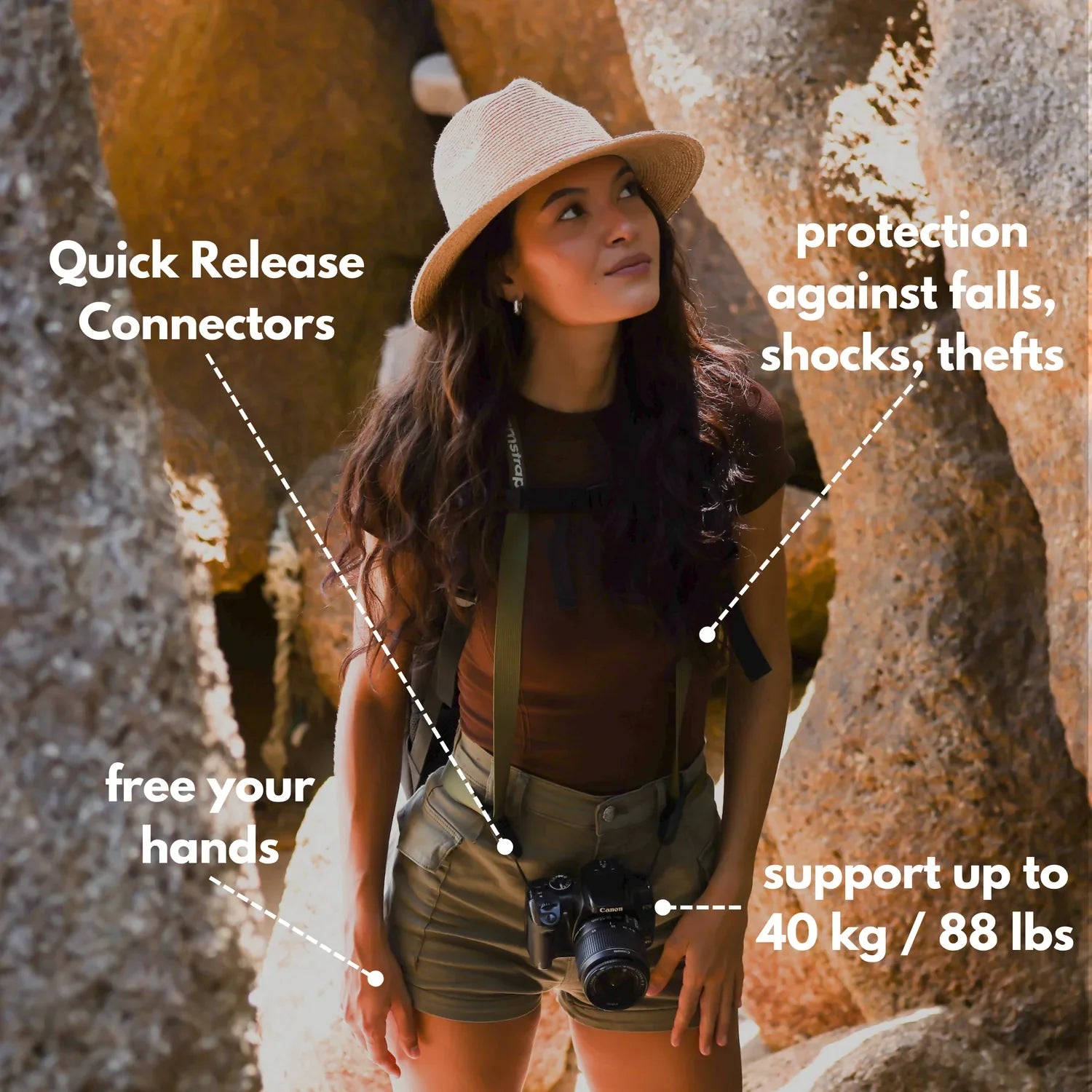
- Pack one compact body, one versatile lens, two batteries, and a fast card.
- Use a slim crossbody strap or sling to keep your camera ready and your shoulders relaxed.
- Trim the bag by carrying only gear that shoots most scenes and solves real problems.

Summer travel camera gear is the small set of tools that lets you make sharp, useful images without hauling a heavy bag. On most trips, that comes down to one body, one lens, a slim strap, and a few small extras. City walks, beach stops, and train transfers all reward a lighter kit. The real challenge is deciding what earns a place in the bag and what stays behind.
Translation missing: en.blog_cta.bundle_heading

- Regular price
-
€42 - Regular price
-
€44 - Sale price
-
€42
By choosing the Camstrap strap, you are opting for a high-quality product designed to meet the needs of the most demanding photographers.
- Developed by a physiotherapist to relieve neck and back pain.
- Fast delivery with tracking by the Post Office 🚚
- Can be used as a shoulder strap or hands-free harness

- Regular price
-
€36 - Regular price
-
€42 - Sale price
-
€36
Translation missing: en.blog_cta.free_shipping_included
What camera gear should I pack for a summer trip?
The best travel kit covers most scenes with the fewest pieces. For many photographers, that starts with a compact body, a versatile lens, two batteries, and a fast memory card.
Canon points to the RF-S 18-45mm F4-5.6.3 IS STM as a compact travel lens that weighs just 130g. In hot weather, that kind of size pays off because a light lens stays on the camera more often.
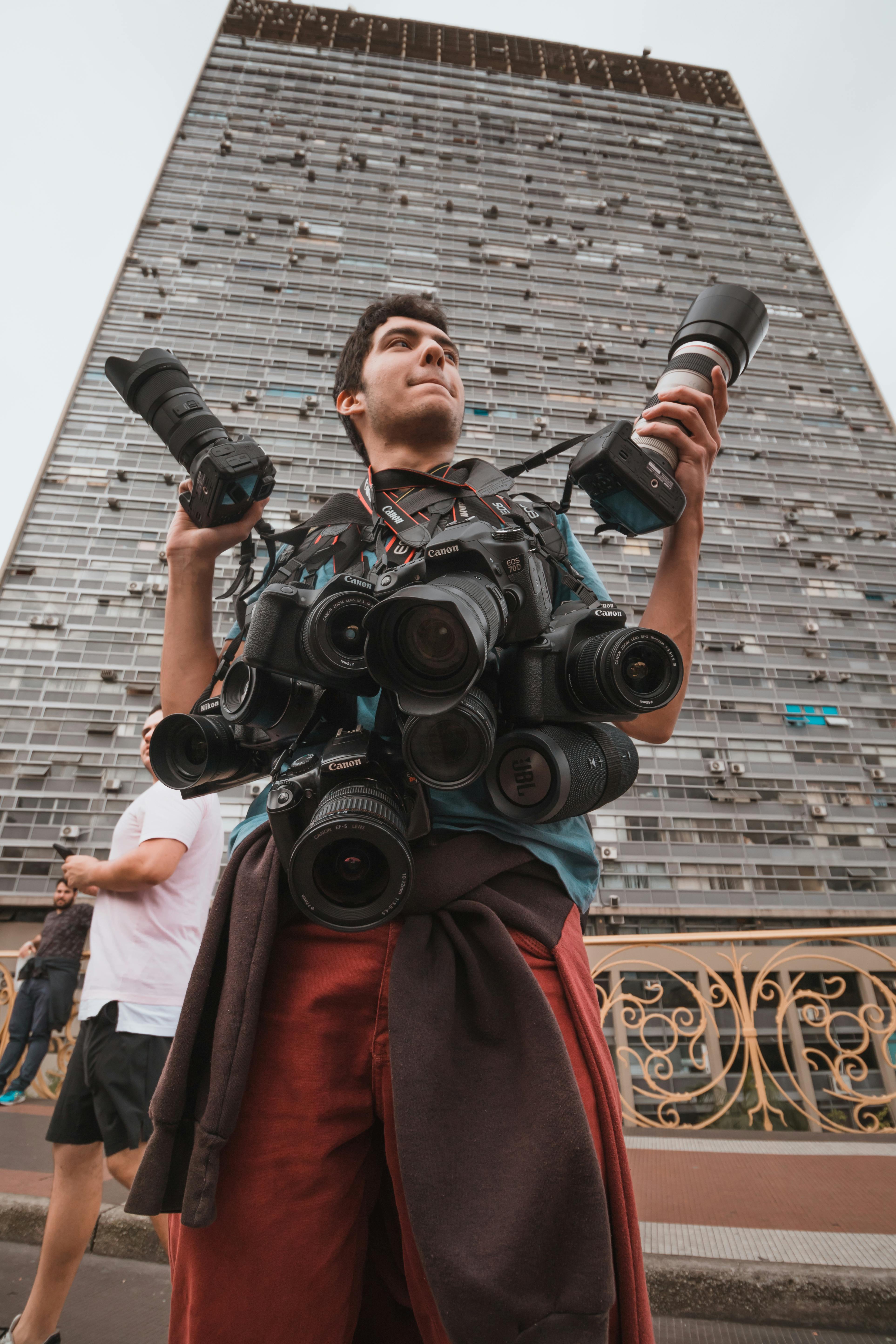
Start with one lens and build from there
A zoom in the 18-45mm range handles wide street views and tighter details. If you want a lens with more reach, Canon says the RF-S 18-150mm F3.5-6.3 IS STM can cover a wide range of travel scenes without a second lens. That longer reach helps with food stalls, signs across a square, and candid moments from farther back. It does add bulk, though, so it works best when you want one lens for the whole day.
Add only the support that saves a shot
- One spare battery for long walks and heat-heavy days
- One UHS-II card with a write speed that matches your burst rate
- A lens cloth for sea spray, sweat, and dusty streets
- A compact strap that keeps the camera ready without hand strain
Canon also notes that a 50mm lens gives a view close to human sight, which makes scenes feel natural. If your kit lets you swap lenses, that focal length is a strong pick for portraits and everyday travel frames.

Match settings to the day
For scenes where both the foreground and background should stay sharp, Canon recommends an aperture between f/8 and f/11. That range works well for landmarks, street scenes, and layered travel frames.
One Canon travel example used 105mm, 1/1,000s, f/7.1, and ISO 400. The pattern is simple: use a faster shutter for motion, then raise ISO only as much as needed.
How do I carry a camera comfortably while traveling?
Comfort comes from spreading the weight well and keeping the camera easy to reach. A good travel carry lets you walk for hours, then lift the camera quickly when a scene appears. On city days, airport-to-train transfers, and crowded streets, that setup makes a difference. If the strap digs in, the camera stays in the bag, and the best moments pass by.

Choose a strap that stays stable in motion
A wide strap spreads load better than a thin one, especially when the camera hangs for long stretches. A quick-adjust design also helps when you switch from walking to shooting.
Camstrap makes sense here because it keeps the camera close and steady during long travel days. That carry reduces bounce while you move through stations, sidewalks, and museum lines.
Keep the camera ready at chest or hip height
- Adjust the strap so the camera rests where your hand reaches it fast.
- Lock the lens hood in place before you leave the hotel.
- Set the camera to a mode you trust before the day starts.
- Use back-button focus if you want quicker recomposition.
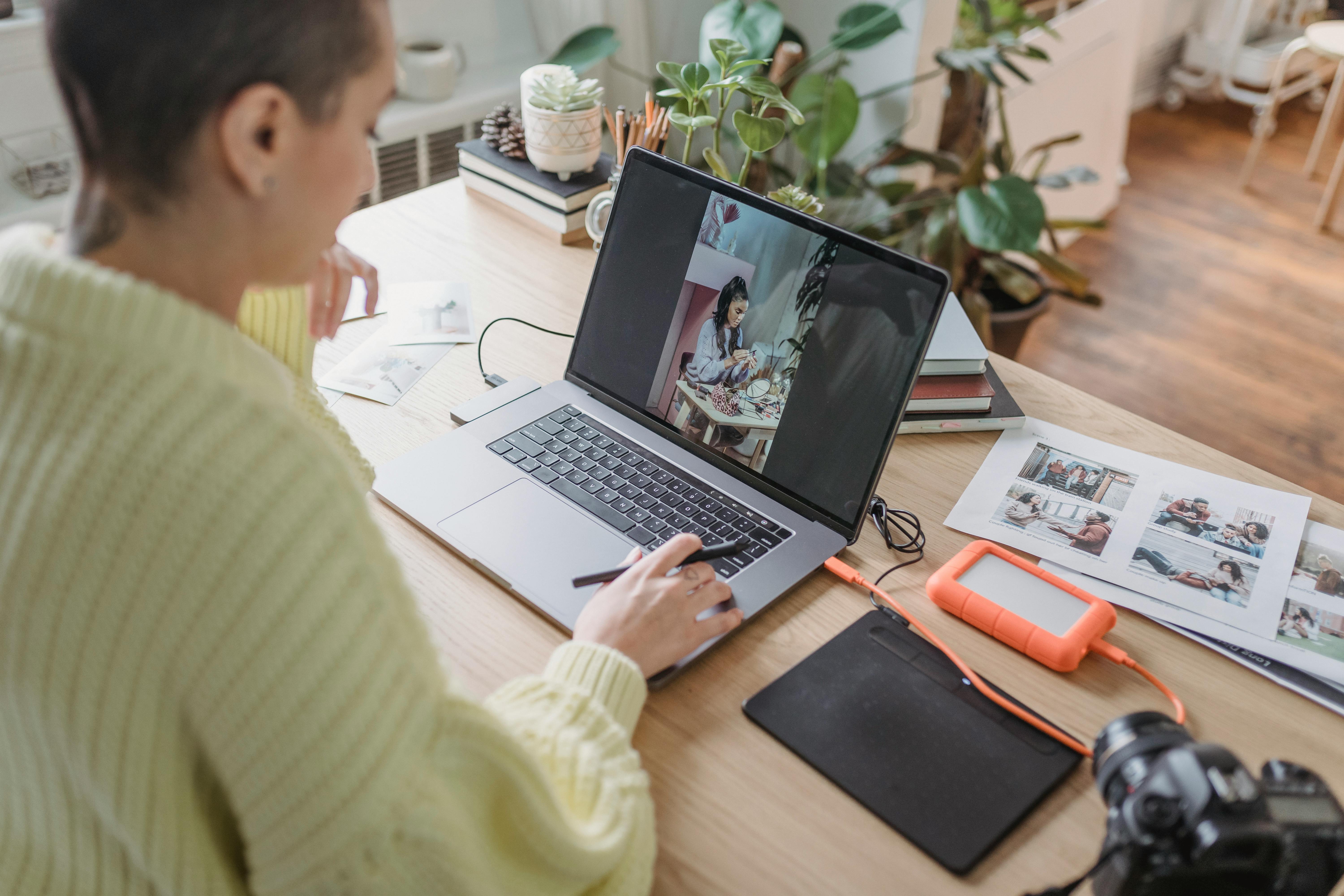
Back-button focus helps when you frame a subject, then wait for the right step or gesture. It also separates focus control from the shutter, which can feel smoother in busy places. A sling-style or cross-body carry often works best for travel. It keeps the camera close while leaving both hands free for tickets, water, or a map.
How can I keep my camera bag light on vacation?
The lightest bag solves real problems, not imaginary ones. Every extra item should earn its place by helping you make a better photo or keep shooting longer.
Start by removing duplicate tools. One lens, one card, and one battery plan handle most summer days better than a full kit.
Use a simple rule to cut weight
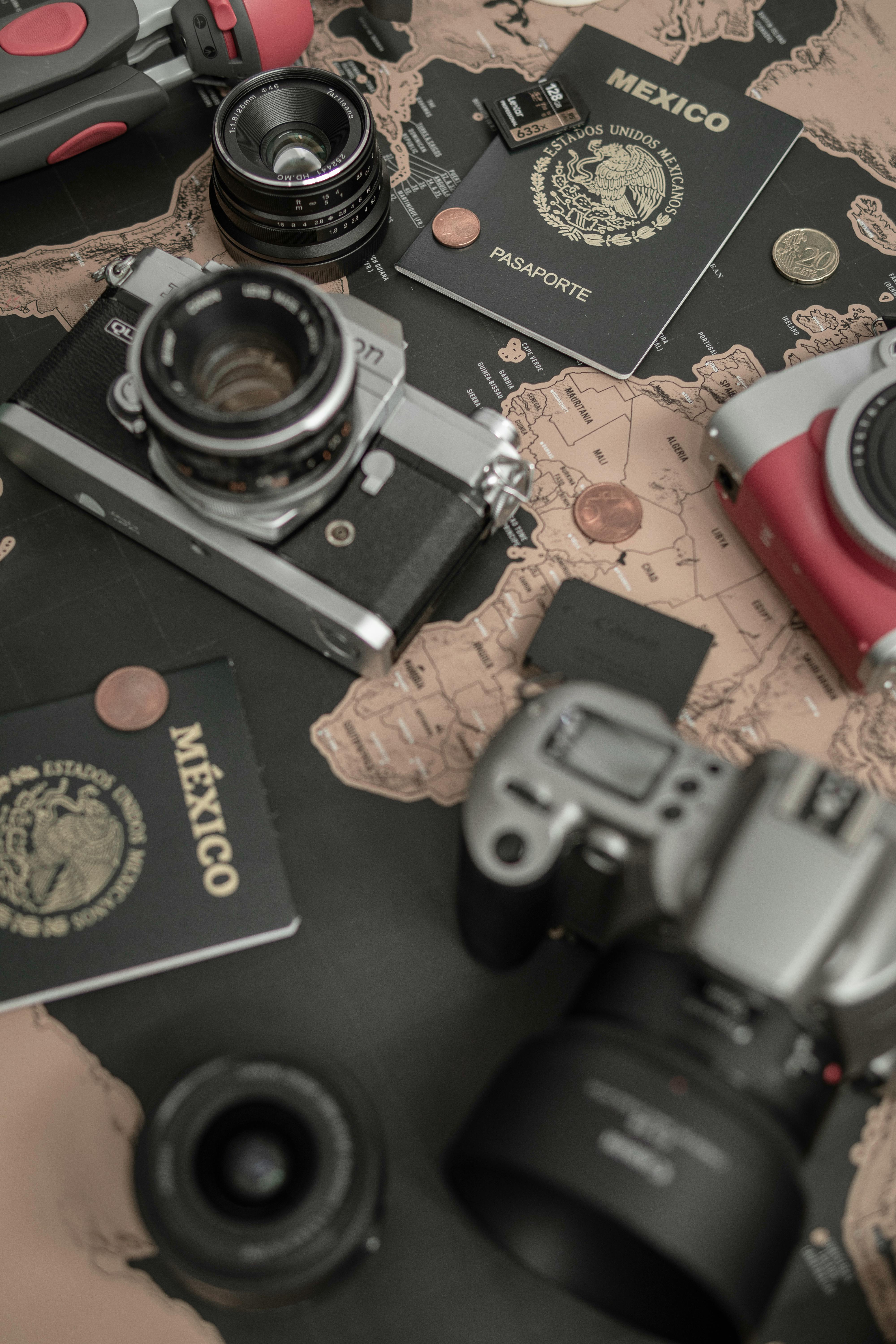
Ask one question for each item: will I use this today? If the answer is no, it stays in the room. This rule works because summer travel days change fast. A light kit helps you move through heat, crowds, and transport without feeling worn down before sunset.
Think about the real drains on power
On mirrorless cameras, the EVF, LCD, and image review use more power than many people expect. Keeping the screen on less often can save more battery than carrying extra bulky gear.
For many trips, a spare battery matters more than a second lens. A small power plan supports the whole day without adding much weight.
Pack for the kind of shooting you will actually do
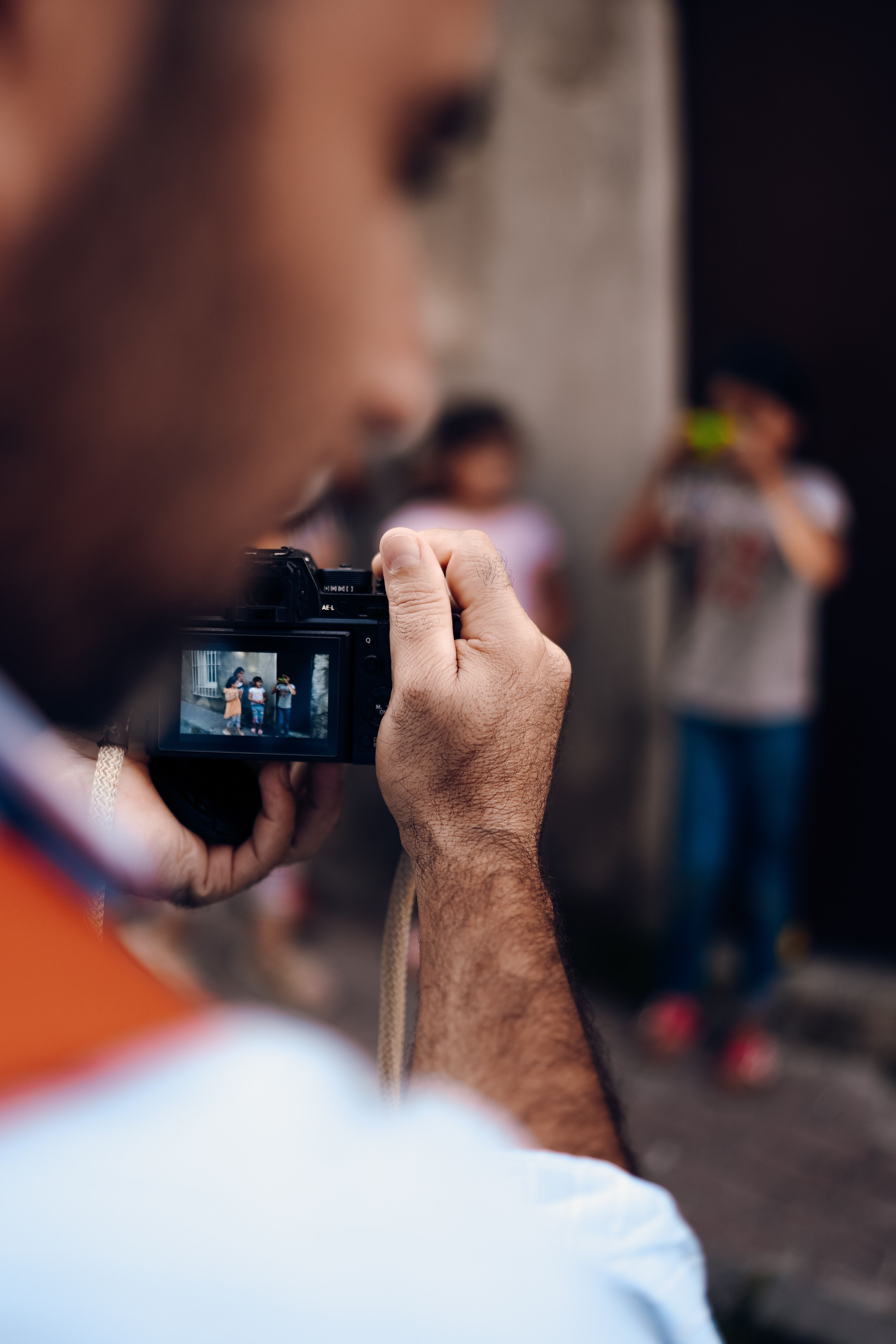
If you plan street scenes, a small prime lens can trim the bag fast. Canon describes the RF 28mm F2.8 STM as a slim pancake lens for travel and street work. Its 28mm view gives a wide but natural feel, and its f/2.8 aperture helps in dim cafes and evening streets. That makes it useful when you want less bulk without giving up low-light reach.
Which settings help summer scenes look sharp?
Sharp summer travel photos usually come from simple, repeatable settings. Use aperture, shutter speed, and ISO with the scene in front of you, not by following a fixed rule.
Bright light gives you room to choose. Soft shade, indoor stops, and moving subjects need a more careful balance.
Lean on aperture control first

Use f/8 to f/11 when you want both near and far details clear. That range is especially useful for architecture, group shots, and landscape views with depth. Open the lens wider when the light drops. A 28mm f/2.8 lens gives you more light than a slower zoom, which helps in evening streets and dim shops.
Keep motion in check with shutter speed
Travel scenes often include walking people, moving buses, and shifting hands. A shutter speed around 1/500s freezes most casual motion well, while 1/1,000s gives more safety for fast gestures.
If your subject slows down, lower the shutter and keep ISO down. On bright days, even a small ISO change can preserve finer detail.
Use autofocus tools that save time
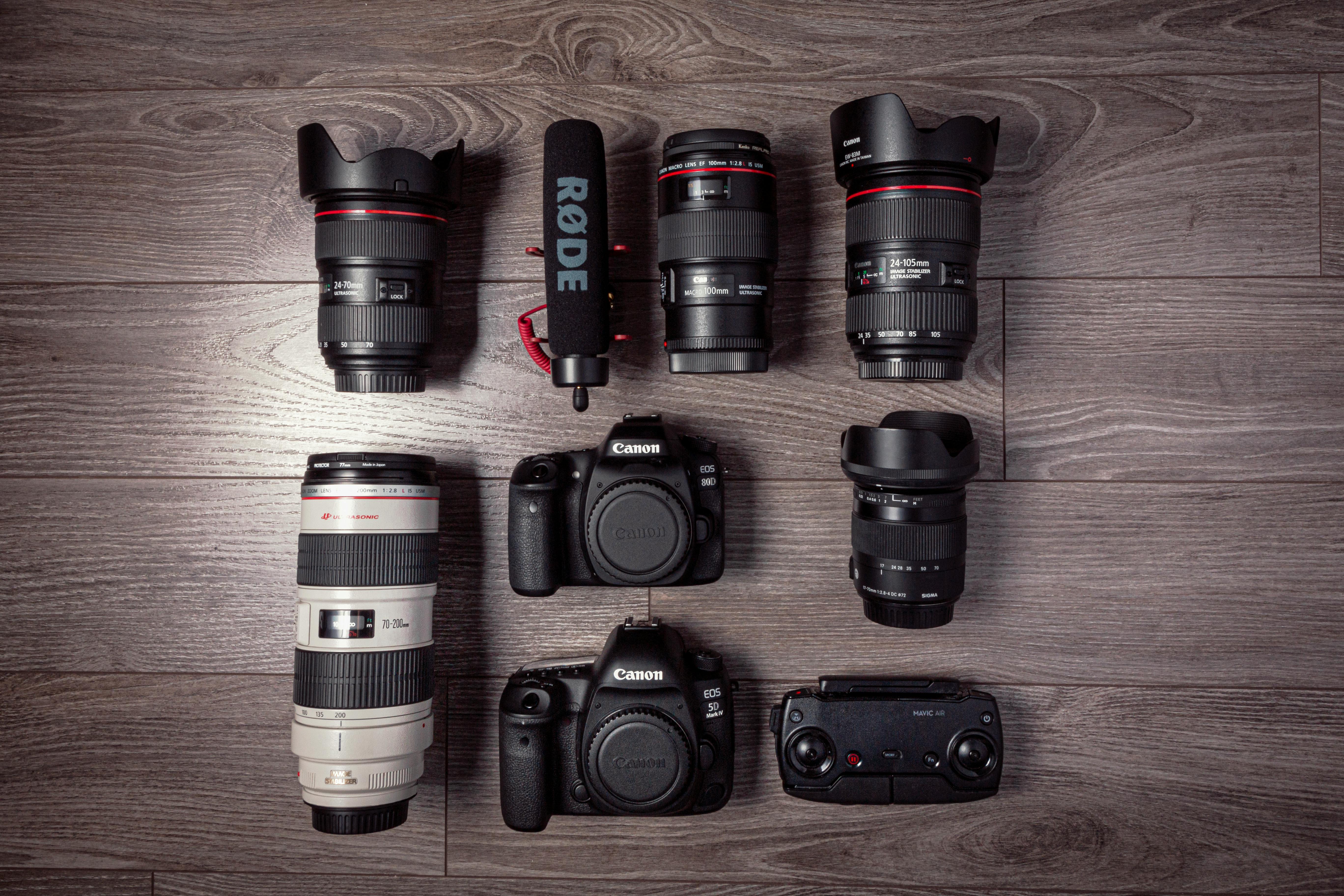
Continuous AF with eye or subject detection works well for moving travel scenes. It keeps focus on faces as people turn, step, or lean into frame. For quick moments, a camera with pre-capture or pre-burst can record frames just before full press. That feature helps when a child jumps, a bird takes off, or a door opens for one second.
Buffer depth is the limit to watch. A mid-tier body may slow after roughly 15 to 30 RAW frames, while JPEG gives you more room before it pauses.
What editing and shooting habits save space and time?
Small shooting habits reduce the need for extra gear later. If you work carefully in the field, you carry less and edit less at night.
The whole trip feels easier. It also helps you focus on the place instead of your pack.

Shoot fewer frames, but more purposefully
Use burst only when the moment changes fast. For still scenes, one well-timed frame usually beats ten similar ones. That approach keeps card use down and makes culling easier. It also cuts the temptation to carry multiple high-capacity cards as a safety habit.
Cull on the move
After a train ride or lunch stop, mark obvious keepers with pick flags in Lightroom or Photo Mechanic. That small step keeps your folder clean before the day gets messy.
At night, back up the best files if you can. A simple copy to a second drive is often enough for a short trip.
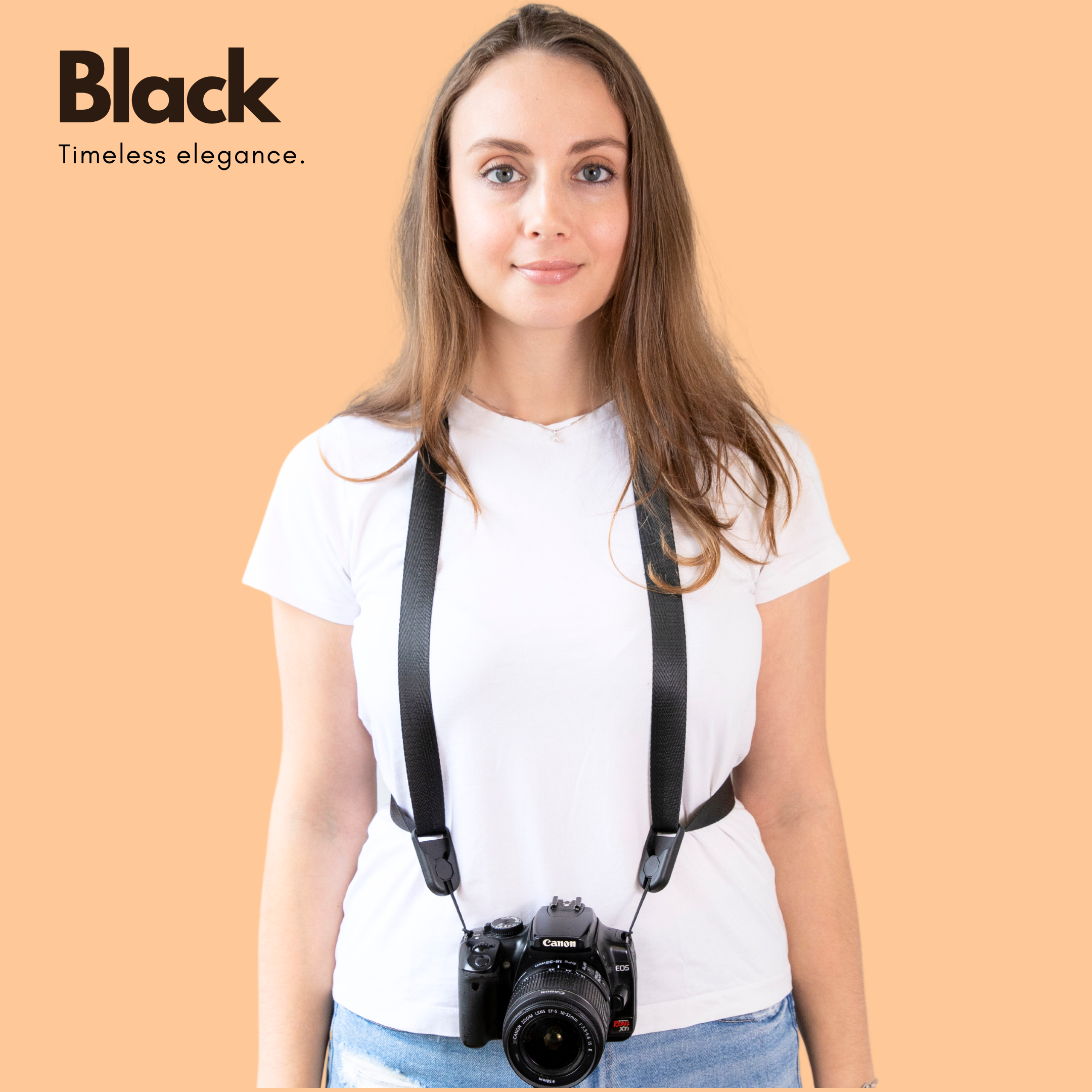
Match the kit to the pace of the day
A museum morning, a beach afternoon, and a night market do not need the same setup. One lens may cover all three if you choose it with care. The real trick for summer travel is packing for your route, your pace, and the light you expect to find. Choose gear that fits the day, and the camera starts feeling like part of the trip instead of dead weight.
For most trips, a compact zoom or one small prime, a comfortable strap, and a single spare battery keep the bag light enough to carry all day. On the next city walk, the camera should feel like part of the trip, not a burden on your shoulder.
Frequently Asked Questions
What camera gear should I pack for a summer trip?
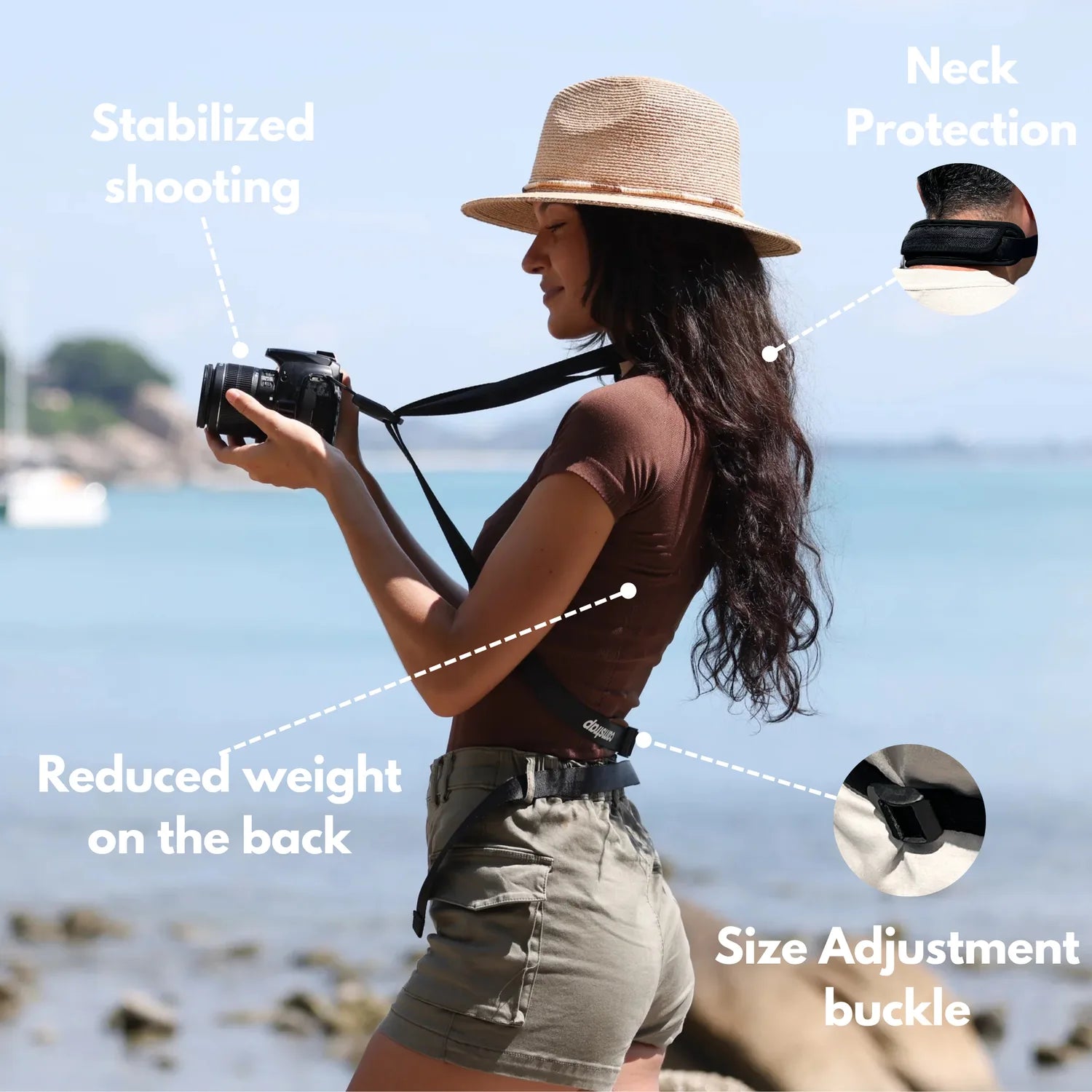
Pack one compact camera body, one versatile lens, two batteries, and a fast memory card for a light travel kit. A slim lens cloth and a compact strap are also useful, and a single zoom such as an 18-45mm or 18-150mm can cover most summer travel scenes without adding much bulk.
How do I carry a camera comfortably while traveling?
Use a wide, stable strap with quick adjustment so the camera stays comfortable while walking and can be raised fast for a shot. A close-fitting carry that reduces bounce, such as a strap designed to keep the camera steady, helps on long travel days through stations, sidewalks, and crowded streets.
How can I keep my camera bag light on vacation?
Keep the camera bag light by carrying only the gear that directly improves image-making: one body, one lens, one spare battery, one fast card, and a lens cloth. Avoid extra lenses and accessories unless they solve a specific problem, because a lighter kit is easier to carry and more likely to stay on the camera all day.