


- Center the frame on long, parallel edges to lock in one vanishing point.
- Follow curbs, rails, and road markings; they’re your strongest leading lines.
- Choose a lone doorway, sign, or person to anchor the quiet finish.
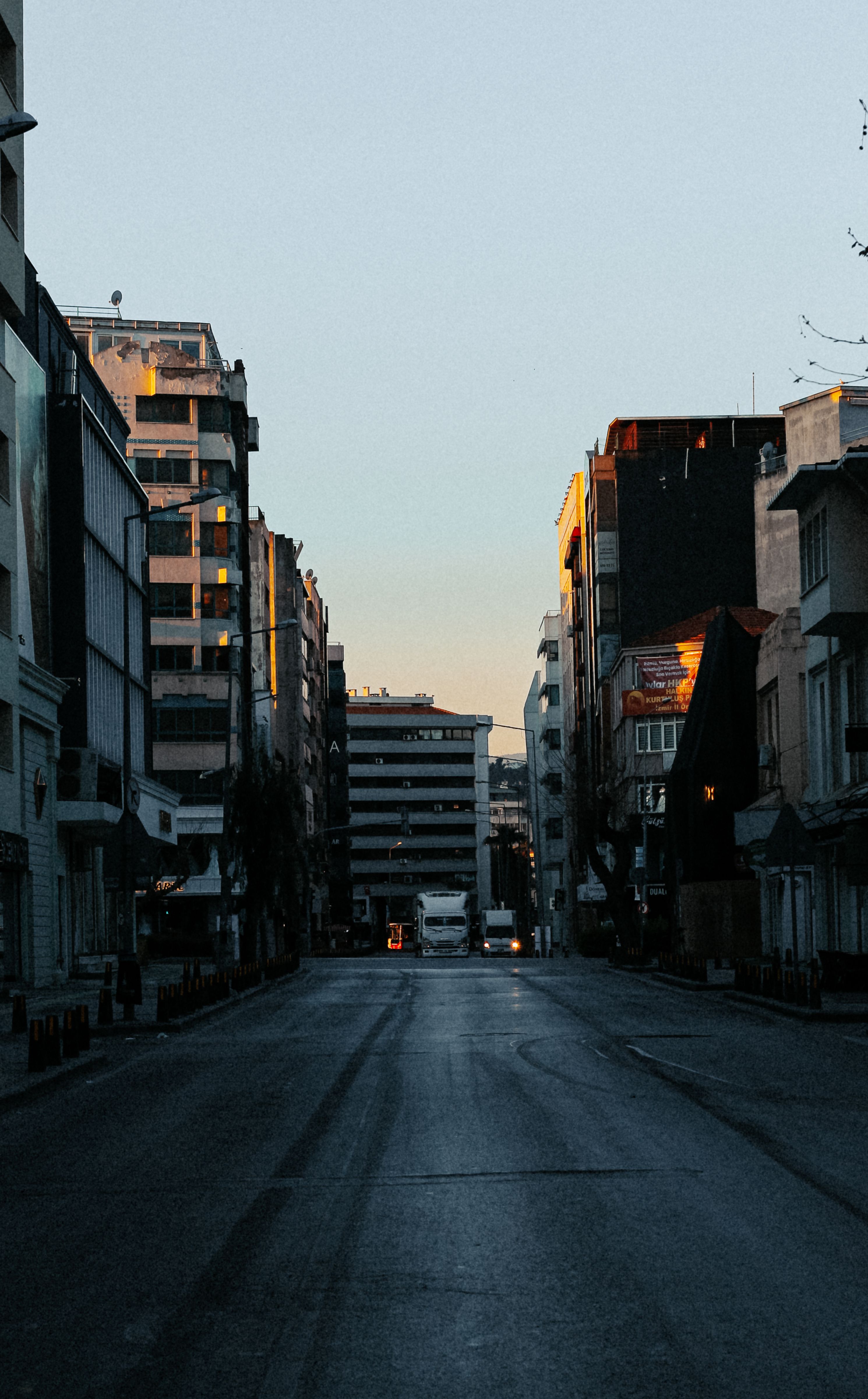
One-point perspective photography frames a scene so parallel lines appear to meet at a single vanishing point. On a busy city walk, that effect can turn a street, hallway, bridge, or plaza into a calm, ordered frame. The challenge is spotting those frames while people move, cars pass, and signs clutter the view. This guide shows how to read clean lines, use symmetry, and work quickly enough to catch the shot before the scene changes.
Translation missing: en.blog_cta.bundle_heading

- Regular price
-
€42 - Regular price
-
€44 - Sale price
-
€42
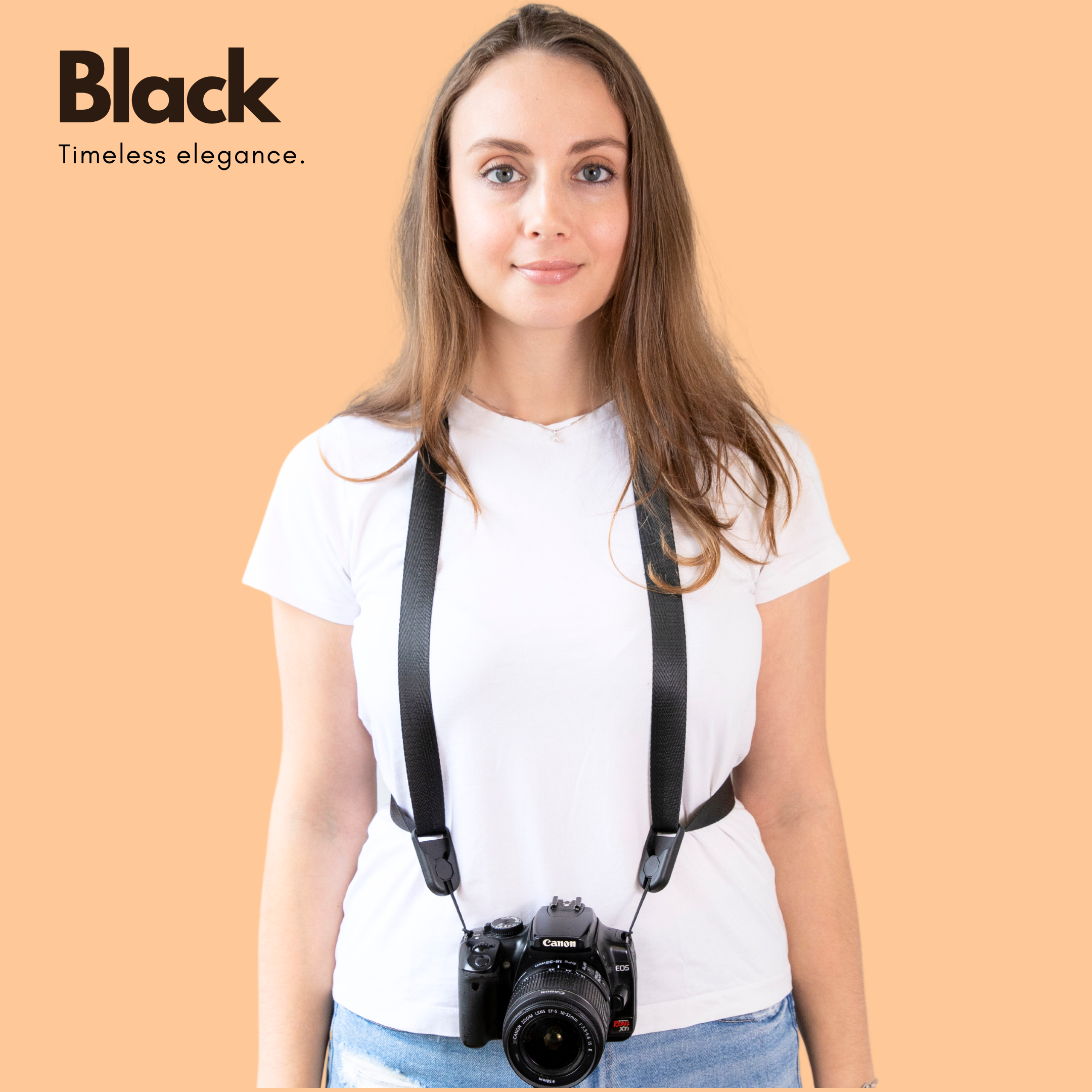
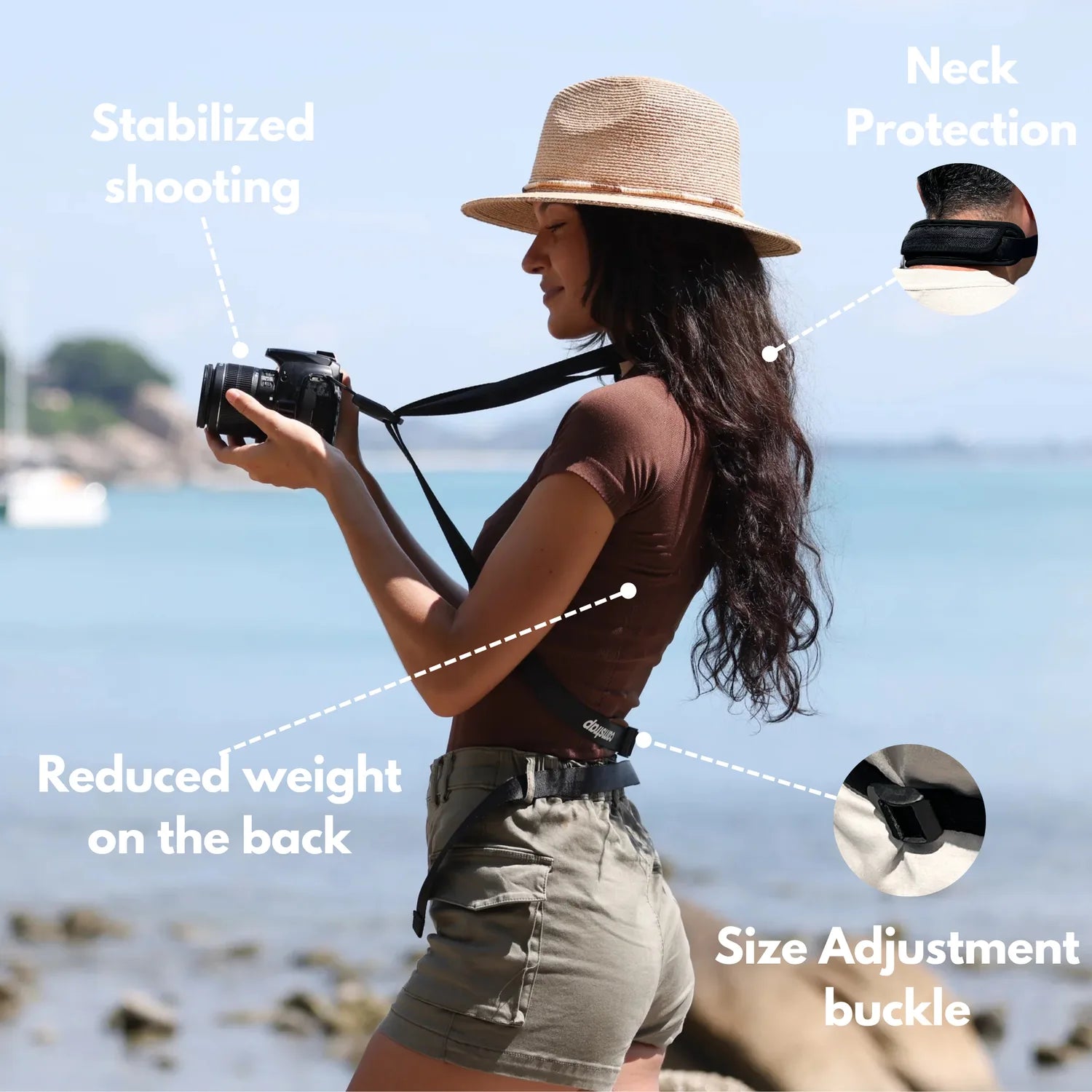
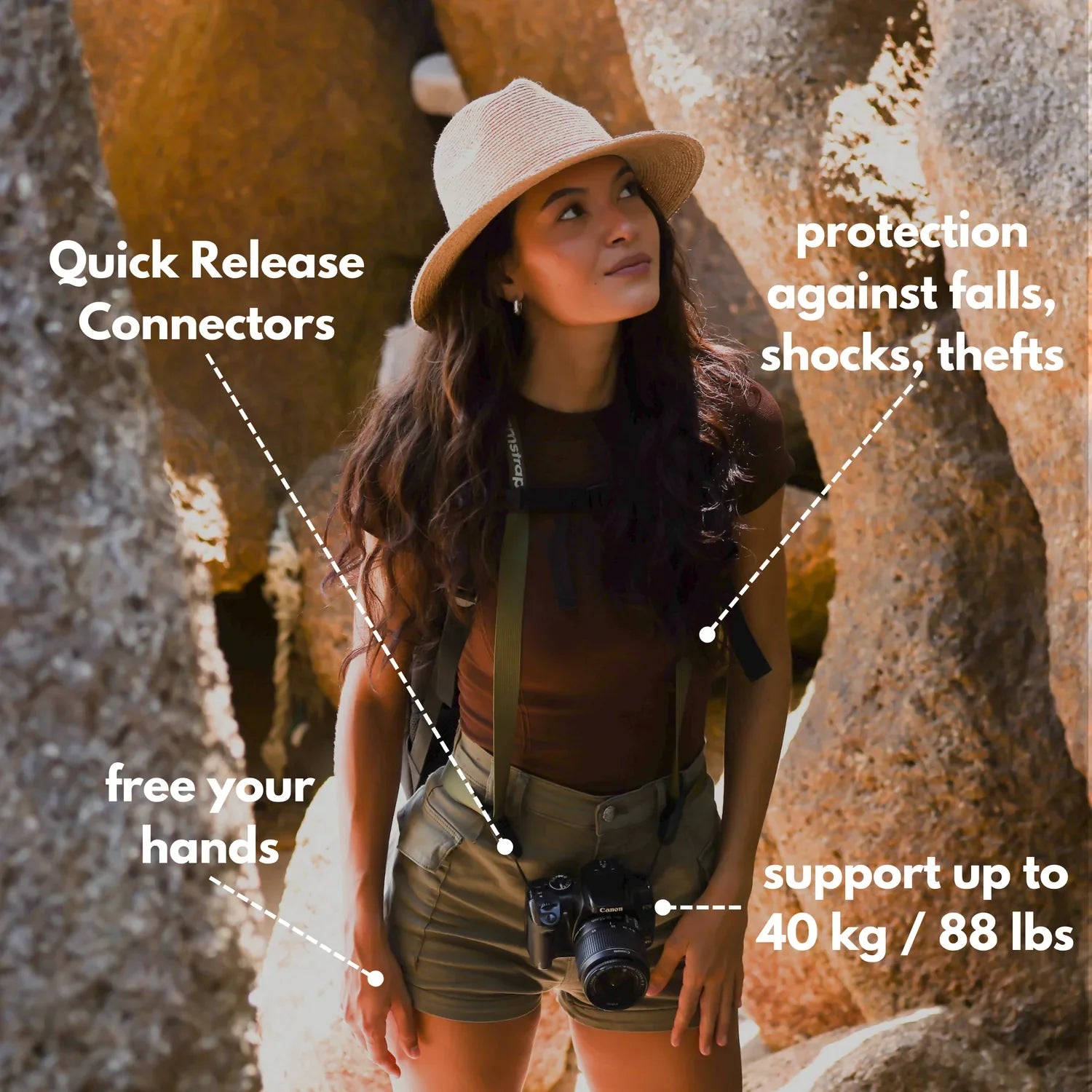
By choosing the Camstrap strap, you are opting for a high-quality product designed to meet the needs of the most demanding photographers.
- Developed by a physiotherapist to relieve neck and back pain.
- Fast delivery with tracking by the Post Office 🚚
- Can be used as a shoulder strap or hands-free harness

- Regular price
-
€36 - Regular price
-
€42 - Sale price
-
€36
Translation missing: en.blog_cta.free_shipping_included
Why city streets feel calm through a camera
City streets already contain the pieces that make this style work. Buildings, curbs, rails, and road marks create strong lines that pull the eye inward.
Leading lines draw the viewer toward a subject or focal point, and they add depth and shape to the photo. In real streets, parallel lines viewed at a distance seem to meet at one vanishing point, which is the visual trick behind the look.

What gives the scene a quiet feel
A frame feels quiet when the eye has one clear place to rest. The scene can still be busy, but the lines keep the view under control. Shadows help too. A doorway shade, a train platform roof, or a narrow street can cut visual noise and make the frame feel simpler.
Why your angle changes everything
Changing your camera height can reshape the whole frame. A lower angle often stretches the lines and makes the vanishing point feel stronger.
Moving a few steps left or right can clean the view. That small shift may hide trash bins, signs, or parked cars that break the line flow.
What makes one-point perspective work on real streets?
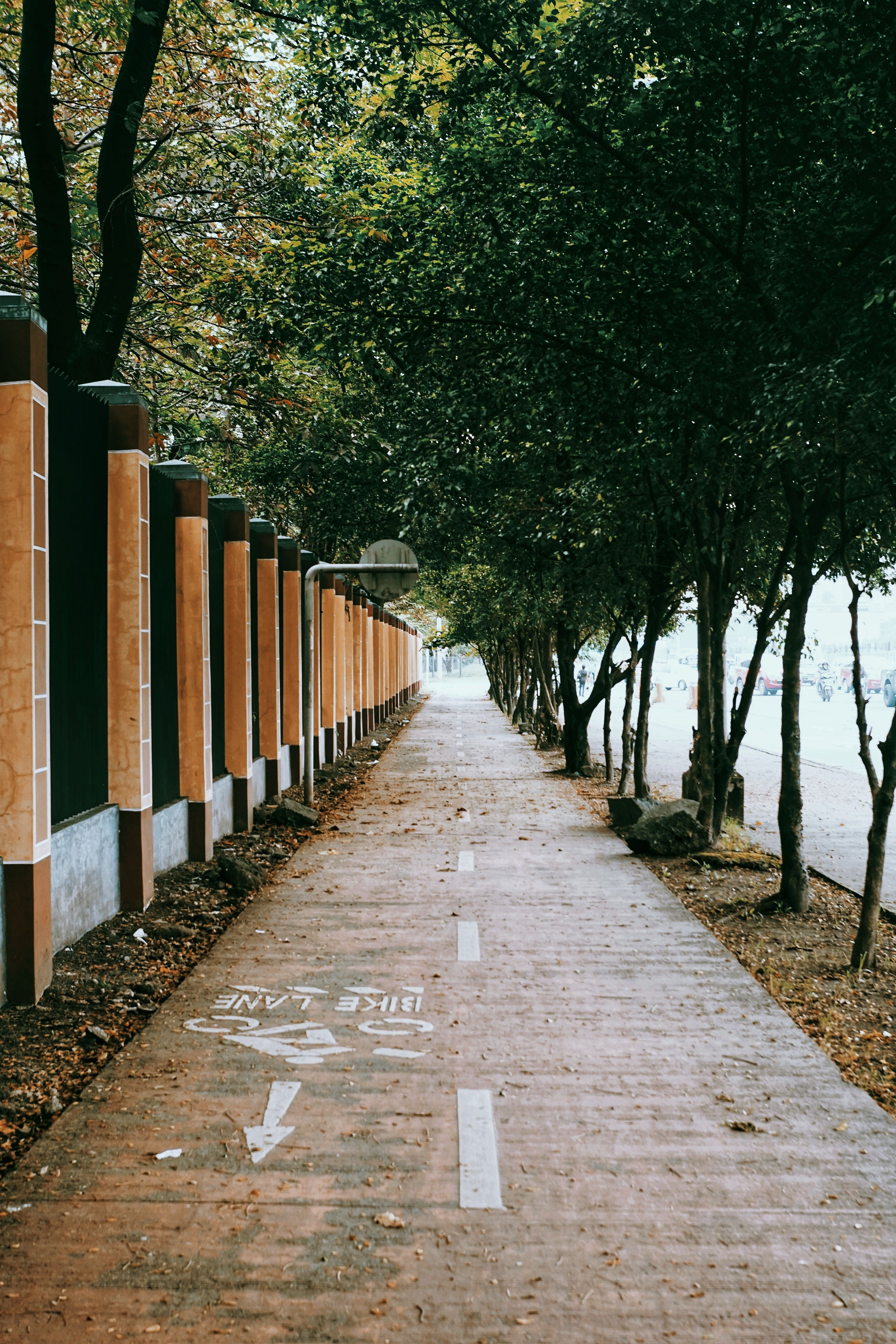
One-point perspective works on real streets because the eye reads repeated, parallel edges as one path. Curbs, windows, walls, rails, and lane marks all pull attention toward the same point. A strong frame needs lines that stay clean for most of the shot. A street with a centered road, a long corridor, or a bridge deck often gives the best result because the geometry stays clear.
Use the center with intent
Placing the main subject near the narrow end of the converging lines focuses the scene. The subject can be a person, bike, taxi, or lone sign.
That placement gives the viewer a clear stop point. It also stretches the sense of distance, which adds drama without extra clutter.

Try a simple lens choice
A 35mm to 50mm lens works well for most street scenes. An 85mm lens can compress the scene and make the vanishing point feel tighter. One Nikon street example used an 85mm lens at 1/160s, f/1.2, and ISO 640. That setup worked because it kept the subject sharp while people and traffic moved around it.
How do I spot strong leading lines while walking?
Strong leading lines show up when you slow your scan and look for edges that run in the same direction. Sidewalk seams, fences, tram tracks, stair rails, and roof lines are good places to start.
Street reflections can help too. Wet pavement, glass fronts, and polished floors often repeat a line and give you another route toward the vanishing point.
- Watch for long edges that stay straight for ten feet or more.
- Look for two lines that narrow as you move forward.
- Check the top and bottom of the frame for lines that cut through the scene.
- Use storefronts, awnings, and traffic lanes as quick guides.
A fast habit helps here: stop, lower the camera, and look through the viewfinder for three seconds. If the lines do not point inward, move again.
Small shifts reveal better paths
One step can change the whole pattern. A curb that looked flat may become a strong guide line from a new angle. This is where walking slowly pays off. The city gives you plenty of near-misses, and the best frame is often just one step away.
What subjects create a clean vanishing point?
Simple subjects create the cleanest vanishing point because they do not fight the lines. A single person, a lone cyclist, a bus at the end of a road, or a bright doorway can anchor the frame.
Geometry matters more than object type. You want a subject that sits where the lines naturally close in, not one that breaks the pattern.
Good subjects to look for
These subjects often work well in the city:
- A person standing in a doorway
- A bike at the end of a narrow lane
- A cab stopped in the center of a road
- A lone pedestrian under a bridge
- A sign or lamp at the far end of a corridor
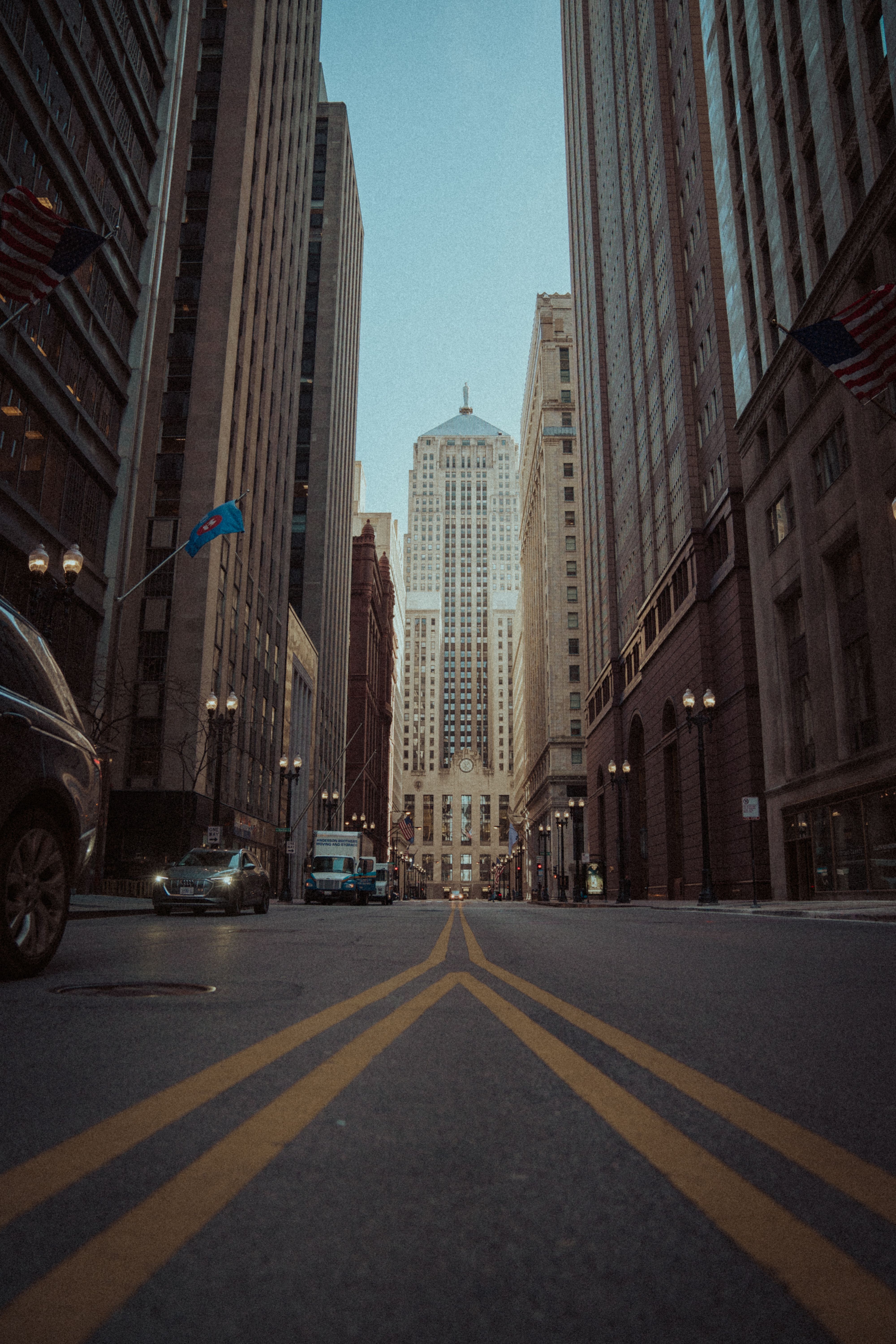
Use a wider aperture when you want the subject to stand out from the background. Adobe’s composition guidance notes that a wider aperture creates a shallower depth of field, which helps pull attention to the focal point.
Focus on one clear target
Autofocus works best when you give it one clear aim. Continuous AF, or AF-C / AI Servo, helps keep pace as the subject moves through the frame. Back-button focus can help too. It lets you lock focus before the subject reaches the vanishing point, then fire when the frame opens up.
How do I frame symmetrical scenes fast on location?
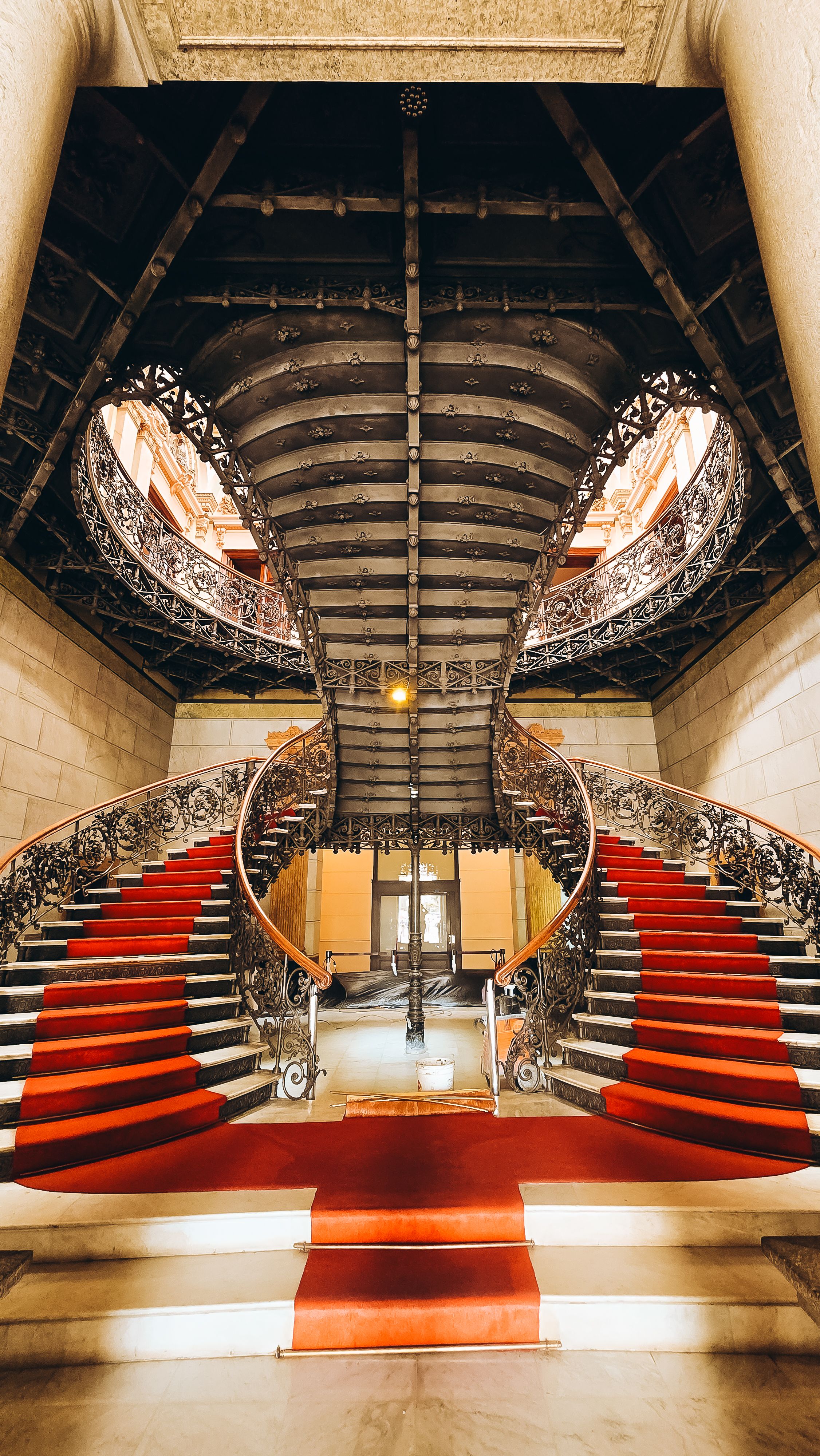
Symmetry is easiest when you use a centered subject and equal space on both sides. Doors, tunnels, bridges, staircases, and long corridors often give you that balance.
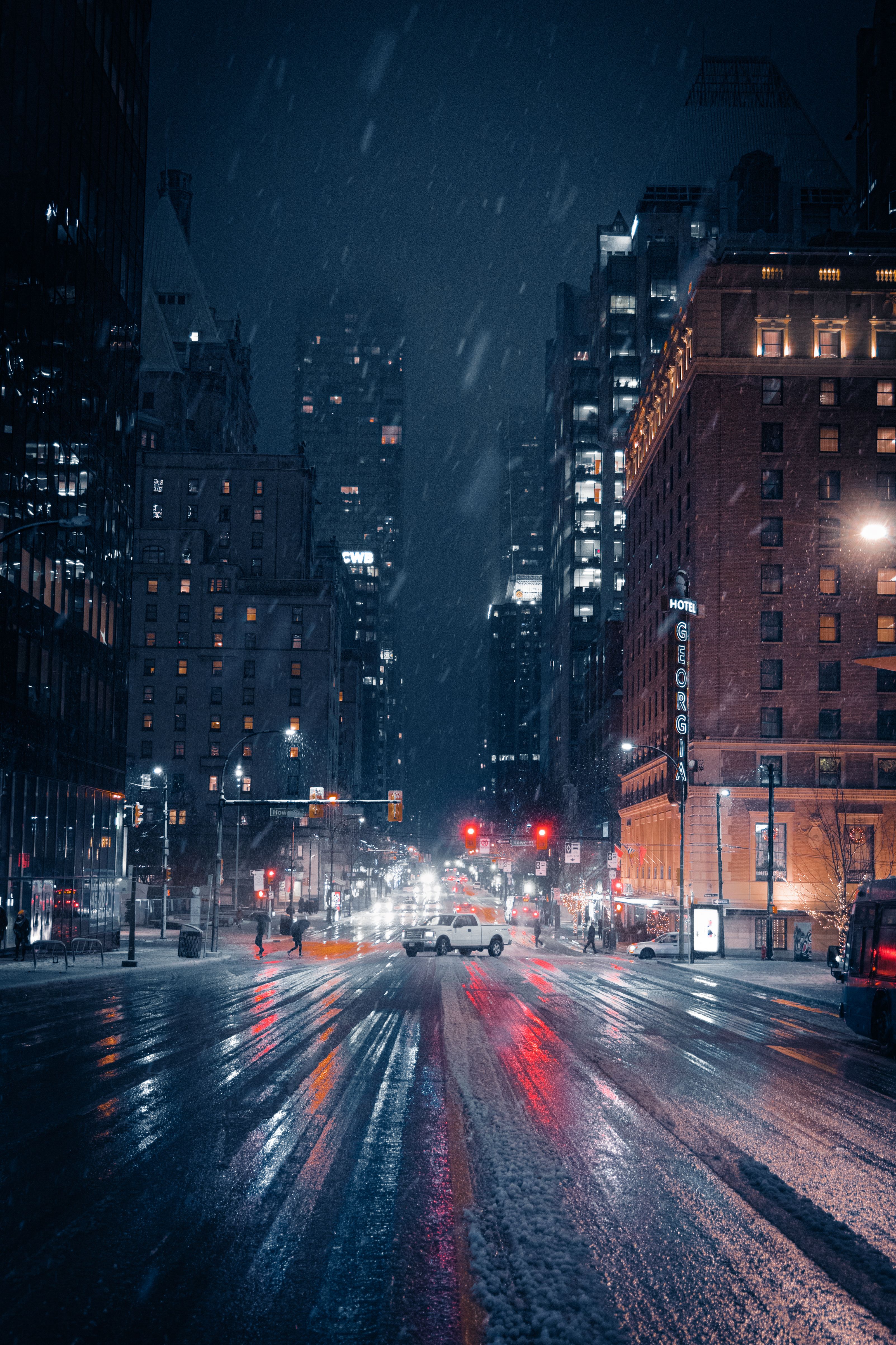
To frame quickly, I square the camera to the scene first and then fine-tune the edges. This cuts the chance of a tilted wall or a lopsided line that breaks the calm feel.
- Find the centerline of the scene.
- Level the camera with the horizon or doorway edge.
- Check both sides of the frame for equal weight.
- Place the subject on the centerline or just below it.
- Take one test shot and review the corners.
A mid-tier mirrorless body can be very useful here, but frame rate matters less than timing. Around 10 fps mechanical burst is enough for most street moments, while faster electronic bursts can reach 20 to 40 fps and may bring rolling-shutter skew or LED banding into play. Buffer size matters. Many mid-tier bodies can hold roughly 20 to 40 RAW frames before slowing, and a UHS-II V60 or V90 card helps the camera clear that buffer faster than a basic UHS-I card.
Can one-point perspective work in crowded places?
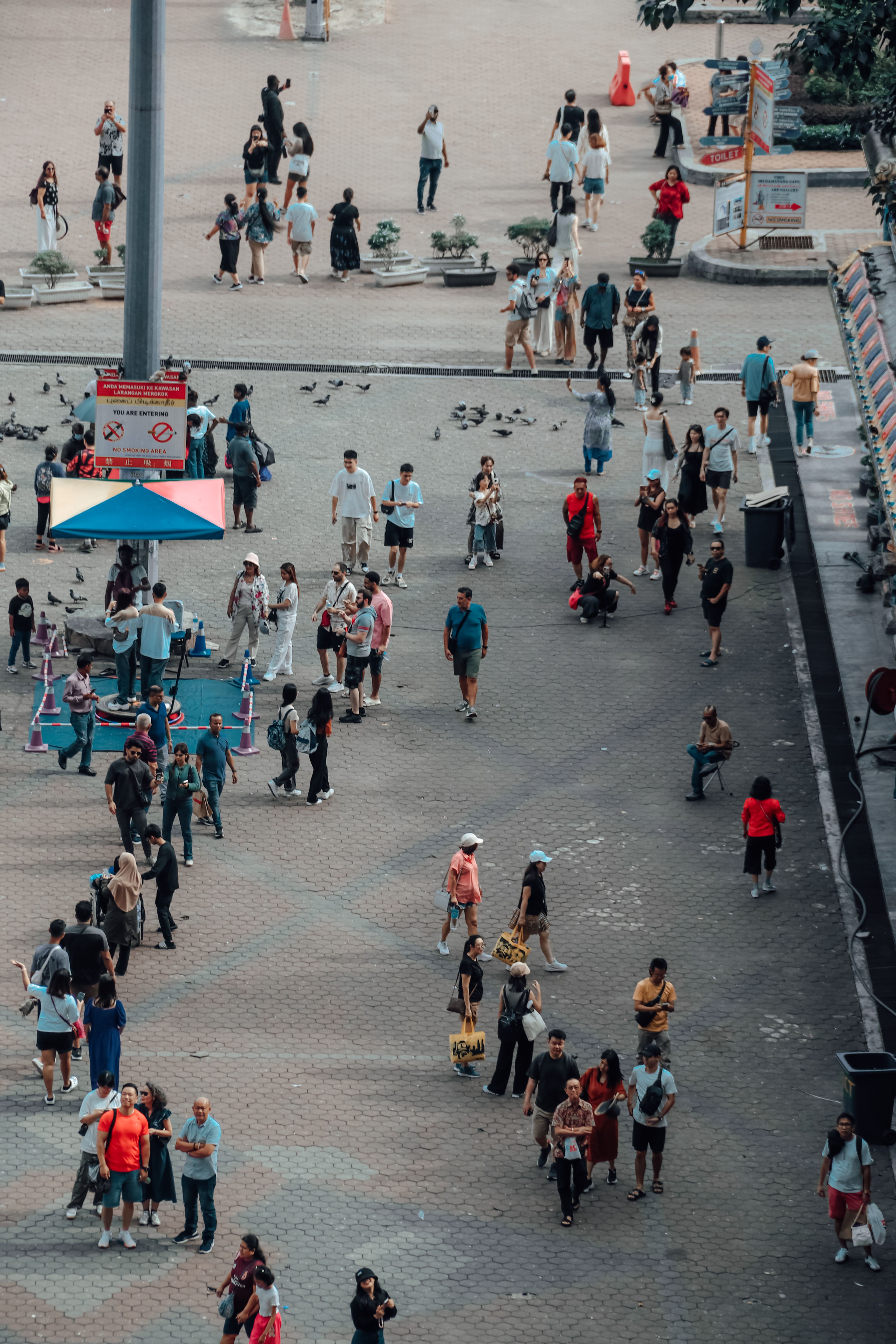
Yes, crowded places can still work because people can act as moving shape blocks inside the frame. The key is to treat the crowd like texture and wait for one clean opening.
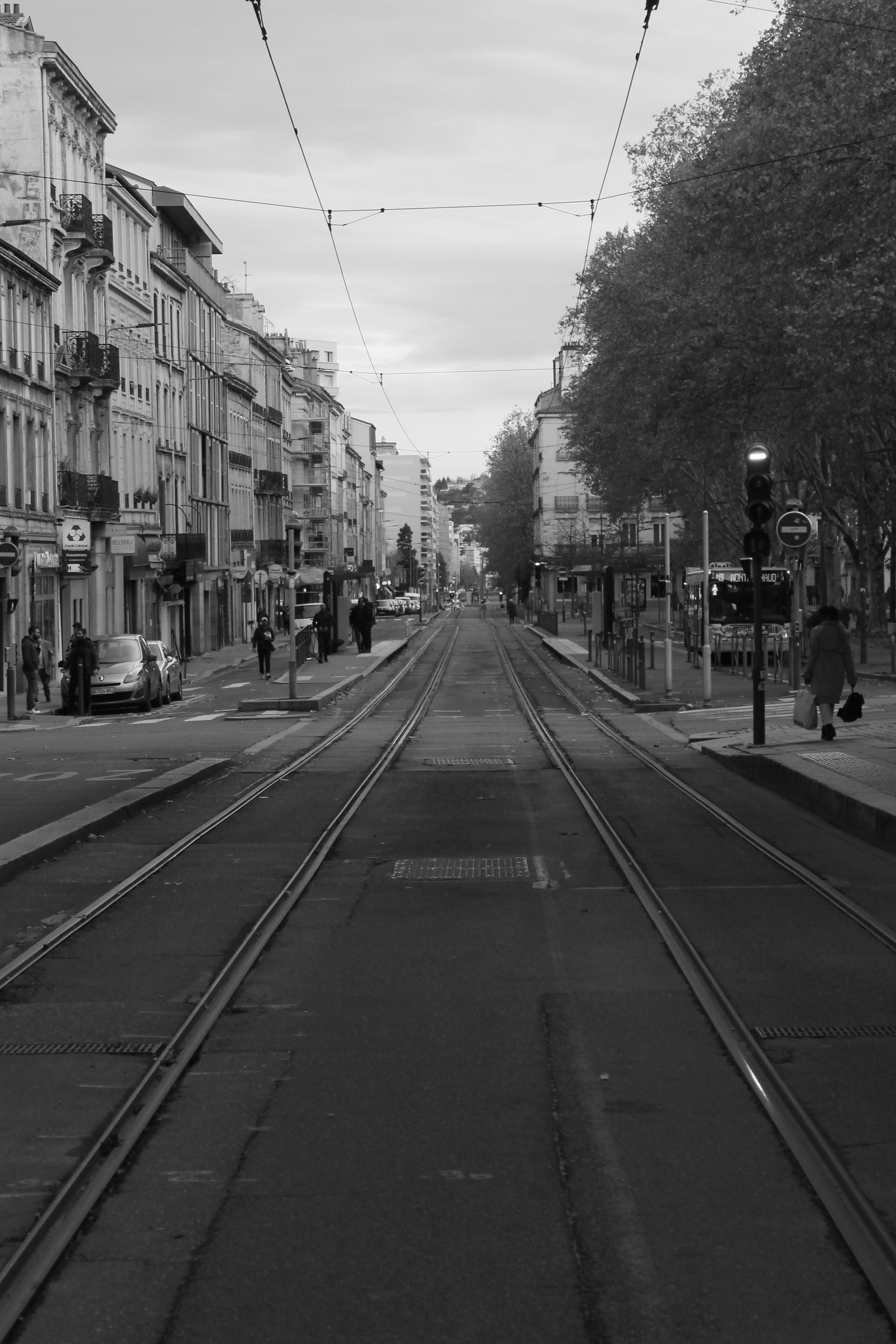
A street corner, station hall, or market lane often gives a brief gap that reveals the lines behind it. A short burst can help here, but the real trick is waiting for the gap, not spraying frames.
Use pre-capture or pre-burst if your camera has it. That feature records frames just before the full press, which helps when a person steps into the center line for only a second.
Keep your kit ready for movement
A compact strap or clip keeps the camera ready as you move from doorway shadow to open street, without juggling gear. A Camstrap Voyager fits that role well because it keeps the camera close and stable, so you can lift it fast with one hand. That helps in crowded places, where the opening can vanish in a beat. Less fumbling means more time for framing and less time for missed geometry.
Watch the tradeoffs
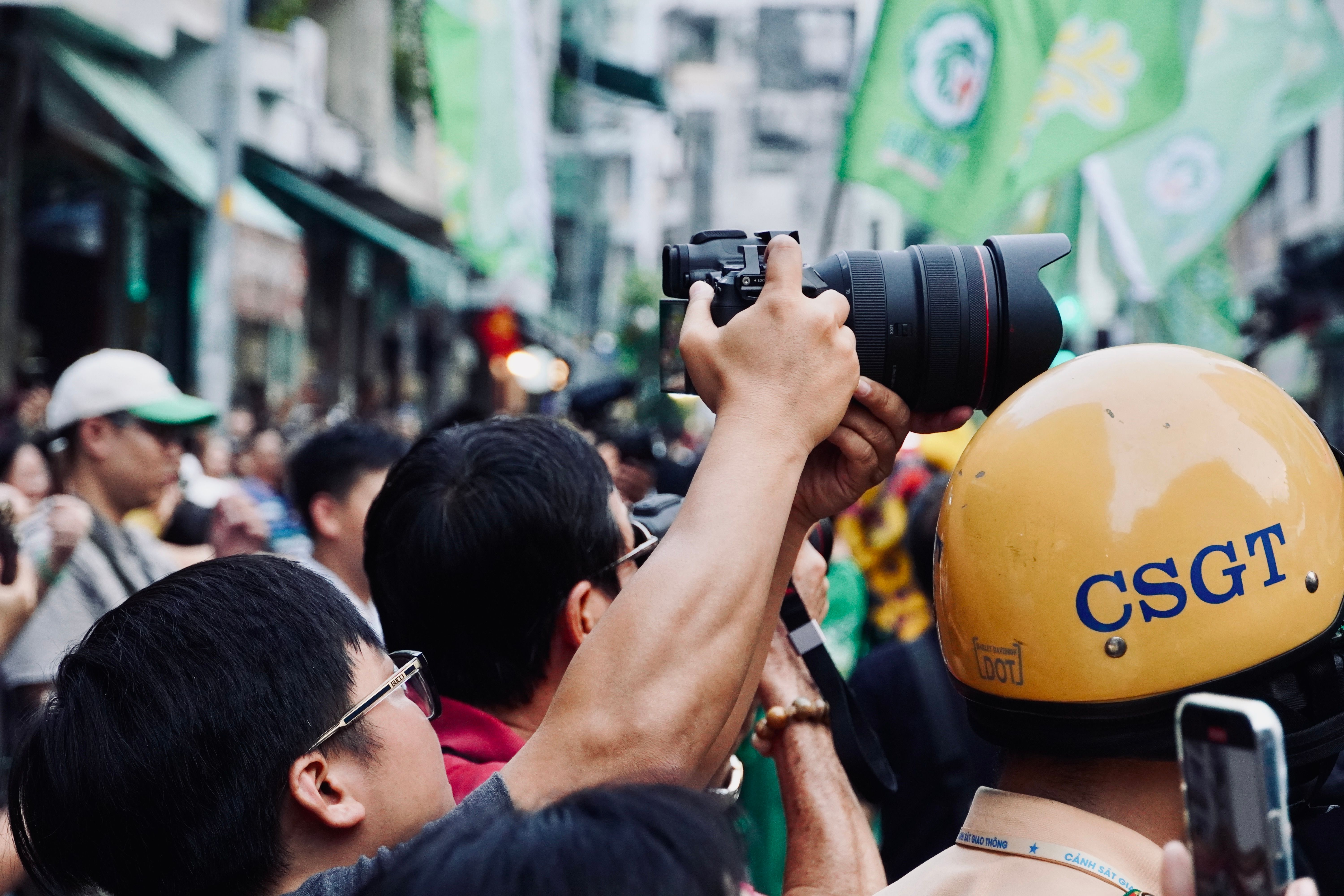
Wide apertures, like f/1.2 to f/2.8, isolate the subject, but they also narrow the focus zone. If the subject shifts a step or two, you may miss the sharpest point.
A higher ISO may be the cost of that choice in dim streets. If the light drops, I keep shutter speed near 1/160s or faster for moving people, then raise ISO as needed rather than letting motion blur soften the frame.
A simple way to build the shot while you walk
The best city frames usually come from a repeatable scan. First, look for a long line. Next, find the vanishing point. Then, wait for one subject to land in the cleanest part of the scene.
This three-part habit saves time by removing guesswork. You are not hunting for every picture at once; you are looking for one clear structure, one clean path, and one place for the eye to stop.
- Scan for rails, curbs, walls, or road marks.
- Check whether the lines narrow toward one point.
- Step until the frame feels balanced.
- Wait for a person or object to support the geometry.
- Shoot a short burst only when the moment is ready.
Light also changes the result. Early morning and late afternoon often cast longer shadows, which can make the lines stand out more clearly. Even at midday, you can still find quiet frames in shade. Look under awnings, inside station entrances, and along narrow side streets where the light falls in clean bands.
Bringing the scene home with a cleaner edit
Editing should protect the structure you found on the street. Crop only if the edge of the frame distracts from the lines, and keep the center clean.
Lightroom or Photo Mechanic can speed up the cull with pick and reject flags. That helps you keep the frame where the geometry is strongest, not just the one with the busiest action.
A good final edit often needs only a small contrast lift and a slight straighten. If the vanishing point feels off-center by accident, fix it. If it feels off-center by choice, keep it that way.
Quiet frames in a busy city walk come from patience, not luck. The more you learn to see lines, openings, and simple subjects, the faster the city starts to feel orderly.
On your next walk, pick one street with a strong centerline and one lens, then work it for ten minutes. The best frame may be the one you nearly passed at the corner.
Frequently Asked Questions
What makes one-point perspective work in real streets?
One-point perspective works in real streets because parallel edges like curbs, walls, rails, windows, and lane marks visually converge toward a single vanishing point. A centered road, long corridor, or bridge deck keeps that geometry clean and makes the effect read clearly.
How do I spot strong leading lines while walking?
Strong leading lines are easiest to spot by scanning for edges that run in the same direction, such as sidewalk seams, fences, tram tracks, stair rails, and roof lines. Wet pavement, glass fronts, and polished floors can also repeat lines and guide the eye toward the vanishing point.
What subjects create a clean vanishing point?
A clean vanishing point is usually created by a street, hallway, bridge, plaza, or long corridor with simple geometry. A lone subject such as a person, bike, taxi, or sign placed near the narrow end of the converging lines gives the frame a clear focal stop.
How do I frame symmetrical scenes fast on location?
Symmetrical scenes frame fastest when the camera is aligned with the center axis of the space, such as the middle of a street, hallway, bridge, or platform. A lower camera angle and a small step left or right can quickly strengthen the symmetry and remove clutter from the edges.
Can one-point perspective work in crowded places?
One-point perspective can work in crowded places because the lines can still organize the scene even when people, cars, and signs are present. A strong frame needs clean lines and a clear resting point for the eye, so shifting position to hide visual clutter is often enough to make it work.


