


- How do I take better travel photos without carrying too much gear
- What camera settings work best for summer travel photos
- How can I keep my camera ready while walking around all day
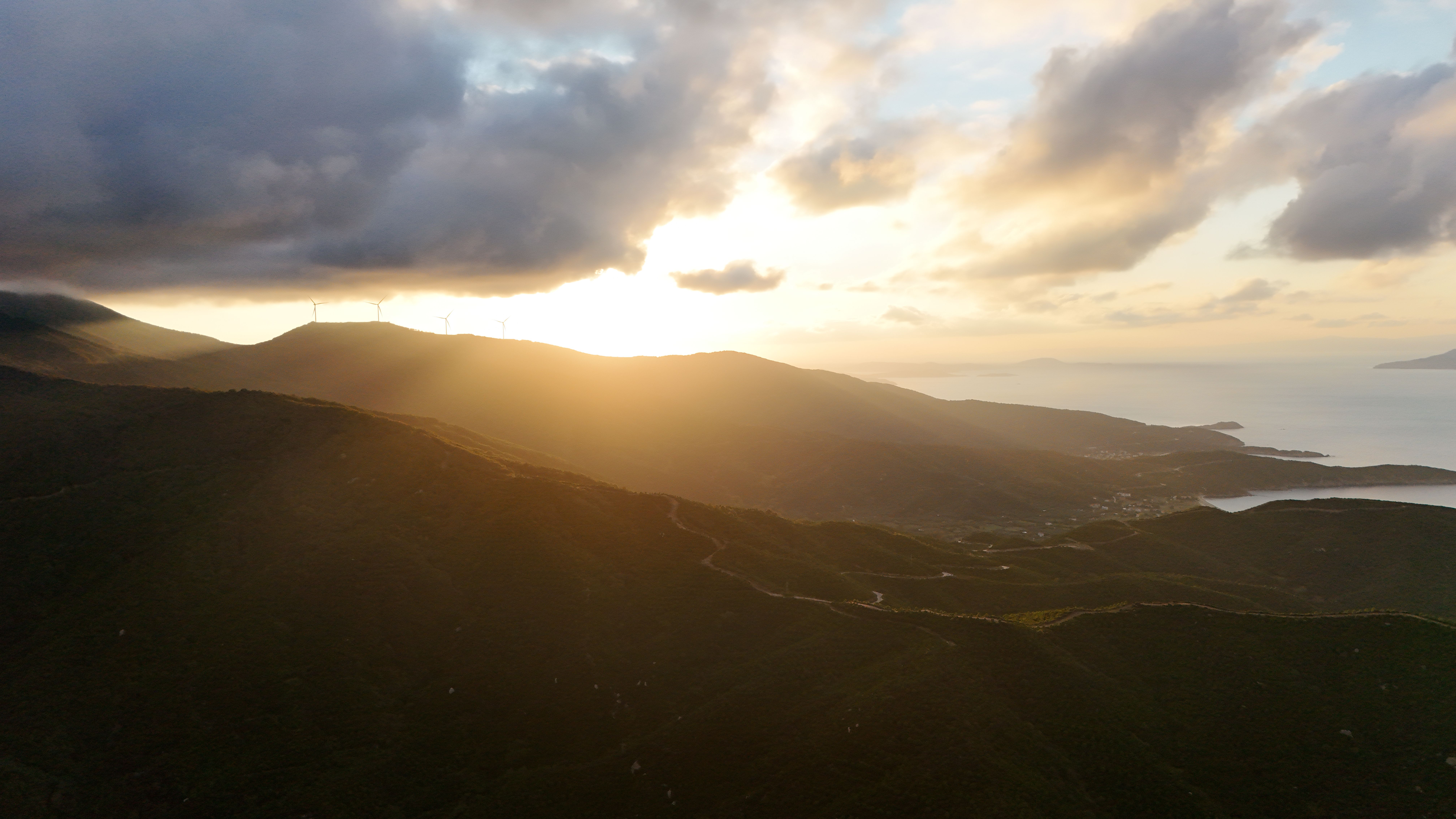
Long summer days give you more light, more time, and more chances to make strong travel photos. That may sound straightforward, but bright sun, hard shadows, and lots of walking can make it trickier than expected. The good news is that a few simple habits can help you shoot better images without hauling around too much gear.
Shop the setup

- Regular price
-
€42 - Regular price
-
€44 - Sale price
-
€42
By choosing the Camstrap strap, you are opting for a high-quality product designed to meet the needs of the most demanding photographers.
- Developed by a physiotherapist to relieve neck and back pain.
- Fast delivery with tracking by the Post Office 🚚
- Can be used as a shoulder strap or hands-free harness

- Regular price
-
€36 - Regular price
-
€42 - Sale price
-
€36
Free shipping included
In this guide, you will learn how to use light, settings, and smart camera-carry tips to make better travel photos from morning to night. You will also see how to move quickly, stay prepared, and keep your gear light and practical. That way, you can focus on the trip and still return home with photos you love.
Why Long Summer Days Help You Capture Better Travel Photos
Summer travel gives you a long window for shooting. You can photograph sunrise, bright midday scenes, and warm evening light all in one day. That range adds variety to your travel photos and helps you tell a fuller story.
At the same time, long days bring strong sun and crowded streets. Light can shift quickly, and you may not want to stop and unpack gear every time something interesting appears. For that reason, the best approach is to keep your setup simple and ready to go.
Use the extra light, but plan for harsh sun
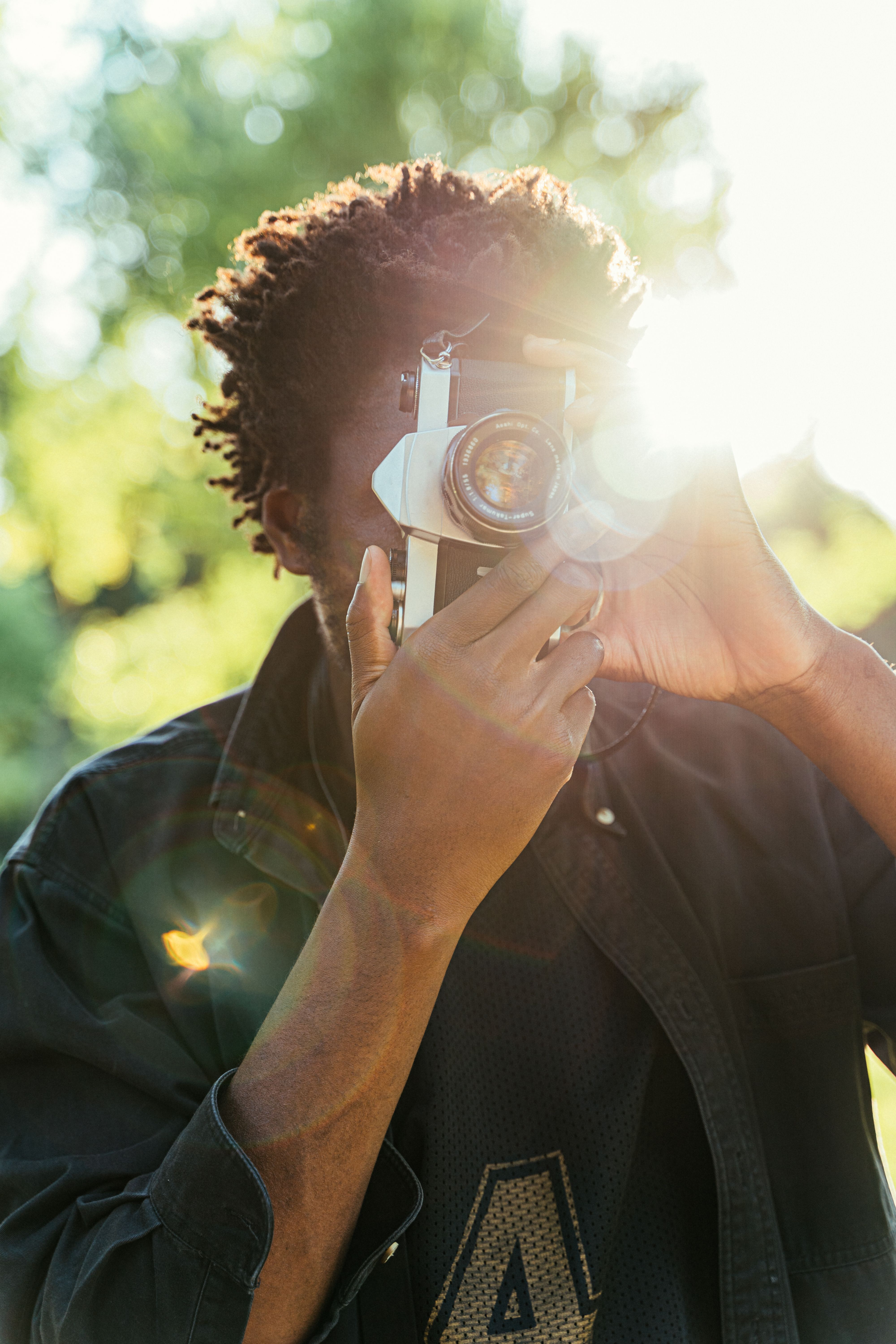
Long summer days give you more natural light, but not every kind of light works well. Midday sun can wash out color and cast deep shadows under eyes and noses. So it helps to think ahead and use shade, reflections, and the right angle.
Travel photos often look best when the light feels soft and balanced. Early morning and late afternoon are still the easiest times to capture people, streets, and places with rich color. Even so, you can still make strong images at noon if you work with the scene instead of fighting it.
Travel Photo Settings That Help You Capture Better Summer Scenes
Good camera settings make a huge difference. You do not need complicated gear to make better travel photos. You just need a few straightforward settings that fit bright light and the pace of travel.
Start with a wide focal length for stronger scenes
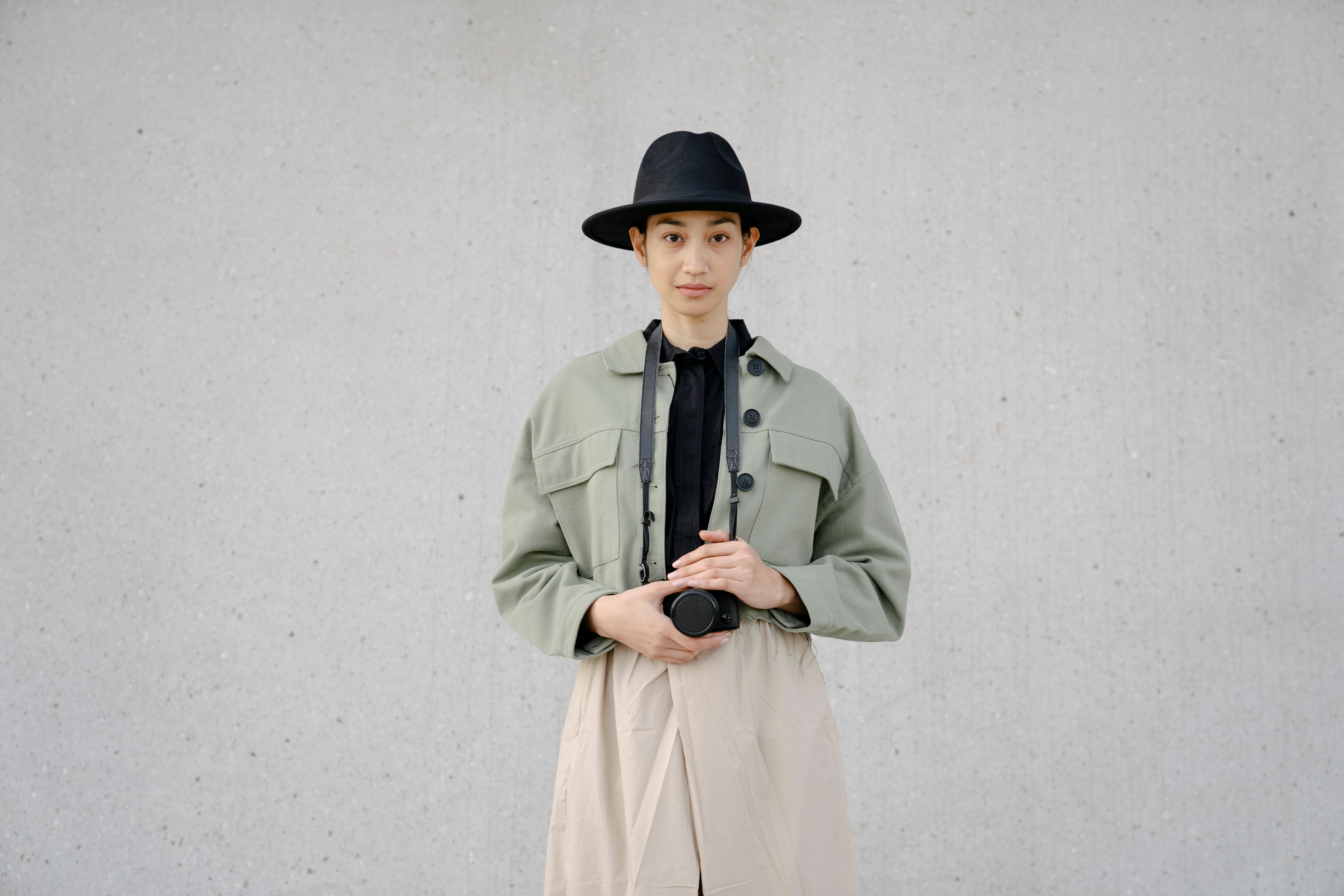
For city views, markets, beaches, and mountain roads, use a wide focal length like 28mm or even 20mm. That helps you include foreground detail and build layers in the frame. Move in close to your subject so the scene feels deeper and more alive.
This method works well when you want to show a sense of place. A wide view can include a person, a path, and a landmark in one shot. As a result, your photos feel more like travel stories and less like simple snapshots.
Use simple settings for bright summer light
A strong starting point is aperture priority mode with a wide or medium aperture. Try f/2 to f/2.8 for portraits, and use f/5.6 to f/8 for streets and landscapes. These settings help keep your subject sharp while still shaping the background.
For moving subjects, set a shutter speed of 1/500s or faster. That helps freeze people walking, cycling, or playing by the water. Keep ISO as low as you can, but raise it when shade or evening light begins to fade.
- Portraits: f/2 to f/2.8, 1/500s or faster, ISO as low as possible
- Street scenes: f/5.6 to f/8, auto ISO, quick shutter speed
- Landscapes: f/8, low ISO, steady hold or tripod if needed
Use a polarizing filter in bright summer light
A polarizing filter can help you capture richer color and cut down glare. It works well on water, windows, wet streets, and skies. In bright summer sun, it can deepen blues and make greens look cleaner.
Research on summer travel photography shows that a polarizing filter should stay on the lens often during bright days. That keeps color strong and contrast clear. So if you want to capture better travel photos with less effort, this small tool can be a smart choice.
How to Capture Better Travel Photos Without Carrying Too Much Gear
Many travel photographers make the same mistake. They pack too much gear and spend too much time swapping lenses. That slows them down and makes them miss real moments. Instead, build a small kit that helps you move quickly and still capture what matters.
Choose one main camera and one or two lenses
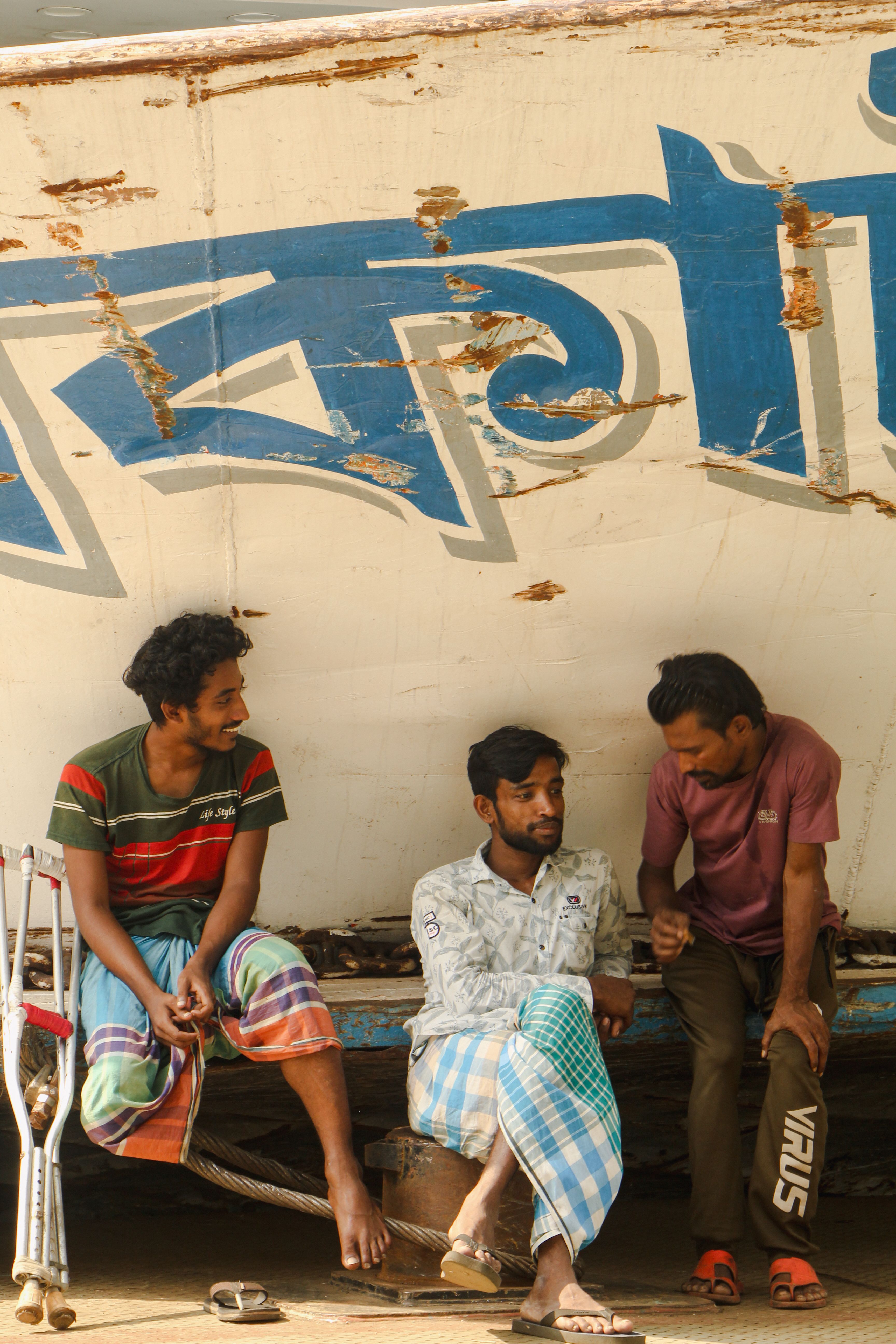
A light kit is often the best kit for travel. One camera body and one zoom lens can cover most scenes. If you prefer prime lenses, a 28mm or 35mm lens can be a strong choice for street and travel work.
If you want more flexibility, a 24-70mm zoom can handle wide views, people, and details. You do not need five lenses to make better travel photos. In fact, fewer options can help you work faster and stay more focused.
Use a strap that keeps your camera ready all day
When you walk between viewpoints, trains, and streets, your camera needs to stay close and easy to reach. A comfortable strap setup can help you keep your camera ready without tiring your neck or hands. That means fewer missed shots and less stress during long days.
This is where a well-made strap matters. Camstrap offers options like the camstrap voyager, camstrap explorer, camstrap nomad, and camstrap magclip, which can suit different travel styles. For example, a secure strap can help you carry your camera all day while moving through busy places.
Pack for speed, not just safety
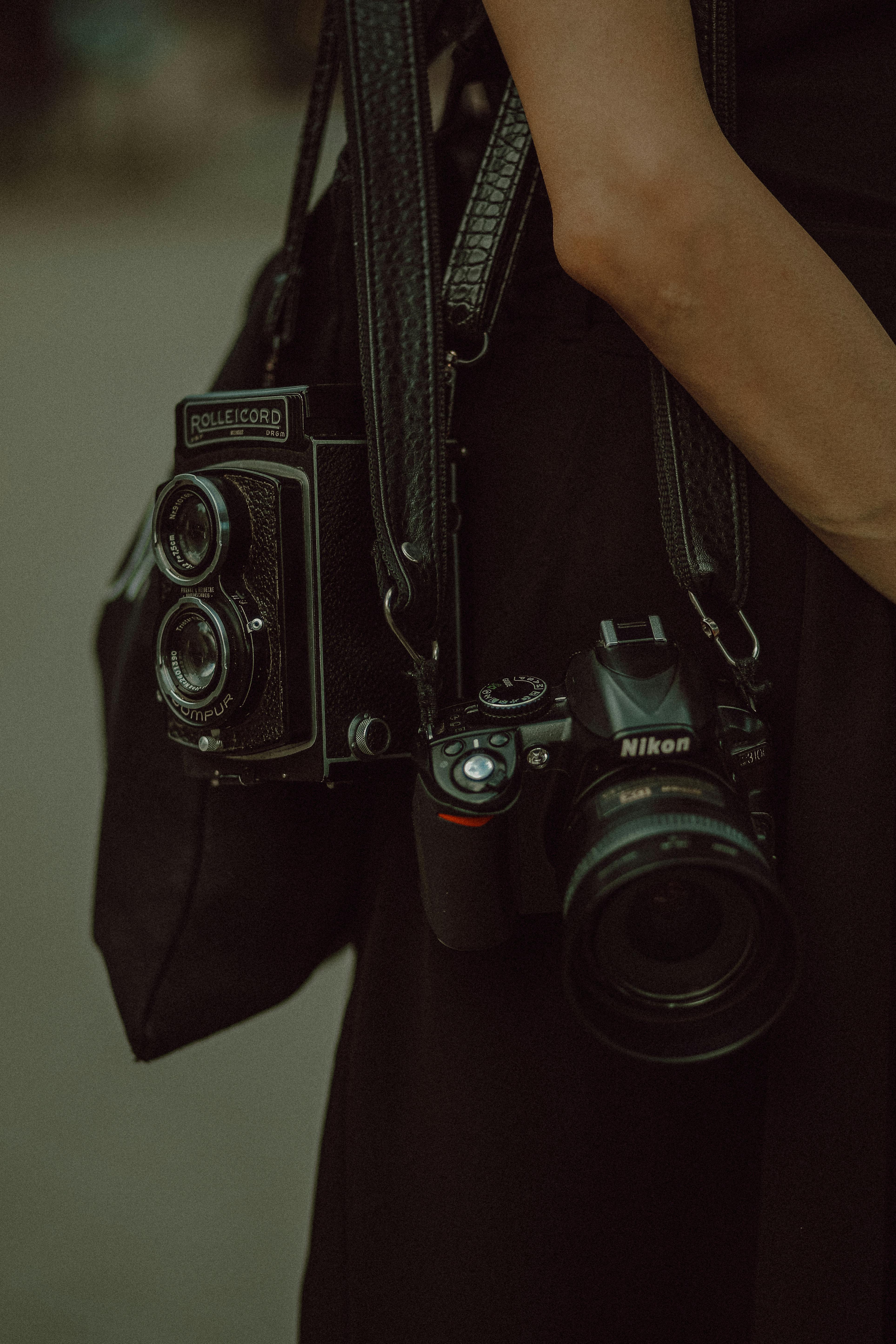
Quick access matters more than perfect packing on long summer trips. Keep a spare battery, memory card, lens cloth, and filter within easy reach. If you can get to your camera fast, you can catch more moments before they pass.
Also, try to keep your bag simple. A small insert or sling bag can work better than a large backpack. That way, you can stay lighter on your feet and spend more time taking photos.
- One camera body
- One main lens or one zoom lens
- Extra battery and memory card
- Polarizing filter
- Microfiber cloth
Better Summer Light: How to Work with Sun and Shade
Strong sun can be your friend if you know how to use it. The key is to stop fighting the light and start shaping it. That often means finding open shade, using backlight, or shifting your angle a few steps.
When you do this well, your travel photos look cleaner and more natural. You can capture faces without harsh lines and scenes without blown-out highlights. As a result, light becomes part of the story instead of a problem.
Find open shade for clean portraits
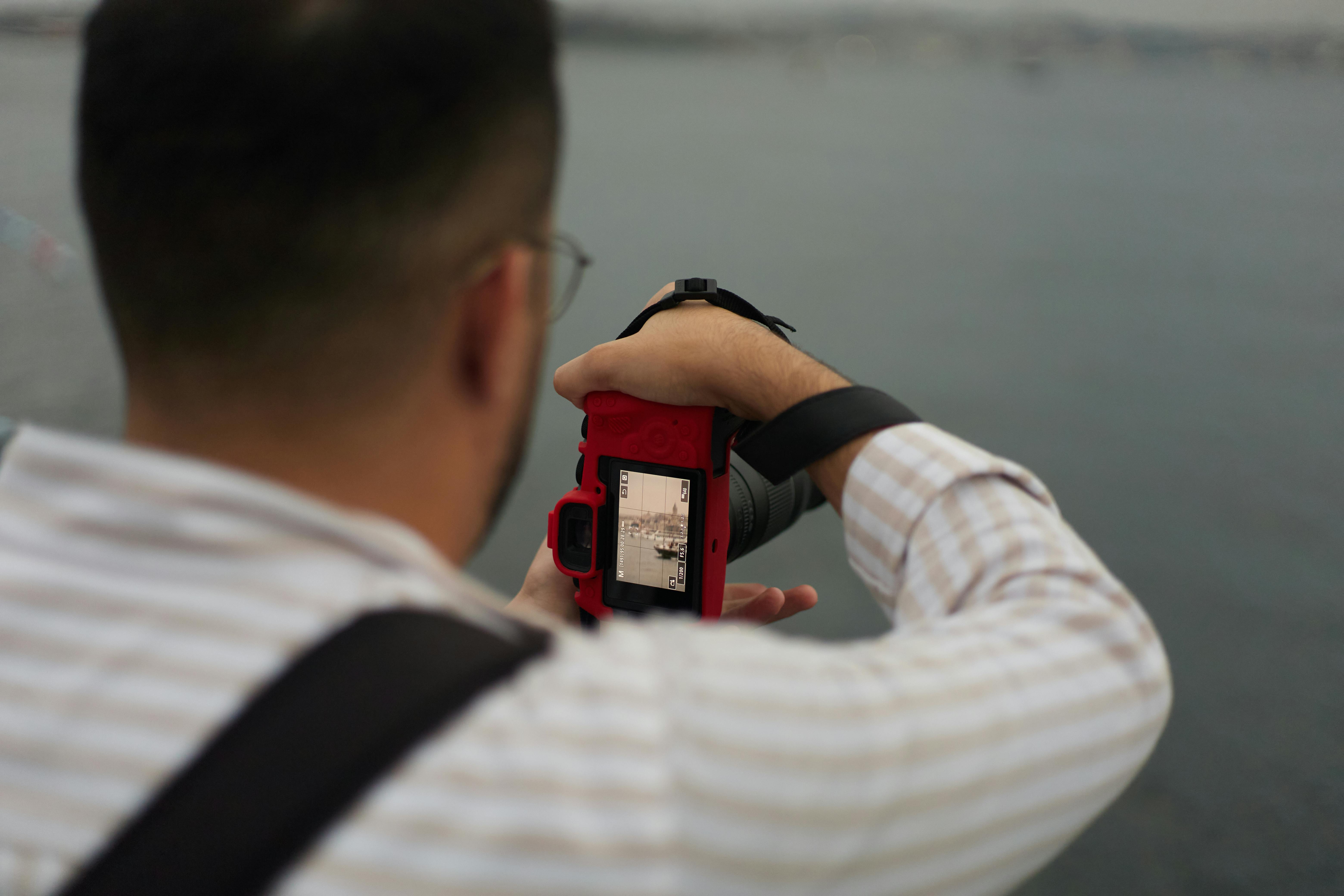
Open shade means soft light that falls under a building edge, tree, or overhang. Research shows that placing your subject in this kind of shade helps block direct sun and create more even light for portraits. It is one of the easiest ways to photograph people in summer without harsh shadows.
If you are taking a portrait, ask the person to stand just inside the shade, facing the open sky. This gives soft light on the face and keeps the background bright. It is a simple trick, but it works well.
Use the sun for silhouettes and water scenes
Sometimes the best move is to use strong sun on purpose. A low camera angle near the waterline can help you capture sun-drenched silhouettes with a more dramatic feel. This works well at beaches, lakes, and rivers.
You can also shoot toward the sun if you want strong shapes and glowing edges. Just watch your exposure so the subject does not disappear too much. A small change in angle can make the whole photo better.
Watch for reflections and glare
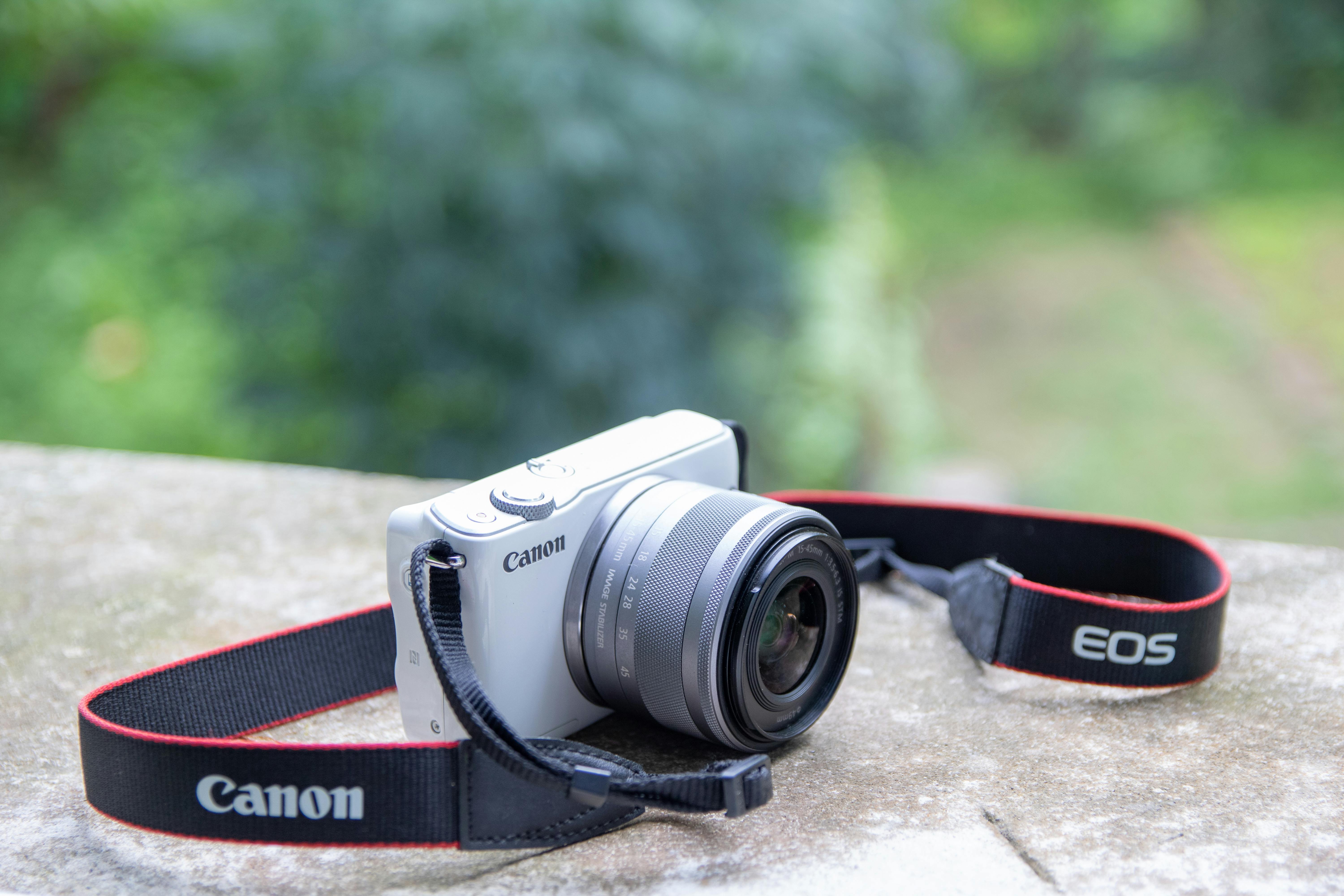
Summer light often bounces off cars, glass, sand, and water. That can create glare, but it can also add energy to a scene. A polarizing filter helps reduce unwanted shine while keeping color rich.
Try moving a few steps left or right before you raise the camera. Often, that small move improves the light more than any setting change. So before you edit later, test the angle first.
Simple Ways to Capture Better Travel Photos of People and Places
Travel photography is not only about landmarks. It is also about the small moments that show what a trip felt like. Meals, train rides, luggage, and sleeping spaces can become the most memorable images in your set.
That is why you should keep your eyes open all day. The best travel photos often happen between the big sights. In addition, those in-between moments help tell a true story.
Follow the rule of thirds for stronger frames
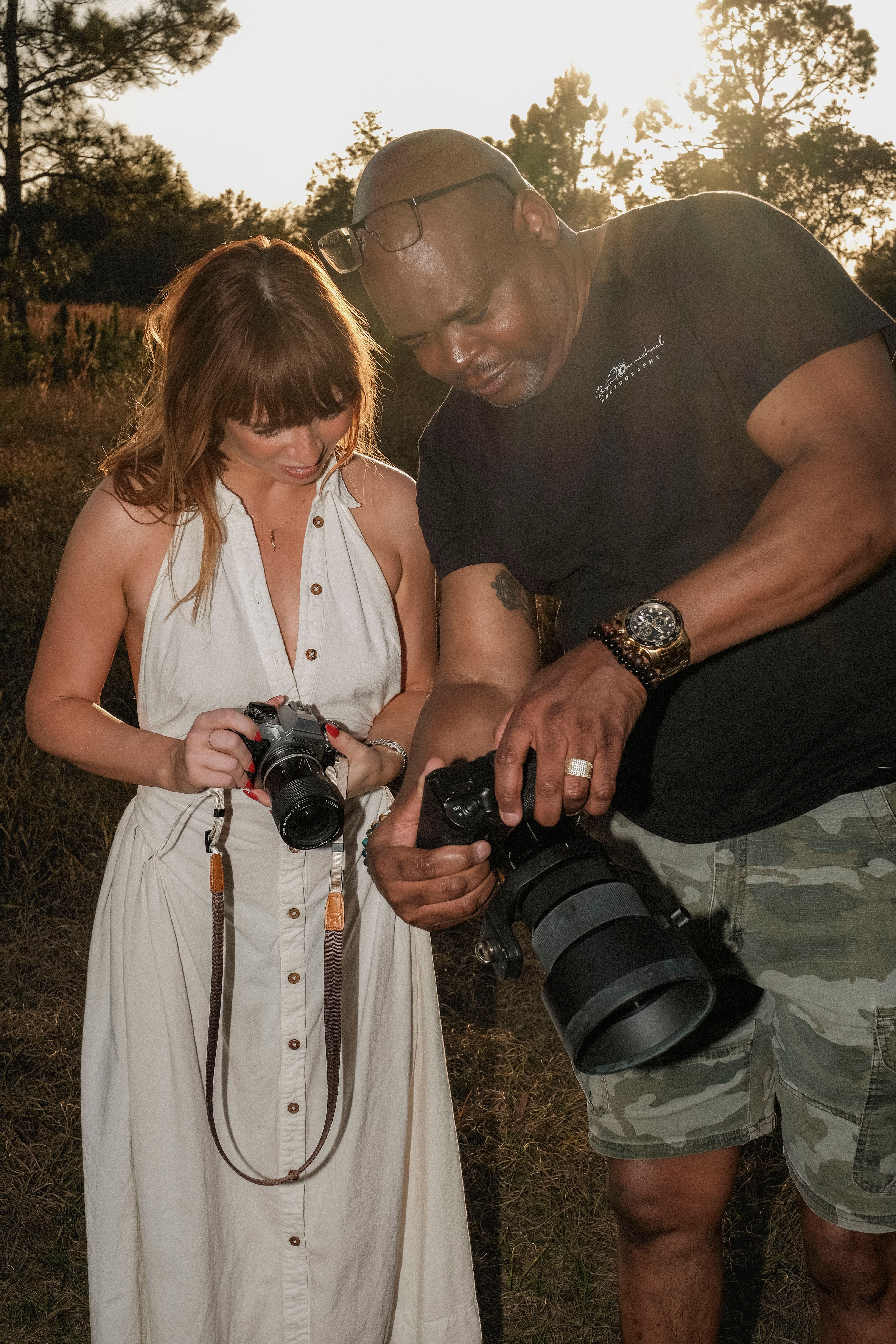
Place your main subject on one of the four intersection points of the rule-of-thirds grid. This often looks better than putting the subject right in the center. It gives the frame more balance and leaves room for the scene to breathe.
This rule works for people, buildings, boats, and even food. It is simple, and it helps your images feel more natural. If you are not sure where to place the subject, start there.
Ask before you photograph people up close
When you are within 12 feet, or about 3.7 meters, of a person, ask for permission before taking the photo. That is a respectful habit, and it often leads to better portraits. People relax more when they know what you are doing.
A quick smile and a simple gesture can go a long way. If they say yes, keep your camera ready and work fast. If they say no, move on and look for another moment.
Do not skip the small travel moments
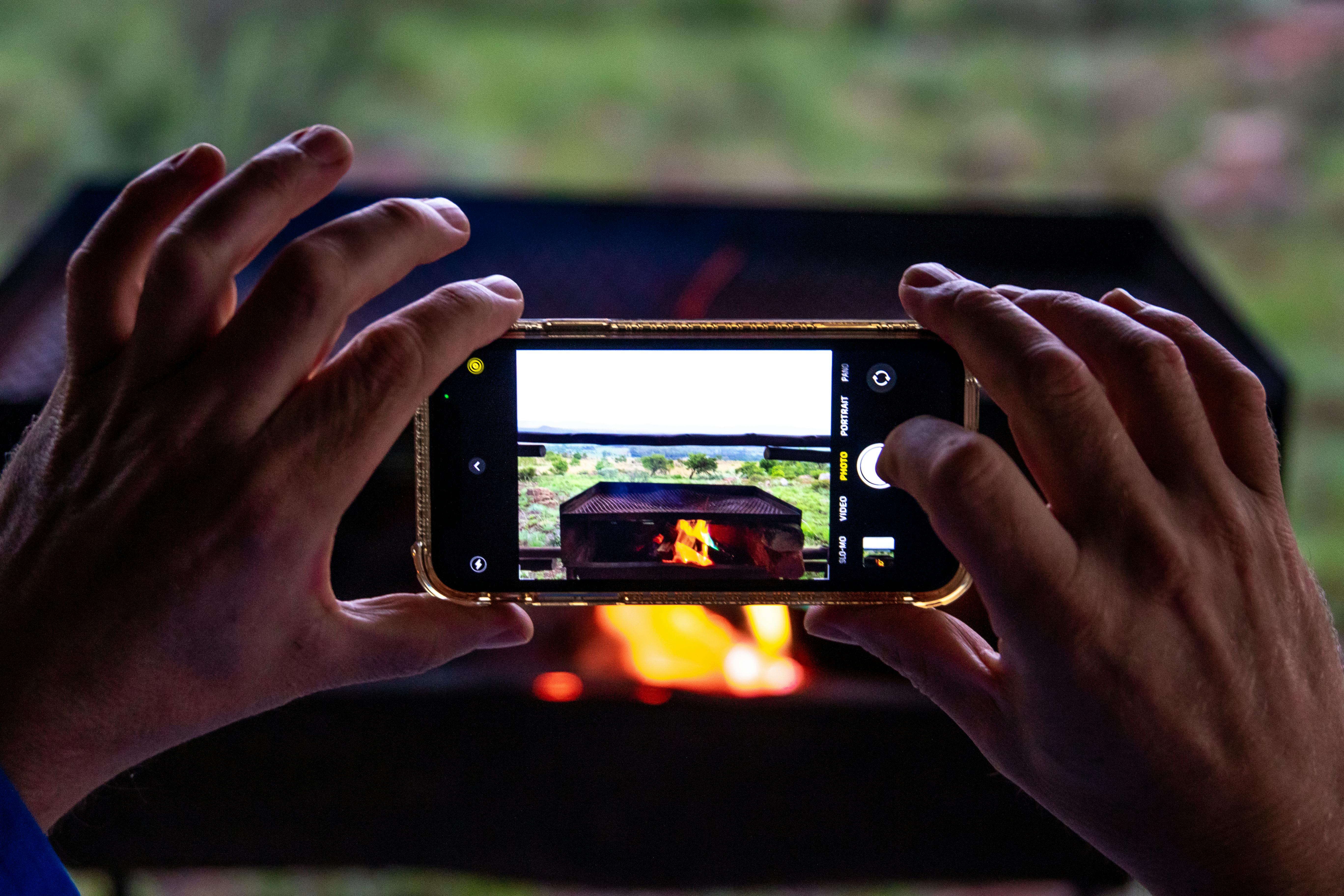
Some of the best travel photos are not grand at all. A meal at a roadside café, a packed train seat, or shoes by a hotel bed can tell a strong story. These details make a trip feel real.
Try to photograph at least a few everyday scenes each day. In the end, those simple frames often bring back the strongest memories. They remind you not just where you went, but how the trip felt.
- Photograph the place where you wake up.
- Capture one meal with local food.
- Get one street scene with people moving.
- Take one detail shot, like signs, hands, or textures.
Keep Your Camera Ready While Walking All Day
Long summer trips often mean long walks. You may move from a train station to a market, then to a hill view, and then to dinner. If your camera is buried in a bag, you will miss moments.
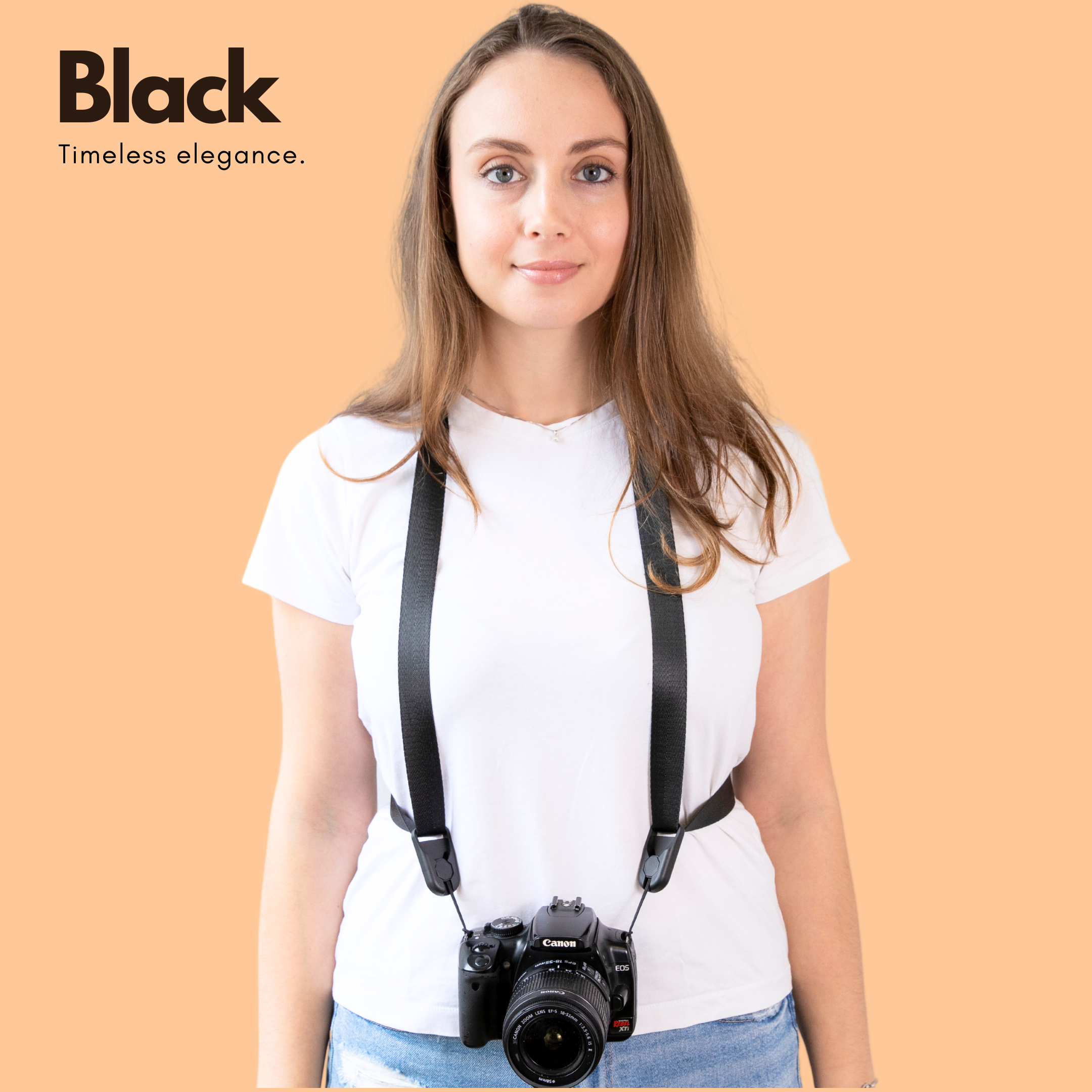
A ready setup helps you react fast and stay relaxed. It also keeps your hands free when you need them. Therefore, your camera should feel like part of your routine, not a burden.
Build a carry setup that feels comfortable
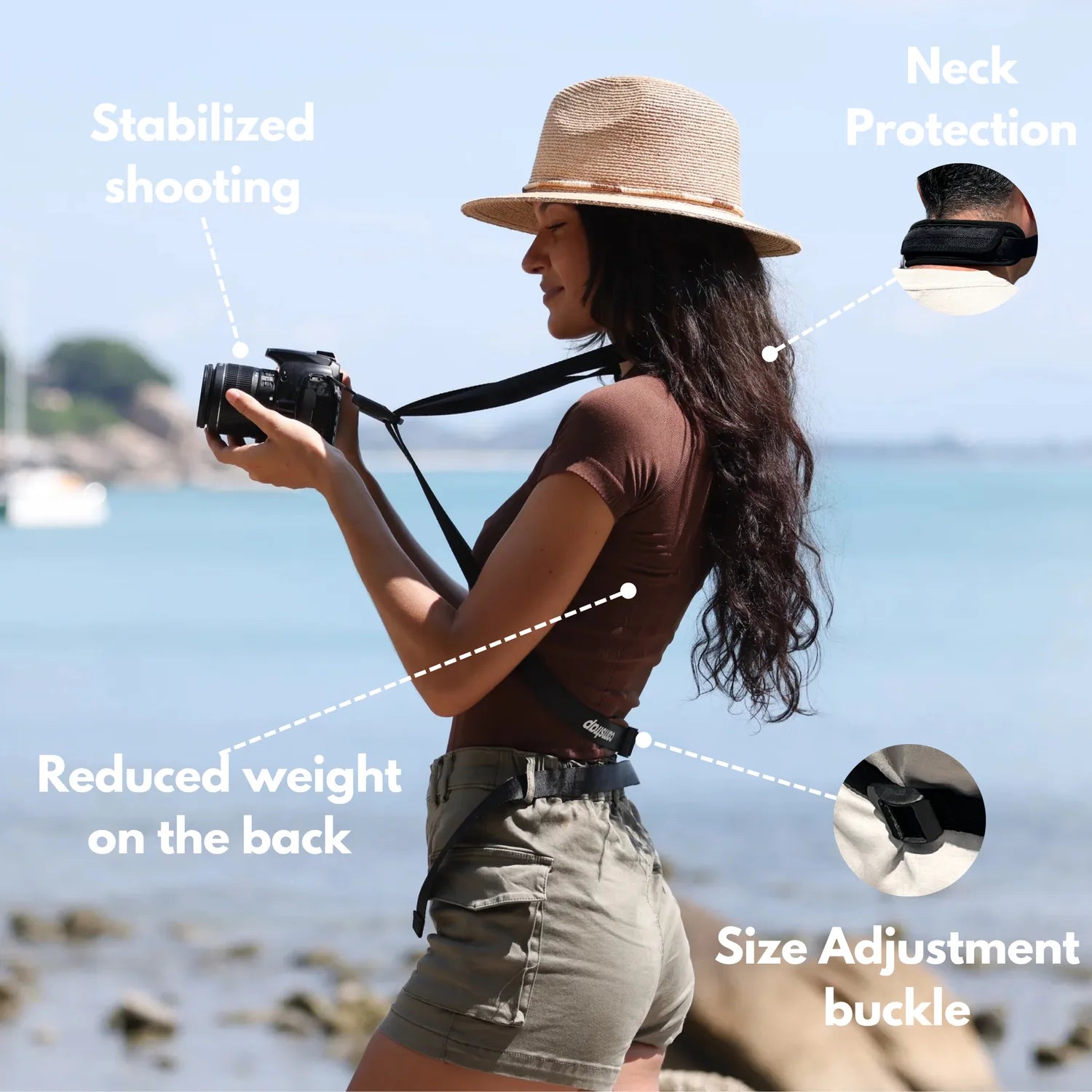
A good strap or clip system can make a big difference during full travel days. Camstrap products like the camstrap voyager, camstrap explorer, camstrap nomad, and camstrap magclip can be part of a simple carry plan. The main goal is comfort, easy access, and steady support.
When your camera hangs well, you can lift it quickly and keep moving. That helps a lot when you are chasing light or catching a street scene. So comfort is not a small detail. It is part of how you capture better photos.
Make your camera easy to use in seconds
Set your camera before you leave your room. Choose the mode you expect to use most, then check your focus mode, file type, and battery. If your camera is ready, you can shoot faster when a moment appears.
Also, learn one quick way to change exposure without looking down too long. The less time you spend adjusting, the more time you spend observing. That habit alone can improve your travel photos a lot.
Use a small routine for each stop
Every time you arrive somewhere new, take a short photo pause. Look for light, foreground detail, and the best angle. Then take one wide shot, one close shot, and one human moment.
This routine keeps you focused and helps you avoid random shooting. It also works well on long summer days when there is so much to see. As a result, you come home with a stronger set of photos.
A Simple Plan to Capture Better Travel Photos All Day
You do not need a huge plan to capture better travel photos. You need a few good habits that repeat all day. Start with light, keep your kit light, and stay ready to shoot.
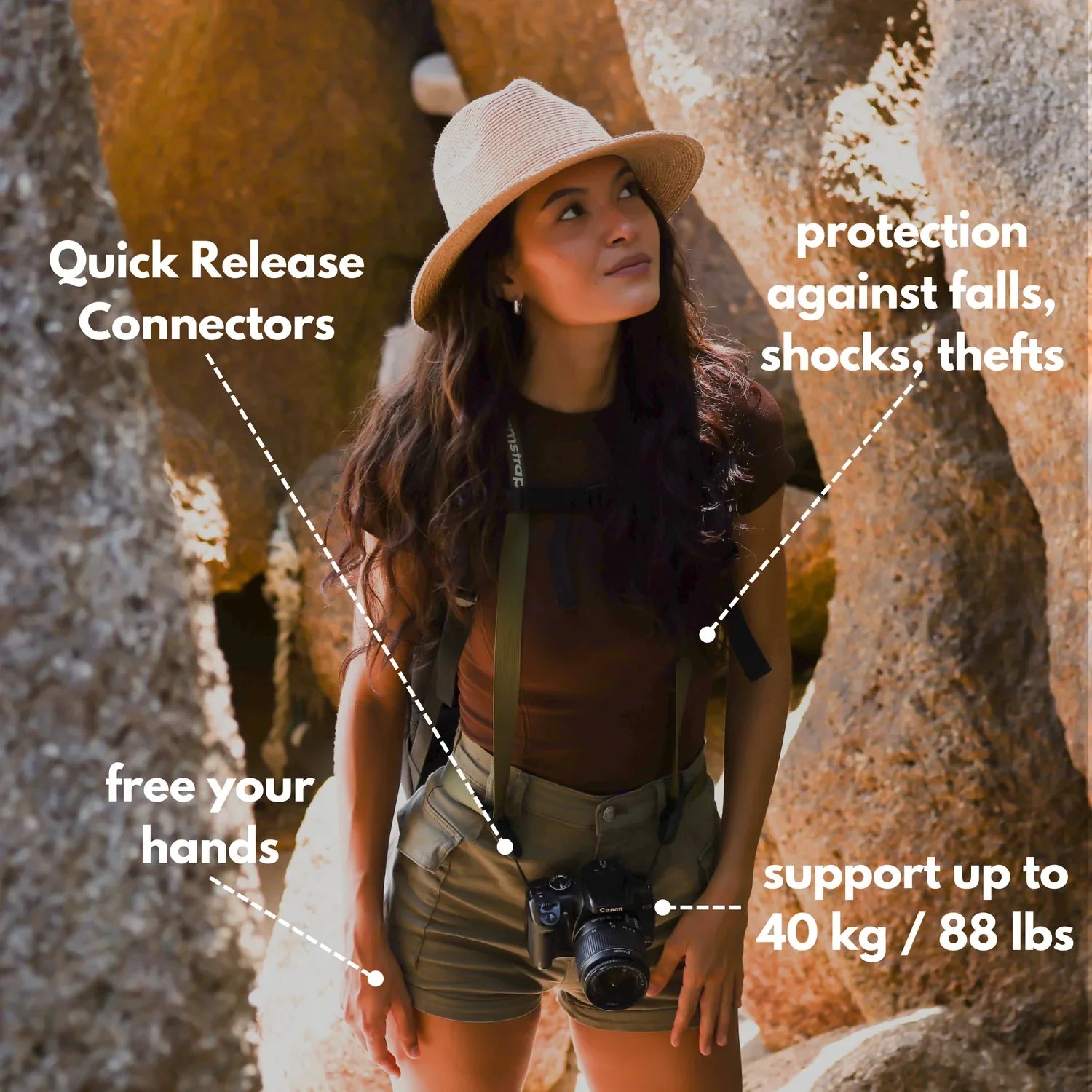
Use wide focal lengths for scene depth, open shade for soft portraits, and a polarizing filter for strong summer color. Keep one camera and a simple strap setup so you can move easily. Then add the small moments that make your trip feel real.
If you remember one thing, remember this: the best travel photos often come from staying alert and staying light. Long summer days give you more chances, but only if your camera is ready when the moment appears. So keep moving, keep looking, and keep your camera close.
Frequently Asked Questions
How do I take better travel photos without carrying too much gear?
Keep your setup simple and practical so you can move quickly without unpacking gear all the time. Use one versatile lens, shoot wide to include more of the scene, and focus on using available light and smart angles rather than extra equipment.
What camera settings work best for summer travel photos?
Start with aperture priority mode and use f/2 to f/2.8 for portraits or f/5.6 to f/8 for streets and landscapes. For moving subjects, use a shutter speed of 1/500s or faster, and adjust ISO as needed for bright light.
How can I keep my camera ready while walking around all day?
Carry your camera in a way that lets you shoot quickly without stopping to dig through a bag. Keep the setup light and accessible so you can respond fast when something interesting appears.


