


- Track the aircraft smoothly at its speed so the plane stays sharp and the background blurs.
- Use burst mode with continuous AF to catch the sharpest frame in the sequence.
- Keep shutter speed around 1/60s; 1/30s or slower exaggerates the panning effect.

Burst mode photography fires off several frames in quick succession. At airshows, it can leave one jet or prop plane crisp while the sky and crowd smear into motion around it. During the exposure, the camera moves with the aircraft. Match your speed and hand movement to the plane, and the subject stays sharp while the background streaks past.
Shop the setup

- Regular price
-
€42 - Regular price
-
- Sale price
-
€42
By choosing the Camstrap strap, you are opting for a high-quality product designed to meet the needs of the most demanding photographers.
- Developed by a physiotherapist to relieve neck and back pain.
- Fast delivery with tracking by the Post Office 🚚
- Can be used as a shoulder strap or hands-free harness

- Regular price
-
€36 - Regular price
-
€42 - Sale price
-
€36
Free shipping included
The motion trick behind a sharp aircraft frame
Panning shots look sharp because the camera tracks the plane at nearly the same speed it’s moving. The aircraft stays in almost the same spot on the sensor during the exposure, while the background shifts and blurs.
The blur is part of the effect. It proves the camera moved with the subject and gives the photo a stronger sense of speed.

Why airshow motion works so well
Aircraft at airshows often move in a smooth, predictable line across your frame. Tracking that is easier than following a bird that darts in every direction. The technique works best when the subject moves roughly parallel to you. A jet crossing the runway or a prop plane on a low pass gives you that clean side-to-side motion.
Angle counts more than many people expect. When the plane comes straight at you or turns away fast, the camera has a harder time matching the movement, and the subject can soften.
Shutter speed shapes the look
Shutter speed controls how much blur you see in the background and in the plane itself. Canon recommends starting around 1/60s for panning, then trying 1/30s or slower for stronger blur.

At about 1/125s, you’ll see less blur than at 1/60s. At 1/200s or 1/400s, you can still get background blur if the plane moves fast and your tracking stays smooth.
Fast speeds like 1/1000s freeze motion well, but they reduce the panning look. Airshow panning usually lives in the slower range for that reason.
Settings that keep the plane steady in frame
The sharpest airshow panning frames come from steady tracking, not luck. Use continuous autofocus, a burst rate that gives you choices, and a shutter speed that matches the plane’s pace. These settings work together. If one part slips, the whole frame can miss.
Focus mode and drive mode that do the work

Continuous AF, also called Servo or AI Servo AF, is the right focus mode for moving aircraft. It keeps adjusting focus while the plane crosses the sky.
Back-button focus helps too. It lets you start focus before the plane reaches your ideal spot, then keep tracking without forcing the shutter button to handle both jobs.
Continuous shooting adds another edge. It lets you press early, keep firing through the pass, and pick the best frame later.
- Use continuous AF for tracking.
- Set continuous drive, not single shot.
- Start firing before the plane reaches the frame edge.
- Keep your elbows tucked and rotate from the waist.
How to on burst mode?

Burst mode turns on when you switch the drive setting to continuous shooting. On many cameras, that means choosing the icon with stacked frames or a high-speed drive option in the quick menu. Use the fastest normal drive mode your camera can sustain. A mid-tier body such as the Canon EOS 90D can shoot about 10 frames per second, which gives you more chances to catch the exact wing angle you want.
Buffer depth is worth checking. Many modern cameras can hold a short run of raw frames without slowing, but the buffer is still finite. A mid-tier body may slow after roughly a few dozen RAW files, while JPEGs usually keep going longer.
How the camera, lens, and body position help
Good panning starts before the shutter fires. Your stance, lens choice, and support method all affect how cleanly you can follow the aircraft.
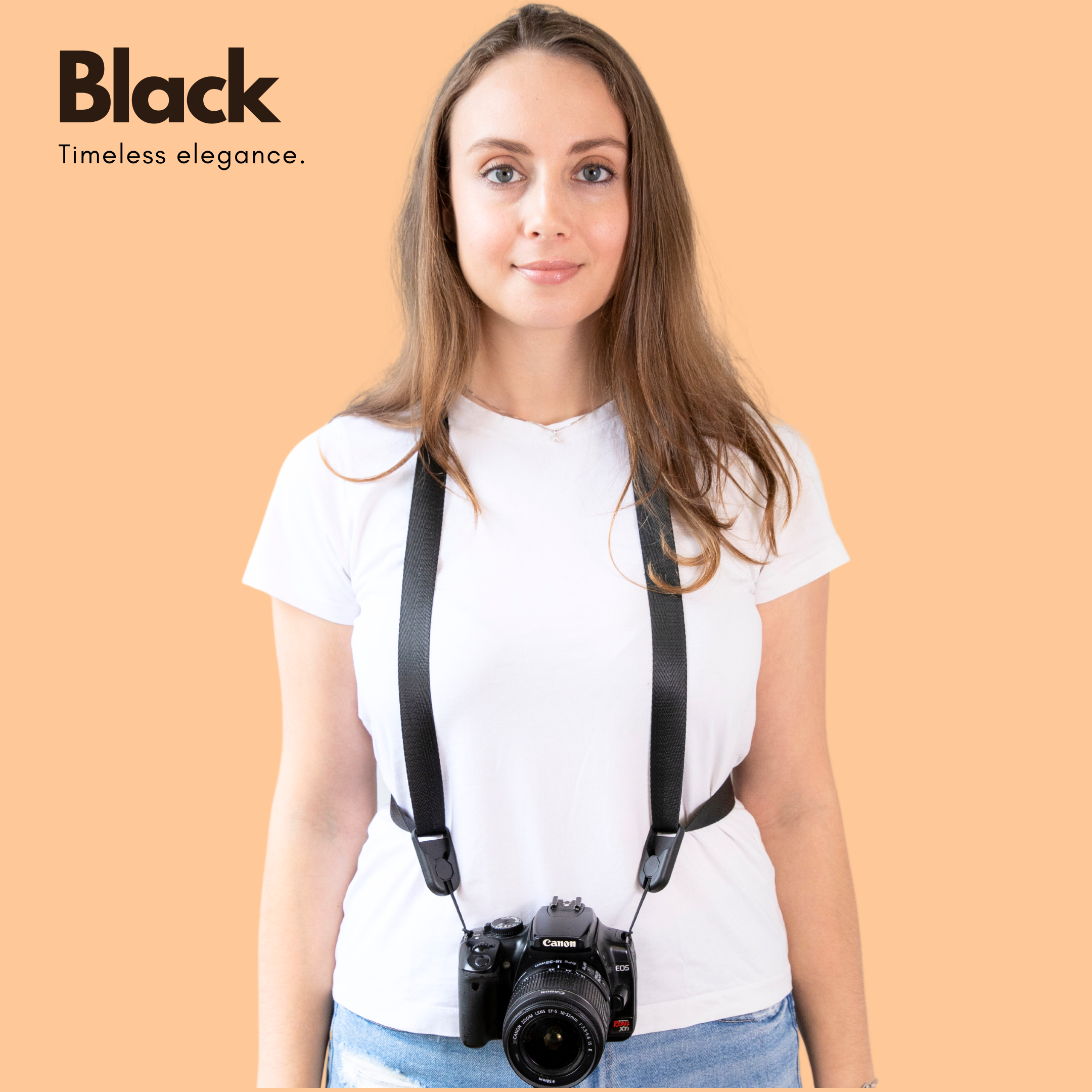
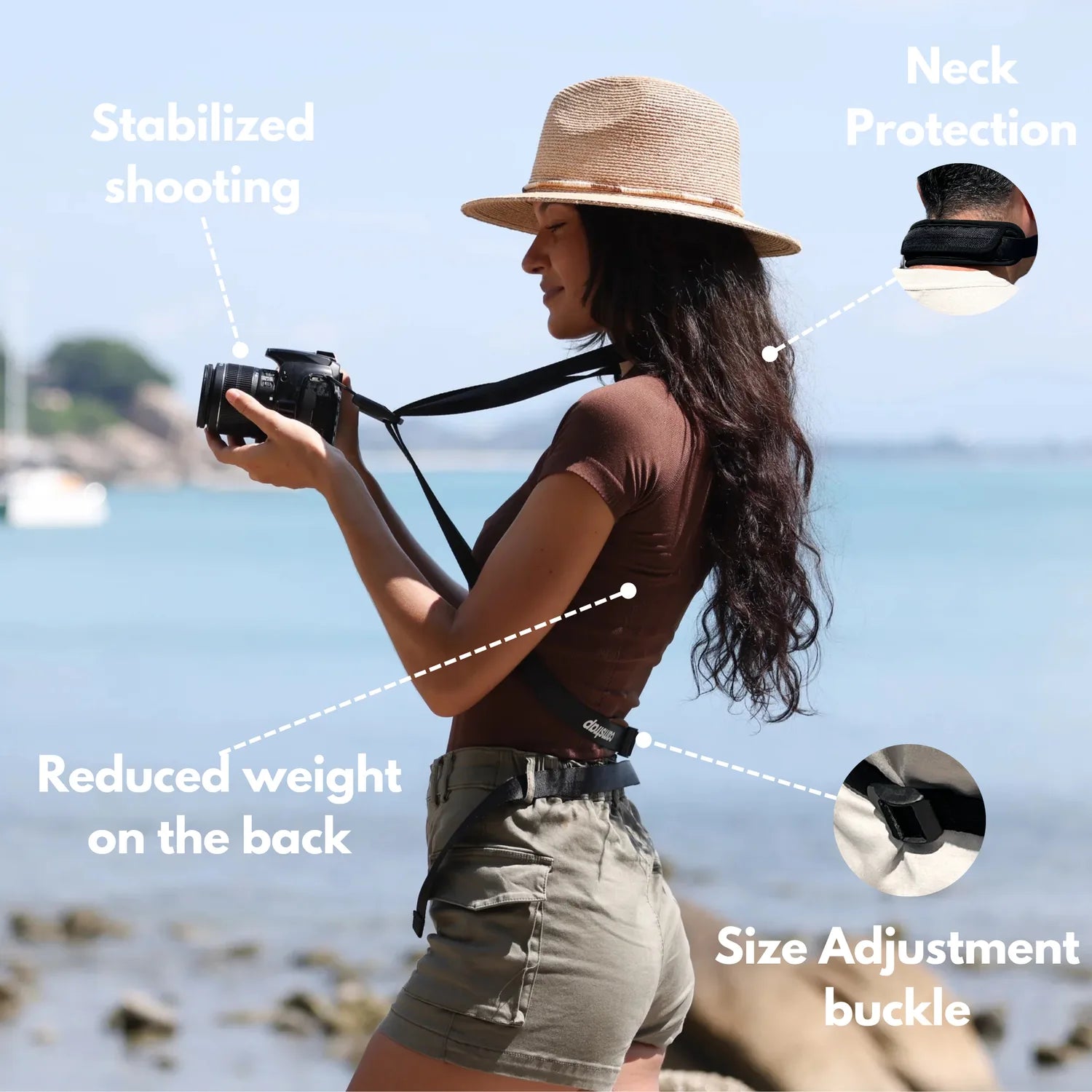
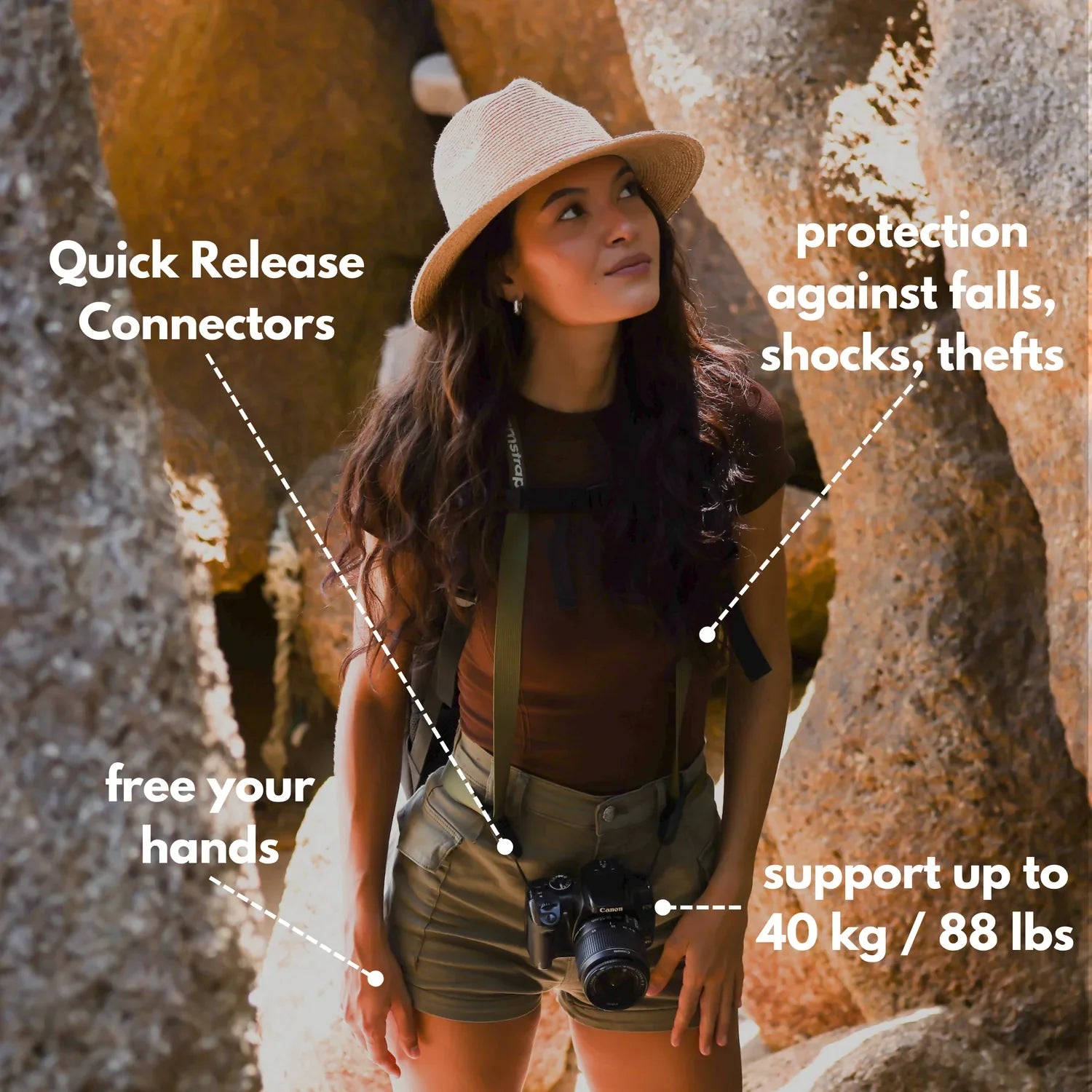
A stable carry setup matters because airshows involve walking, stopping, and changing positions fast. A hands-free strap can keep the camera ready while you move along the fence line, and a secure sling like the Camstrap voyager helps spread weight across the shoulder so the camera stays easy to lift for the next pass.

Lens choice for cleaner tracking
A medium telephoto lens often works best, usually around 50mm to 85mm on full frame or the matched crop equivalent. That range gives you enough reach without making the view so tight that small tracking errors ruin the frame. Longer glass can still work, but it demands smoother motion. The tighter the framing, the more every small hand shake shows up in the final image.
Use an aperture around f/2.8 to f/5.6 if light allows. Wider openings help keep shutter speed up, while a slightly smaller opening can make focus errors less painful.
Body position and follow-through
Stand with your feet apart and turn your torso like a tripod. Keep your elbows close, then rotate from your hips and waist as the plane passes.

Do not stop your motion when you press the shutter. Follow through after the shot, just like a golfer keeps the swing moving after contact.
The last part matters. If you lock up at the moment of release, the plane often blurs even when your timing was close.
Which shutter mode is best?
Continuous shooting mode is best for airshow panning because it gives you several frames from one smooth pass. That extra frame count raises your odds of getting one image with sharp cockpit detail and clean wing lines. Use it with continuous AF and a fast card. If your camera offers pre-capture or pre-burst buffering, turn it on for fast passes because it can store frames from just before full press.
Electronic shutters can help on some mirrorless bodies, but they also bring tradeoffs. Very fast moving prop blades, LED screens, and some stadium lights can show banding or odd motion if you push the wrong mode too far.

How the shutter choice changes the result
A mechanical shutter is still a safe choice for many airshow frames. It avoids the rolling-shutter skew that can bend propellers or tilt fast-moving lines in some electronic modes.
Use electronic first curtain if your camera has it and you want less shake without full electronic shutter risks. Full electronic can be useful for silent work, but it is not always the cleanest choice for aircraft with props or fast rotor motion.
Card speed matters here too. UHS-II cards with V60 or V90 ratings clear the buffer much faster than older UHS-I cards, which helps when you fire long sequences in RAW.
What the six basic shot types add to an airshow story
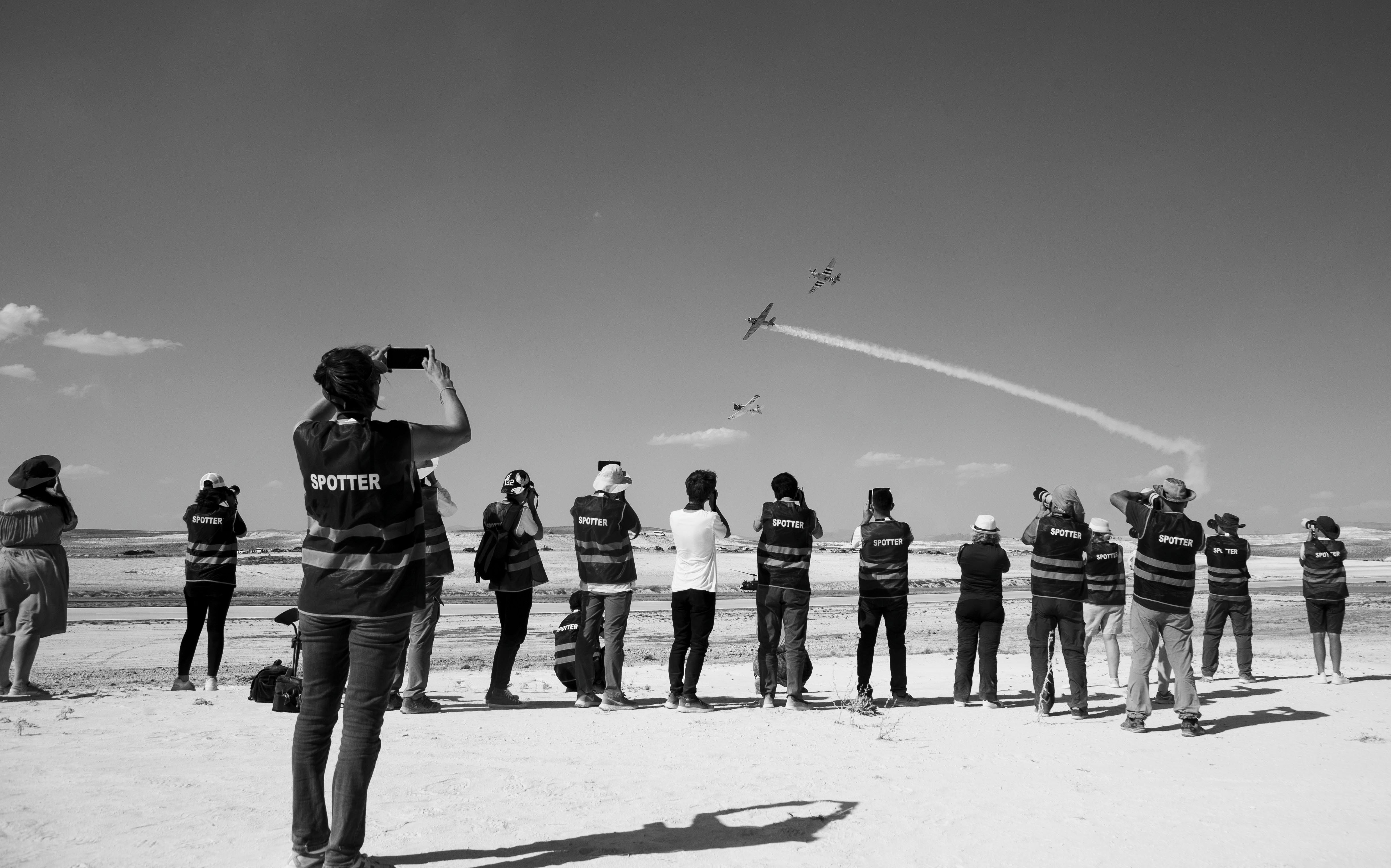
The six basic camera shot types help you vary the story around your panning frames. A good airshow set is not only one style of photo. Mixing shot sizes gives your final gallery more life. It also helps you place the sharp panning image in context.
- Extreme wide shot for the whole airfield.
- Wide shot for the plane in its space.
- Medium shot for the full aircraft profile.
- Close-up shot for cockpit, nose, or landing gear.
- Extreme close-up for details like rivets or markings.
- Over-the-shoulder style framing when you include a pilot or viewer.
Those shot types are useful because panning alone can feel repetitive. A wide frame shows scale, while a close frame shows texture and engine detail.
At airshows, I like to pair a sharp panned pass with one tighter detail frame. That small mix makes the edit feel complete without adding extra gear or extra stress.
Is 30 a slow shutter speed?

1/30s is a slow shutter speed for airshow panning and a very useful one. It gives strong motion blur in the background while still letting a well-tracked aircraft stay sharp. It also raises the difficulty. At 1/30s, your hand motion must match the subject more closely than it does at 1/125s.
For many photographers, 1/60s is the easier starting point. Once that feels steady, dropping to 1/30s can create a more dramatic blur behind the plane.
When slower speeds make sense
Slower speeds work best when the plane crosses smoothly and fills enough of the frame. A large jet on a clean pass is easier to pan at 1/30s than a small aircraft changing direction.
They also work well in bright daylight, where you can keep ISO low. If the light drops, you may need a wider aperture or a higher ISO to stay at the same shutter speed.
The tradeoff is simple. A low ISO keeps file quality cleaner, but it may force you to open the aperture more than you want.
Putting the technique together on the flight line
The best panning shots come from a simple rhythm. Track early, focus early, and keep moving after the shutter clicks. Start with a setup such as 1/60s, f/2.8 to f/5.6, and continuous AF with burst shooting. If the pass is clean and your tracking feels solid, try 1/30s for a stronger sense of speed.
Review the results by looking at the prop tips, cockpit edges, and text on the fuselage. If those details are sharp, your panning matched the aircraft well.
Image review should stay brief, because too much chimping breaks your rhythm. A quick check can show if your shutter speed is too slow or your focus point keeps drifting.
For editing, cull fast and keep the frame with the best wing angle, clean background, and sharp nose art. A short burst often gives you the exact moment you wanted, even if the first frame missed. Sharp panning at airshows looks impressive because it blends control and motion in one frame. When the camera tracks well, the aircraft stays crisp, the background turns to streaks, and the photo feels alive.
The best airshow shots usually come from a steady stance, continuous AF, and a shutter near 1/60s. On the next low pass, start tracking a second early and keep the pan going past the frame edge.
Frequently Asked Questions
How to on burst mode?
To turn on burst mode, set the camera’s drive mode to continuous shooting. On many cameras, that means selecting the drive icon with multiple frames or switching from single-shot to continuous drive.
What are the 6 basic camera shot types?
The six basic camera shot types are extreme long shot, long shot, medium shot, medium close-up, close-up, and extreme close-up. They describe how much of the subject is visible in the frame.
Is 30 a slow shutter speed?
Yes, 1/30s is a slow shutter speed and creates stronger motion blur than faster settings. For airshow panning, 1/30s is commonly used when you want a more dramatic sense of speed.
Which shutter mode is best?
Continuous shooting mode is best for panning shots because it captures multiple frames during a pass. Combined with continuous autofocus and a shutter speed around 1/60s or slower, it gives the best chance of getting a sharp aircraft frame.


