


- Blend in with the street, keep the camera low, and shoot in short bursts.
- Choose 35mm for context or 50mm for cleaner, more intimate candids.
- Pre-focus by zone or use AF-C so fast scenes stay sharp.

Focus photography is the art of catching real people in real moments with a camera that stays ready and calm. It works best when the camera feels like part of your walk, not something you keep lifting and hiding. Crowded streets, markets, and transit hubs reward quick thinking. Fast focus and a simple setup matter, along with enough comfort to keep moving for hours.
Shop the setup

- Regular price
-
€42 - Regular price
-
- Sale price
-
€42
By choosing the Camstrap strap, you are opting for a high-quality product designed to meet the needs of the most demanding photographers.
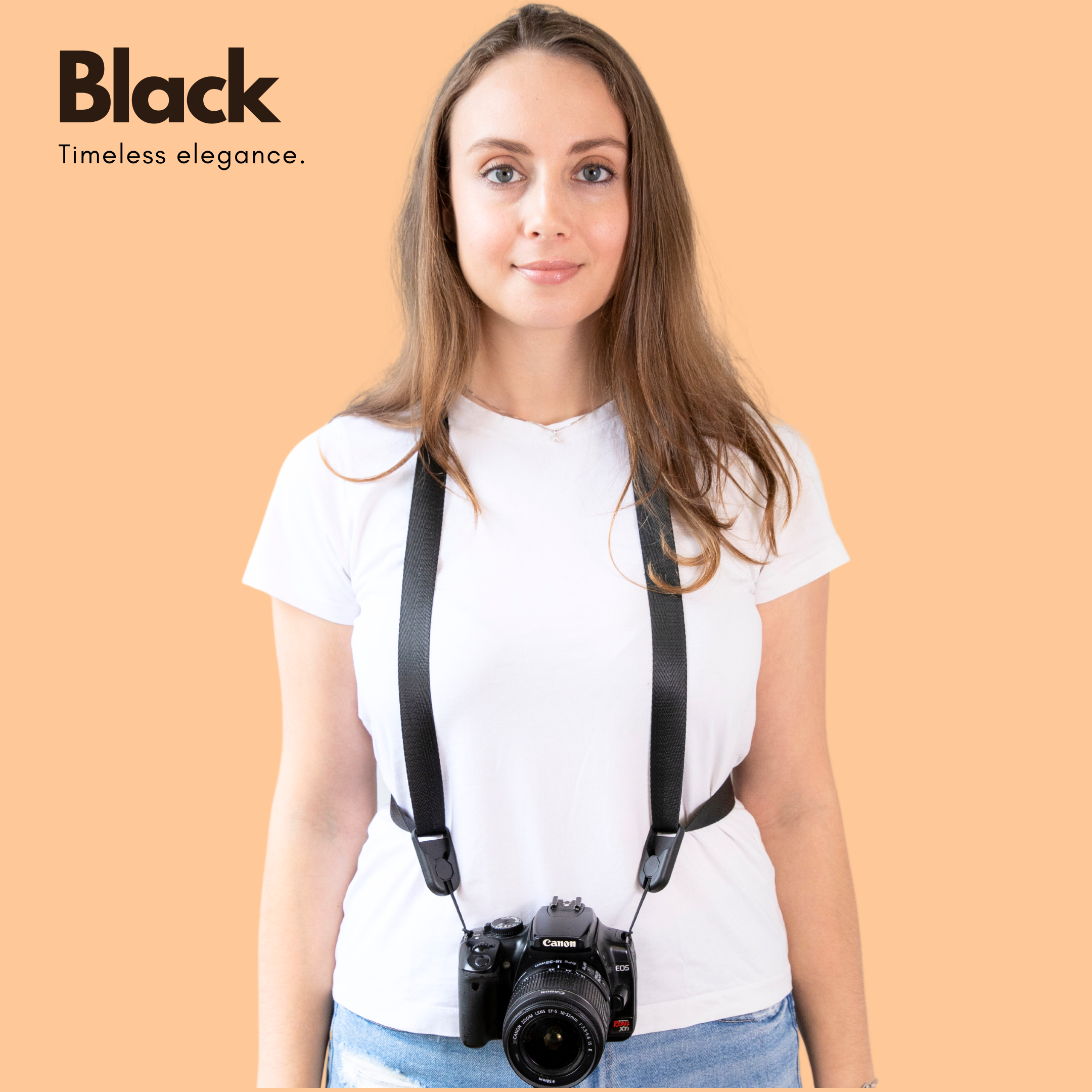
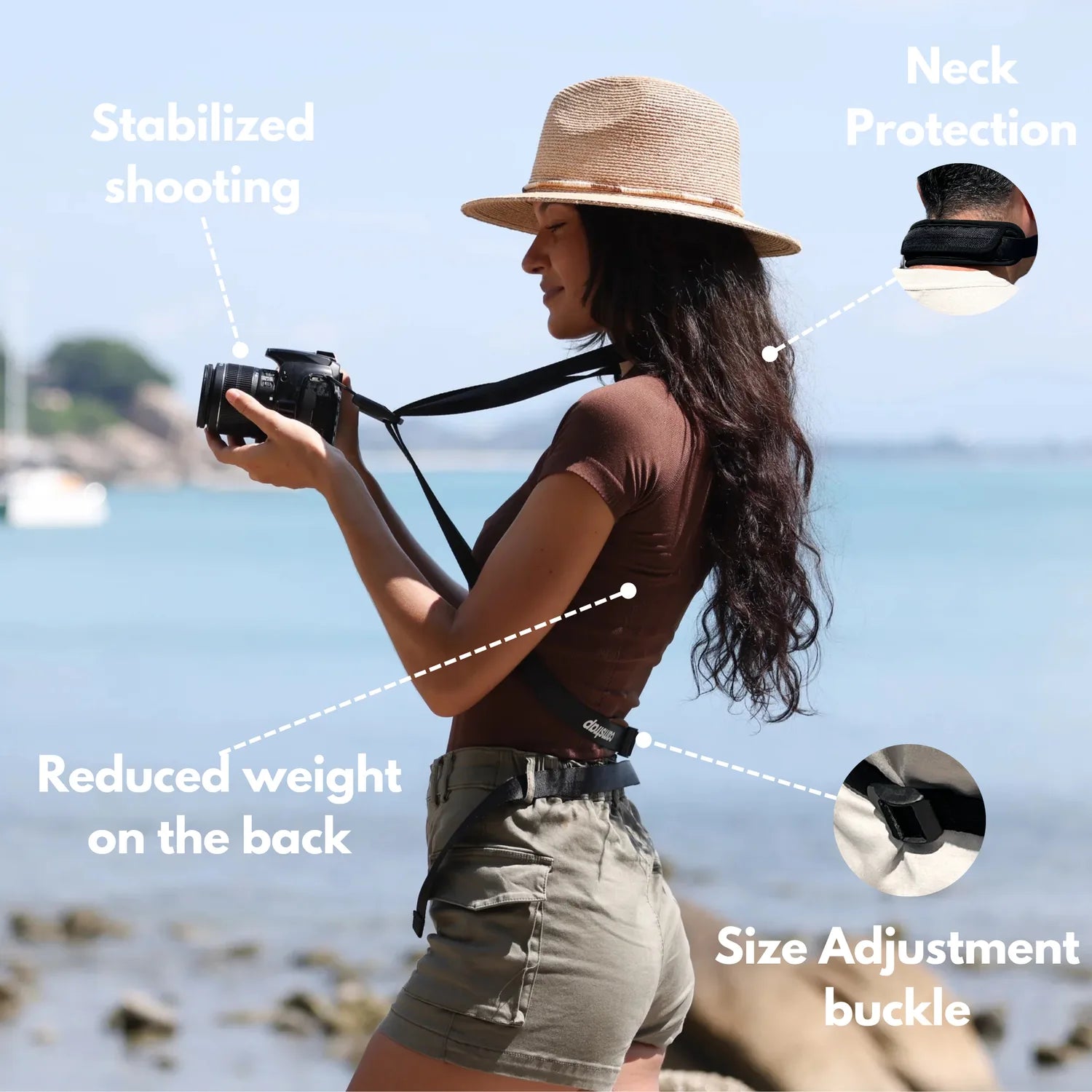
- Developed by a physiotherapist to relieve neck and back pain.
- Fast delivery with tracking by the Post Office 🚚
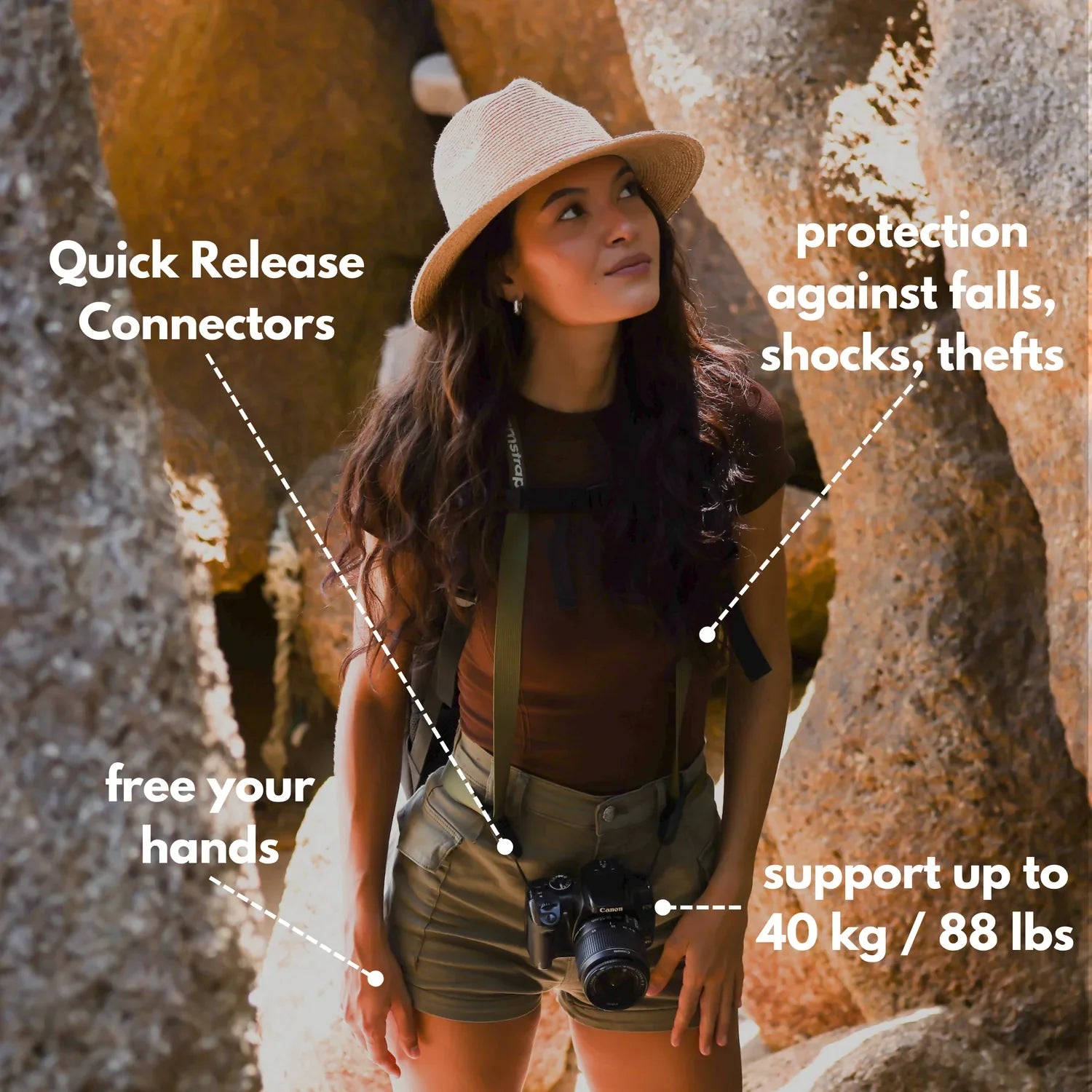
- Can be used as a shoulder strap or hands-free harness

- Regular price
-
€36 - Regular price
-
€42 - Sale price
-
€36
Free shipping included
Moving through the street without looking like a shooter
The first task is to blend into the pace of the street. Walk with purpose, keep your camera close, and skip the sudden stops that make people stare.
Body language counts more than gear. A relaxed face, slow head turns, and a normal walking rhythm help you read as just another passerby.

Small habits that lower your profile
- Keep the camera at chest height until you need it.
- Watch scenes before raising the camera.
- Use one hand only when you can, then shoot fast.
- Take a few frames, then move on.
People react to hesitation, and that is where this approach pays off. Pause too long and the lens stands out before the scene does. On a busy street, a calm, steady presence usually feels natural. There is no need to treat the camera like contraband.
Which lens gives the cleanest candid street view?
A 35mm or 50mm lens suits candid street work because both render a scene in a natural way. Those focal lengths sit close to what the eye takes in, so faces and body shapes stay honest.

For tighter frames, 50mm gives a clean balance between context and subject shape. For wider scenes, 35mm leaves room for people, signs, and street detail.
Canon’s street examples back this up with real settings. One uses 50mm at 1/80s, f/2.8, ISO100, while another shows 35mm at 1/20s, f/8, ISO400.
Picking the right look for the moment
- Use 35mm when you want the full scene to matter.
- Use 50mm when you want cleaner framing and easier subject isolation.
- Open to f/2 to f/2.8 when you want a stranger to stand out.
- Stop down near f/8 when you want more of a crowded street sharp.
A wide aperture gives shallow depth of field, which separates a person from the crowd. The tradeoff is simple: focus errors show up more easily. For very busy scenes, f/8 is a smart middle ground. It gives more depth of field while still keeping shutter speed usable in changing light.

How do you photograph people candidly without being obvious?
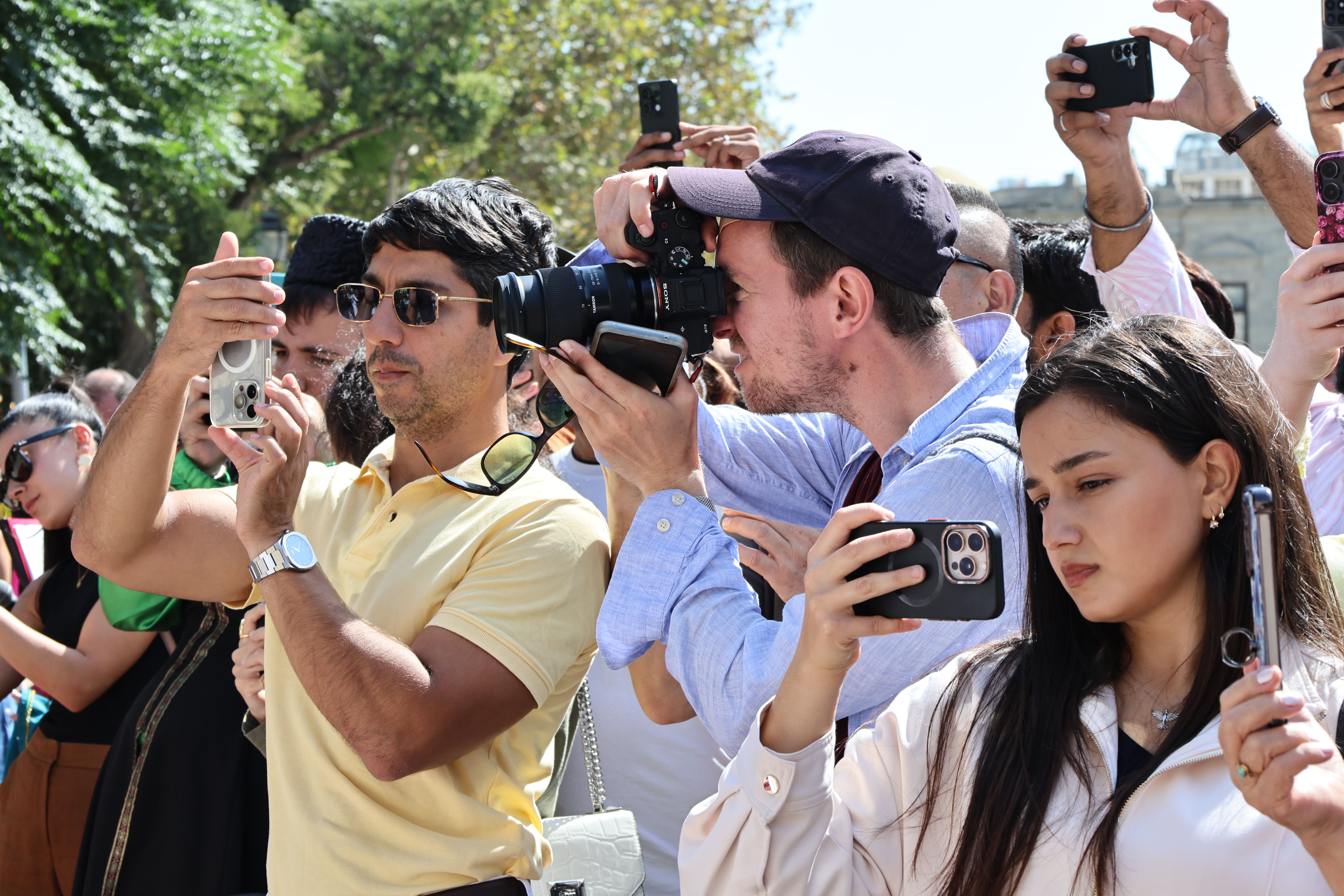
Candid street photos work best when you shoot from the flow of the crowd. Keep moving, frame quickly, and avoid locking eyes with your subject before the shot.
Use the camera as if you are checking the scene, not hunting for a face. A short glance down, then a fast raise, often feels less intrusive than a long, fixed aim.
A few simple moves help a lot:
- Pre-frame the scene while walking.
- Wait for a person to enter the frame.
- Press the shutter in one short burst.
- Lower the camera and keep walking.

This method works because it cuts down the delay between seeing and shooting. People read your movement, and the moment passes before they fully react.
How do you focus quickly when scenes change fast?
Fast focus starts with continuous AF, also called AF-C or AI Servo, plus eye or subject detection when your camera supports it. That setup tracks motion well as people cross your frame. Manual AF point choice also matters. It keeps the camera locked on the person you want instead of a bright bag or a pole in front.
Camera settings that keep up
- Use a single AF point or a small zone for control.
- Try back-button focus so focus and shutter stay separate.
- Keep a thumb on AF-ON while your finger fires the shutter.
- Use pre-capture or pre-burst if your body offers it.
Pre-capture can save frames from just before the full press. It helps with brief gestures, like a glance, a laugh, or a hand movement.
Buffer size still matters on real street walks. Many mid-tier bodies slow after roughly 15 to 25 RAW frames, while JPEG mode can hold longer. A short 3 to 6 frame burst will not usually stress a modern buffer.
Can I shoot street photos with a small camera setup?
A small camera setup is often the best choice for crowded city work. A light body and a compact prime lens let you react faster and stay less tired.
Small gear also keeps you less noticeable. That helps when you want people to keep acting naturally around you.

Canon’s daylight example shows how flexible a compact setup can be: f/2.8, ISO100, and 1/2000s in bright light. In dimmer streets, you may need to raise ISO, open the aperture, or slow the shutter speed.
What a lean street kit should do
- Start fast without digging in a bag.
- Stay balanced at your side for long walks.
- Move smoothly when you raise it for a frame.
- Keep the lens cap and straps out of your way.
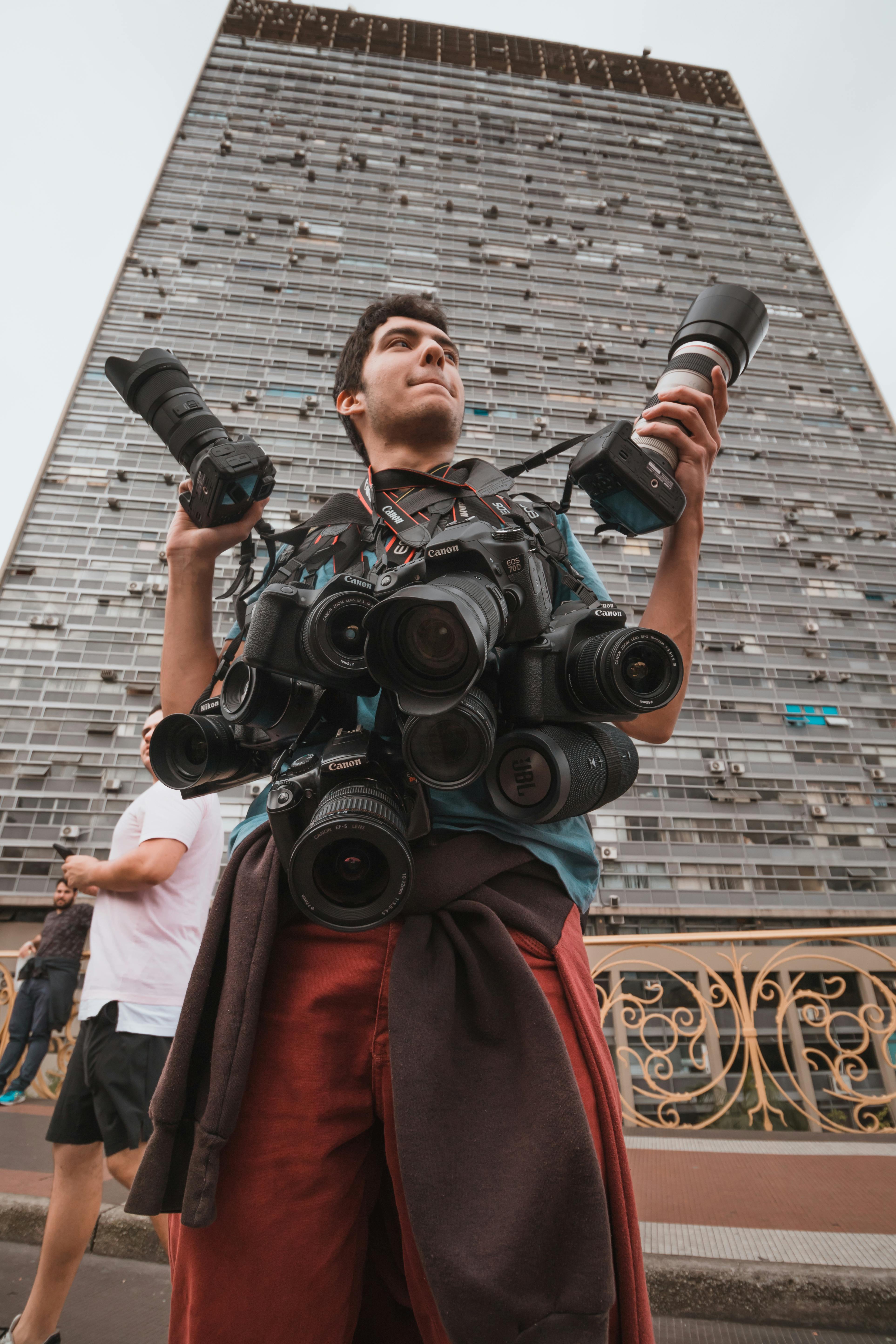
A hands-free strap helps here because the camera stays close and ready while you weave through sidewalks and markets. A design like the Camstrap voyager fits this setting because it spreads weight well and lets you bring the camera up with one clean motion. The carry cuts down fumble time. The less you wrestle with the setup, the more natural your timing becomes.
How do I stay comfortable carrying a camera for hours?
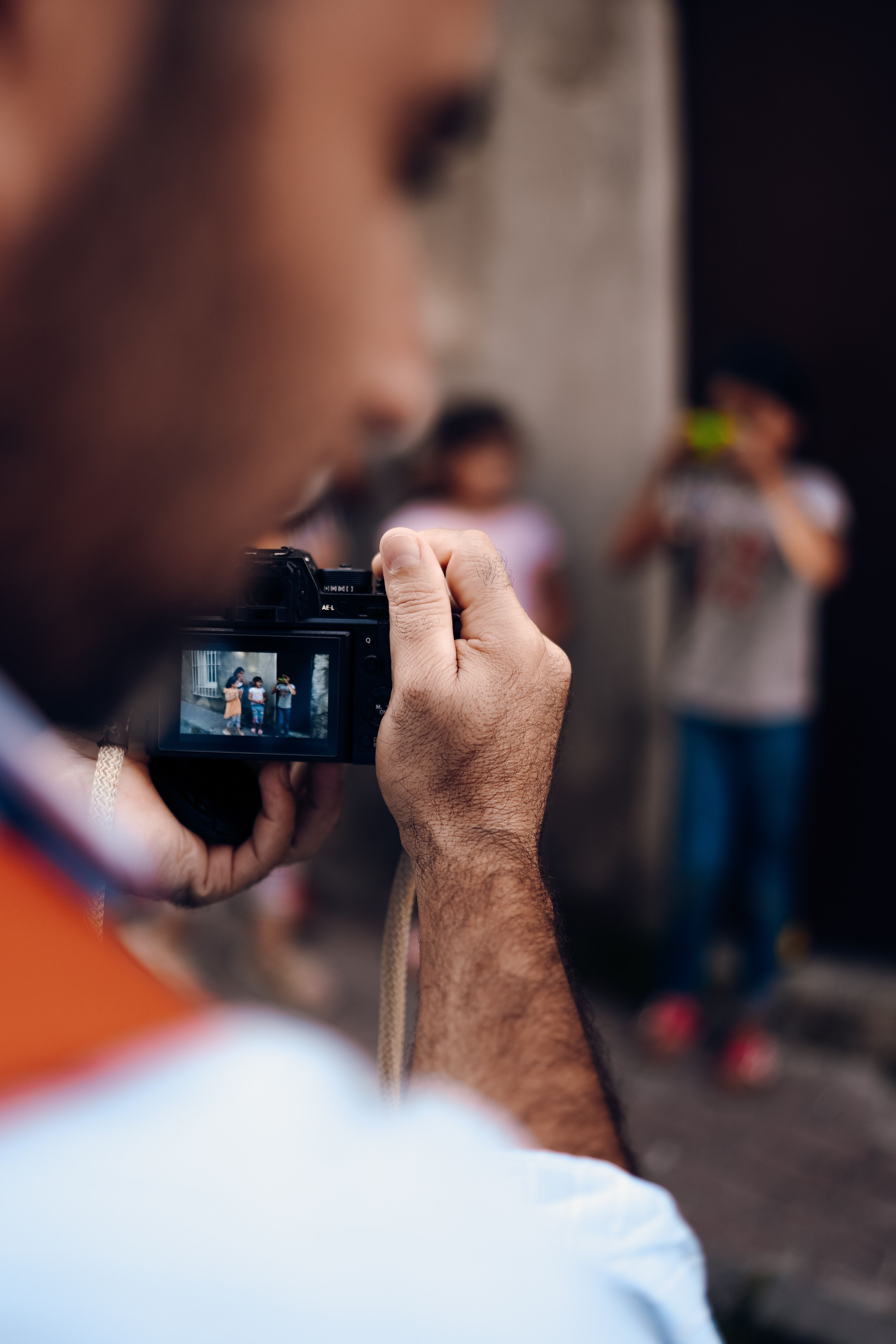
Comfort comes from how the camera sits on your body, not just from the camera weight itself. If the load pulls at one shoulder or neck point, fatigue builds fast.
Use a strap that spreads weight and keeps the camera from swinging. A stable carry saves energy and helps you stay alert for small moments.
Practical comfort checks for long walks
- Adjust the strap so the camera rests at a quick-grab height.
- Keep the body tucked close to your side.
- Choose a lens that does not tempt you to overpack.
- Review settings before the walk, not in the middle of it.
Ergonomics shape your focus speed too. If your setup feels awkward, you hesitate, and hesitation kills candid timing. Light gear, quick access, and a stable carry work together. A city walk can feel smooth for two hours one day and tiring after thirty minutes the next for that reason.
Settings that hold up in changing light
Street scenes shift from sun to shade in seconds, so exposure choices need room to move. Canon recommends raising ISO, slowing shutter speed, or opening the aperture as light drops.
For a 50mm lens, 1/50s or faster is a useful starting point to reduce shake. With a 200mm lens, the rough guide moves to 1/200s or faster.
In practice, I keep a simple range in mind. Around 1/250s works well for walking people, f/2 to f/2.8 helps in low light, and ISO can rise as needed when the street gets dark.
A quick field sequence
- Set AF-C or AI Servo before the walk starts.
- Choose 35mm or 50mm based on how close you plan to work.
- Start near f/2.8 for subject separation.
- Lift ISO as shadows get deeper.
- Check shutter speed often, then keep moving.
One useful tradeoff sits at the center of this style. A wide aperture makes your subject pop, but it also narrows your focus margin, so a tiny error can ruin the frame. A moderate stop like f/8 can save a crowded scene when you want more than one person sharp. It is not as dreamy, but it is far more forgiving when the street keeps shifting.
Keeping the moment honest from first step to last frame
The best candid work comes from calm choices made before you press the shutter. When your lens, focus mode, and carry system all support the same goal, you can respond without fuss.
That is the real strength of this style. You stay light on your feet, keep the camera ready, and let the street hand you the frame.
On my next crowded walk, I would keep a 35mm prime ready, use AF-C with a single point, and hold the camera on a hands-free strap for the whole route. If a face turns toward me in the market, I want the shot to happen in one clean motion.
Frequently Asked Questions
How do you photograph people candidly without being obvious?
Candid street photos stay discreet when the camera moves with the flow of the crowd and the shot is framed quickly. Keep walking, avoid locking eyes with the subject before shooting, use the camera like you are checking the scene, and lower it right after a short burst.
What lens works best for candid street moments?
A 35mm or 50mm lens works best for candid street moments because both give a natural-looking view. Use 35mm when the full scene matters and 50mm when you want cleaner framing and easier subject isolation.
How do you focus quickly when scenes change fast?
Fast focus comes from using a simple setup and keeping the camera ready before the moment happens. Pre-frame the scene, choose an aperture that matches the crowd such as f/2 to f/2.8 for isolation or near f/8 for more depth, and shoot in short bursts so focus happens with less delay.
Can I shoot street photos with a small camera setup?
Yes, a small camera setup works well for street photos because it is easier to carry, faster to handle, and less noticeable. The camera should feel like part of the walk, not something that slows movement or draws attention.
How do I stay comfortable carrying a camera for hours?
Comfort for long street walks comes from keeping the camera simple and easy to move with. A lightweight setup that stays ready and close to the body helps you keep moving for hours without feeling burdened.


