


- Use burst mode for the briefest sprint peak, then keep firing through the action.
- Set continuous AF and a fast shutter, then fire a short burst as the runner enters frame.
- Burst photos stay sharp when exposure and focus are right; the mode itself doesn't lower quality.

Burst mode photography records several frames in quick succession while a runner is moving. From the trackside, it lets you catch the spike lift, the hard arm drive, and the face locked into effort. That peak lasts a split second. Pair a fast shutter with steady focus and sharp timing, and that split second becomes a usable frame.
Shop the setup

- Regular price
-
€42 - Regular price
-
- Sale price
-
€42
By choosing the Camstrap strap, you are opting for a high-quality product designed to meet the needs of the most demanding photographers.
- Developed by a physiotherapist to relieve neck and back pain.
- Fast delivery with tracking by the Post Office 🚚
- Can be used as a shoulder strap or hands-free harness

- Regular price
-
€36 - Regular price
-
€42 - Sale price
-
€36
Free shipping included
Begin with speed and focus
Start with a shutter speed faster than 1/1000s. Canon recommends that pace for freezing fast action, and it gives sprint work a solid baseline.

In bright daylight, I usually begin at 1/1600s or 1/2000s. When the light falls, I keep the shutter high and open the lens wider instead of backing off too soon.
1. Lock the shutter speed down
Sprints throw arm swing, knee lift, and foot strike into the same instant. A slow shutter smears those details, even when the runner is only a few meters away. For outdoor track use, 1/1000s to 1/2500s works well. A Canon EOS R6 sports example used 119mm, 1/8000s, f/2.8, and ISO 400, which shows how far speed sometimes needs to go to freeze the peak cleanly.
2. Match tracking AF with burst firing
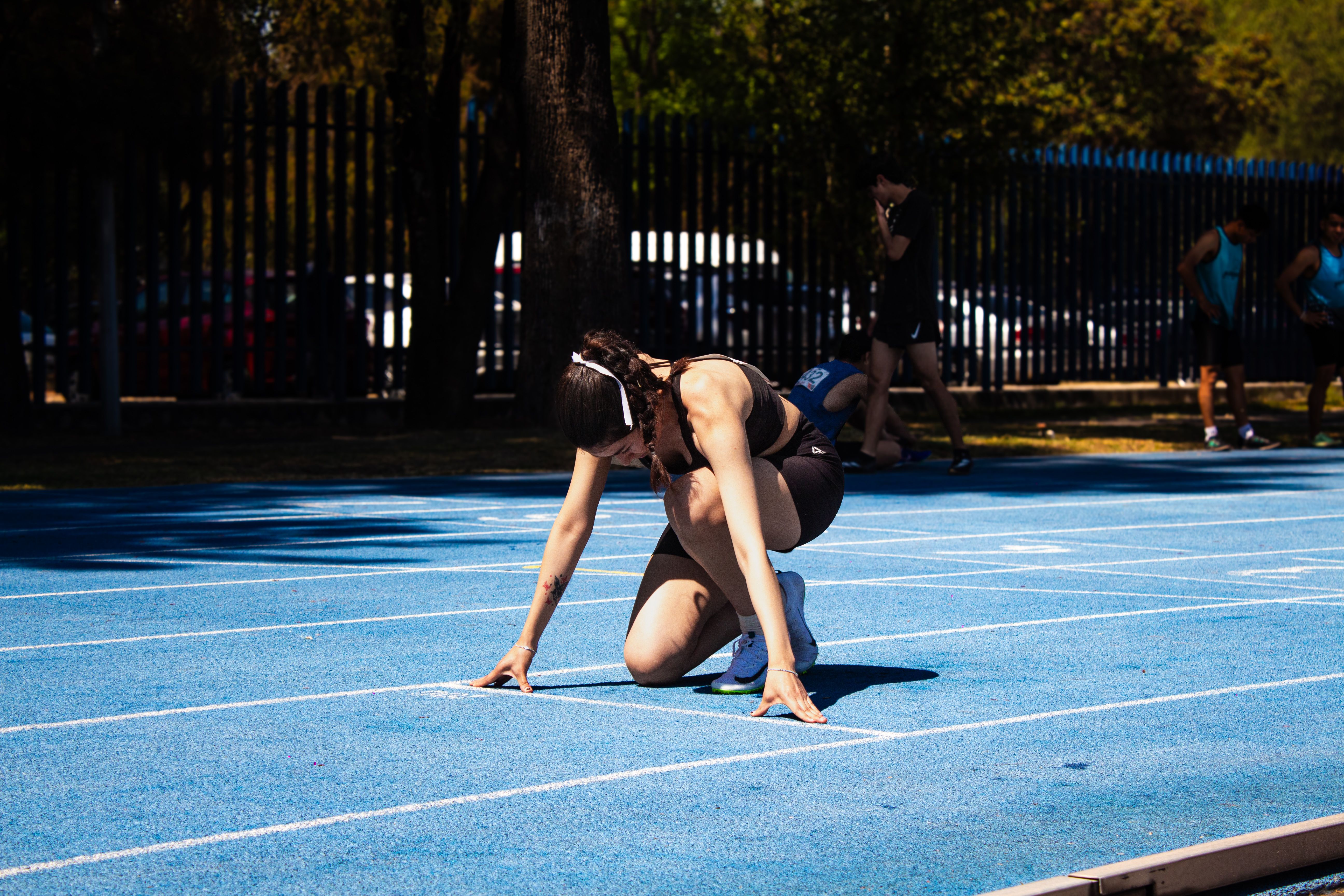
Continuous autofocus follows the athlete as they move through the frame. Tracking AF can stay glued to the runner, while single-point AF gives tighter control over the exact focus spot.
Use AF-C on Nikon or Sony bodies, or AI Servo on Canon bodies. Then fire a short burst as the runner enters your zone, because the strongest frame often lands near the middle of the sequence.
Prep the camera for the race
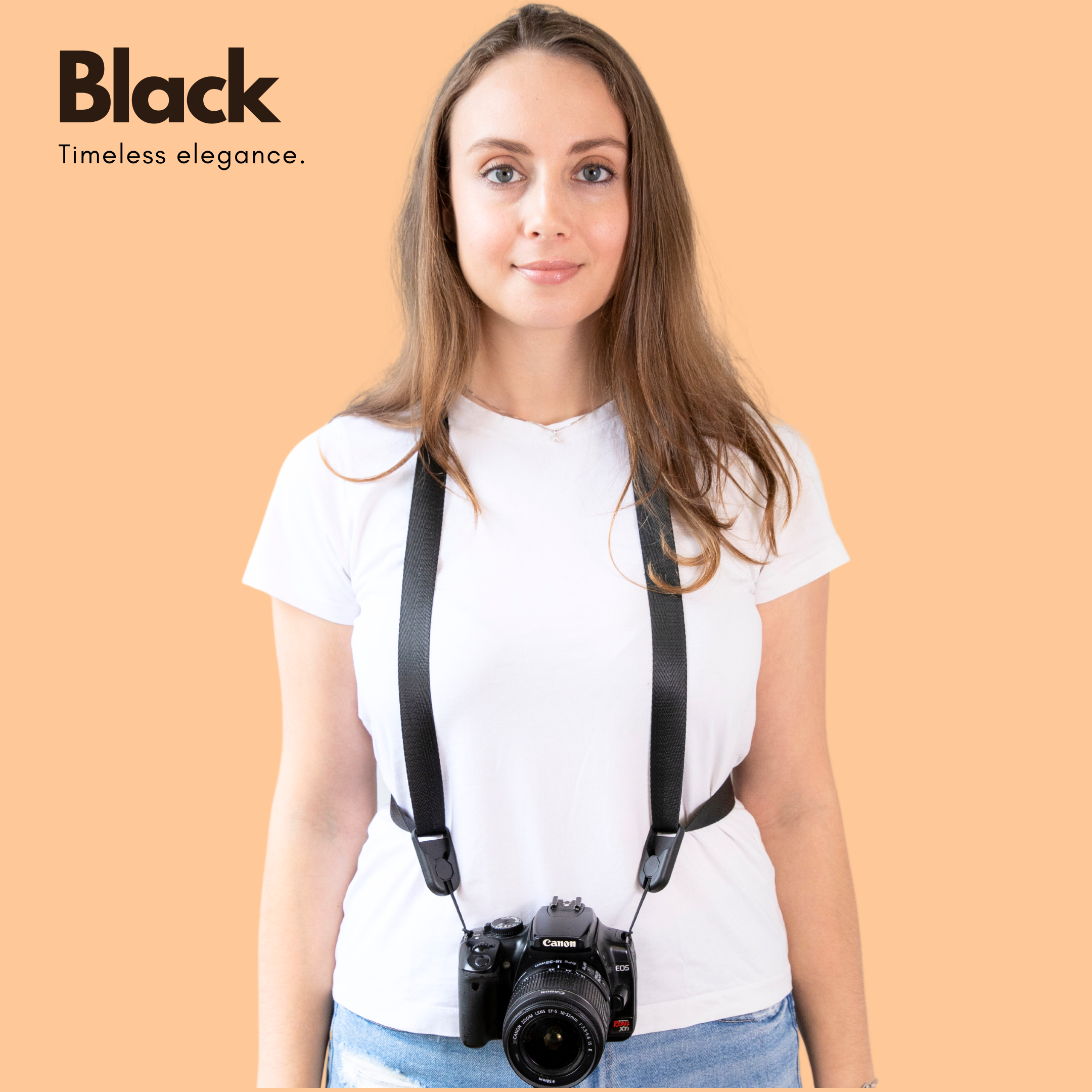
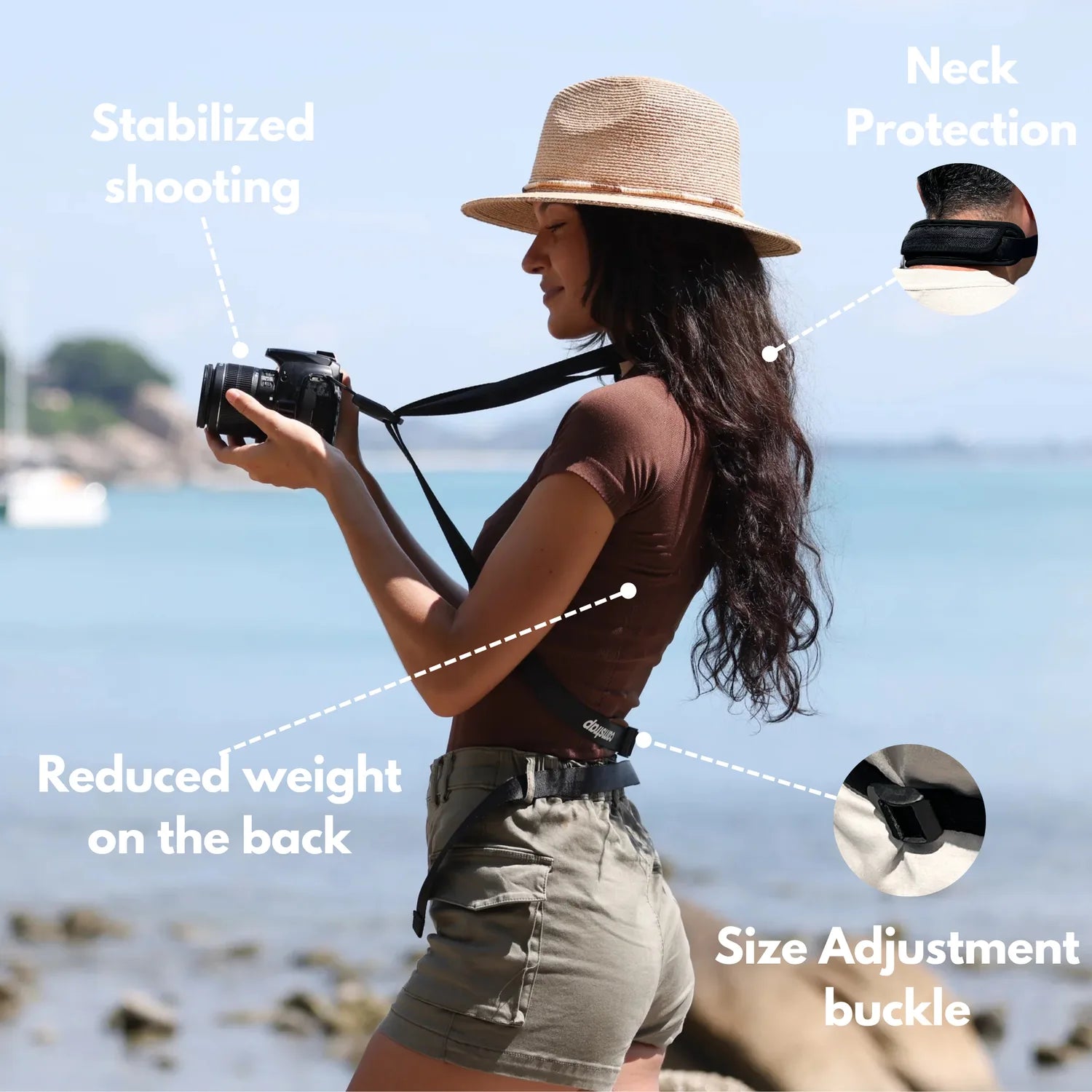
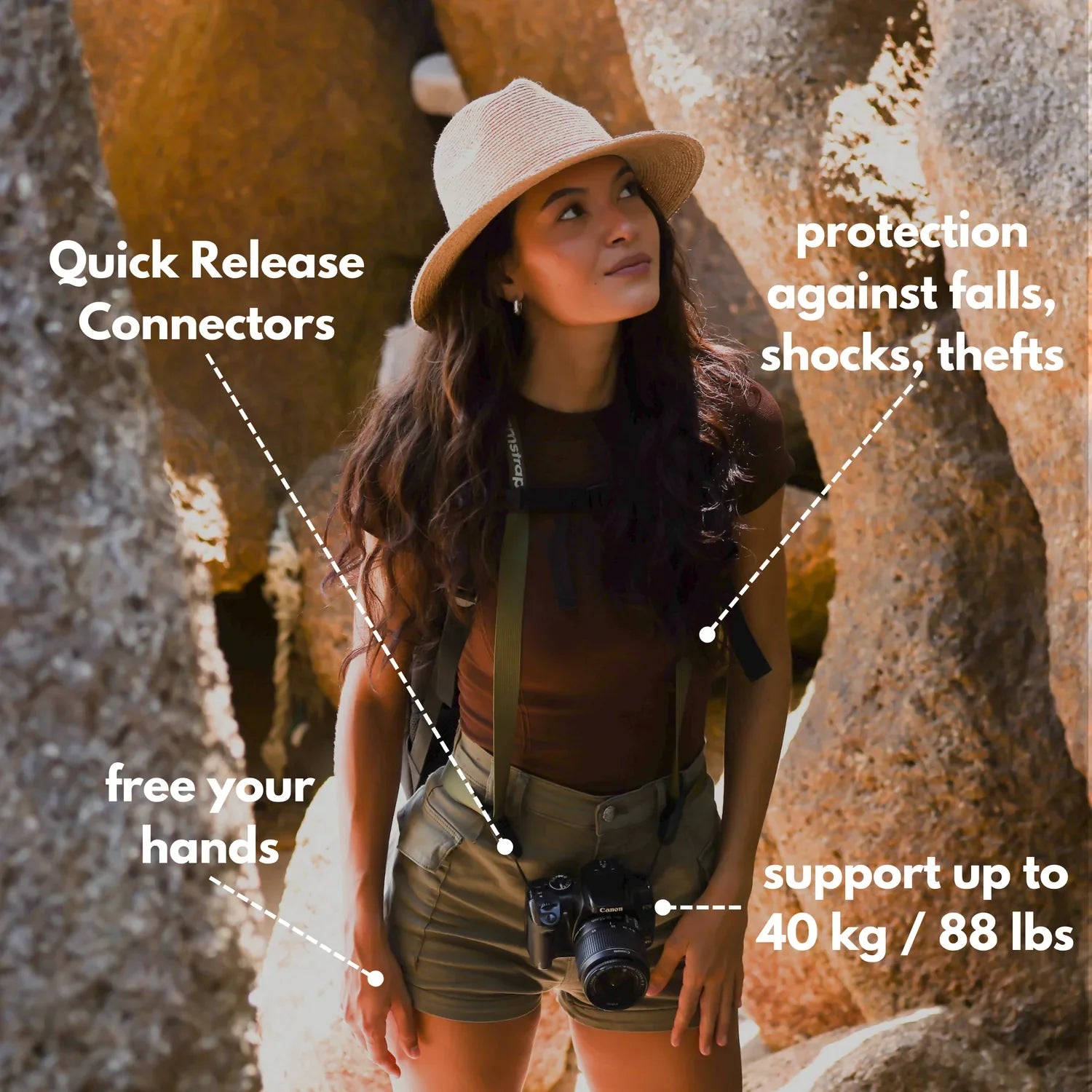
Setup carries as much weight as timing. A good trackside configuration keeps the subject sharp, the camera stable, and your movement quick between lanes or marks. Fast action also rewards simple handling. A hands-free strap or clip, such as the Camstrap Voyager, keeps the camera secure while I jog to a new spot or switch lenses.
3. Pick a lens that protects shutter speed
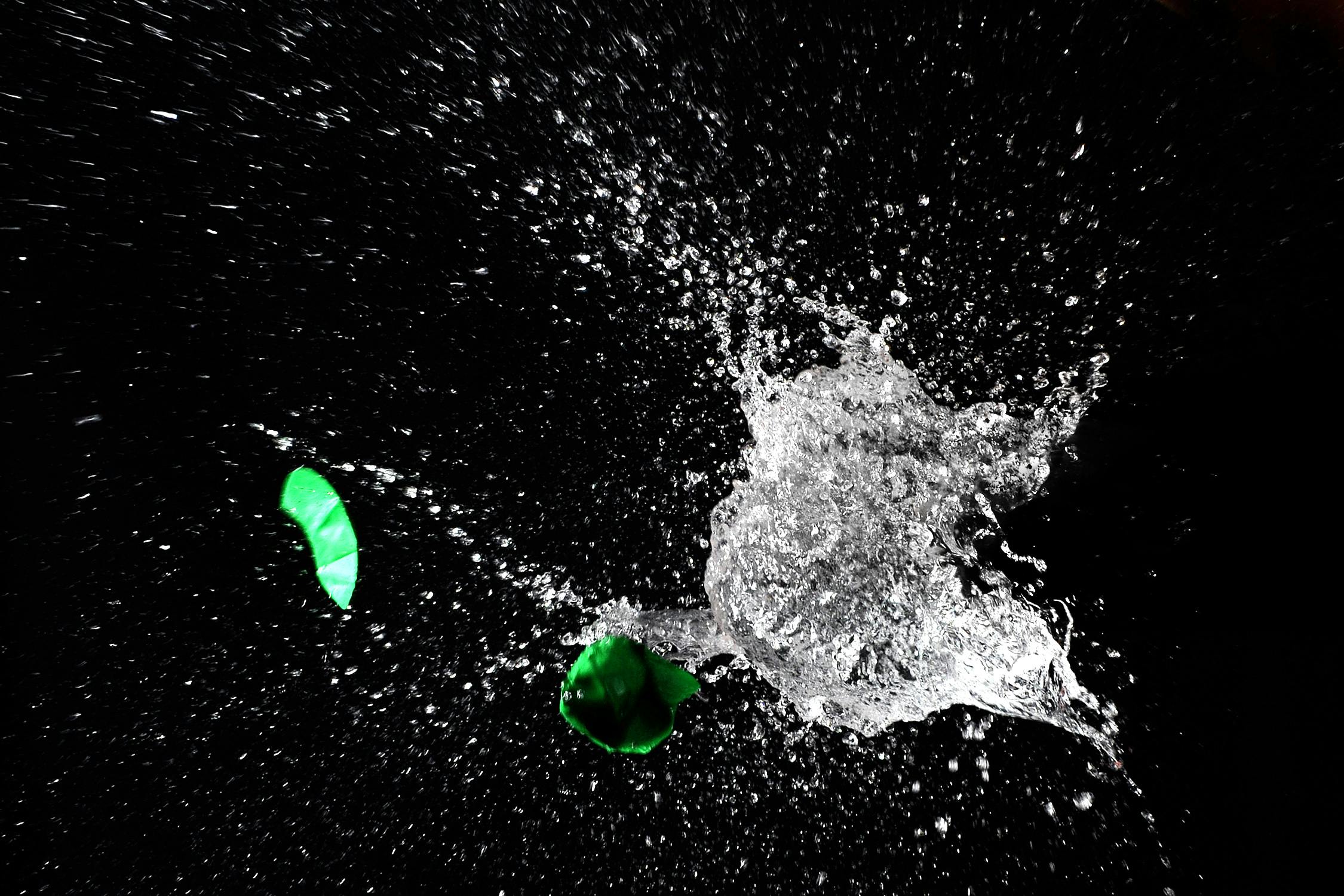
Canon notes that lenses with apertures from f/1.8 to f/2.8 help keep shutter speeds high in dull light. That helps at late meets, in shade, or under weak stadium lamps.
A 70-200mm f/2.8 is a strong track lens because it brings both reach and speed. A 50mm to 85mm prime can also shine from a fixed spot, especially for start-line frames and straightaway exits.
4. Use the burst rate your buffer can handle

Frame rate counts, and buffer depth does too. A Canon EOS 90D can shoot at 10 fps, while some Canon bodies reach 20 fps or 30 fps in RAW burst mode. Mid-tier bodies often slow after roughly 25 to 40 RAW frames, while JPEG or HEIF can run longer. A short three- to six-frame burst will not fill a modern buffer, but long holding runs can still clog it if you shoot RAW and use a slow card.
- Use RAW if you want more room for exposure fixes.
- Use JPEG or HEIF if you need the longest burst length.
- Use UHS-II V60 or V90 cards for faster writes.
- Use CFexpress if your body supports it and you shoot long RAW bursts.
Move between positions without missing the action
Track meets reward mobility. The best angle may sit near the bend, then shift to the finish line, then move again for relay handoffs.

Gear choice helps the shot here. A strap or clip that frees both hands lets you climb bleachers, move along the rail, and keep the camera ready instead of buried in a bag.
5. Pre-focus where the runner will peak
Set your focus point where the runner should hit top speed or the cleanest form. That can be the end of the straight, the curve exit, or the last 20 meters. Back-button focus helps because it separates focus from the shutter. Hold focus on the lane line, then fire bursts as the athlete enters the spot you chose.
6. Plan for light before you chase frames
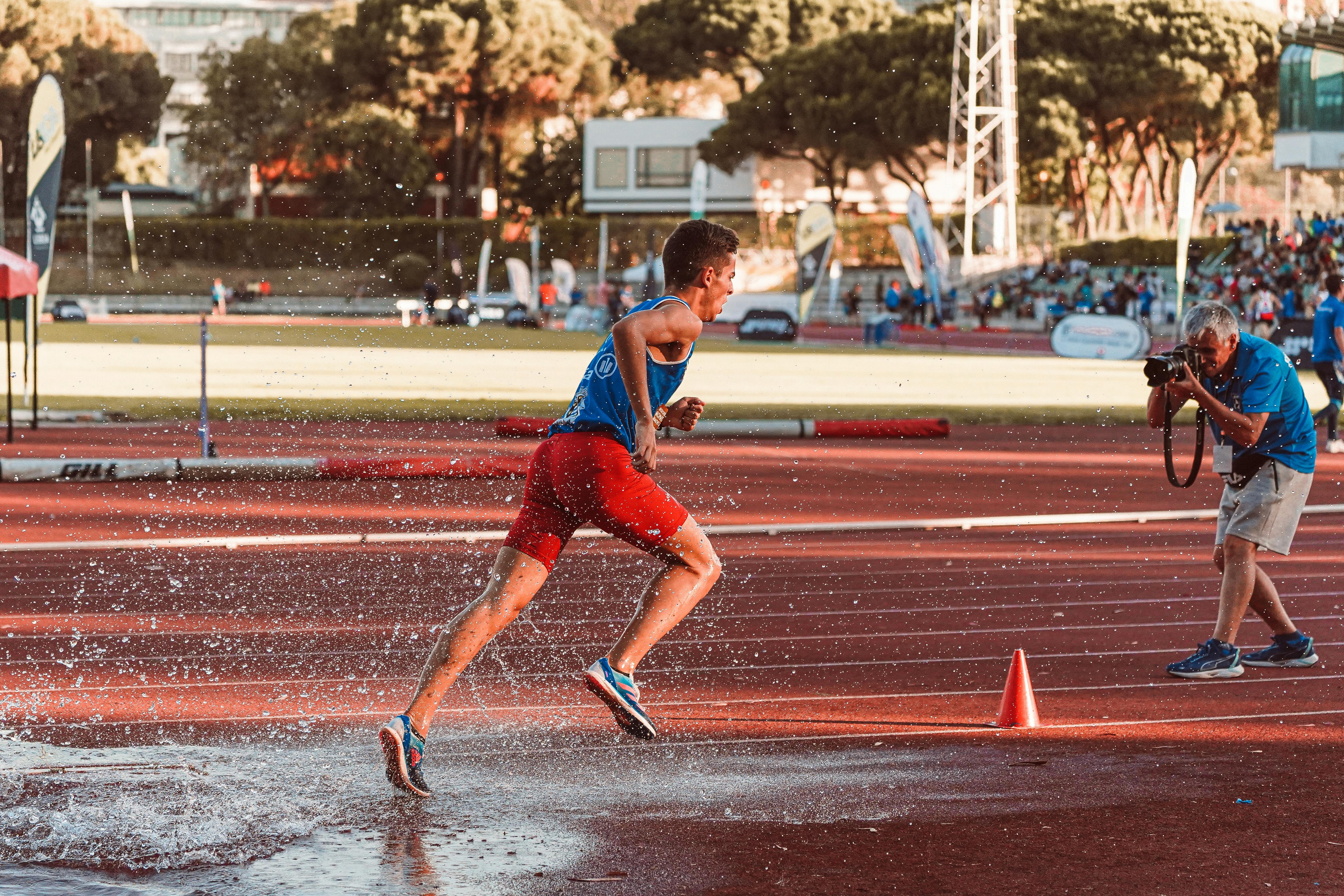
Low light changes the whole setup. If the sun drops or the race moves into shade, you may need ISO 1600, ISO 3200, or even higher to keep the shutter fast.
The tradeoff is real. A wider aperture and higher ISO can save motion, and they also raise noise, so I watch the histogram and expose cleanly rather than rescue a dark file later.
When should burst mode come out?
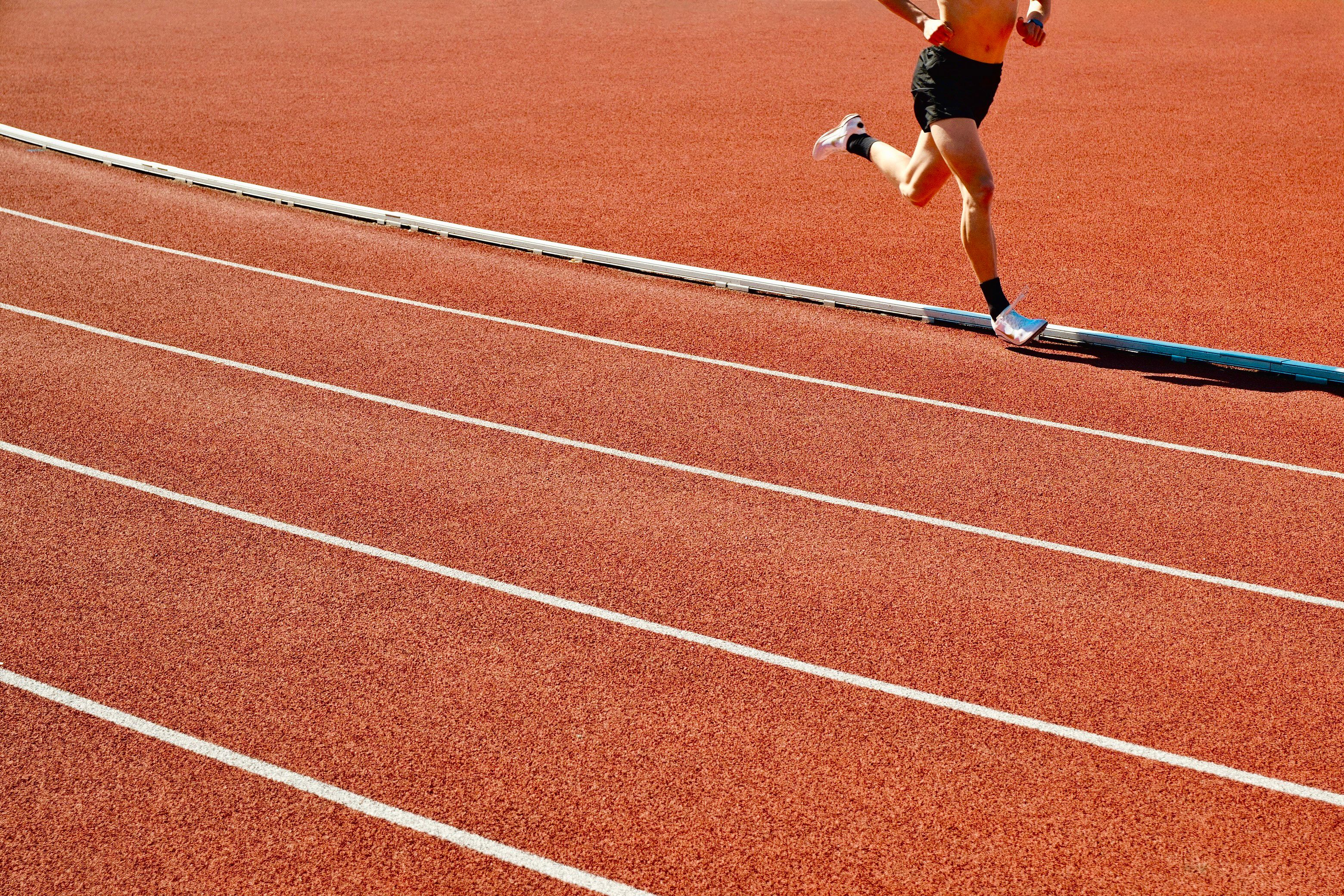
Use burst mode when the best moment is hard to predict and lasts less than a second. Sprints, long jumps, pole vault takeoff, and finish-line lean all fit that rule. It also helps when body position changes quickly. A runner may look flat one frame and perfect the next, so a short burst gives you several chances around the peak.
How do you use burst mode for photos?
Set the camera to continuous drive, choose a fast shutter, and keep autofocus active. Then hold the shutter or use a remote release as the subject enters the frame.
A simple field routine works best:
- Switch to manual or shutter-priority mode.
- Set the shutter to 1/1000s or faster.
- Pick continuous AF with eye or subject detection.
- Use continuous drive at the highest useful fps.
- Press in short bursts, not long holds.
- Review the frames and adjust your timing.

Pre-capture or pre-burst tools can also help. These modes save frames from just before the full press, which is useful when the key foot strike happens before your brain reacts.
Do burst photos lose quality?
Burst photos are not lower quality by default. The real risks come from shutter speed, focus error, rolling shutter in some electronic modes, and a full buffer.
Some cameras also show banding under LED or fluorescent lights when they use very fast electronic bursts. Mechanical or electronic-first-curtain modes can be safer if the finish line sits under tricky lights, even if the frame rate is lower.
Quality can also slip when you shoot too long and the buffer slows. A clean five-frame burst often looks better than a rushed 30-frame spray that misses focus or catches a half-open stride.
Can an iPhone shoot burst mode?
An iPhone can shoot burst mode, and it works well for trackside moments when speed has to fit in a small package. The feature gives you a quick sequence of frames, which helps during starts, handoffs, and finish-line jumps. A phone has less reach than a real telephoto lens, so it works best from close sidelines or the stands. Use it for strong moments and fast sharing, but expect less subject isolation than a camera with a 70-200mm lens.
Watch the rhythm, then press at the peak
The best sprint frame is rarely the first frame in the burst. It is usually the one where the front knee rises, the torso stays tall, and the face shows drive without extra twist.
Watch for rhythm, not just speed. A runner gives off clues before the peak, and once you learn that pattern, your timing improves fast.
Trackside success comes from a simple stack: fast shutter, steady handling, smart AF, and short, well-timed bursts. Add a hands-free carry setup, stay mobile, and keep your camera ready for the next lane, because the next peak often comes only seconds later.
Frequently Asked Questions
When to use burst mode in photography?
Burst mode in photography is best for fast, unpredictable action such as sprinting, where the peak moment lasts only a split second. It helps capture several frames as the subject enters the zone, making it easier to get a sharp frame with the best arm drive, knee lift, and facial expression.
How to do burst mode on photos?
To do burst mode in photography, switch the camera to continuous drive, use tracking autofocus such as AF-C on Nikon/Sony or AI Servo on Canon, and fire a short sequence as the subject moves through the frame. A fast shutter speed, typically faster than 1/1000s, helps freeze motion while the burst records multiple frames in quick succession.
Are burst photos lower quality?
Burst photos are not inherently lower quality, but long bursts can reduce performance if the buffer fills, especially with RAW files and a slow memory card. JPEG or HEIF usually allows longer burst length, while RAW gives more room for exposure adjustments.
Can an iPhone camera do burst mode?
An iPhone camera can capture burst-style sequences using its burst shooting feature, recording several frames in rapid succession. Burst mode on a phone is useful for fast action because it increases the chance of catching the sharpest instant.


