


- Choose one subject and make it separate from the clutter.
- Use contrast, light, and scale to give the eye a landing point.
- Keep the frame simple so the main subject reads instantly.
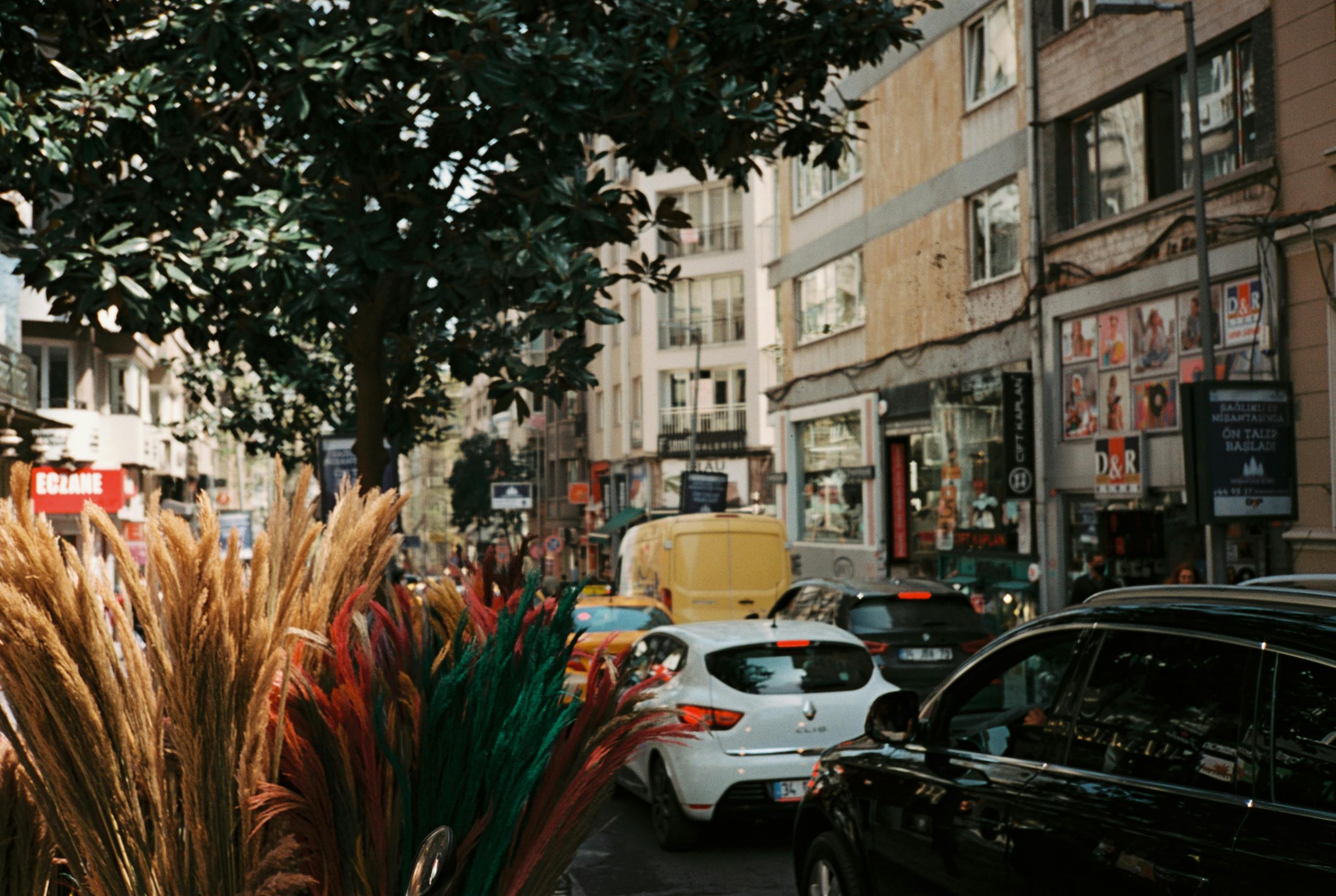
Focal point photography means steering the eye toward one subject inside the frame. On the street, images go flat when that subject never separates from the background. Sidewalk shooting feels quick and instinctive, yet the view often stays level and crowded. You may catch the moment, but the photo still reads like a snapshot rather than a scene.
Translation missing: en.blog_cta.bundle_heading

- Regular price
-
€42 - Regular price
-
€44 - Sale price
-
€42
By choosing the Camstrap strap, you are opting for a high-quality product designed to meet the needs of the most demanding photographers.
- Developed by a physiotherapist to relieve neck and back pain.
- Fast delivery with tracking by the Post Office 🚚
- Can be used as a shoulder strap or hands-free harness

- Regular price
-
€36 - Regular price
-
€42 - Sale price
-
€36
Translation missing: en.blog_cta.free_shipping_included
Why the curb makes scenes look plain
Shooting from the sidewalk keeps your camera at the same height as everyone else. The result is a straight, familiar view that often stacks heads, signs, cars, and shop windows into one busy line.
The street is not the issue. Separation is. Without it, every object fights for attention.
What your eye sees first
Your eye wants one place to land. When the frame is packed with equal parts, it keeps moving and never settles.
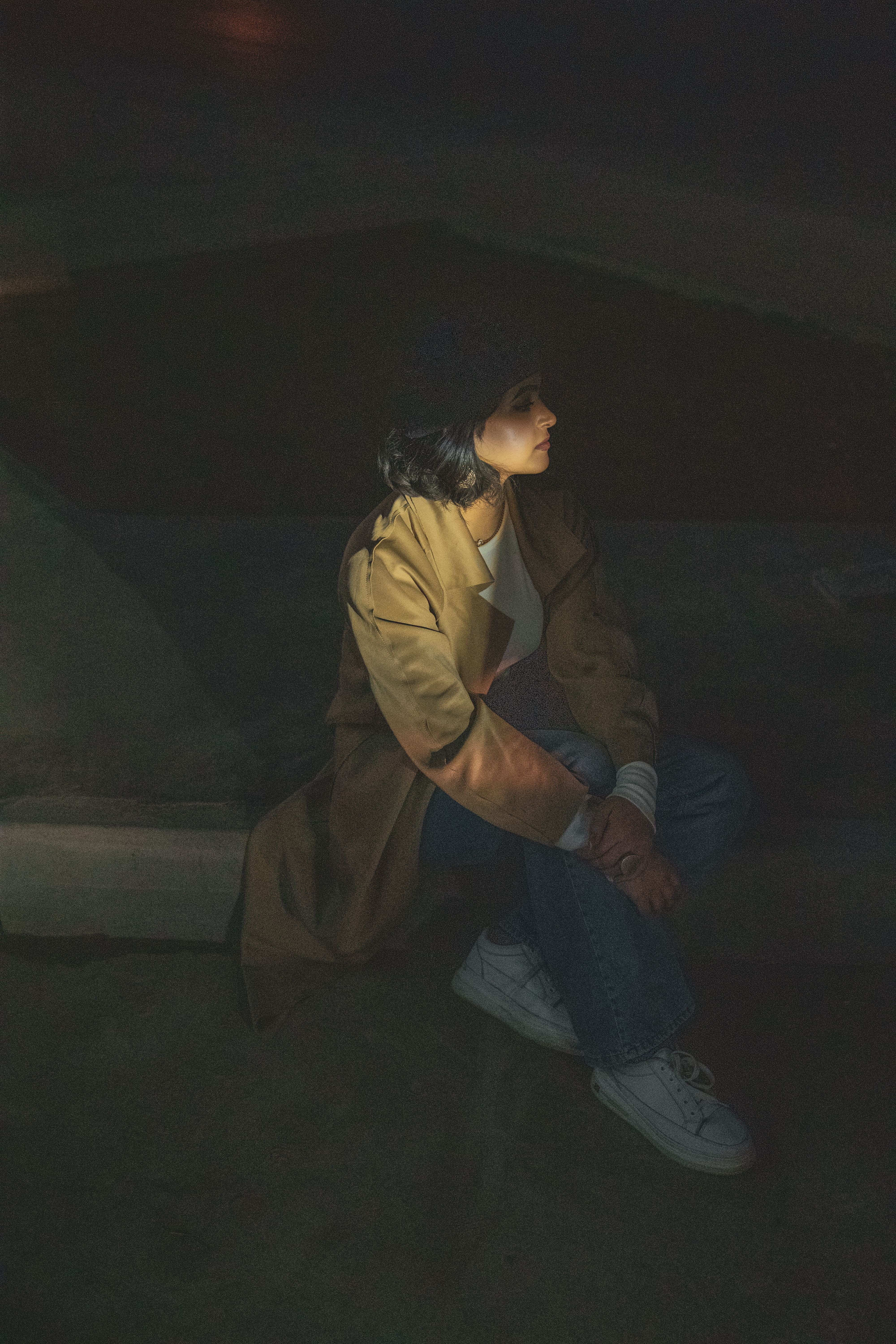
Flat street photos often feel busy but weak for that reason. They have content, yet no clear visual anchor.
Common sidewalk habits that add flatness
- Standing too far back from the subject
- Keeping the camera at chest or eye level all the time
- Using a wide view without a clear foreground
- Framing through signs, poles, and parked cars by accident
- Waiting for action, but not for shape or contrast
These habits are easy to slip into because they feel safe. Safe framing usually gives you the least depth.
What is a focal point in photography?
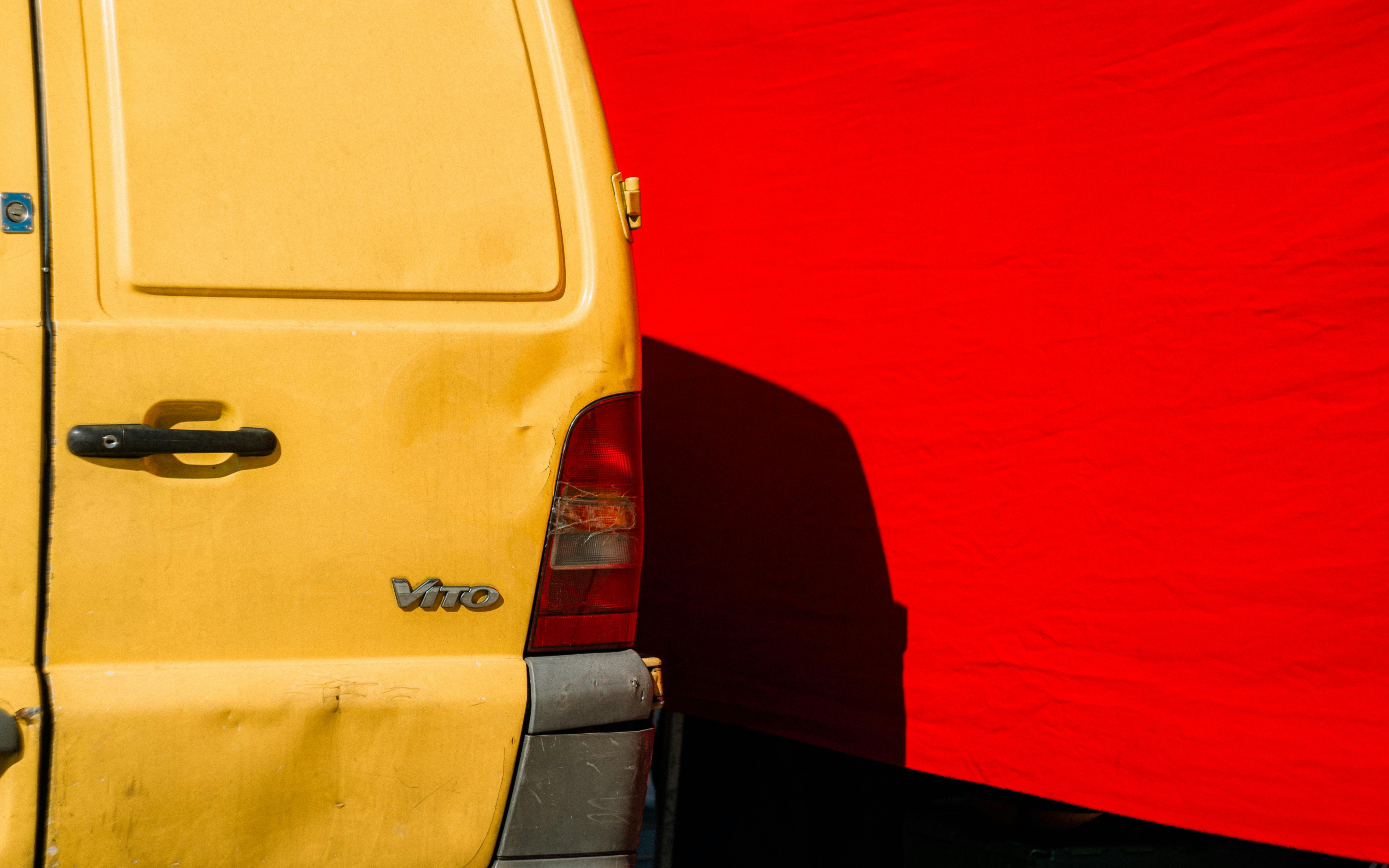
A focal point in photography is the main subject or area that grabs the eye first. It might be a person, a face, a bright coat, a hard shadow, or a sharp line in a crowded scene. On the street, the strongest choice is often plain and direct. One person crossing in bright light can work better than a busy block full of detail.
What gives it weight
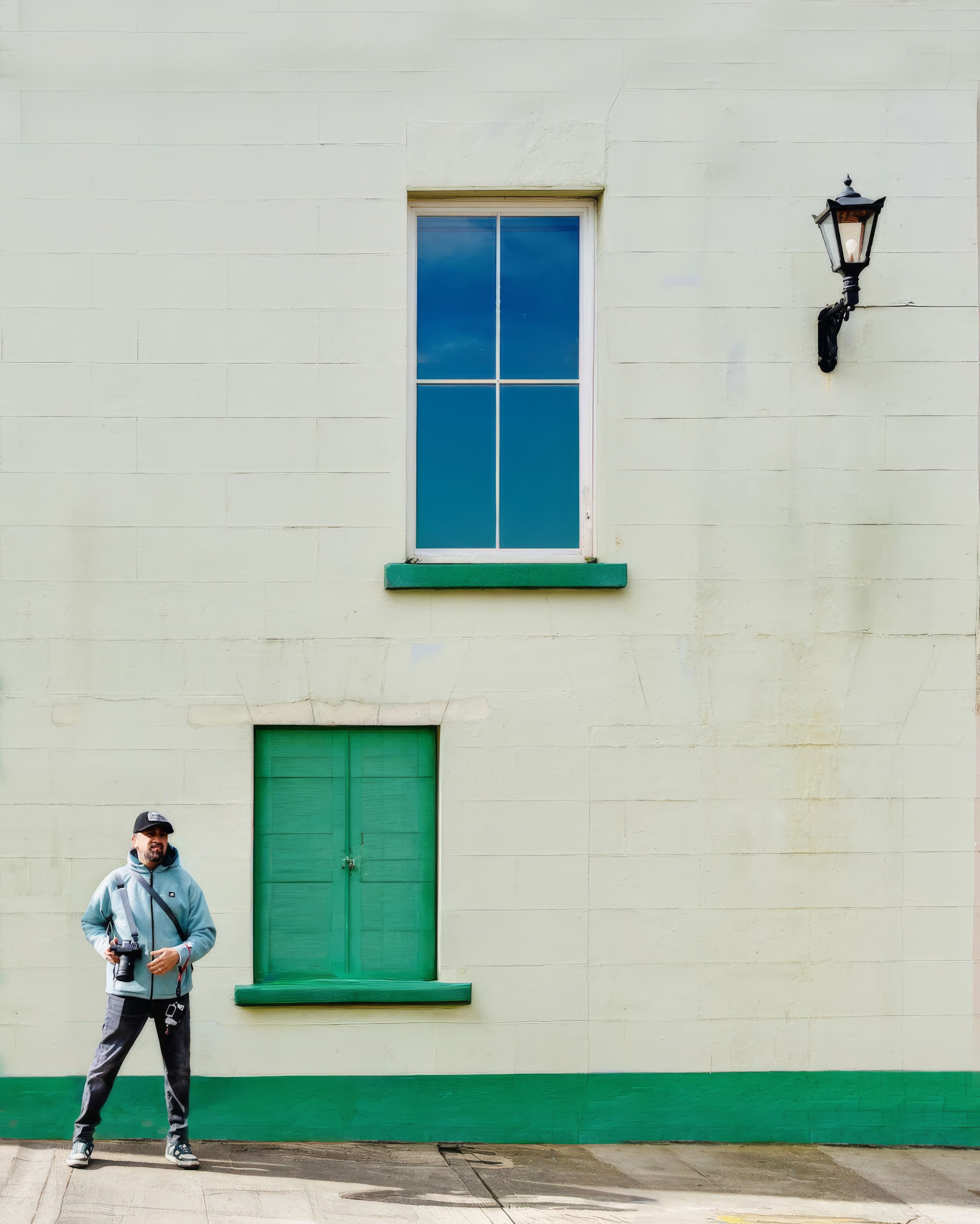
Several things can make one part of the frame stand out. Size, light, color, sharpness, and contrast all help.
A red jacket against gray pavement is one easy example. Another is a face in crisp focus while the rest falls soft.
What is the purpose of a focal point?
A focal point gives the viewer a place to enter the photo. It also sets the mood, because the eye reads the main subject before anything else. Without that guide, a street photo can feel like a list of objects. With it, the same street can feel calm, tense, lonely, or alive.
Why it matters for story
A clear center of attention helps the scene make sense in one glance. On the street, you often have only one strong second.
Editing gets easier too. You can crop tighter, remove distractions, and keep the shot focused on one idea.

What is the best focal point?
The best focal point fits the light, the moment, and the story. In street work, a person with clear shape and strong light is often the strongest choice. Faces help a lot, but they are not required. A hand on a bicycle handle, a shadow cutting across pavement, or a lone umbrella can carry the frame if it stands apart.
Simple ways to choose one
- Pick the subject with the strongest contrast.
- Look for a shape that reads fast.
- Use light to separate the subject from the scene.
- Remove extra clutter before you press the shutter.
The brightest thing in view is not always the right choice. Often, the best subject is the one that reads most clearly at a glance.
What is focal point in simple terms?
In simple terms, the focal point is the part of the photo that matters most. It is the thing your eyes notice first and remember last.

Think of it as the photo’s “main character.” If that role is unclear, the whole frame can feel weak even when the light is good.
A quick street test
Cover the edges of your frame with your hands. If the center still feels strong, you likely have a good point of focus for the scene. If the answer is no, move a step left, crouch lower, or wait for one stronger subject. Small shifts often make the frame read much better.
How to add depth from a flat sidewalk
Depth starts when you break the level, eye-height view. Even a small shift in height can change how layers stack inside the frame.
Instead of standing still at curb height, look for a lower wall, a stair, a bench, or a doorway edge. Those simple spots give you more foreground and better overlap between objects.
Use light, not just subjects

Light can do more than a crowded scene. A strip of sun on one person, with shade around them, often creates stronger depth than a busy crowd. Backlight helps too, because it puts a bright rim around the subject. Side light can carve out shape in a way flat front light cannot.
Try one-point perspective on purpose
One point perspective photography works well on streets with strong lines. Road edges, rails, and building fronts can pull the eye toward one main subject.
This works best when the lines lead to a person or object near the vanishing point. Without that target, the lines may still look nice, but the frame can stay weak.
Settings and gear that keep the frame alive
A small aperture and fast focus can help, but they do different jobs. For street scenes, a 50mm to 85mm lens often gives a cleaner subject shape than an ultra-wide lens. For moving people, I often start around f/2 to f/2.8 and 1/500s. That keeps motion in check while still letting the subject stand out from the background.
Camera modes that serve quick street work
- Continuous AF with eye or subject detection for moving people
- Back-button focus to lock focus before the moment hits
- Mechanical burst around 10 fps when you want clean files and less risk of rolling-shutter skew
- Electronic burst for faster rates, often 20 to 40 fps, with some tradeoffs in LED or fluorescent banding
- Pre-capture or pre-burst buffering when your camera supports it
Pre-capture helps when the key step happens too fast to time by eye. It records frames from just before the full press, which can save a missed crossing or turn.
Storage and buffer limits
A mid-tier mirrorless body may slow after about 20 to 40 RAW frames, depending on file size and card speed. RAW files fill the buffer much faster than JPEG files.
UHS-II V60 cards are a useful floor for many shooters. V90 or CFexpress cards matter more when you shoot long bursts or want the buffer to clear faster.
One tradeoff matters here: a wider aperture can help blur the background, but it also shrinks your depth of field. At f/1.8, focus misses show up fast, especially when people keep moving toward you.
A small carry detail that helps
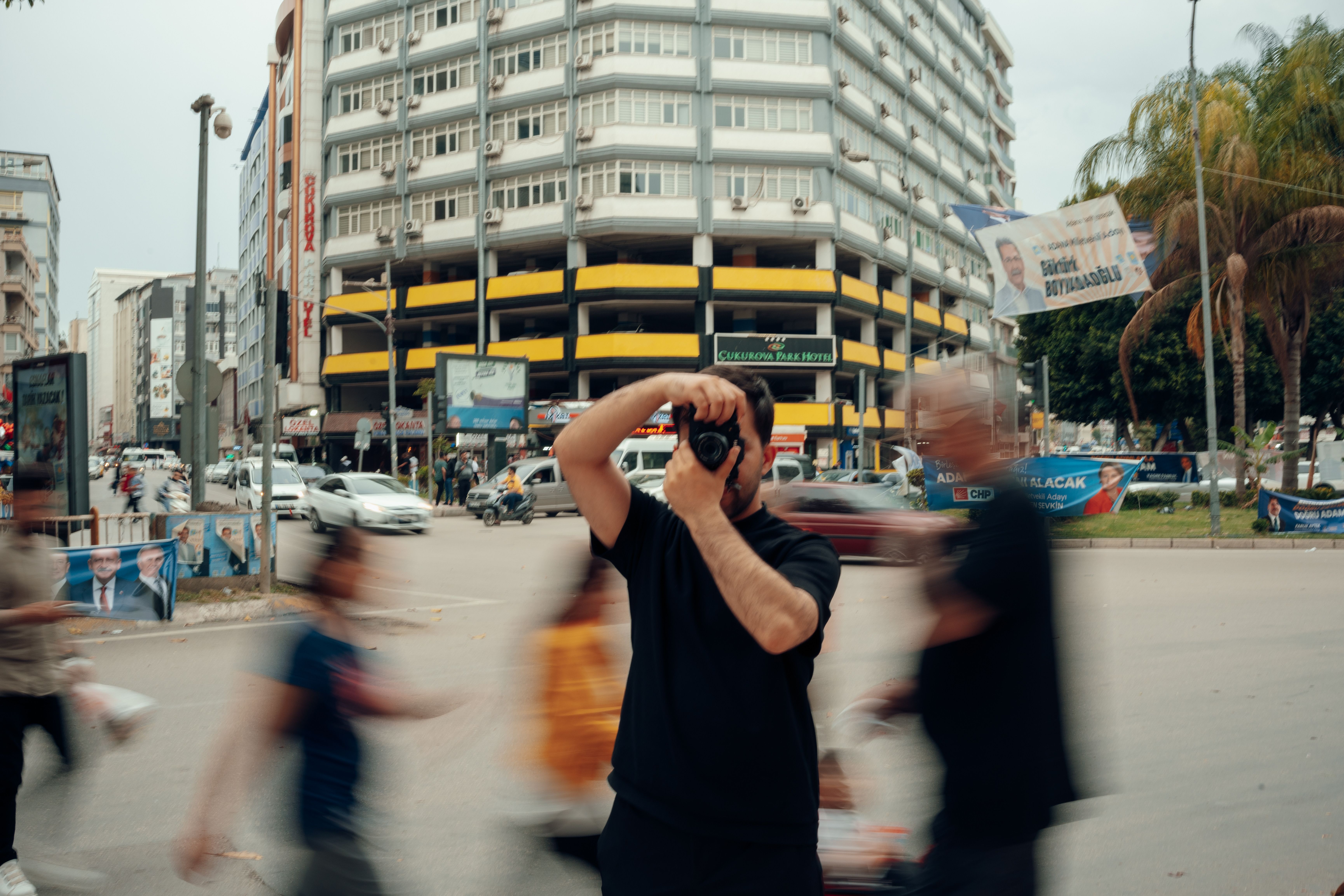
A hand-free strap keeps the camera ready for quick turns, layered scenes, and sudden moments between crossings. A design like the Camstrap voyager can help because it stays out of the way while keeping the camera close. That matters on the sidewalk, where you may need to raise the camera in one move and shoot before the moment passes.
How to make street frames feel deeper right away
Better depth starts before you press the shutter. Pick a stronger place to stand, then wait for the right subject to enter that space.
This works because street scenes are full of moving layers. The frame gets stronger when those layers line up instead of compete.
A simple shooting flow
- Find one strong line, like a curb, wall, or shadow edge.
- Place your subject near that line, not in the middle of it.
- Check for a clean background behind the head and shoulders.
- Wait for one bright patch or dark shape to support the subject.
- Fire a short burst only when the body shape looks strongest.
This is where sidewalk work changes. You stop reacting only to action, and you start building a frame with layers.
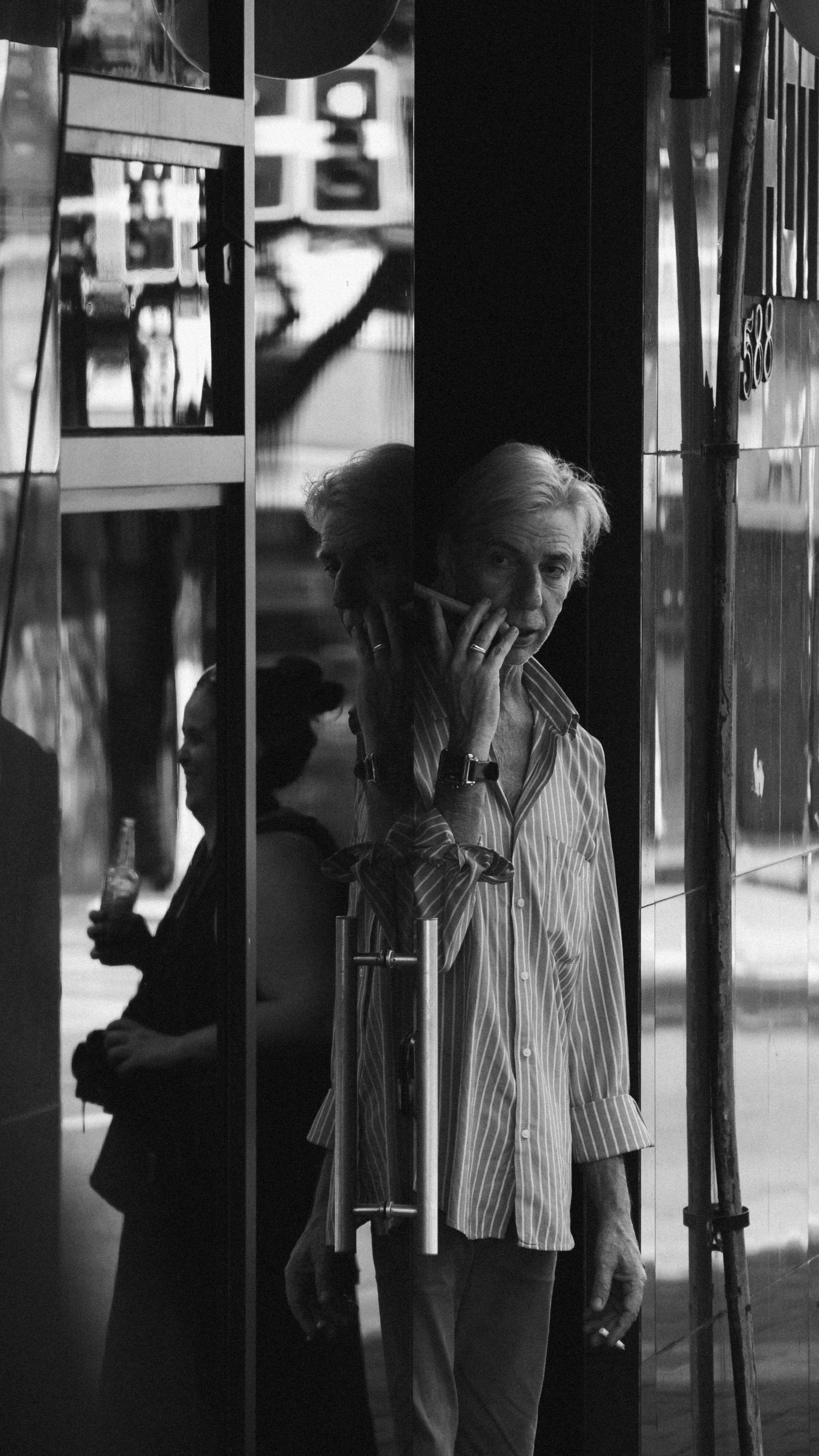
Editing can support the same goal
In Lightroom or Photo Mechanic, use pick and reject flags fast. Cull for shape first, then for focus and timing. If a frame feels flat, ask one question: does the eye know where to land? If not, the crop or the moment may need work.
Closing the gap between scene and story
Flat street photos usually come from weak separation, weak height choice, or no clear subject. The fix is not more gear alone, but better control of depth, light, and timing.
Once you start looking for one clear subject, the frame changes fast. The street becomes a place with layers, not just a place with people.
Keep one simple goal on your next walk: build a scene where the eye lands in one second. If you do that, your next frame may feel much less like a sidewalk snapshot and much more like a finished street photo.
Frequently Asked Questions
What is a focal point in photography?
A focal point in photography is the main subject or area that grabs the eye first. It can be a person, a face, a bright coat, a hard shadow, or a sharp line that stands out from the rest of the frame.
What is the purpose of a focal point?
The purpose of a focal point is to give the viewer a place to enter the photo and understand what matters most. It also shapes the mood by directing attention before the eye moves to anything else.
What is the best focal point?
The best focal point is the subject that best fits the light, moment, and story. In street photography, a person with clear shape and strong light is often strongest, but a hand, shadow, or lone object can work if it stands apart.
What is focal point in simple terms?
In simple terms, a focal point is the part of a photo your eye notices first. It is the visual anchor that keeps the image from feeling busy and gives the scene one clear subject.


