


Finding the best camera strap can make or break a multi-day backcountry shoot. You need comfort, security, and quick access to the camera on long hikes. This guide shows easy setups, gear picks, and tips for 2026 trips.
The choice: pick the best strap for your trip
Pick a strap that blends comfort, strength, and fast access. A good strap stops neck and shoulder pain on long walks. It must hold heavy bodies like the Nikon Z5 II or Panasonic Lumix S5 II without stretch.
Shop the setup

- Regular price
-
€42 - Regular price
-
€44 - Sale price
-
€42
By choosing the Camstrap strap, you are opting for a high-quality product designed to meet the needs of the most demanding photographers.
- Developed by a physiotherapist to relieve neck and back pain.
- Fast delivery with tracking by the Post Office 🚚
- Can be used as a shoulder strap or hands-free harness

- Regular price
-
€36 - Regular price
-
€42 - Sale price
-
€36
Free shipping included
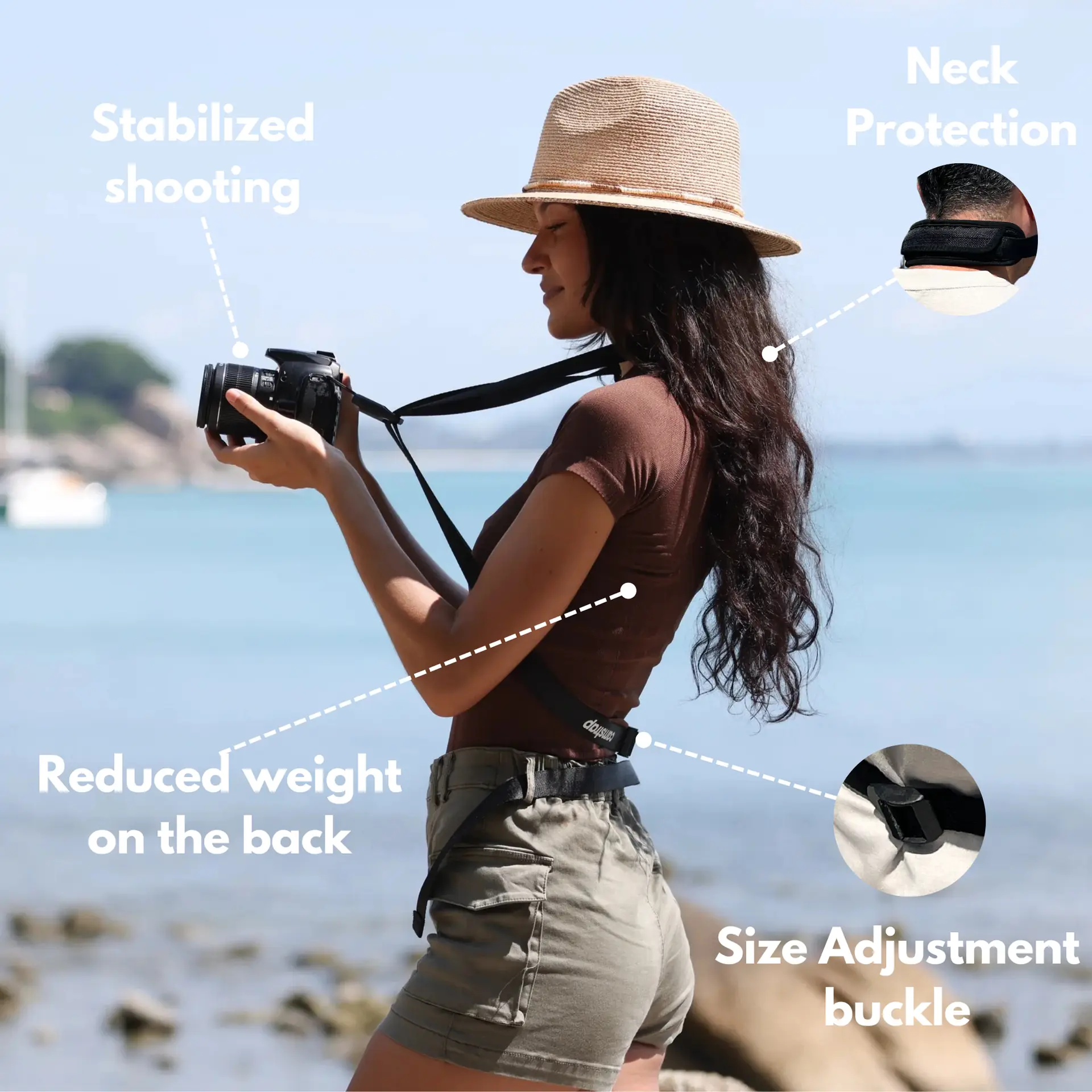
Think about how you move on the trail. Crossbody straps work for fast hikes and quick reach. Padded slings suit heavy kits that use Tamron lenses. Two-point straps help stabilize weight on long treks.
What to test before your trip
Fit the strap to the camera and lens you will use. Walk for an hour with the loaded camera. Check for rub points, wobble, and ease of reach.
Key features to look for
- Wide padding that spreads load and cuts pressure.
- Quick-adjust buckles to change length fast.
- Secure hardware like locking clips or magclip mounts.
- Durable fabric that fights moisture and sun damage.
- Low profile design to sit under pack straps.
The ideal strap setup and load distribution
The best setup balances camera weight with pack weight. Put heavy items low and close to your back. This keeps your center of gravity stable and reduces shoulder strain.
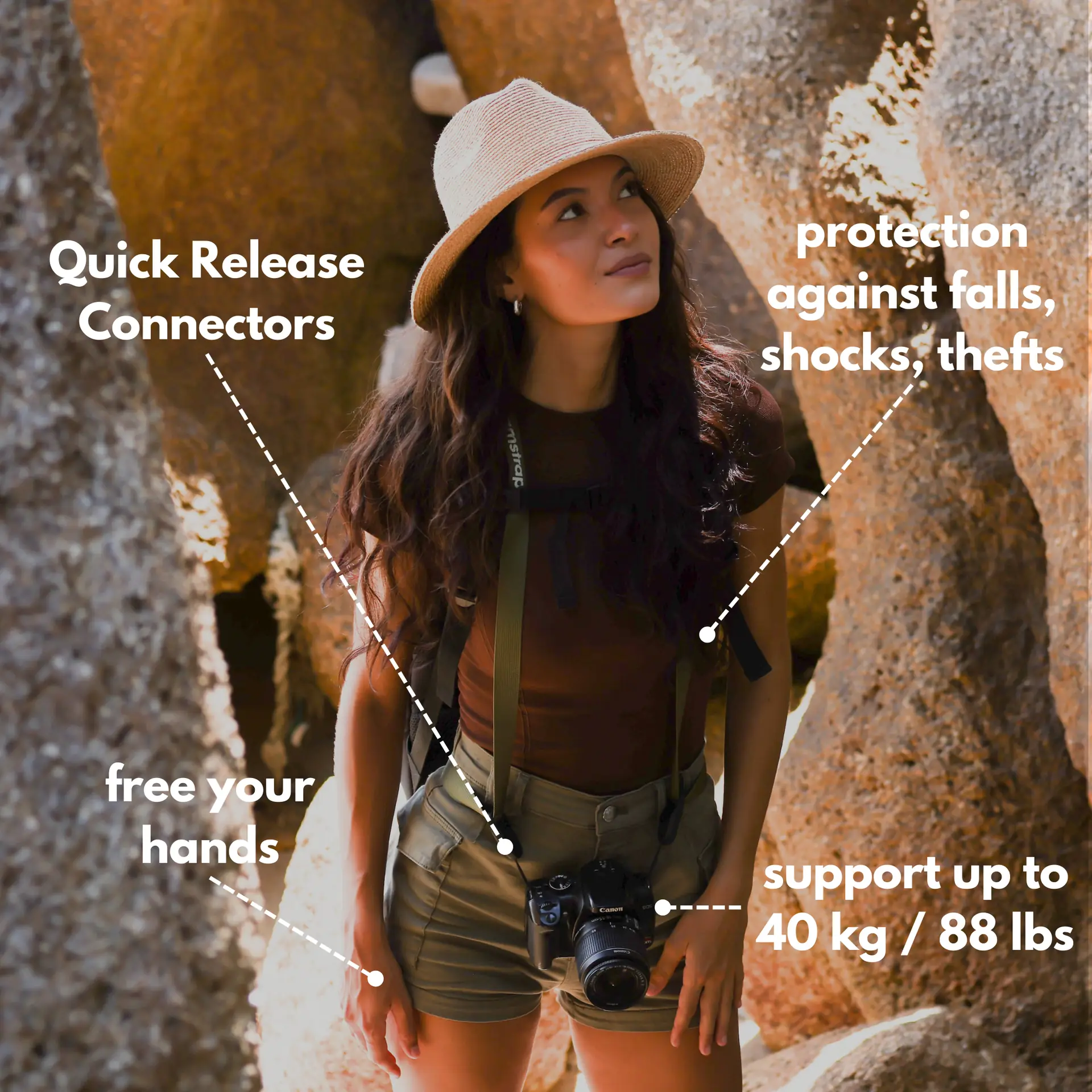
Use a strap that lets you tuck the camera under a pack shoulder strap when you climb. Then you can reach it in seconds when light changes. A magclip or quick release keeps the camera ready without flapping.
Shoulder, crossbody, or hip carry?
Shoulder carry keeps the camera close and simple. Crossbody carry ties the camera across your chest for better stability. Hip carry works well with big pack belts for instant access.

Mix a chest harness and a sling
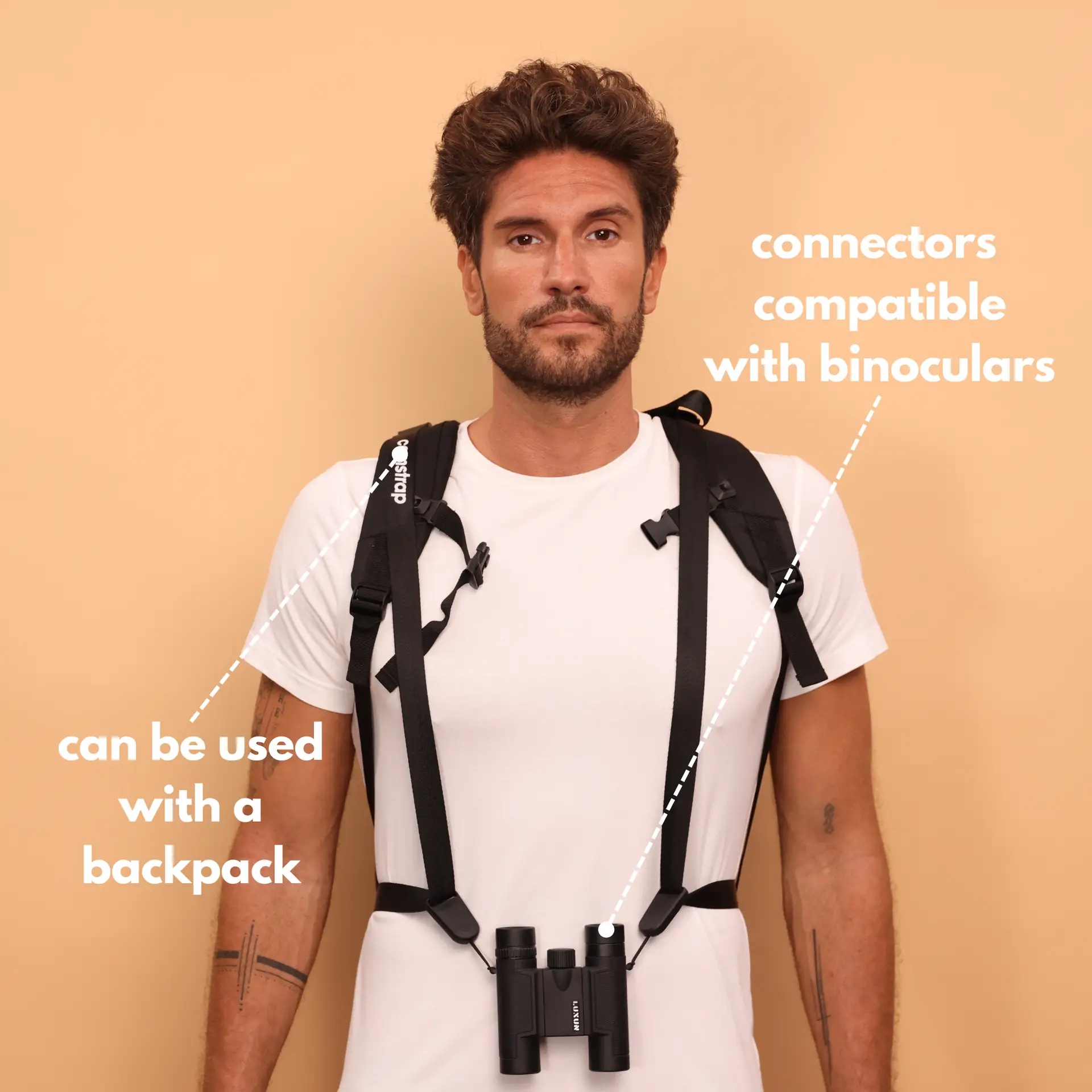
Try a light chest harness under the pack for rough or steep terrain. Then add a sling strap on top for quick shots. This mix gives comfort and fast access on hard trails.
Best Camstrap models: voyager, explorer, nomad, and magclip
Camstrap makes straps that fit real backcountry needs. The camstrap voyager adds wide padding and fast adjust for long hikes. The camstrap explorer gives a slim fit for travel days in cities like Buenos Aires or Venice.
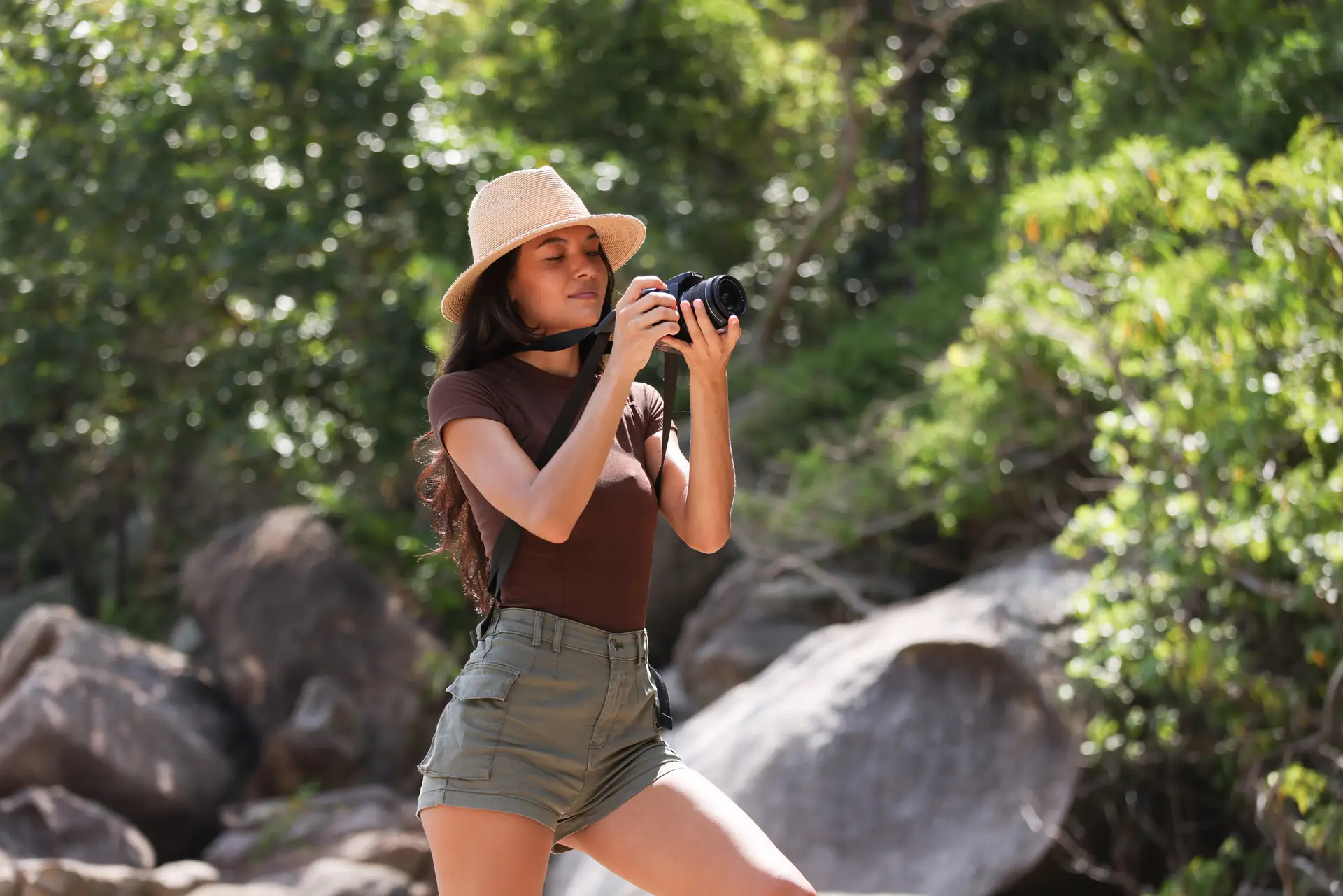
The camstrap nomad fits adventurers who carry mixed kits and Tamron zooms. The camstrap magclip gives fast magnetic detach and a tight hold for roadside shots. Camstrap blends function with clean design in every model.
How to choose among Camstrap models
- Pick the voyager for long miles with heavy bodies like the Nikon Z5 II.
- Pick the explorer for low-profile travel in Melbourne or Buenos Aires.
- Pick the nomad if you carry mixed lens kits or Tamron zooms.
- Pick the magclip for the fastest detach on quick roadside frames.
How to pack and manage gear on long trips
Packing for multi-day shoots needs a clear strap plan and gear order. Put tripods low in the pack and group lenses by use. Keep the camera ready in a strap-ready spot so you can grab it fast.
For light setups, a Nikon Z5 II or Panasonic Lumix S5 II gives good image quality with less bulk. For heavier bodies like some Fujifilm cameras, pick a strap and pack that share the load. This keeps you moving and pain-free.
Packing checklist for a multi-day shoot
- Primary camera body with lens attached and a body cap.
- One or two backup lenses in padded cases.
- Spare batteries and a power bank or charger.
- Memory cards in a dry case and a small card wallet.
- Tripod or monopod secured low in the pack.
Packing tips for cities and remote ranges
Shoot in cities like Venice or Buenos Aires with a low-profile strap and small pack. For mountain or snow trips near Queenstown or Montreal, add weather covers and extra batteries. Also, keep a quick access strap ready for fast street scenes.
Best practices for safety, comfort, and quick access
Follow small steps to stay safe and comfy on the trail. Adjust straps so the camera rides mid-chest. This position cuts swing and lets your hands work with poles or ropes.
Use a double-lock or magclip to avoid drops. Carry a small tether as backup for expensive bodies like Fujifilm cameras. These habits give peace of mind in rough terrain.
Quick access tips
- Set strap length so one hand reaches the shutter easily.
- Use quick-adjust sliders to change length while walking.
- Keep the lens cap on a tether to avoid loss.
- Practice drawing and re-stowing the camera before the trip.
Safety and weather tips
Cover metal parts to avoid noise and cold contact. Use a rain cover or dry bag in wet climates. Check stitching and clips before each trip to find wear early.
Maintenance, repair, and long-term care for the best durability
Good care keeps a strap working for years. Clean dirt and salt with mild soap and water. Dry the strap fully before you pack it away.
Check buckles, stitching, and magclip parts before long trips. Replace worn parts right away. Carry a small repair kit with spare clips, thread, and a multi-tool.
Quick repair items to carry
- Spare webbing and small carabiners.
- Strong cord and a needle for simple stitching fixes.
- Small multi-tool to tweak screws and clips.
- Electrical tape to bind frayed edges in a pinch.
Choosing the best strap setup for your persona
Different shooters need different strap setups. Travel Enthusiasts want a light, secure strap for airports and city streets. Outdoor Adventure Photographers need rugged straps for harsh weather and steep trails.
Amateur Photographers often seek an affordable but safe option that still feels good on long walks. Camstrap aims to meet all these needs. Camstrap is a brand that wants to change how people carry cameras. Our mission blends function with clean design. You can feel this in the camstrap voyager, explorer, nomad, and magclip.
Match your kit to your goals
If you shoot architecture in Venice or Buenos Aires, pick the explorer for low profile and fast moves. If you chase alpine light near Queenstown or Montreal, pick the voyager for padding and load spread. If you travel light in Melbourne, pick the nomad or magclip for speed and ease.
Conclusion: the best strap setup for your next multi-day trip
In the end, the best strap setup matches your gear, body, and trip. Pick a strong padded strap like the camstrap voyager for long days. Go slim with the explorer for travel and city shoots.
Test your setup before the trip. Pack smart and balance weight in your pack. Use backups like tethers and a small repair kit to protect camera bodies like Fujifilm models or the Nikon Z5 II.
Start with a clear plan. Try a Camstrap model that fits your needs. Then tweak the setup in the field. The right strap will help you shoot more, hike longer, and enjoy the backcountry in 2026.


