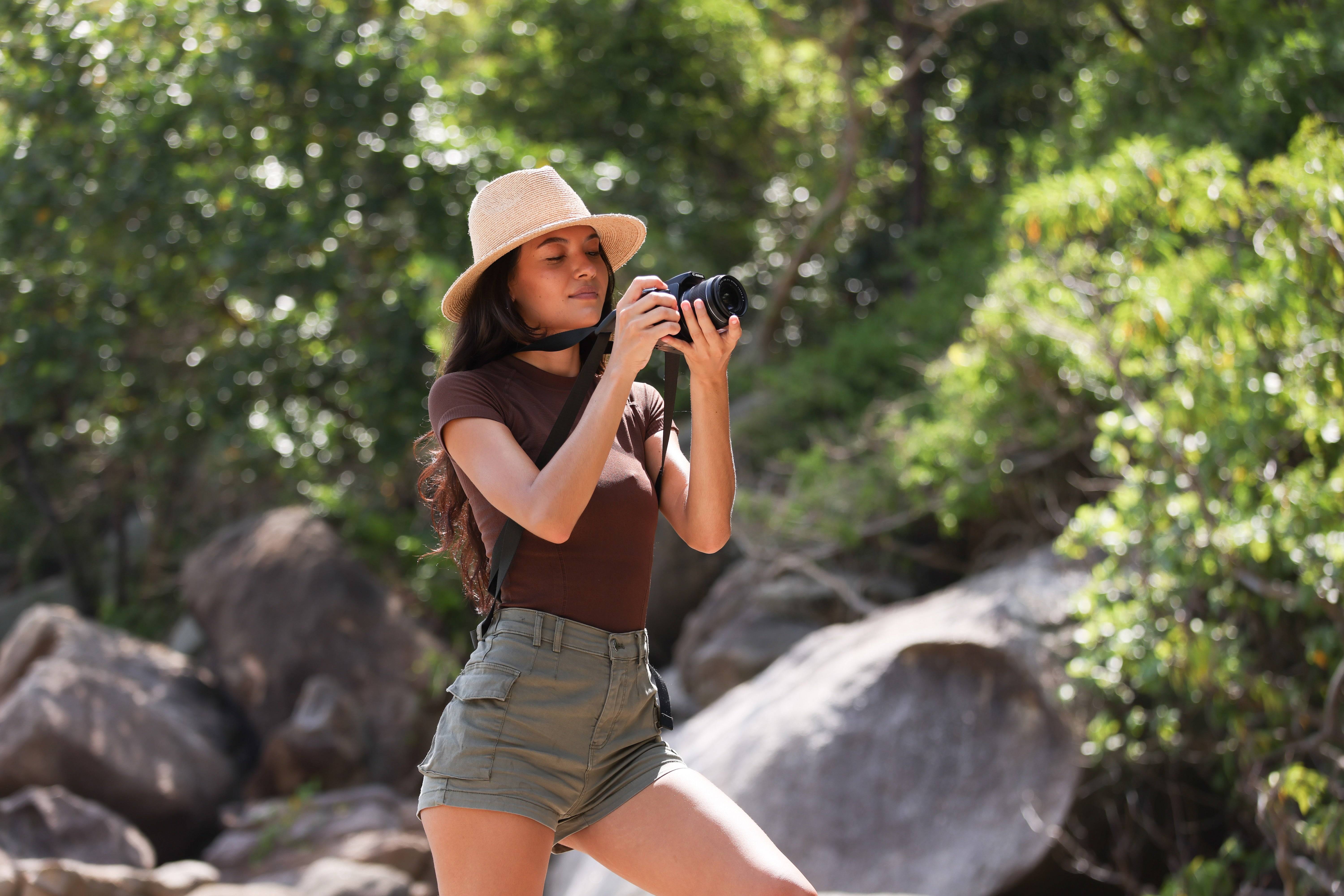
Shooting film‑like travel photos with a mirrorless camera is easier than you think. This guide shows how to get a warm, old‑school look with modern gear and editing. You will find simple gear picks, shooting tips, and editing steps to help your photos feel timeless.
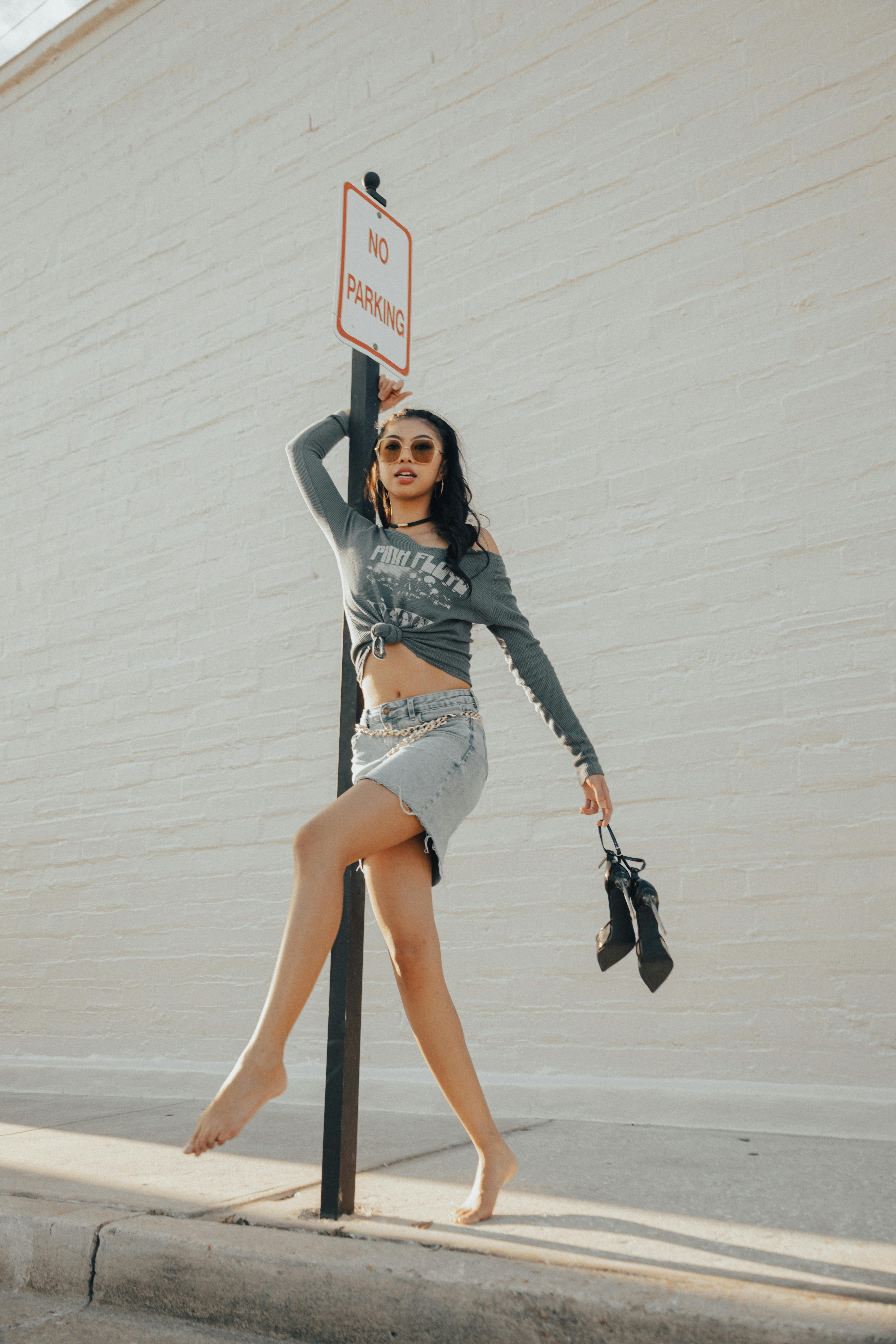
How to pick the right mirrorless gear for travel
Pick a camera that fits your travel style and weight. Light options like the Sony A6000 work well for fast city shoots. If you want a retro feel, try the Nikon Zfc or the Nikon Z8 for more power.
Shop the setup

- Regular price
-
€42 - Regular price
-
€44 - Sale price
-
€42
By choosing the Camstrap strap, you are opting for a high-quality product designed to meet the needs of the most demanding photographers.
- Developed by a physiotherapist to relieve neck and back pain.
- Fast delivery with tracking by the Post Office 🚚
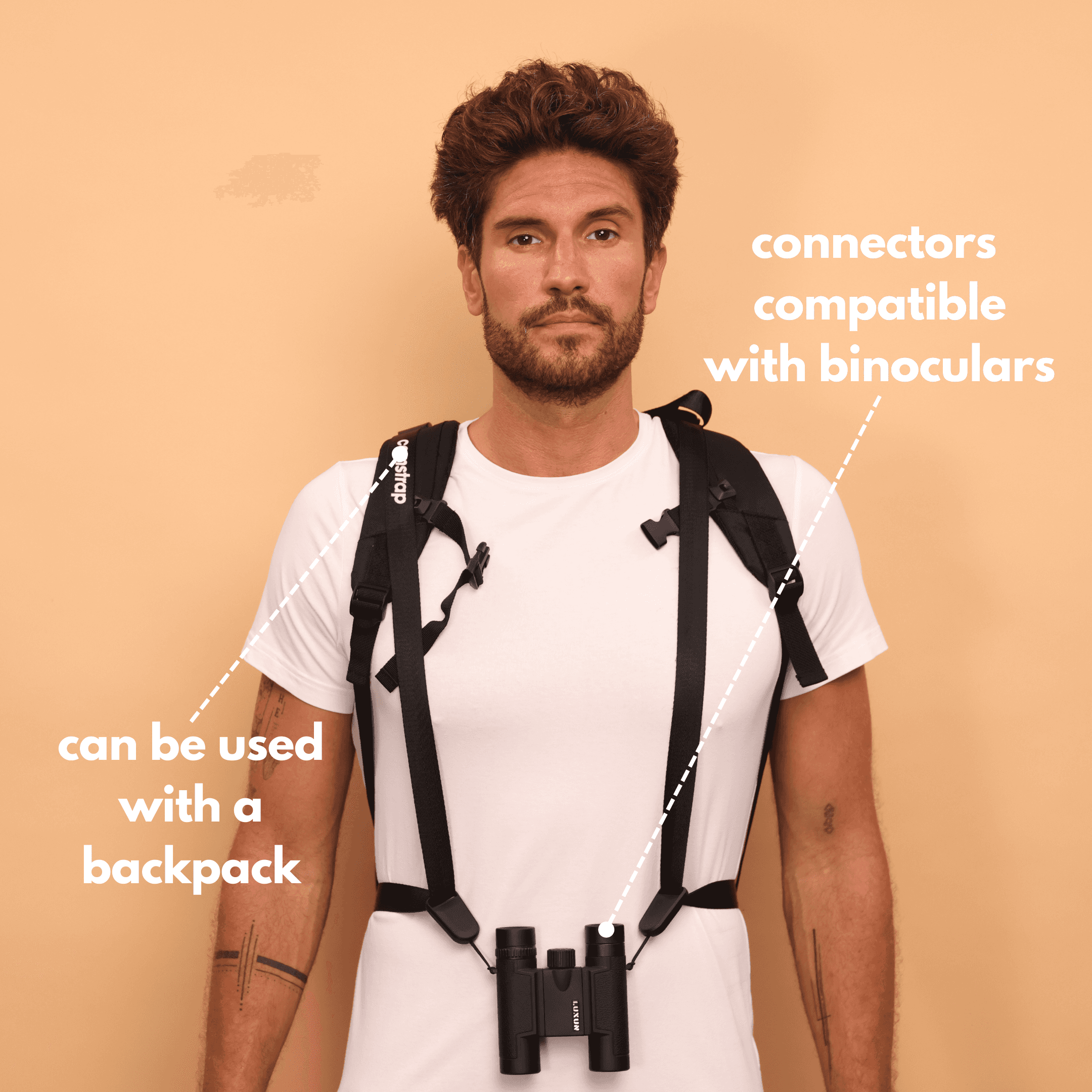
- Can be used as a shoulder strap or hands-free harness

- Regular price
-
€36 - Regular price
-
€42 - Sale price
-
€36
Free shipping included
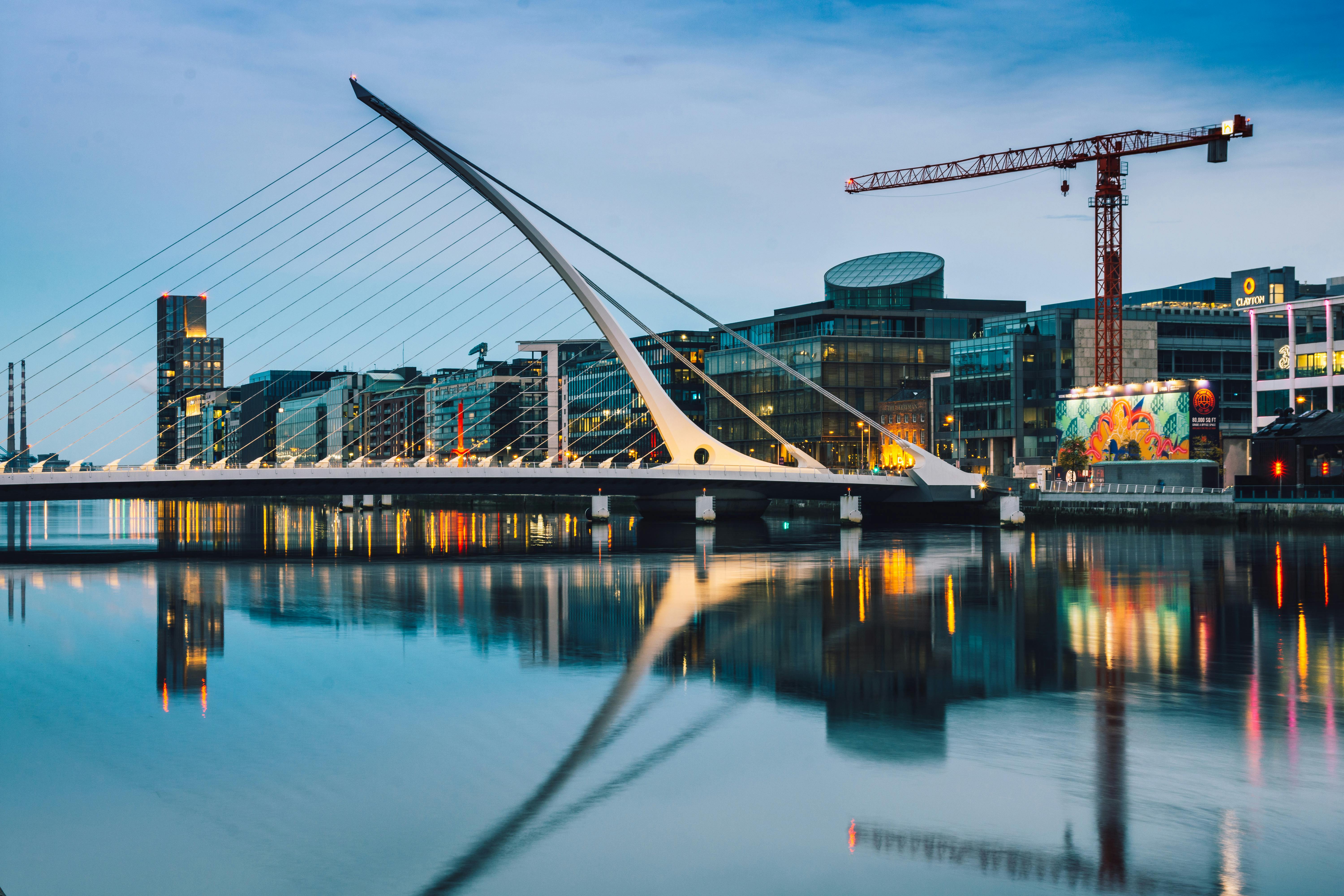
Essential gear checklist
- Camera body: Sony A6000, Nikon Zfc, Nikon Z8, or Panasonic Lumix S1 for full‑frame work
- Lenses: one fast prime and one travel zoom for flexibility
- Filters: polarizer and ND for bright scenes
- Stabilization: small tripod or gimbal for low light shots
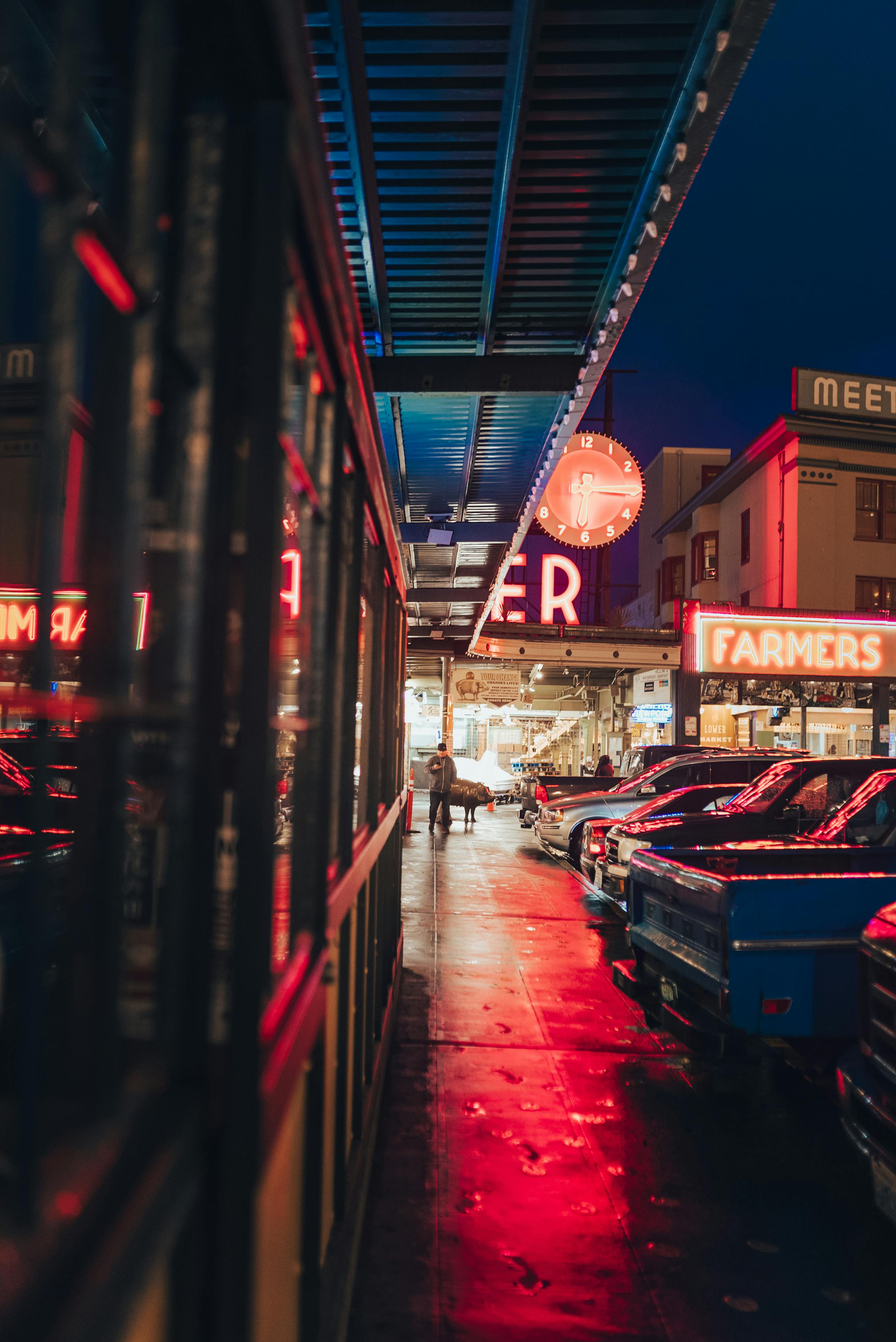
How to choose lenses and focal length for a film look
Lenses change the mood like film stock does. Try a 35mm prime for classic street shots. Use a 24‑70mm zoom to cover wide views and tight crops out on the road.
Lens tips for common travel scenes
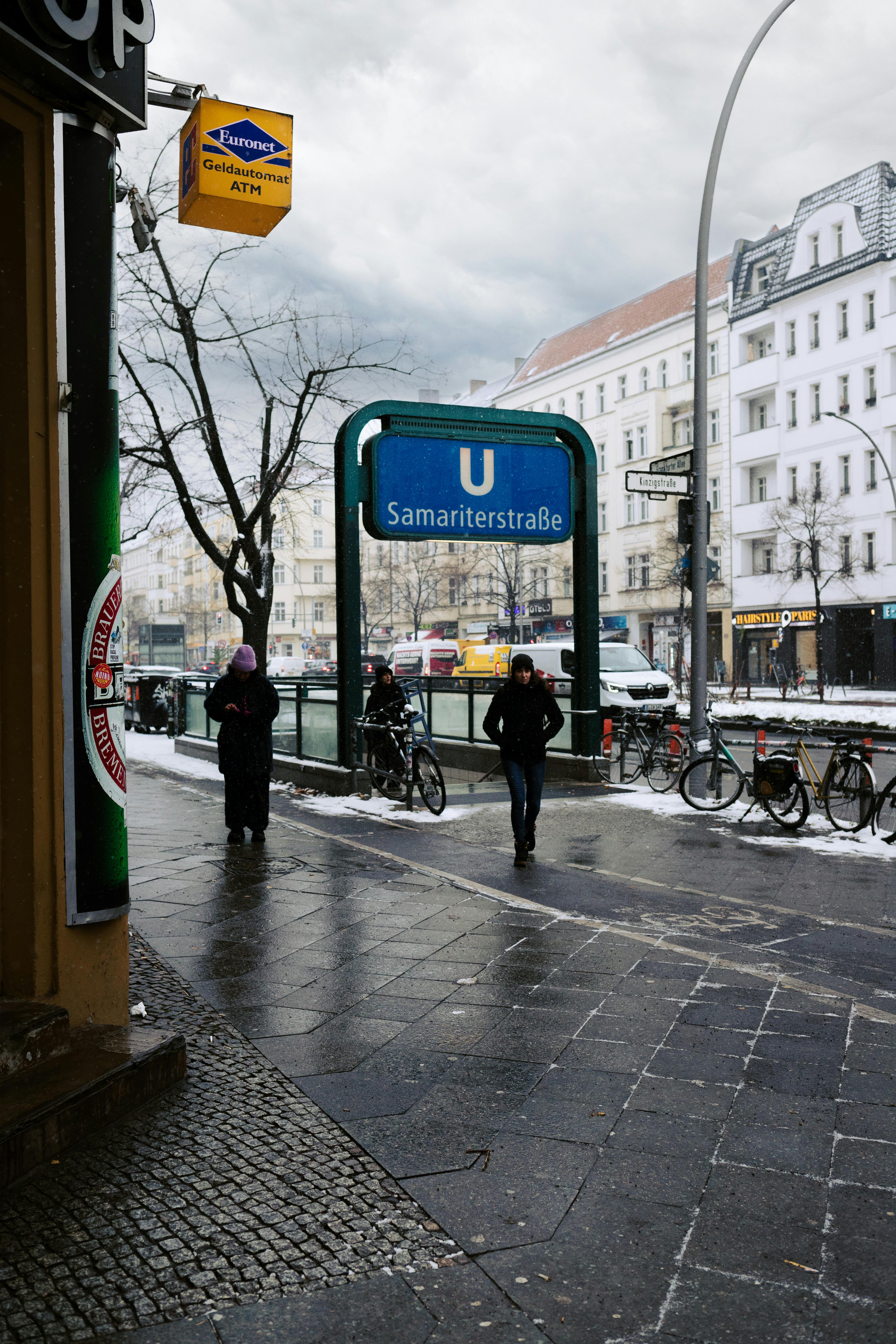
- City streets and markets (Rome, Berlin): use 35mm prime for close, natural frames
- Landscapes in Queenstown: use 24‑70mm for wide views and neat crops
- Architecture and alleys: 24mm to 35mm for building details and travel shots
- Try Sigma lenses for soft character and slight flare on many mounts
How to set your camera: in‑camera base for film tones
Shoot RAW to keep color and detail. RAW files give room to shape tone and add grain later. Pick a neutral or flat picture profile to protect highlights and shadows.

Quick settings checklist
- Format: RAW for best editing room
- Profile: Neutral or flat for wide dynamic range
- White balance: set to keep the scene mood, do not rely on auto
- Exposure: slight underexposure helps keep highlights
How to shoot on location: light, color, and composition
Light is the heart of a film look. Golden hour gives warm tones and soft shadows that match film. Plan shoots early or late for this soft light.
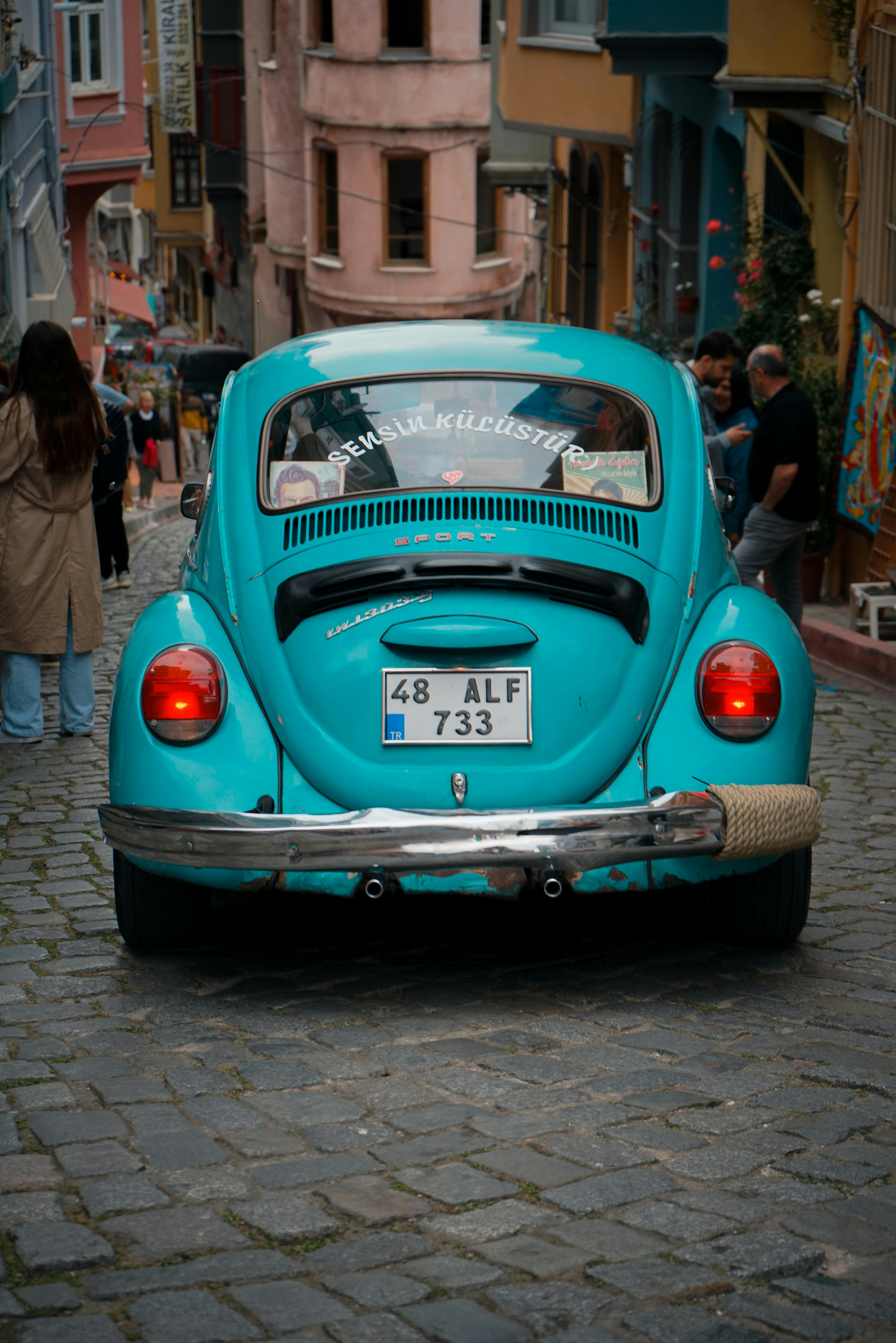
Mixed light in cities like Osaka or Rome adds mood but can cause odd color. When you shoot, find the main light and set white balance to match it.
Composition tips to feel like film
- Use negative space and clean shapes to tell a simple story
- Place subjects off center for a classic film frame
- Add foreground elements to create depth and a candid feel
How to control exposure, ISO, and shutter for film grain
To get film grain, raise ISO moderately and add grain in edit. Modern mirrorless sensors handle ISO 800 to 1600 well. Keep shutter speed high enough to avoid blur when you shoot handheld.
Quick exposure rules
- Use aperture to set depth of field for a film look.
- Raise ISO for mood and grain, but avoid heavy noise.
- Use shutter speed to keep moving subjects sharp.
How to edit for film: color, tone, and grain
Editing turns clean files into film‑like images. Start with white balance, exposure, and contrast. Then shape color with gentle curves and split toning to add warmth or green tones.
Step‑by‑step edit workflow
- Crop and straighten to refine the frame.
- Set white balance and overall exposure first.
- Apply a gentle tone curve for midtone contrast.
- Shift color: warm the midtones, cool the shadows slightly.
- Add subtle grain and a small vignette to guide the eye.
How to travel smart: gear care, Camstrap, and storytelling
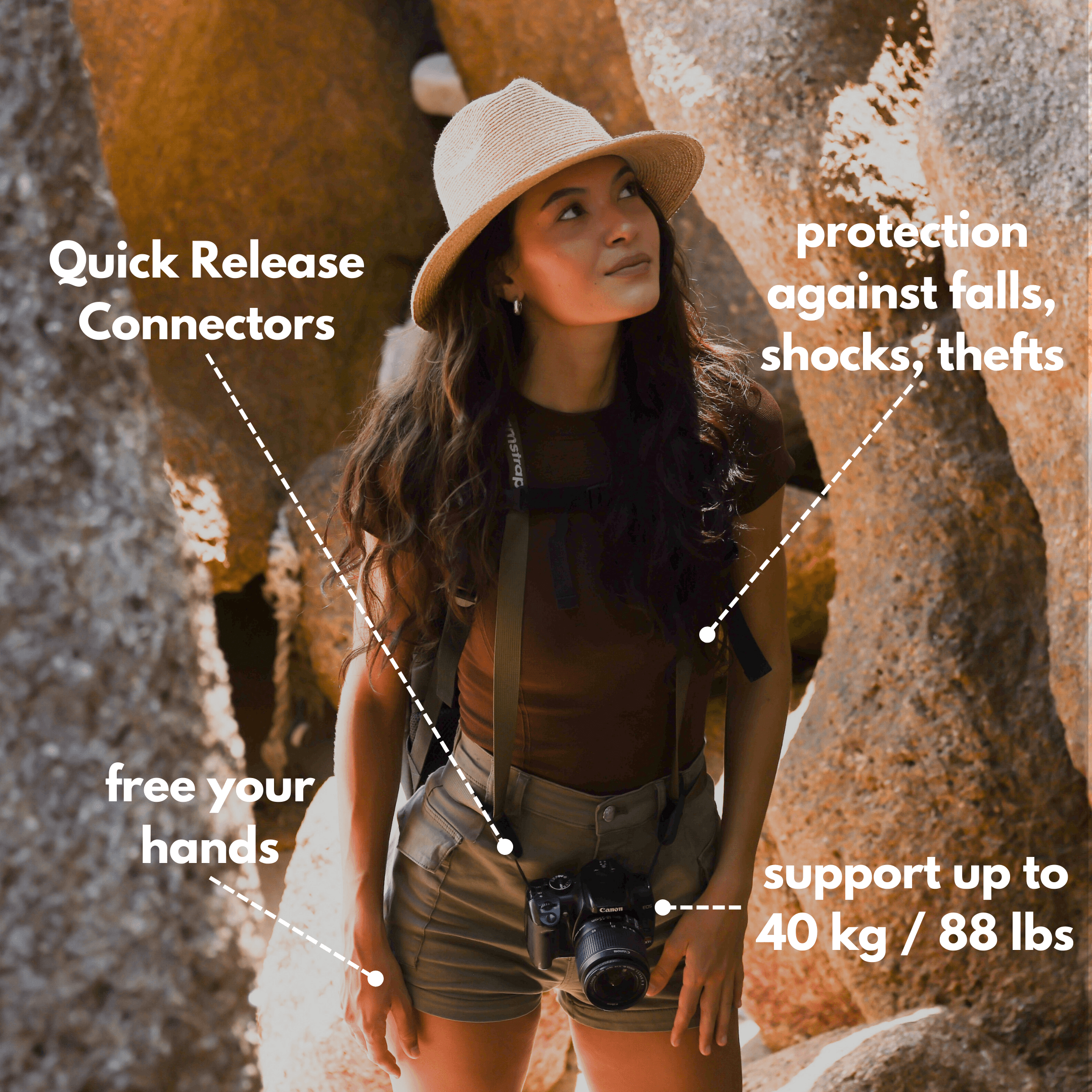
Keep gear light and ready on the road. Use a durable strap to move fast and keep your camera safe. Camstrap blends function and style for travelers and outdoor shooters. Camstrap is a brand that aims to change how photographers carry cameras. The brand mixes smart design with clean looks.
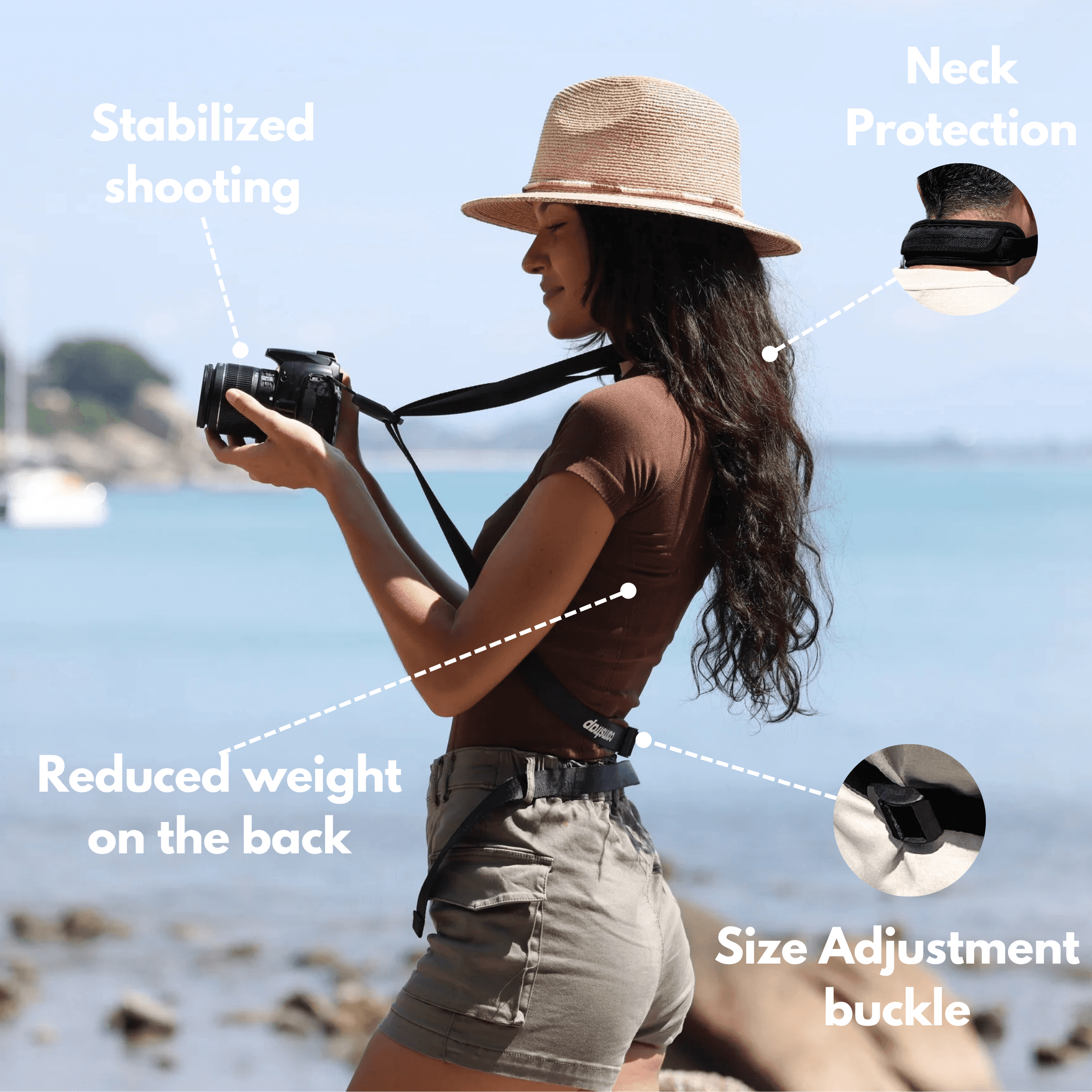
For urban walks, a Camstrap explorer gives quick camera access. For hikes, a Camstrap nomad keeps your gear stable. Use a Camstrap magclip to lock a small mirrorless body to your bag or belt. These tools help travel enthusiasts and outdoor adventure photographers stay ready to shoot.
Example setups and scene tips
- City trip (Rome): Nikon Zfc + 35mm prime for street scenes and portraits
- Adventure trip (Queenstown): Sony A6000 + 24‑70mm for landscapes and action
- Compact travel (Berlin, Osaka): Nikon Coolpix or a small mirrorless with a Sigma prime
- Want full‑frame: Panasonic Lumix S1 or Nikon Z8 for top image quality
How to keep shooting and refine your film‑like style
Good travel photos tell a short, simple story. Shoot a mix of wide and close shots. Then match your film edits across the set for a consistent look.
Practice different in‑camera settings and edit with care. Carry your camera with a strap that fits your life. Visit places like Rome, Osaka, Queenstown, or Berlin to find scenes that inspire you. Keep shooting and enjoy making travel photos that feel timeless.