- Use continuous drive, AF-C/AI Servo, and hold the shutter for a burst.
- Burst frames can be sharp and usable, but not every shot will be perfect.
- iPhones still support burst capture—swipe the shutter left in Camera.
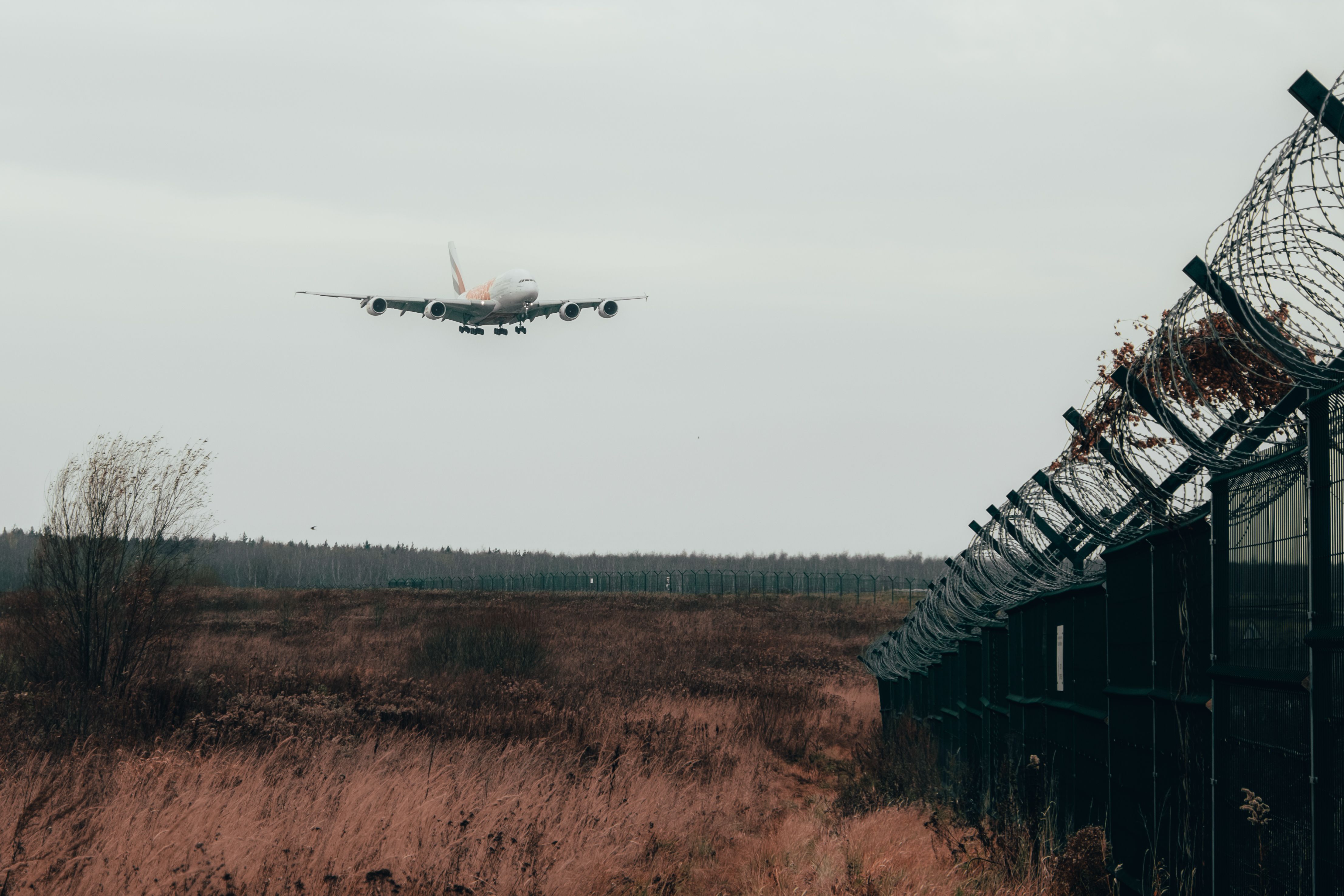
Burst shooting records several frames in quick order, which helps freeze fast motion. From the fence line, it improves your odds of keeping a jet sharp as it cuts across a small slice of sky. Jets move quickly, and the usable moment is brief. A plane can cross a clean background in a second, so setup, focus, and timing need to work together.
Shop the setup

- Regular price
-
€42 - Regular price
-
€44 - Sale price
-
€42
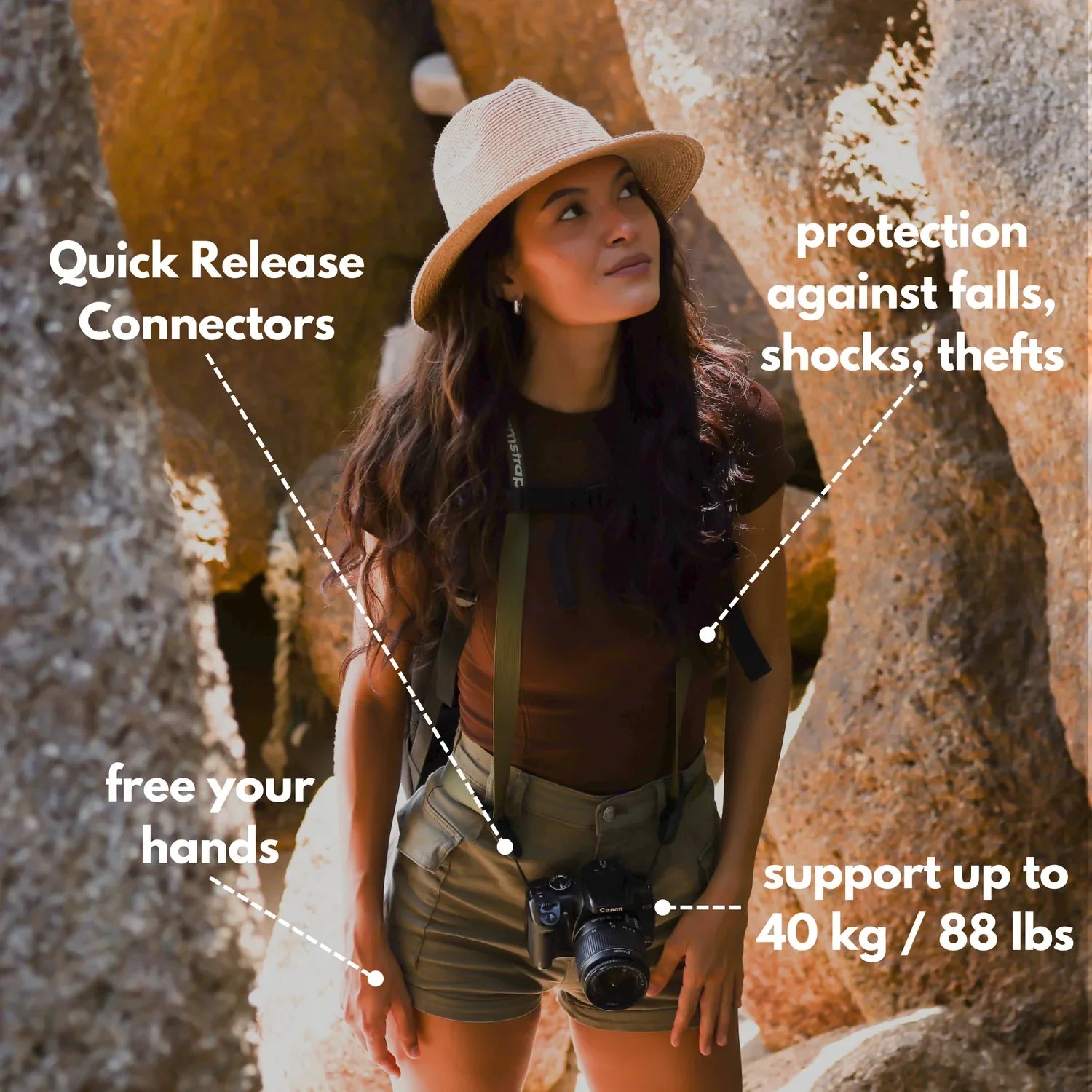
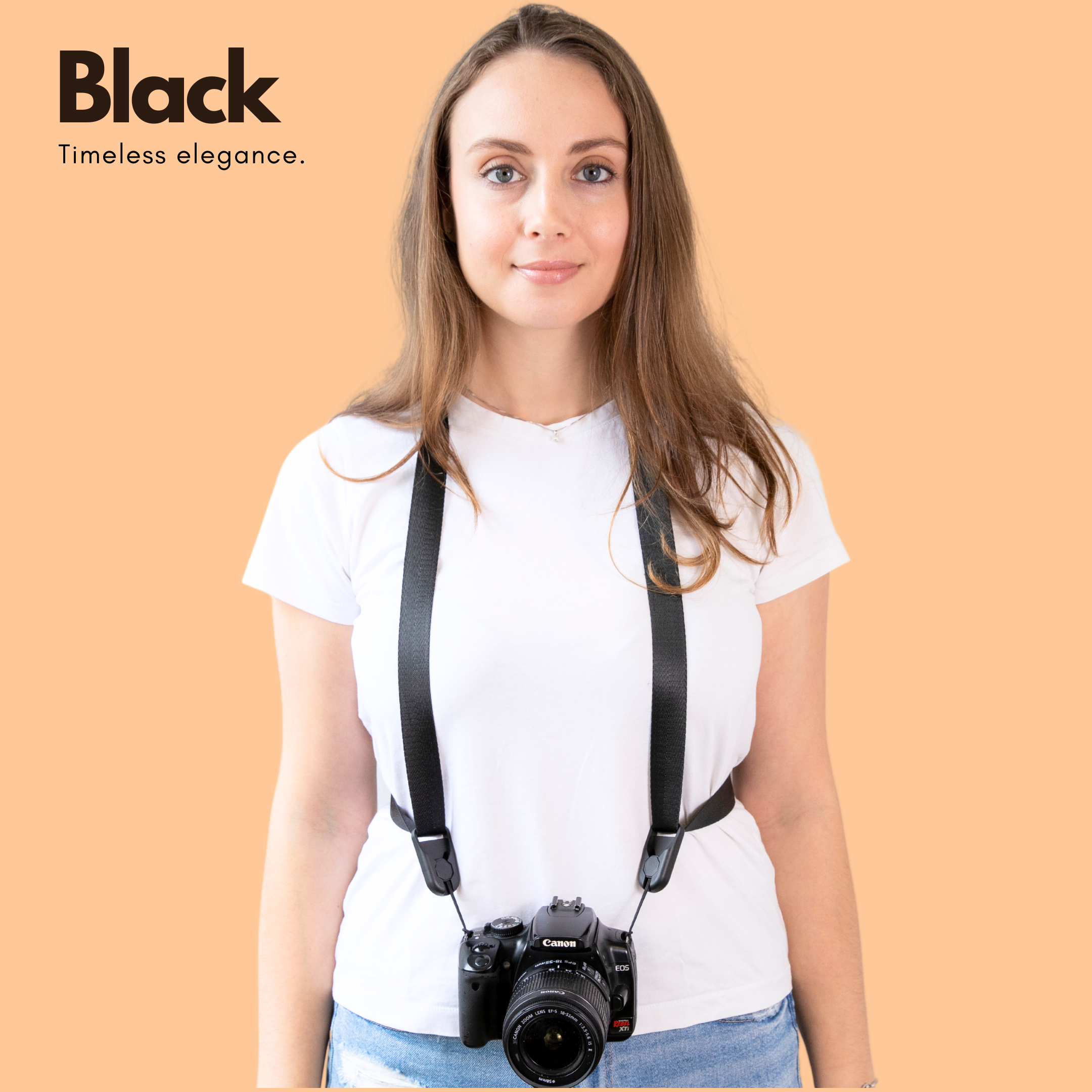
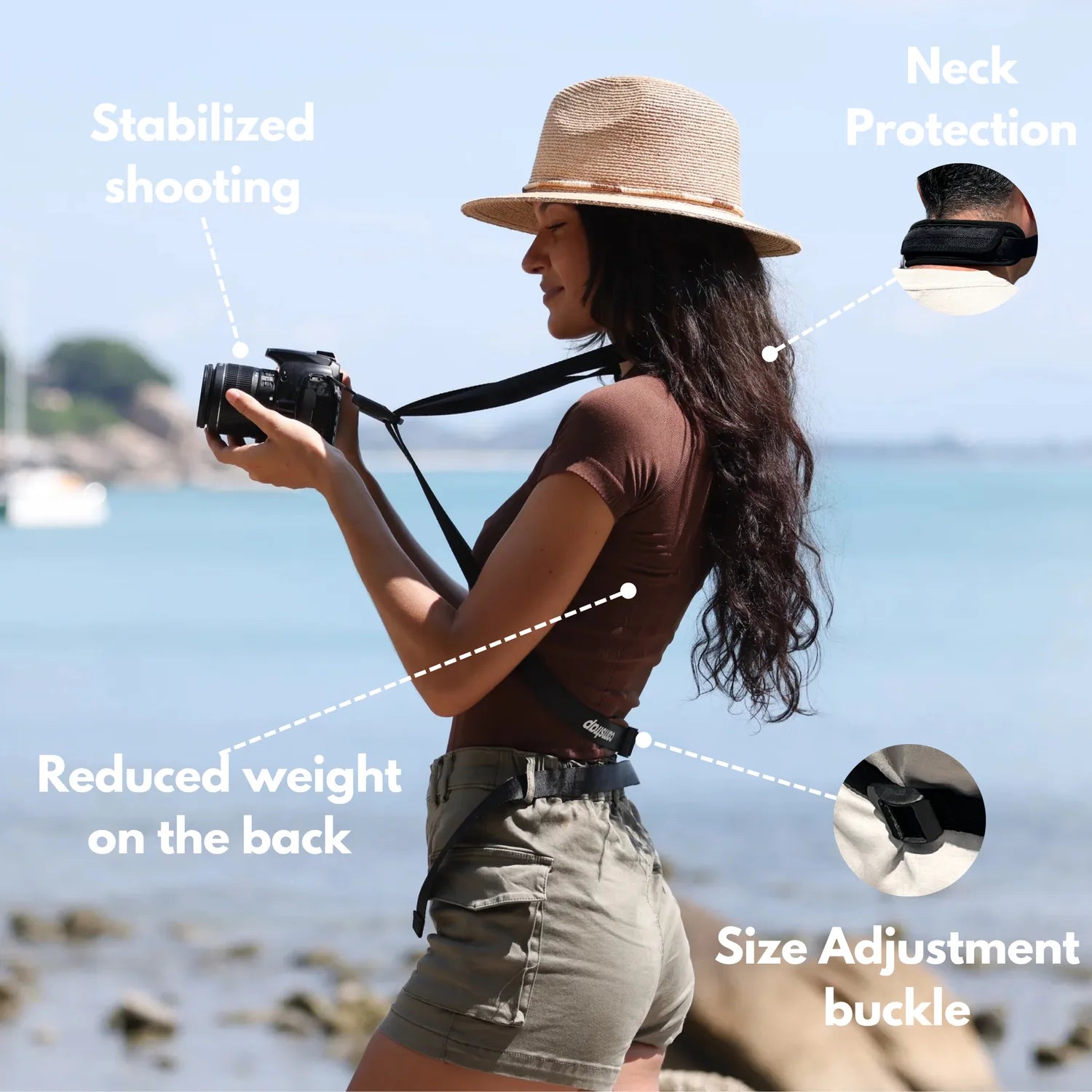
By choosing the Camstrap strap, you are opting for a high-quality product designed to meet the needs of the most demanding photographers.
- Developed by a physiotherapist to relieve neck and back pain.
- Fast delivery with tracking by the Post Office 🚚
- Can be used as a shoulder strap or hands-free harness

- Regular price
-
€36 - Regular price
-
€42 - Sale price
-
€36
Free shipping included
Why the fence line changes your approach
The fence line gives you a steady perch and an open view. It also puts you close to the action without having to chase it.
Wire, mesh, and posts can trip up autofocus, and glare from glass or shiny metal can flatten contrast. If you are shooting near an airport window or viewing area, Nikon advises keeping the camera as close to the glass as possible without touching it, and wearing dark clothing to reduce reflections.
Set your position before the jet arrives
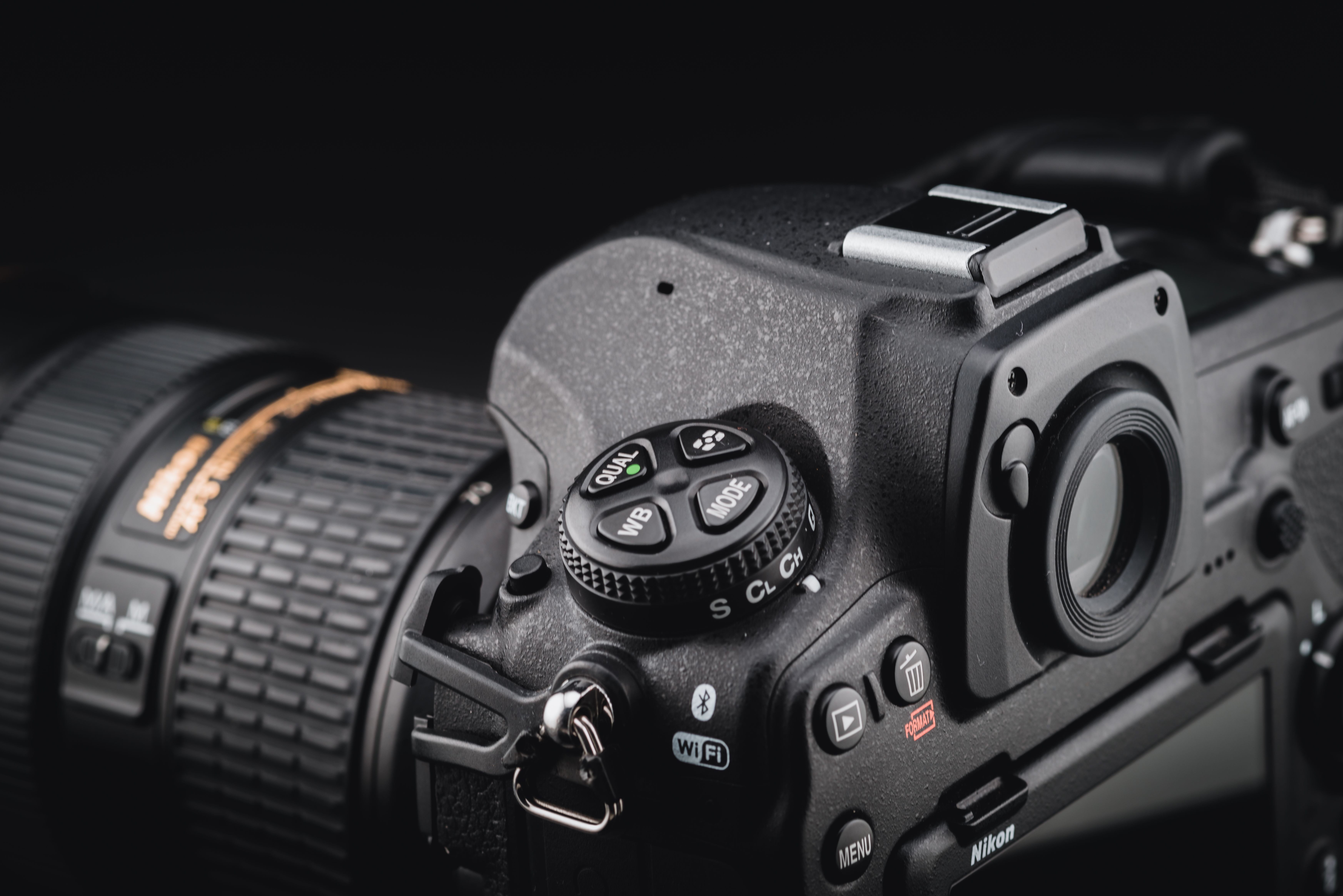
Good results begin before the aircraft appears. Choose your spot, check the flight path, and plant your feet where the plane will pass cleanly through the frame. A hands-free strap helps here because the camera stays ready while you shift between viewing spots. A strap such as the Camstrap voyager makes it easier to lift, shoot, and lower the body quickly, which counts when the jet appears for only a few seconds.
How do you use burst mode for photos?
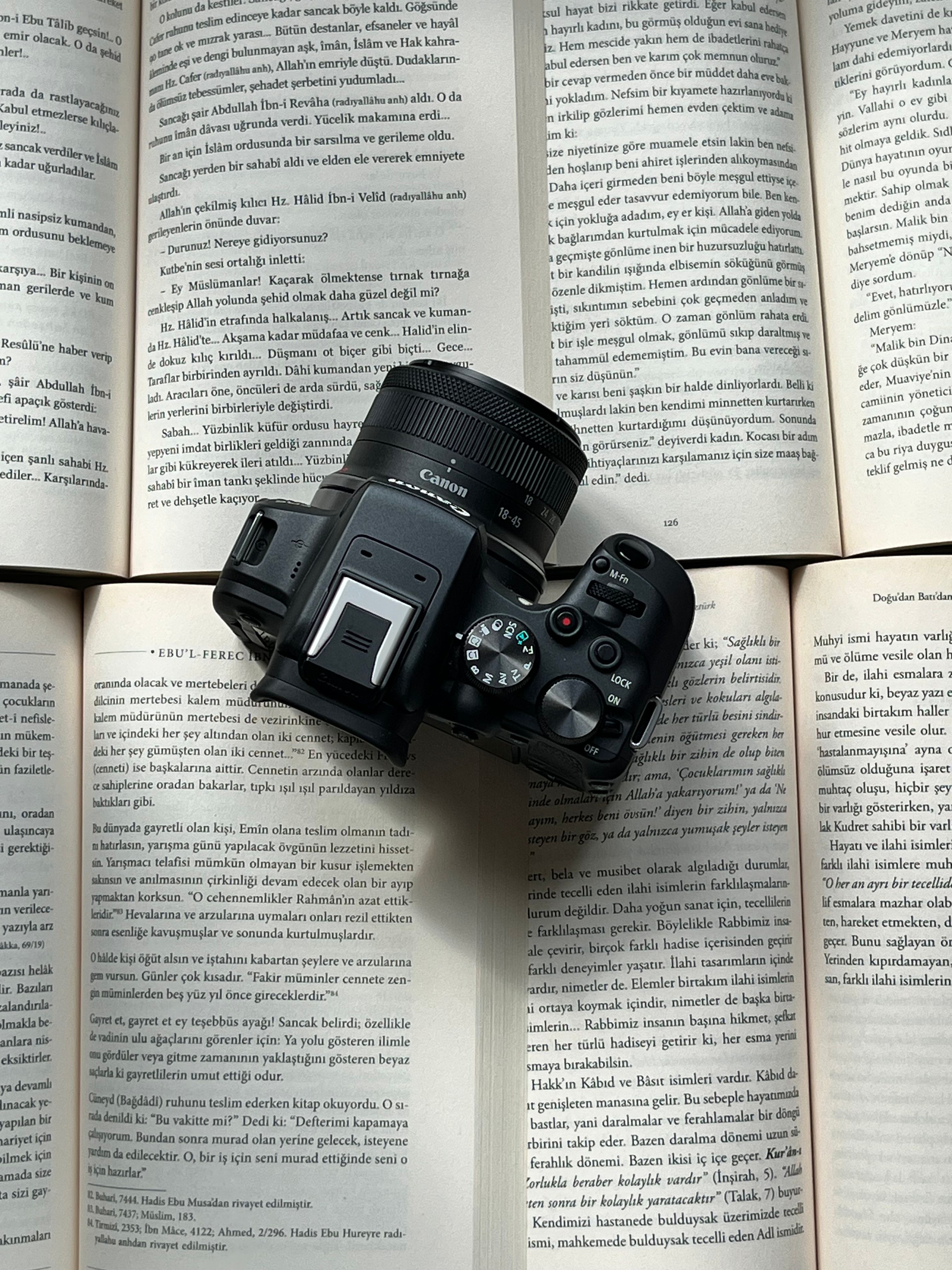
Hold the shutter down and the camera will record several frames in a row. On most mirrorless and DSLR bodies, the simplest setup is continuous drive, continuous autofocus, and a shutter speed fast enough to stop the plane.
Set the camera to AF-C on Nikon or Sony, or AI Servo on Canon. Then choose a drive mode near the top of the camera’s frame-rate range, such as about 10 fps on a mechanical shutter or 20 fps and higher on an electronic shutter if your body supports it.
A simple field setup that works
- Use shutter priority or manual exposure for control.
- Start near 1/1000s for jets in flight.
- Set the aperture around f/5.6 to f/7.1.
- Raise ISO only as far as needed for a clean shutter speed.
- Use back-button focus if your body allows it.
Adobe recommends autofocus and a high shutter speed for moving aerial subjects, and that advice fits this job well. Nikon also notes that about 1/500s at f/5.6 can work for high-flying subjects, while many example jet shots use 1/800s, 1/1250s, or even 1/4000s when light is strong. Back-button focus separates focus from the shutter press. With that setup, it is easier to lock on, track the jet, and keep firing without refocusing each time you press the button.
Do burst photos lose quality?
Burst photos are not lower quality by default, though they can slip if your settings push the camera too hard. The main tradeoff is that high frame rates may shorten buffer life, and electronic shutters can create rolling-shutter skew or banding under some lights.
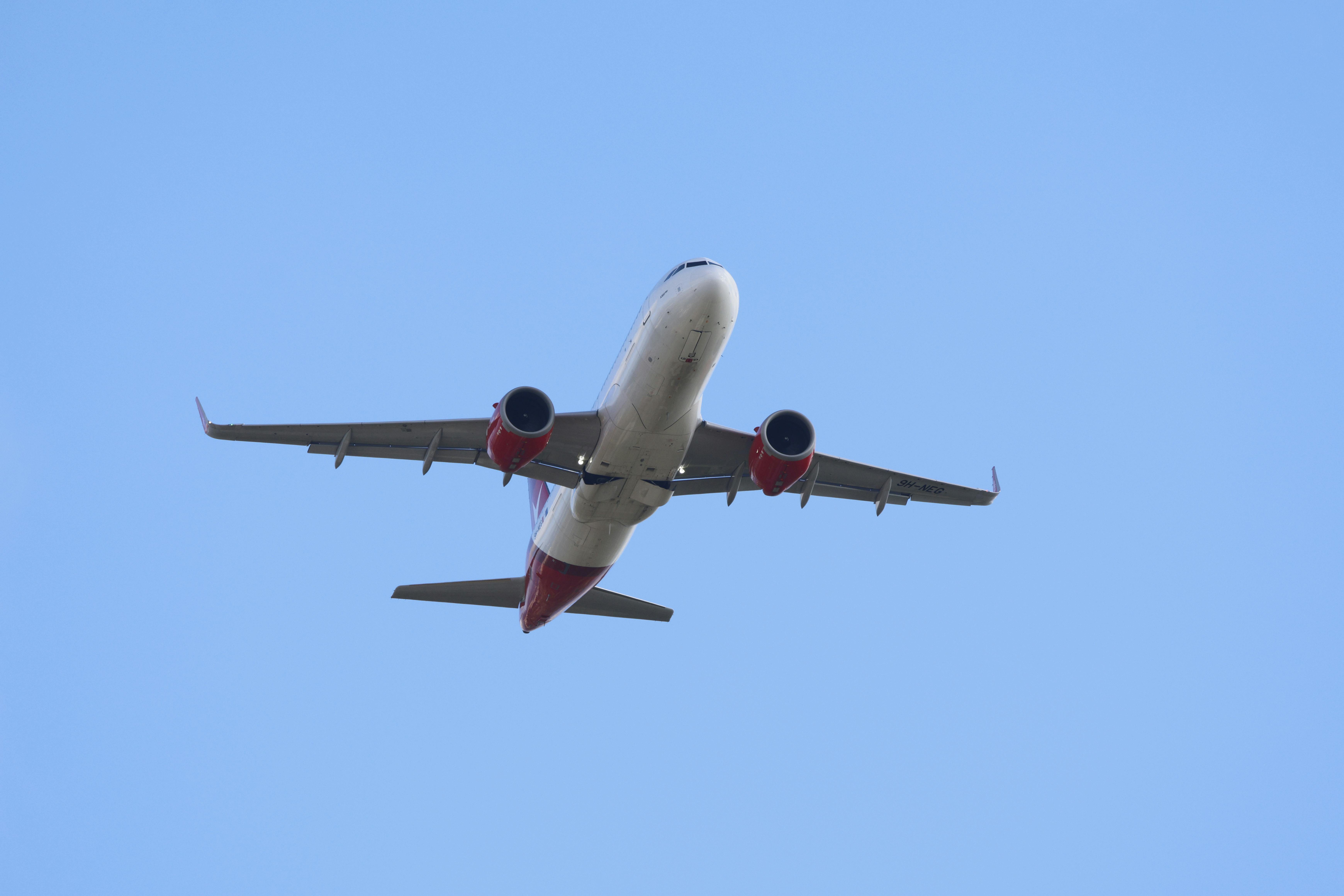
File type and card speed also affect image quality. RAW keeps more detail and editing room, but it writes more data than JPEG, so a mid-tier body may slow after roughly 20 to 40 RAW frames before the buffer clears. A UHS-II V60 or V90 card helps here, and CFexpress helps even more on bodies that support it.
Where quality usually slips
Motion blur is the first problem when shutter speed drops too low. Focus miss comes next, especially if the lens hunts on fence wire or a busy sky edge.
Noise can rise when you save the shot with a narrow aperture and a high ISO at dusk. For that reason, many jet shooters prefer a balanced setting like f/5.6, then adjust ISO as the light changes.
Why use burst photos at all?
Burst photos raise your odds of catching the best instant in a fast event. With jets, that best instant might be a clean wing angle, a sharp nose, or a perfect pass over the fence line. They also help when the plane changes bank angle or slips behind clutter. One frame may catch a pole in the way, while the next opens the aircraft against a clean patch of sky.
Pre-capture, sometimes called pre-burst buffering, adds another edge. The camera records a short slice of frames just before the full press, which can save the moment when the jet enters the frame a little earlier than you expected.
Do iPhones still capture bursts?
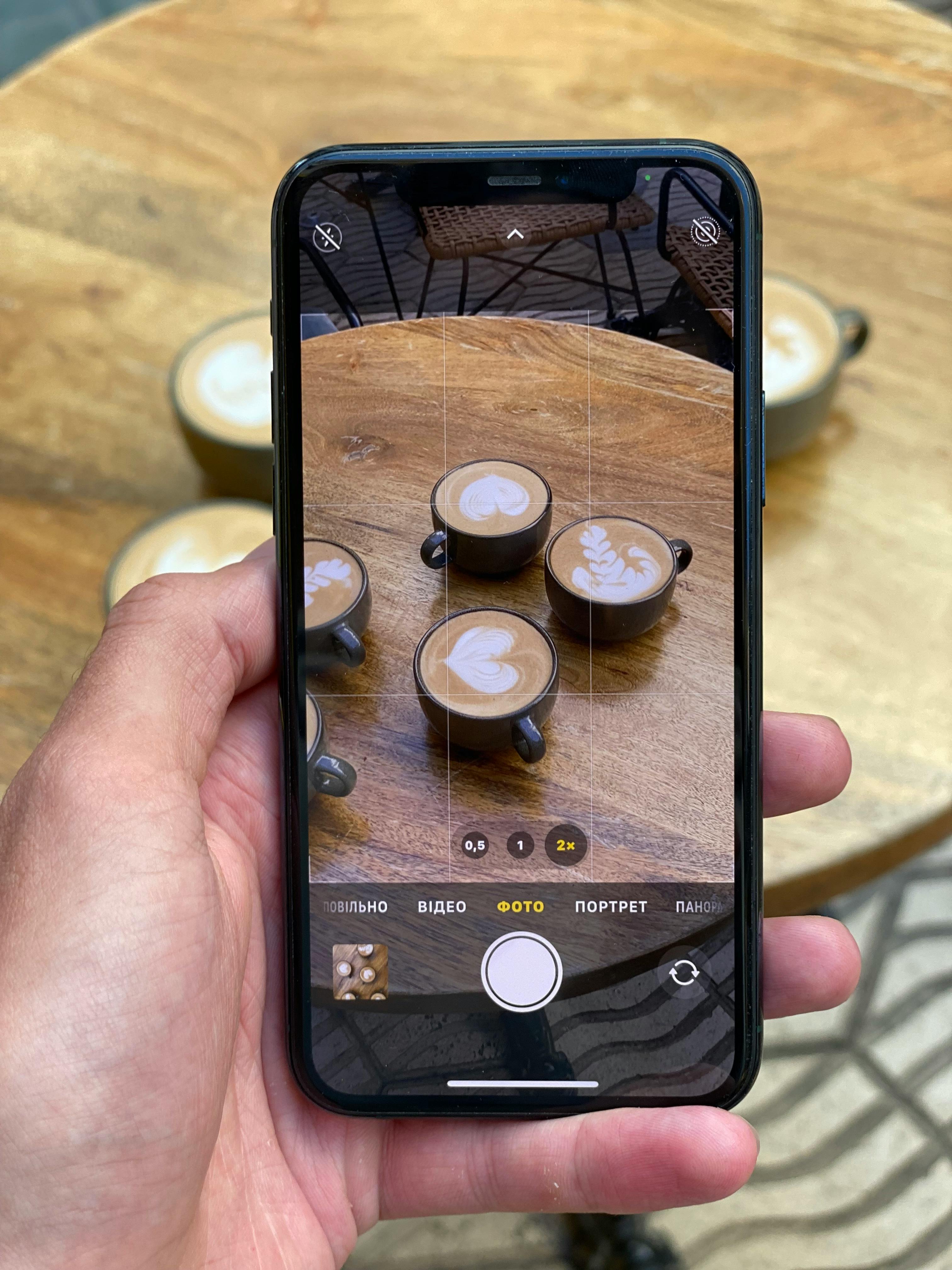
iPhones still support burst-style shooting, but the method depends on the model and settings. Newer iPhones often use a press-and-hold gesture, a volume-button option, or a related continuous-shot feature through Live Photos and camera settings.
A phone can still struggle with fast jets when the light is low or the subject is small. The tiny sensor and shorter lens make tracking harder, so a real camera gives you more control over shutter speed, focus mode, and zoom reach.
Phone use at the fence line
If you shoot on a phone, lock exposure on the sky and keep your hands steady. Tap to track the aircraft, then fire several frames as it passes the best angle. Still, the main rule stays the same: get the frame before the plane leaves the clean part of the scene. A quick series gives you more chances to hit that clean shot.
Lens, light, and motion choices that matter most
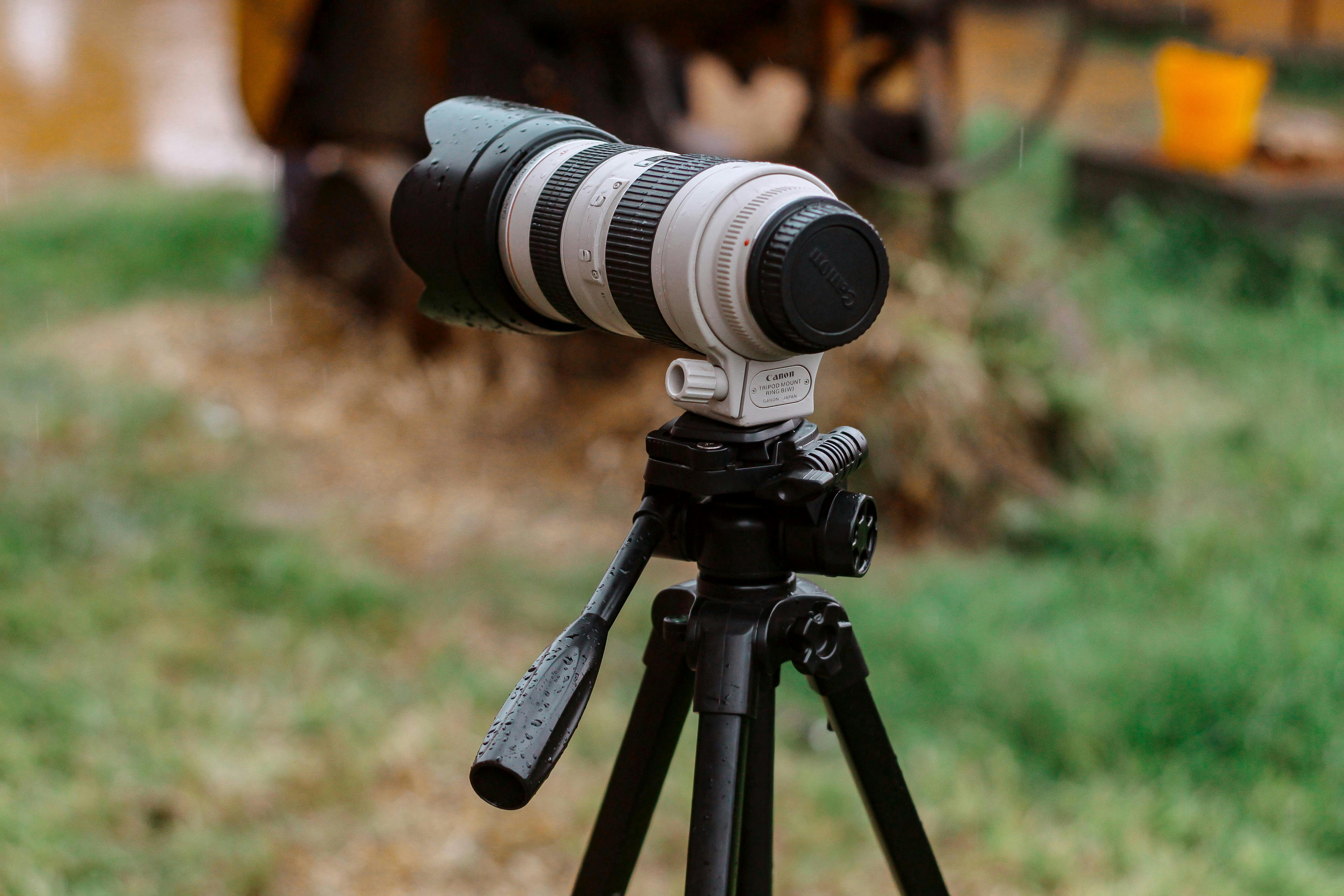
Lens choice shapes how hard the job feels. A focal length around 200mm to 400mm works well for distant aircraft, while 70mm to 135mm can suit closer approaches or wider airport views.
Exposure mode matters too. Nikon reports that aperture-priority exposure works well for jets, while propeller aircraft need slower shutter speeds if you want visible prop blur. For jets, a fast shutter like 1/1000s or 1/1250s is usually the safer start.

When autofocus helps, and when it does not
Continuous AF is the right starting point for most aircraft shots from the ground. Nikon recommends continuous shooting and autofocus for most images, and switching to manual focus only if autofocus begins to hunt.
Focus can fail near fences, heat shimmer, or heavy haze. If the camera keeps locking onto the wire or background, move the focus point higher and keep the plane in a cleaner part of the frame.
Image stabilization can help at slower speeds, but Adobe notes it may be worth disabling when your shutter speed is much faster than the focal length. At 1/1000s and above, the gain is often small, and some systems can even add tiny movement when they do not need to.
Field habits that make the frame sharper
Sharp jet shots come from rhythm as much as gear. Track early, start your pan before the plane reaches the frame edge, and keep the nose of the aircraft in your focus area. Keep your elbows close and rotate from your waist. Smooth motion matters more than quick finger work, because jerked pans cause blur even when the shutter speed is high.
- Pre-focus on the area where the jet will cross.
- Half-press or hold back-button focus to keep tracking alive.
- Begin the pan before the jet reaches the best spot.
- Hold the shutter down for a short burst.
- Keep panning after the last frame to stay smooth.
A short burst of three to six frames does not fill a modern buffer by itself. The real risk comes when you hold the shutter too long in RAW or use a very high frame rate without a fast card.
Light level also changes the plan. In bright sun, you can keep ISO lower and use 1/1250s or faster. Near sunset, you may need to trade some noise for a usable shutter speed.
Quick answers to common shooting questions
The four questions below come up often, and each one affects aircraft work in a real way. Clear answers save time at the fence line.
How do you use burst mode for photos?
Switch the camera to continuous drive and hold the shutter for several frames. For aircraft, pair that with AF-C or AI Servo and start near 1/1000s so motion stays under control.
Do burst photos lose quality?
Burst photos are usually the same quality as single shots when exposure and focus stay locked. Quality drops only when buffer limits, rolling shutter, poor light, or focus misses get in the way.

Do iPhones still capture bursts?
iPhones still support burst-style capture on many models, often through a press-and-hold action or related camera options. The feature works, but a larger camera still gives you better reach and more control for jets.
Why use burst photos at all?
The point is to catch the exact frame where the aircraft looks best. A burst gives you multiple chances, which matters when the jet moves past the fence line in a moment.
Before you head out, check your shutter floor, your card speed, and your focus mode. Those three things decide whether you come home with one lucky frame or a full set of crisp passes from the fence line.
Frequently Asked Questions
How to do burst mode on photos?
To shoot burst mode, set the camera to continuous drive and hold the shutter button down so it records several frames in quick succession. On many Nikon or Sony bodies, use AF-C; on Canon bodies, use AI Servo, then choose a fast shutter speed such as around 1/1000s for jets.
Are burst photos lower quality?
Burst photos are not lower quality by default. Quality can drop if the camera buffer fills, if the shutter speed is too slow, or if electronic shutter settings cause rolling-shutter skew or banding under certain lights.
Do iPhones still take burst photos?
iPhones still can take burst-style sequences by capturing multiple frames in rapid succession. The exact gesture and availability depend on the iPhone model and camera mode, but the function still exists as a fast multi-frame capture option.
What is the point of burst photos?
Burst photos increase the chance of catching a fast-moving subject at the sharpest possible instant. For jets, burst shooting helps freeze motion and improves the odds of getting one frame where the aircraft is crisp against a clean background.