- Use the 20-60-20 rule to keep 20% subject, 60% context, 20% breathing room.
- Make the focal point the first thing eyes land on, then simplify everything else.
- Treat the focal point as the main visual anchor that tells the photo’s story.
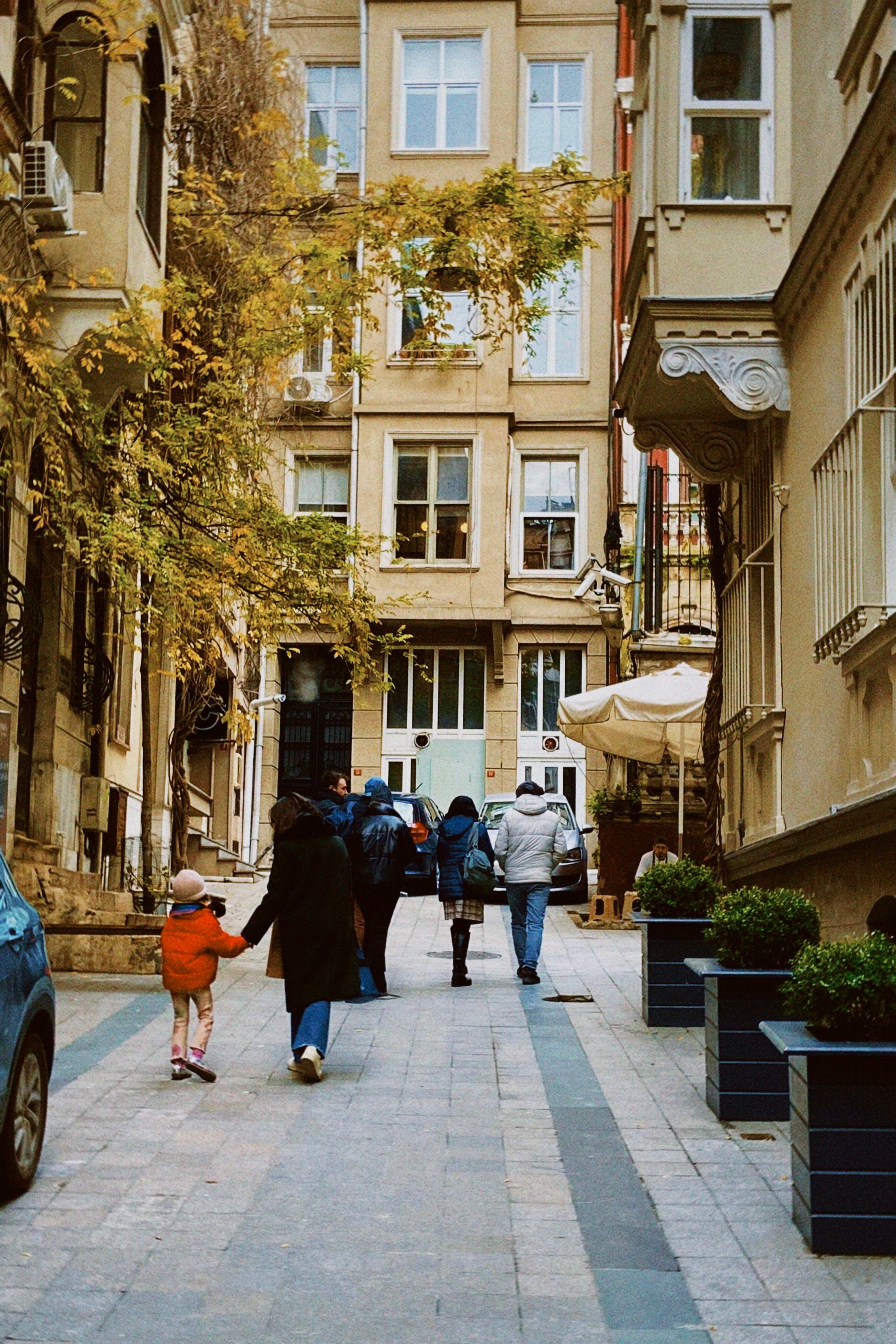
Focal point photography directs the eye to one main subject in a scene. On a city walk, it helps you place a child’s laugh, a handhold, or a quick glance exactly where it belongs in the frame. City streets throw motion, light, and clutter at you all at once. The mix can energize family photos, and it can just as easily bury the moment you meant to save.
Shop the setup

- Regular price
-
€42 - Regular price
-
€44 - Sale price
-
€42
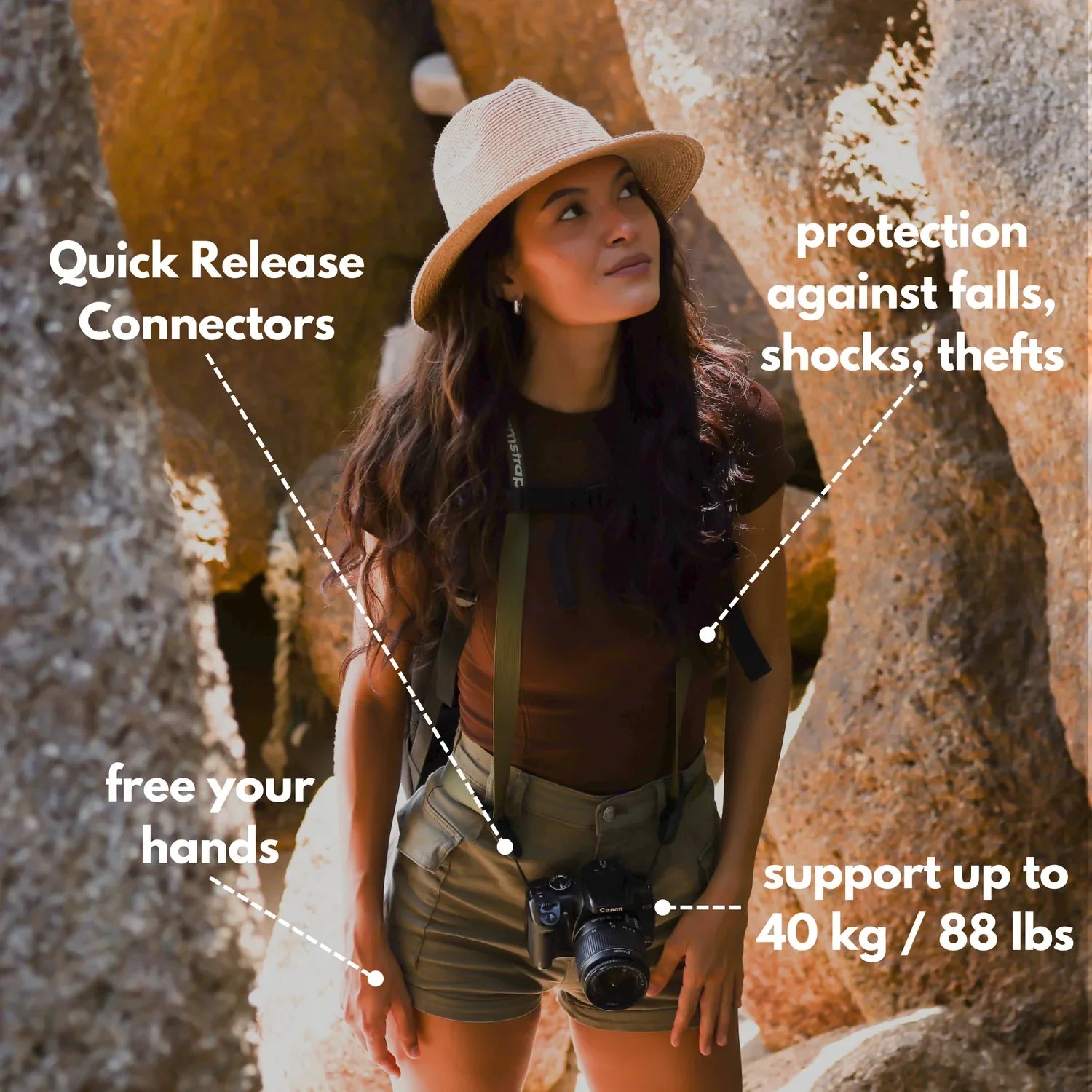
By choosing the Camstrap strap, you are opting for a high-quality product designed to meet the needs of the most demanding photographers.
- Developed by a physiotherapist to relieve neck and back pain.
- Fast delivery with tracking by the Post Office 🚚
- Can be used as a shoulder strap or hands-free harness

- Regular price
-
€36 - Regular price
-
€42 - Sale price
-
€36
Free shipping included
A simple plan fixes a lot of that. Choose the right lens, keep your hand steady, and set focus quickly so you catch real moments instead of stiff poses.
Why city walks make family photos feel more alive
City walks work because each few steps offers a new little scene. A crossing light, a cafe window, or a row of trees can turn an ordinary stroll into a strong frame.
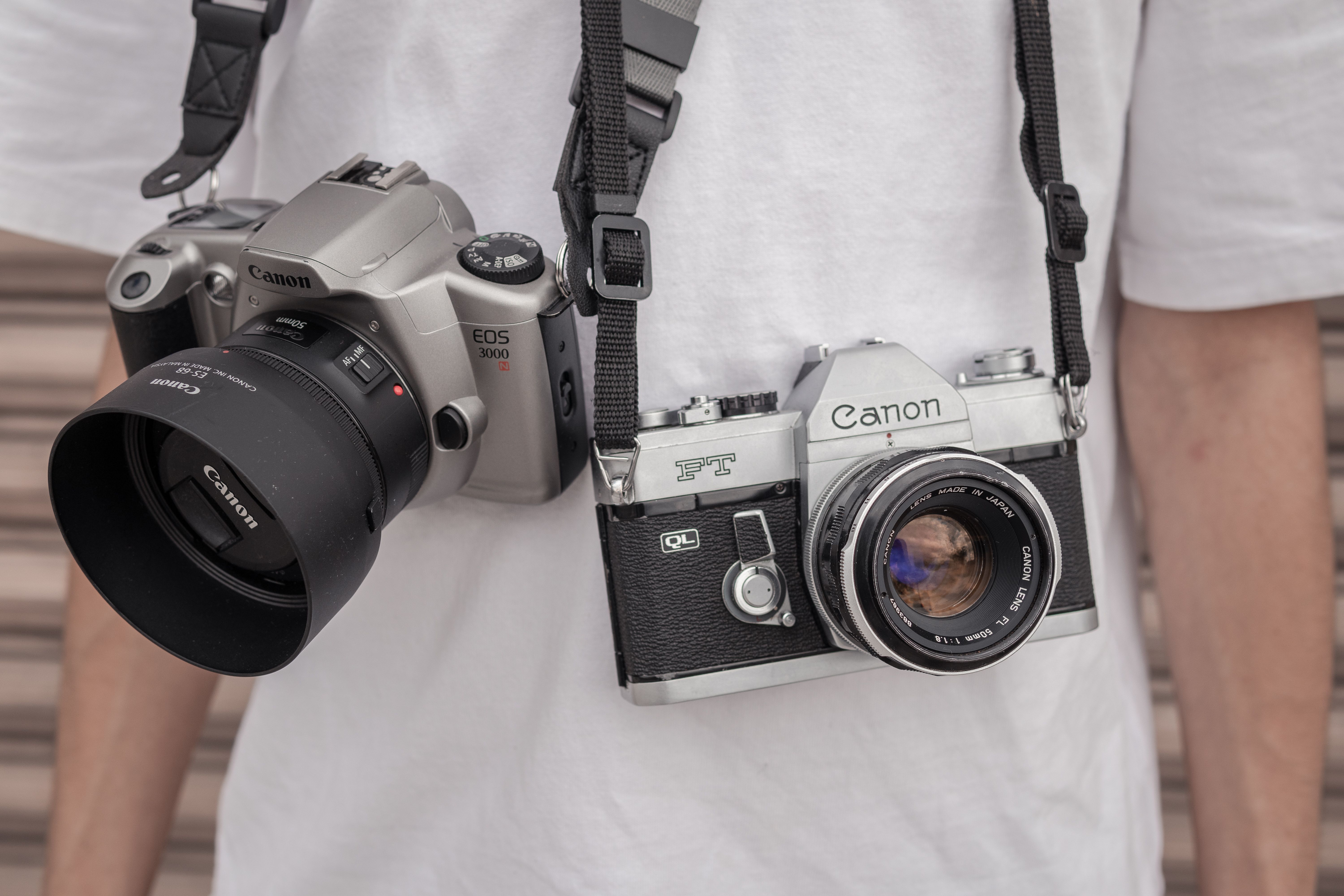
Canon recommends a 50mm lens for family work and notes that an 18–45mm zoom can trim away busy background clutter. Adobe points to 35mm, 50mm, and 85mm lenses for lifestyle work because they balance setting and portrait detail well.
Choose scenes, not poses
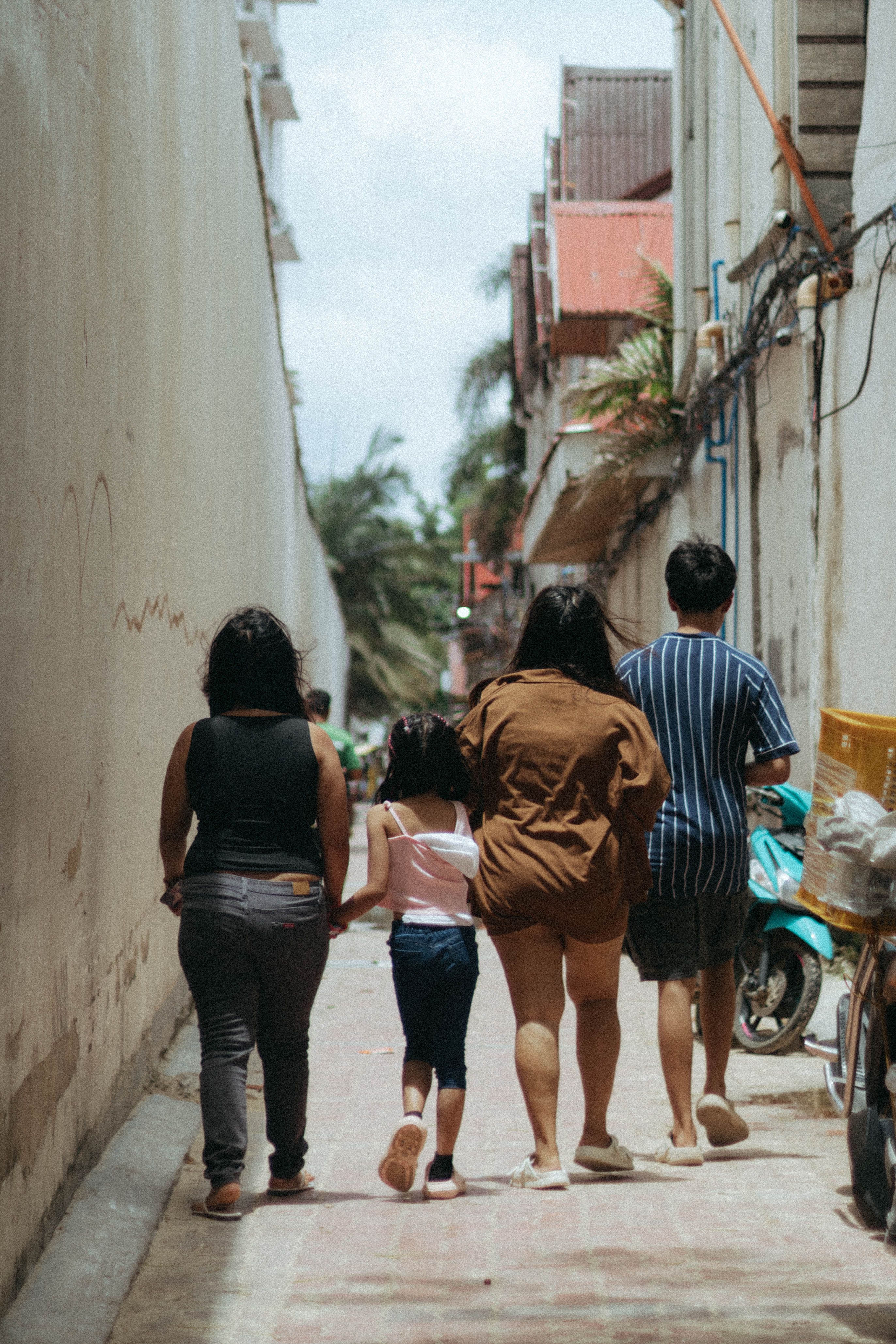
Real moments usually happen between the planned shots. A child may point at a bus, or a parent may bend down to tie a shoe. Canon advises shooting before and after the pose, and that small habit keeps the frame from feeling frozen.
Let the street do part of the storytelling. A crosswalk, mural, or shop sign can frame the family without taking over.
Keep the background simple enough
Busy streets grab attention fast. A longer lens, like 50mm or 85mm, can compress the scene and tuck extra clutter out of sight.
Adobe notes that shorter focal lengths suit urban scenes, while longer ones suit portraits or distant subjects. In practice, that means stepping in for connection or stepping back for context.

A small change in angle can transform the frame. Move two steps left, and a lamp post may vanish from behind a face.
Lens, aperture, and shutter settings that keep faces sharp
Strong family street photos depend on the right balance of sharpness and motion. A 50mm lens is a solid starting point, and a 35mm lens can bring more of the street into the frame. Canon says a wide aperture like f/2.8 reduces depth of field, while a smaller aperture like f/22 keeps more of the scene sharp. For family groups, Canon also notes that f/4 to f/5.6 can keep people in two rows sharp.
Settings that work in real street light
- Use Aperture Priority or Manual mode for better control.
- Start near f/2.8 for one person or f/4 to f/5.6 for small groups.
- Keep shutter speed at 1/250s or faster for moving kids.
- Raise ISO as needed, often to ISO 800–3200 in shade.
Canon shows one family frame at 1/160s, f/2.2, and ISO 1250. That combination shows how quickly low light can push ISO up, even on a simple walk.
One tradeoff stands out here. A wider aperture softens the background, but it also leaves less room for error if people lean or turn.
Focus modes that save fast moments
Continuous AF, also called AF-C or AI Servo, works well when children move toward or away from you. Eye detection helps too, because faces shift fast during a walk. Back-button focus gives you more control. It lets you lock focus once, then keep shooting as the family moves through the frame.
For burst work, a modern mirrorless body can shoot around 10 frames per second with the mechanical shutter, or far more with electronic modes. High-speed modes help, though they can bring rolling-shutter skew or banding under LED lights.
How to build a frame that leads the eye
A strong frame keeps the viewer from wandering. The eye should land first on one person, one gesture, or one shared look.
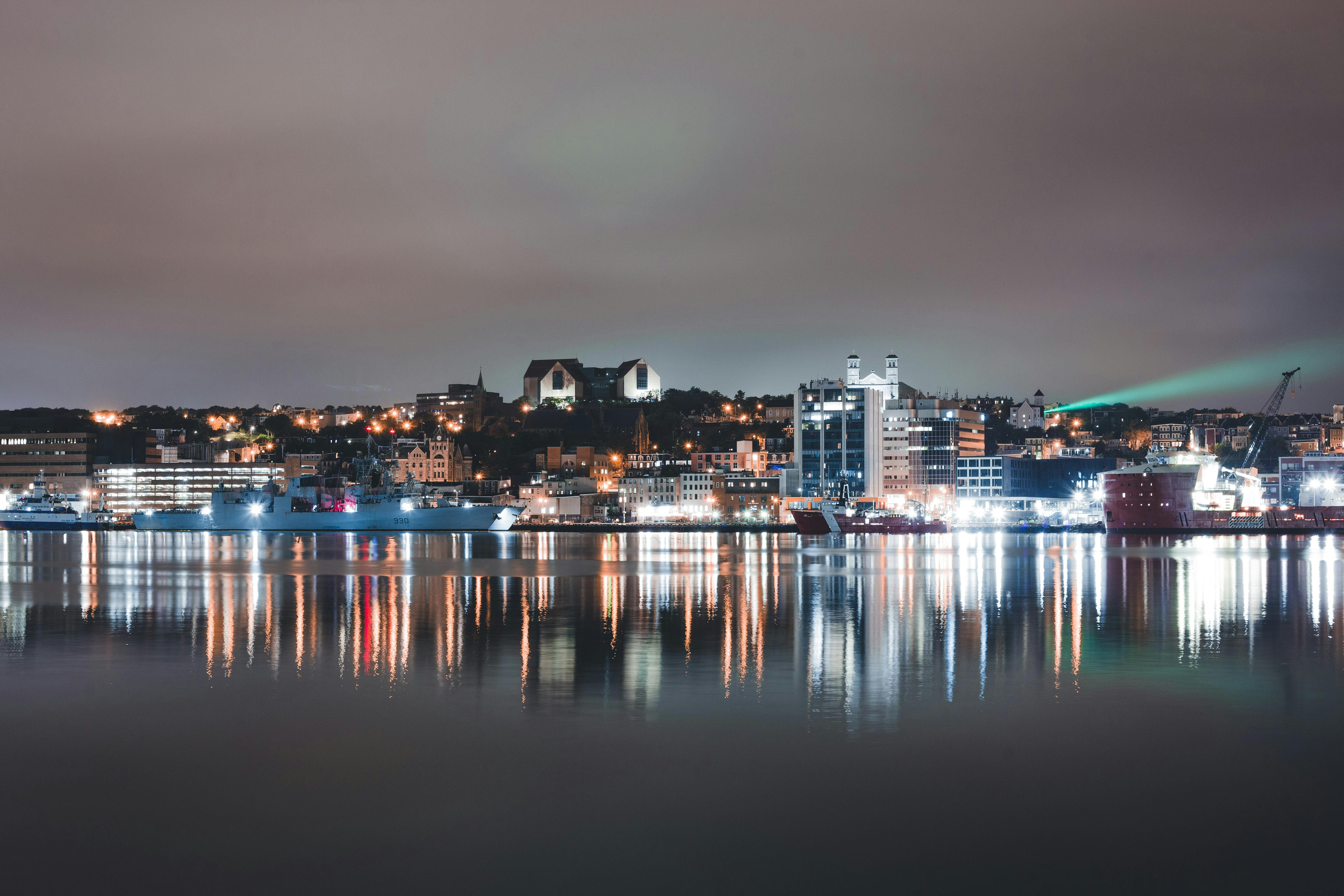
In a city scene, the focal point might be a child’s face, a bright coat, or a hand reaching for a parent’s arm.
What the 20 60 20 rule does
The 20 60 20 rule splits attention across a scene, with about 20% of the frame feeling active, 60% feeling steady, and 20% adding balance or lift. It helps you avoid a flat image by giving the eye a clear path. On a city walk, that might mean a person in the lower third, open street space in the middle, and a bright sign or skyline detail near the top. The exact mix changes with the scene, but the idea stays the same.
Use it as a guide, not a law. If the family moment is strong, the rule should serve the moment.
What the purpose of a focal point is
A focal point tells the viewer where to look first. It gives the image one clear center, even when the street around it feels busy.
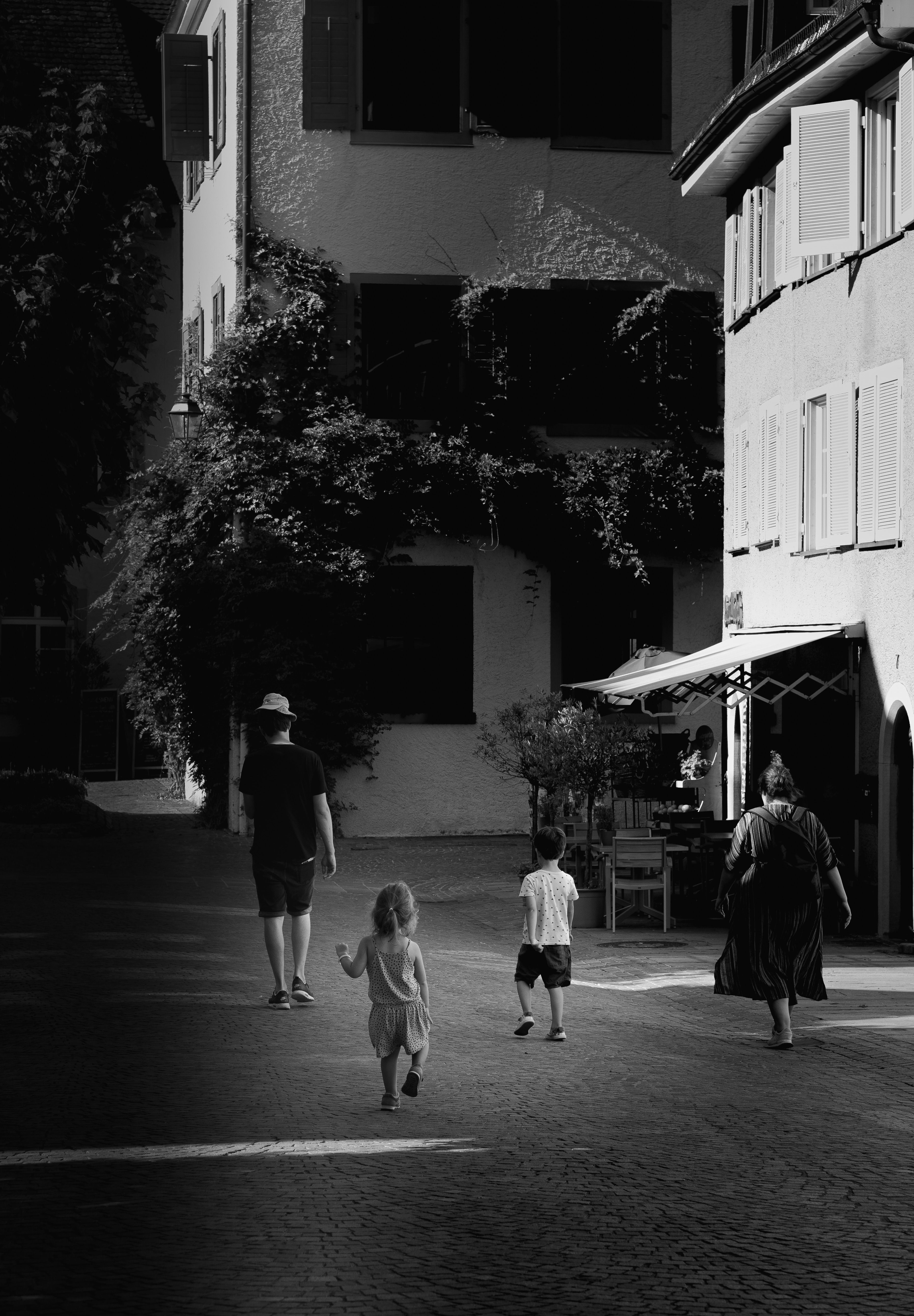
Without that anchor, eyes bounce around too much. With it, the photo feels calm, even if the scene is full of motion.
One strong subject is usually enough. A parent laughing at a joke can carry the whole frame.
What focal point in simple terms is
Focal point in simple terms is the main thing your eye sees first. It is the photo’s lead actor. In family street work, the focal point might be a child’s face, a shared smile, or a bright jacket against gray pavement. Clear shape and clean contrast make it stand out fast.
Think of it as the story’s first word. Everything else should support it.
How to know where the focal point is
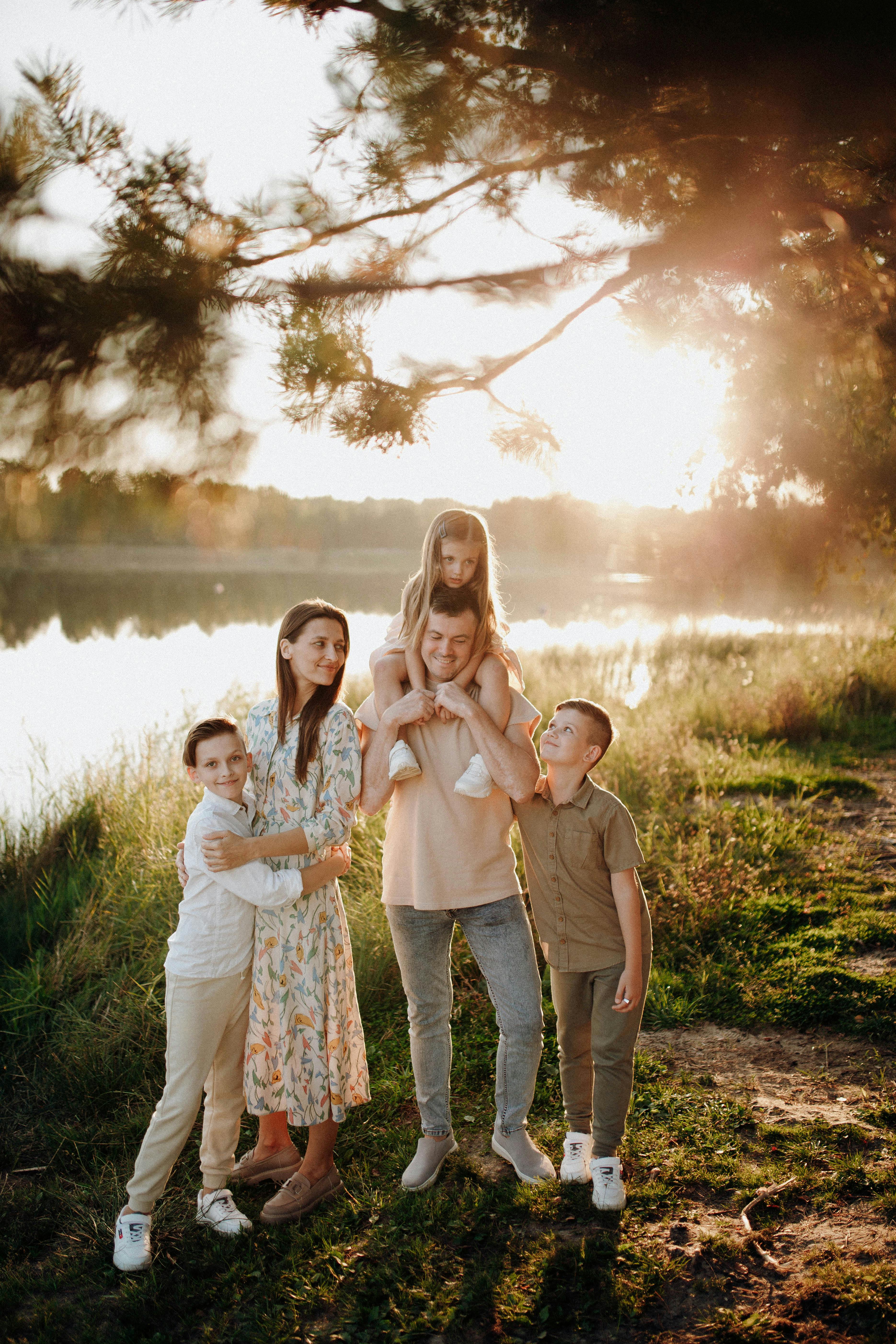
You know where the focal point is by checking where your eye goes first when you look at the frame. Your eye should land there in less than a second.
Bright color, sharp detail, and clear placement often pull focus. If a trash can or sign steals attention, shift your angle or reframe.
In camera, use single-point AF or a small zone when the scene is crowded. That keeps the camera from choosing the wrong edge, sleeve, or background object.
Ways to stay ready without missing the moment
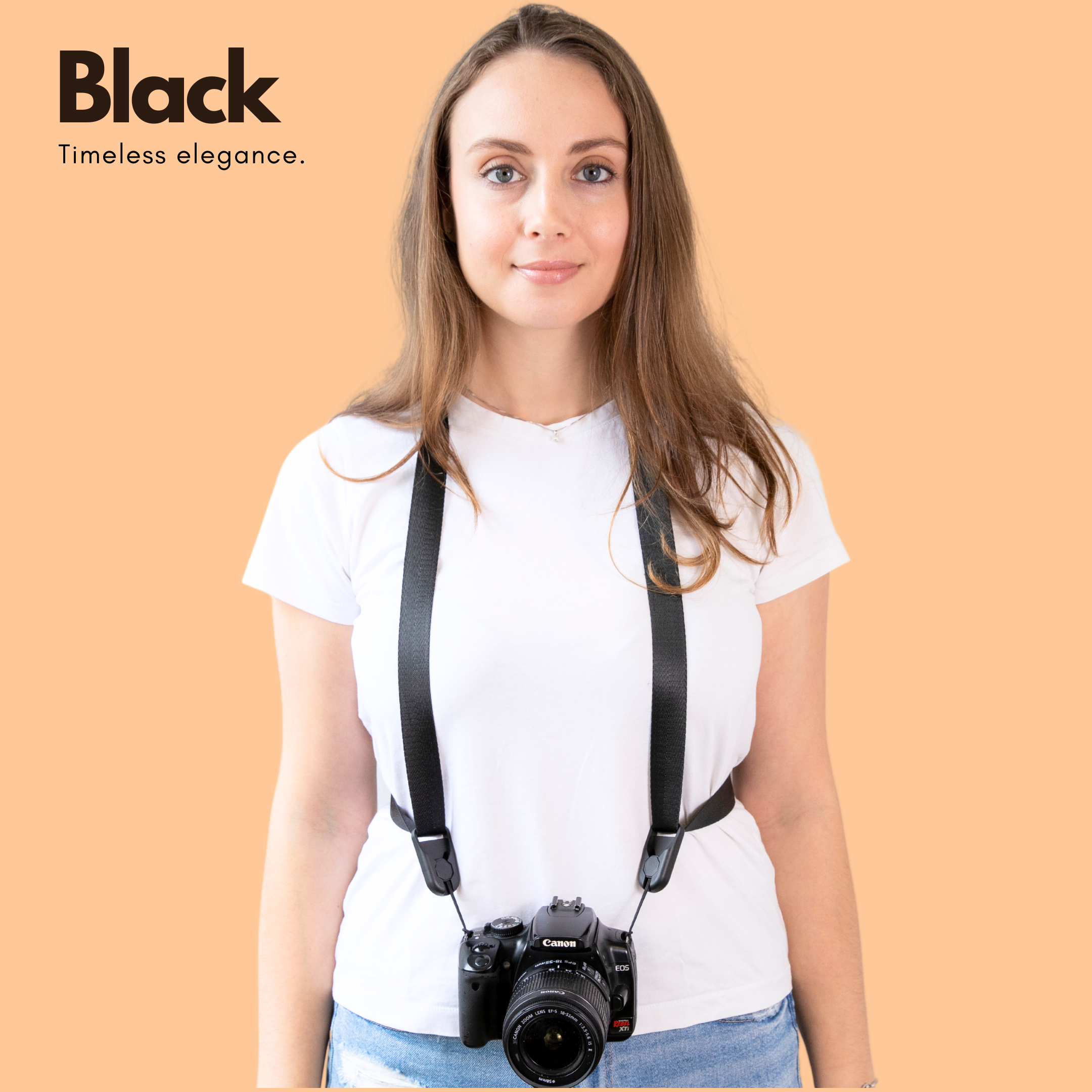
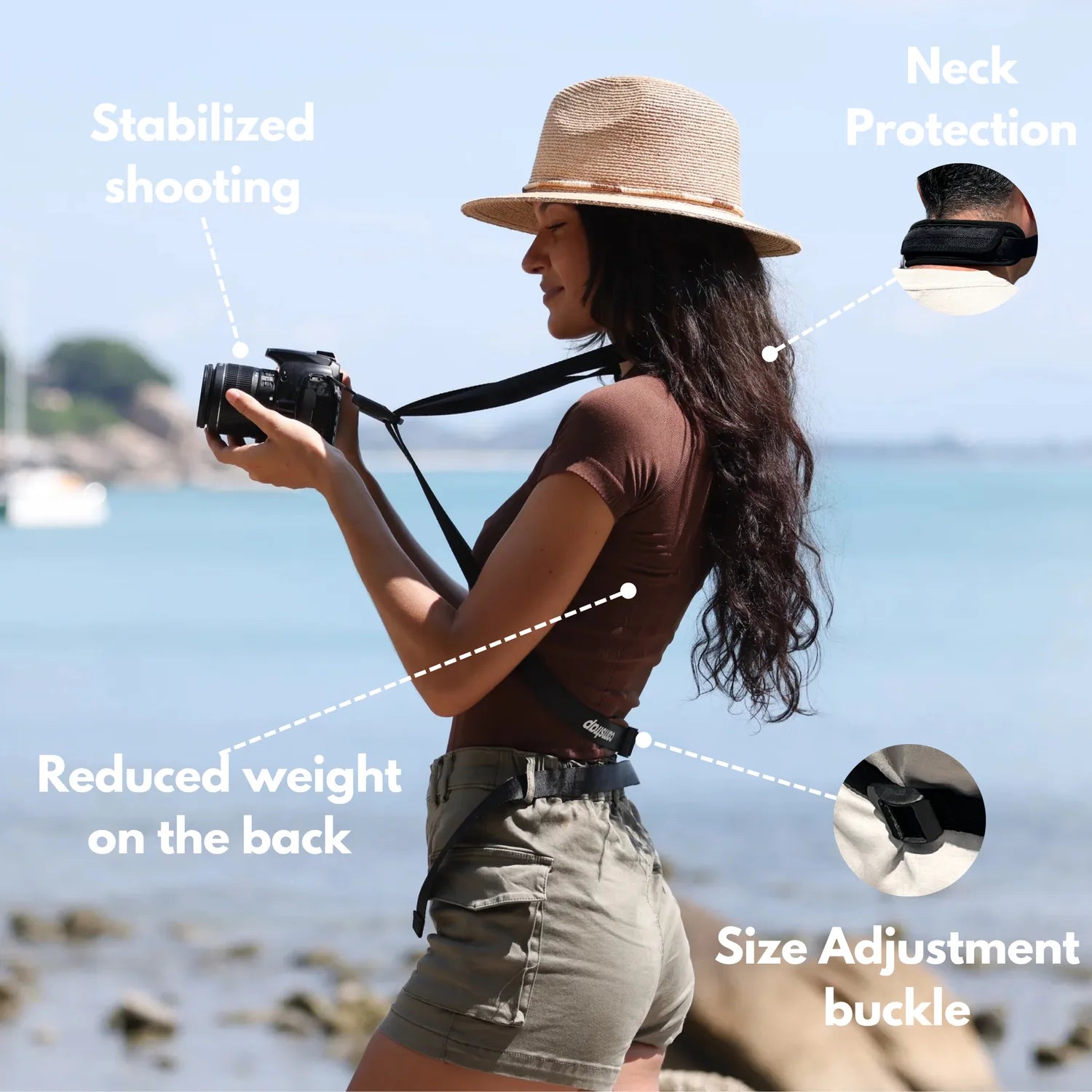
Family walks move fast because kids set the pace. A hands-free camera strap helps, since the camera stays ready at your side. Camstrap Voyager fits that need well in my experience because it spreads the load across the body and keeps the camera quick to grab with one hand. That makes it easier to catch a look or step without digging in a bag.
A small kit that actually helps

- Camera body with eye-detect AF.
- 35mm, 50mm, or 85mm lens for street-family work.
- One spare battery for screen and EVF use.
- A card with strong write speed, such as UHS-II V60 or V90.
- Lens cloth for rain, food, or fingerprints.
Mirrorless power use often comes from the EVF, LCD, and image review, not from the shutter itself. Turning off long review times can save battery during a long walk.
Card speed matters when you shoot bursts or RAW files. A UHS-II card with V60 or V90 support clears the buffer faster than a basic UHS-I card.
Use burst mode with a clear limit
Burst mode works best for a short run, not endless spraying. A mid-tier body may slow after roughly 20 to 40 RAW frames, while JPEGs stretch much farther. Pre-capture or pre-burst modes help with sudden smiles and jumps. These modes save frames from just before the full press, which can rescue the exact instant you missed.
Keep the burst short and deliberate. Three to six frames is often enough for a child turning, stepping, or laughing.
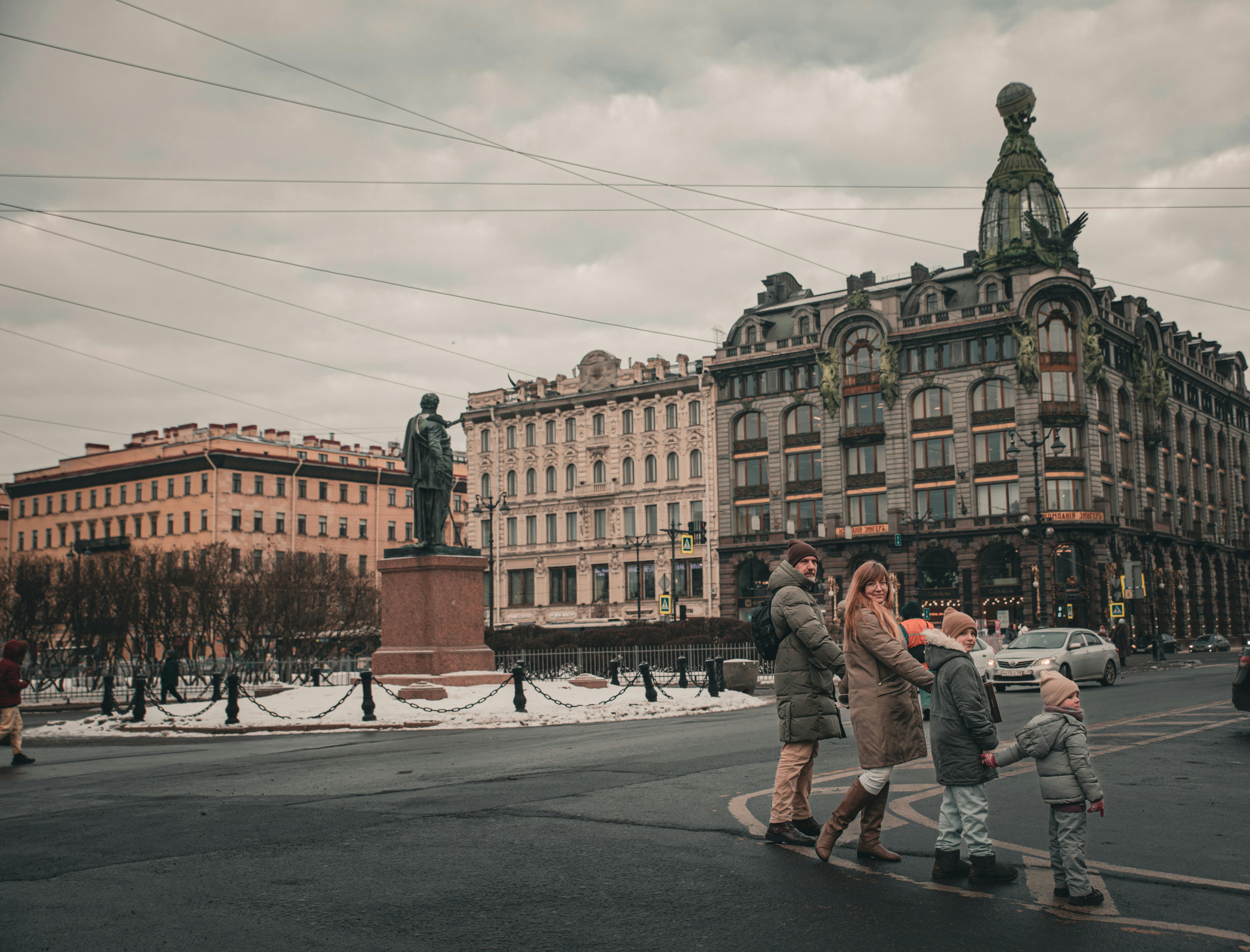
Street light and motion in the frame
City light changes fast as you move. Open shade, glass reflections, and late sun can shift exposure from block to block.
Aperture choice changes how much of that scene stays in focus. A wide aperture isolates people, while a smaller one keeps more of the street crisp.
Use motion without losing the scene
If the family is walking toward you, keep shutter speed near 1/250s or faster. Canon also gives 1/50s for a 50mm lens as a general anti-shake guide, and 1/200s for a 200mm lens. Those numbers point to a simple rule: longer lenses need faster shutters. If you slow down too much, the street may stay sharp while faces blur.
Sometimes blur helps tell the story. A little motion in legs or hands can make the frame feel more real.
Pick the right distance from the family
A 35mm lens lets you stay close and keep the city in the frame. A 50mm lens gives a more natural view, and 85mm pulls the subject away from the background.
For crowded sidewalks, longer focal lengths can also help you wait for a cleaner gap. That makes it easier to isolate a face without asking everyone to stop.
Watch for light on the face first. If the face is dull, the whole photo can feel flat.
Simple habits that make the walk pay off
The best results often come from a few calm habits repeated well. Scan for clean backgrounds, keep your focus point on the nearest face, and shoot before the pose ends. Take one frame for the scene, one for the gesture, and one for the close moment. That gives you options without turning the walk into a photo drill.
Most of all, stay loose. A city walk offers small surprises on every block, and those are often the frames worth keeping.
At the end of the day, sort the strongest images by eye contact, clean shape, and real feeling, then flag the keepers in Lightroom or Photo Mechanic for a quick first pass.
Frequently Asked Questions
What is the 20 60 20 rule in photography?
The 20 60 20 rule in photography is a composition guideline that divides attention into 20% foreground, 60% main subject, and 20% background or supporting space. It helps balance a frame so the subject remains the clear focus while the scene still adds context.
What is the purpose of a focal point?
A focal point in photography directs the viewer’s eye to the main subject in the frame. Its purpose is to make the most important part of the scene immediately clear and prevent distractions from overpowering the moment.
What is focal point in simple terms?
A focal point in simple terms is the place in a photo that first grabs attention. It is the main subject or detail the viewer is meant to notice right away.
How do I know where the focal point is?
The focal point is usually the brightest, sharpest, most isolated, or most visually prominent part of the image. In family street photos, it is often the child’s face, a handhold, or a quick glance placed where the eye naturally lands.