


Waarom een handbagage-klare, minimalistische uitrusting belangrijk is in 2025
Luchtvaartmaatschappijen blijven bagagekosten verhogen en ruimte verkleinen. Daarom is een handbagage-klaar camerapakket in 2025 belangrijker dan ooit. Een minimalistische set laat je snel door luchthavens bewegen en de bagageband overslaan. Je komt nog steeds thuis met prachtige foto's.
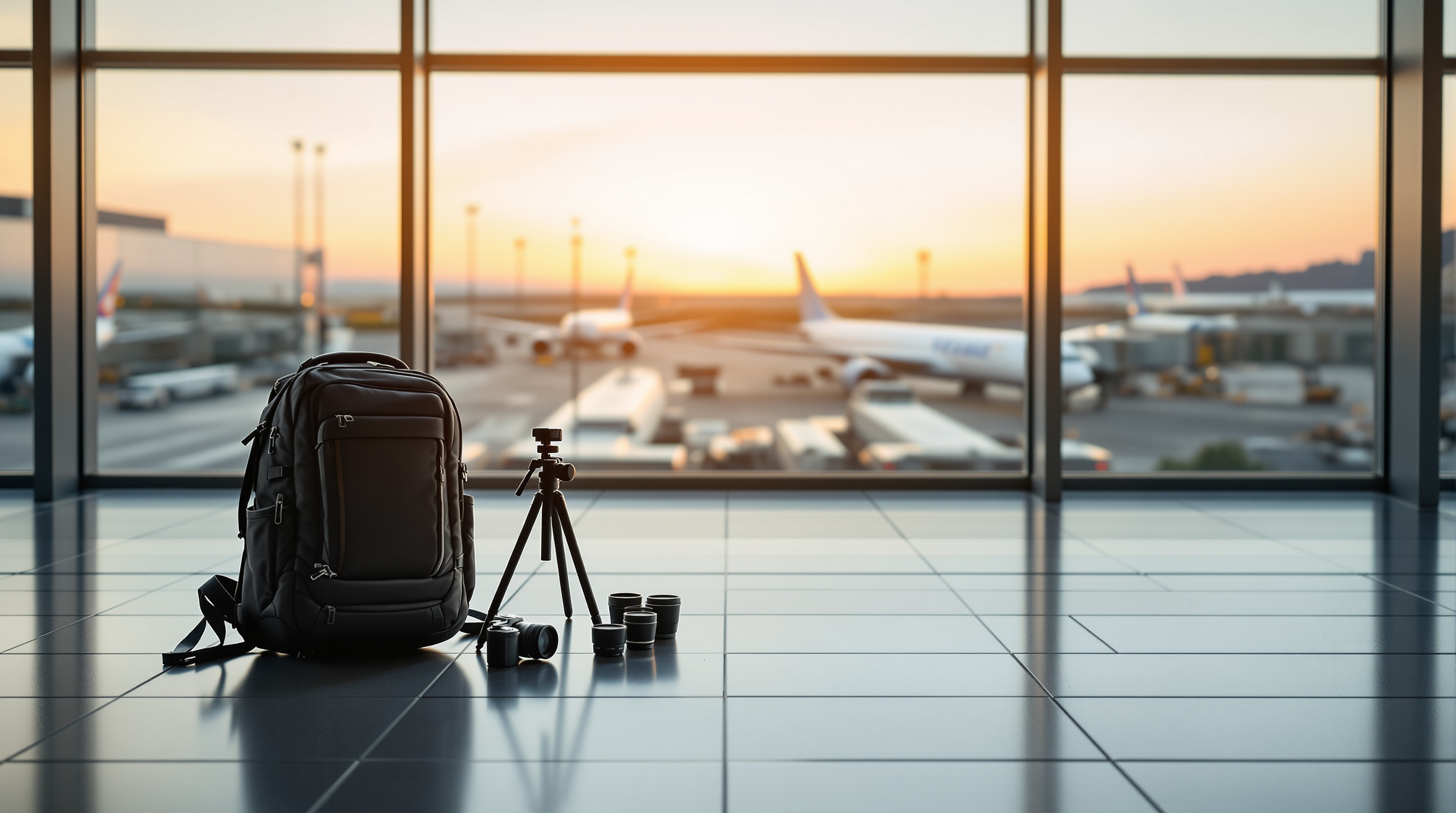
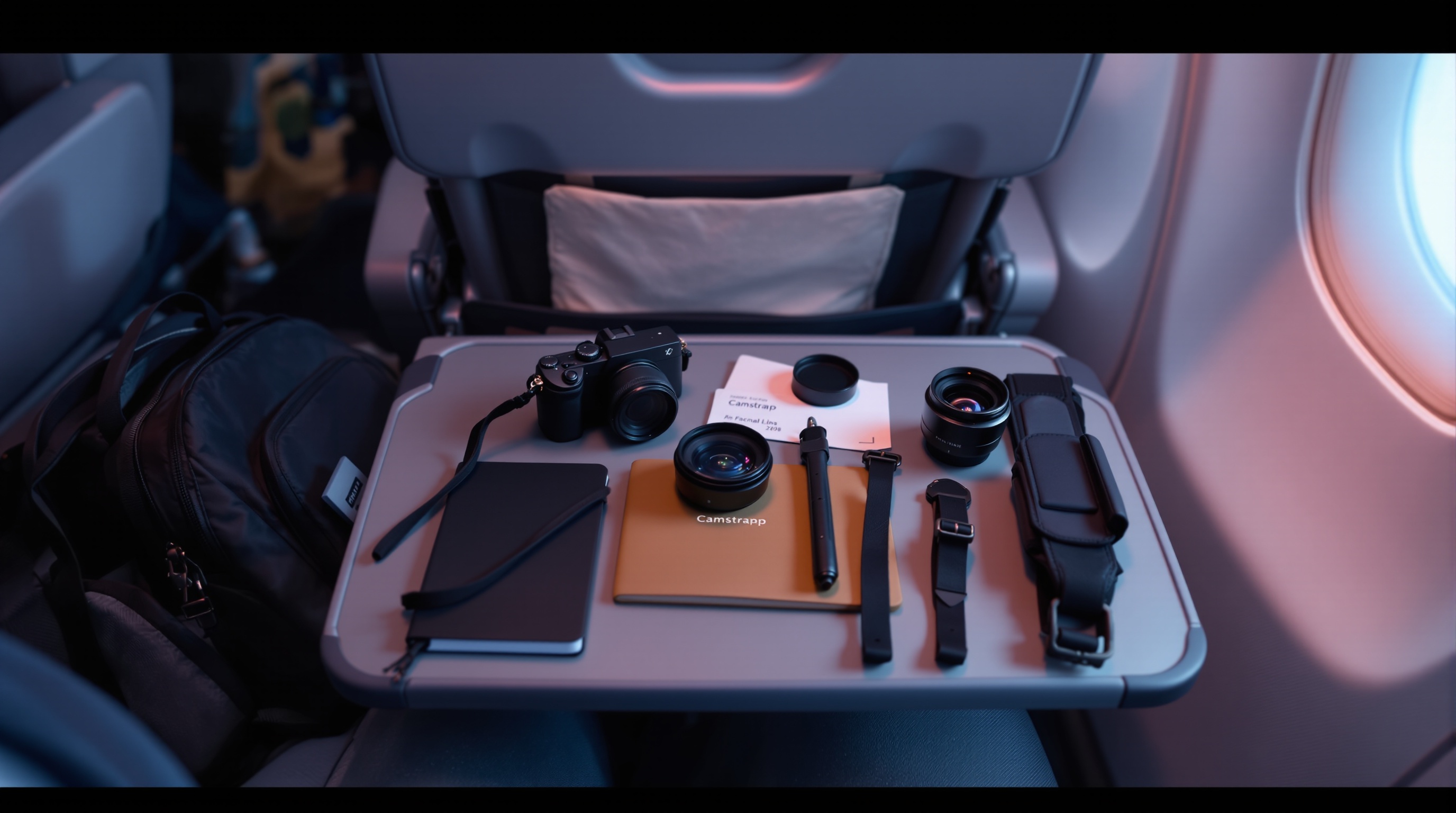
Veel reisfotografen laten nu zien dat je geen enorme rugzak vol apparatuur nodig hebt. Veel professionals werken met één compacte body, twee kleine lenzen, een lichte riem en een slank statief. Deze eenvoudige kit past in een persoonlijke tas onder de stoel. Hij werkt goed voor stedentrips, lange reizen en weekendwandelingen.
In deze gids leer je hoe je je eigen minimalistische, handbagage-vriendelijke kit samenstelt. We concentreren ons op compacte camera's, slimme lenskeuzes en lichtgewicht riemen zoals die van Camstrap. Het doel is helder: je draagt minder gewicht, voelt meer vrijheid en maakt nog steeds betere foto's.
Een minimalistische handbagage-reisfotografie-kit ontwerpen
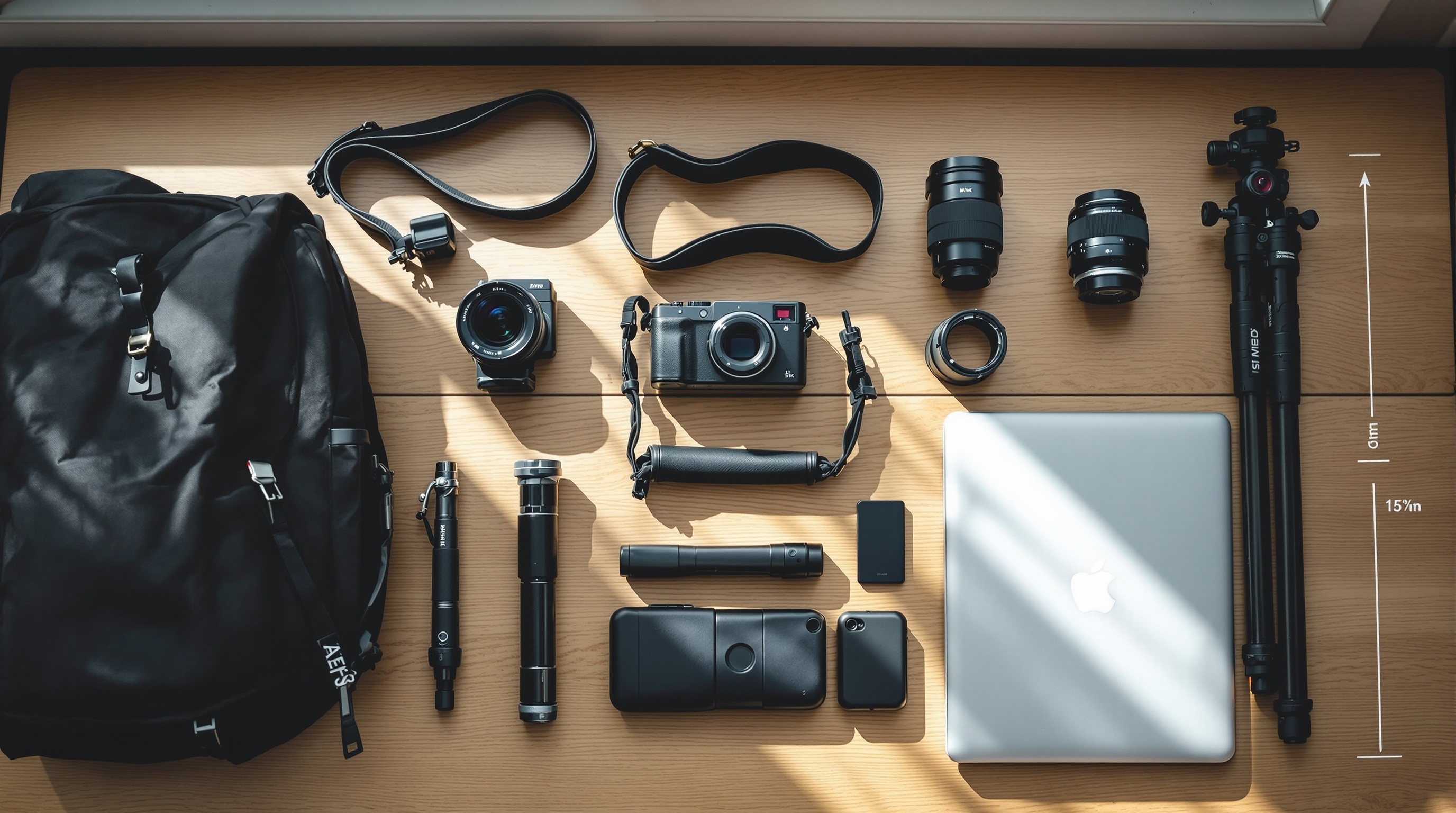
Voordat je apparatuur koopt, heb je een plan nodig. Een minimalistische handbagage-kit is niet alleen \"minder spullen\". Het is de juiste mix van gereedschappen die de meeste reisbehoeften dekt zonder extra volume. Zie het als een kleine gereedschapskist waarmee je nog steeds landschappen, straatfotografie, portretten en details kunt vastleggen.
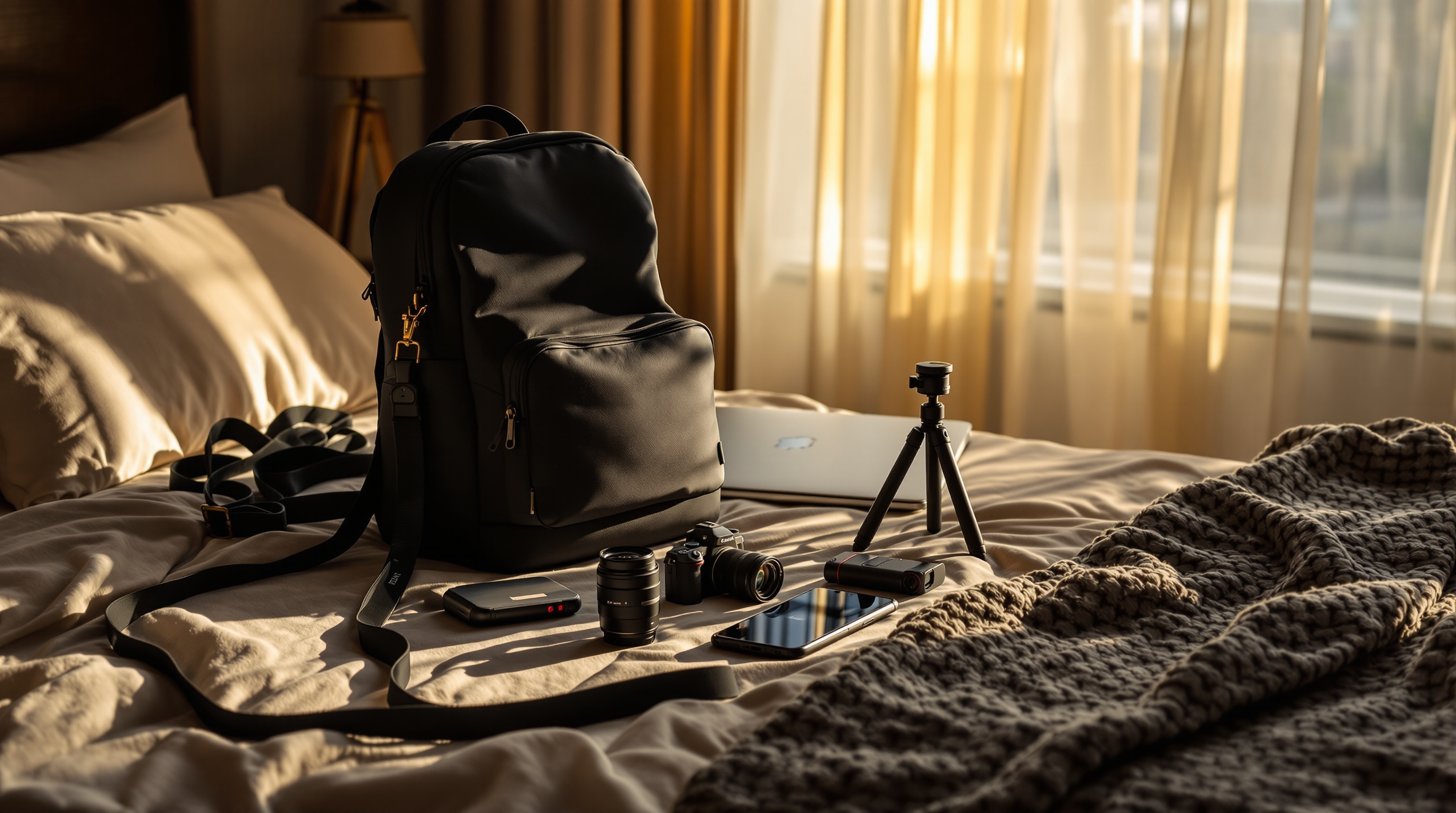
Reisgidsen voor apparatuur tonen een duidelijk patroon. Fotografen die fulltime reizen bouwen meestal rond één hoofd camerasysteem. Daarna voegen ze een klein setje lenzen toe, één riem die ze vertrouwen en een paar belangrijke accessoires. Alles moet in één carry-on rugzak of zelfs een grote sling passen.
Belangrijke regels voor een handbagage-klaar kit
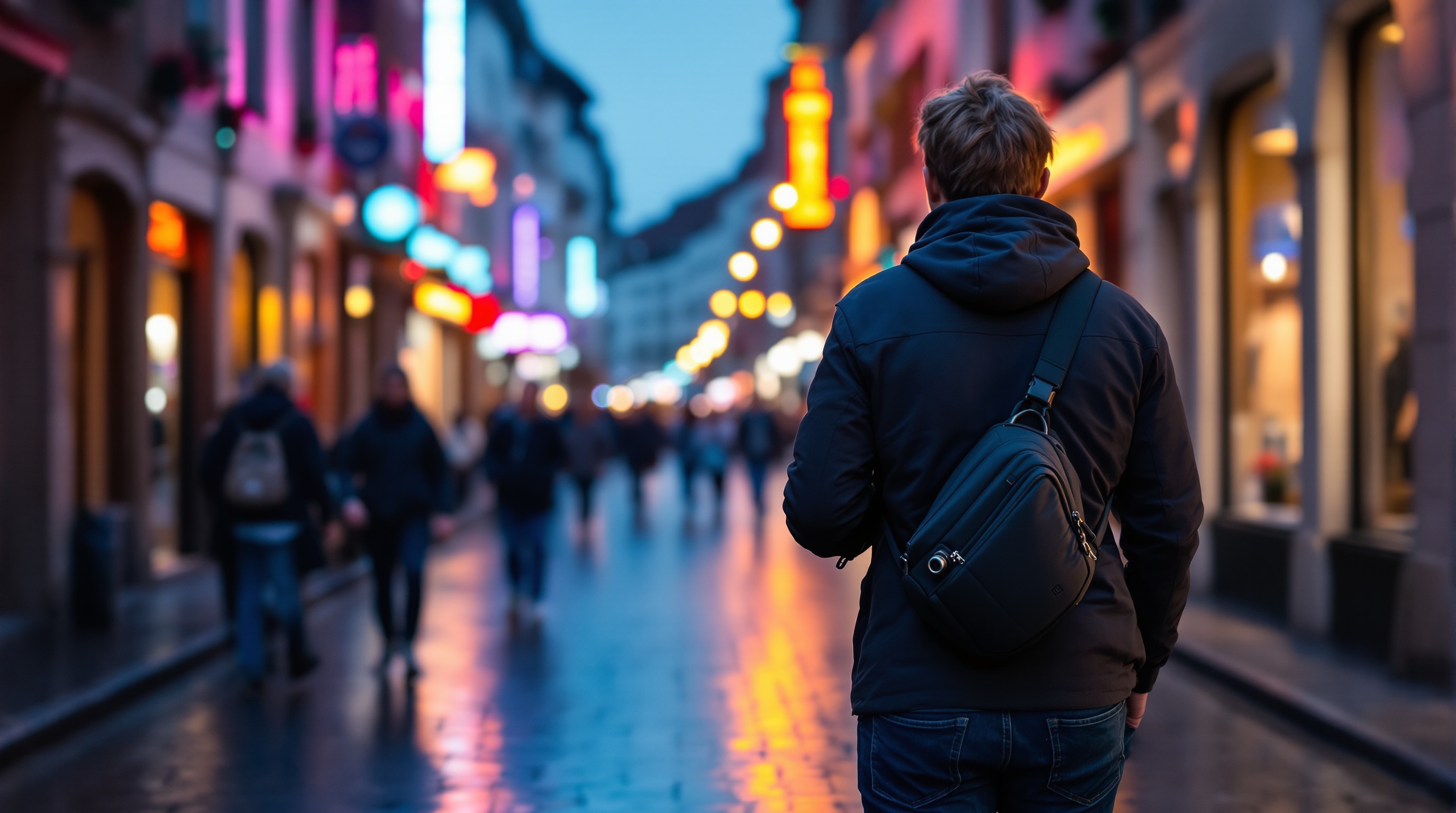
- Blijf binnen de afmetingen van een persoonlijke tas van de luchtvaartmaatschappij waar mogelijk.
- Kies één hoofd camerabody, niet twee of drie.
- Beperk jezelf tot twee of drie lenzen van groothoek tot korte tele.
- Gebruik een sterke, comfortabele riem zodat de camera direct klaar is aan je lichaam.
- Neem alleen de accessoires mee die je dagelijks gebruikt, niet spullen \"voor het geval dat\".
Voor wie is deze handbagage-opstelling
- Reisliefhebbers die een lichte kit willen die naast een laptop en een trui past.
- Buiten-avontuurfotografen die wandelen, klimmen of peddelen en stevige, compacte apparatuur nodig hebben.
- Amateurfotografen die betere foto's willen dan met een telefoon, zonder een verwarrende berg spullen.
Als je in een van deze groepen past, kan een compacte handbagage-kit veranderen hoe je reist en schiet. Je draagt minder en geniet meer van de reis.
Een compacte handbagage-vriendelijke camerabody kiezen
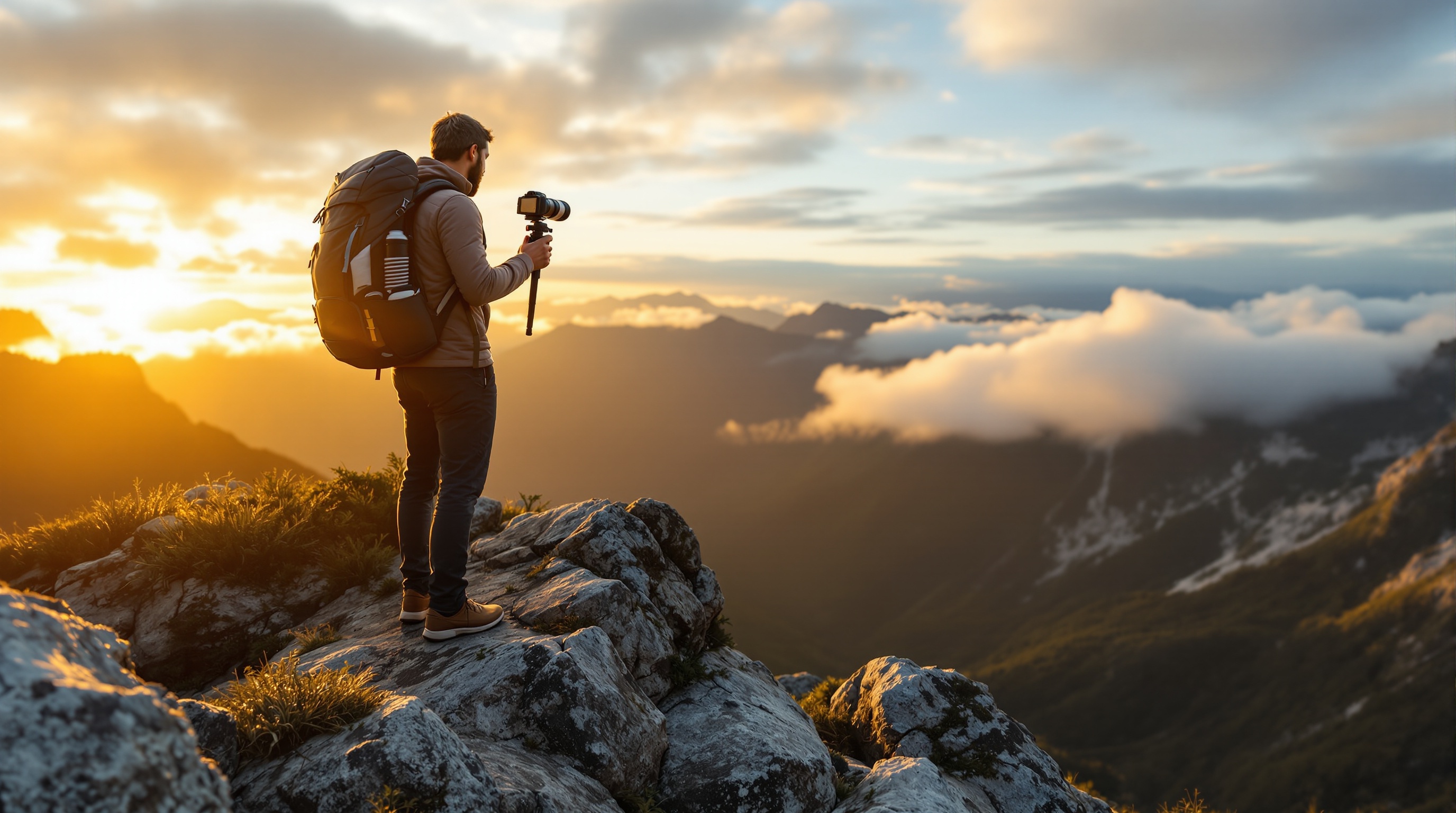
Je camerabody is het hart van je handbagage-kit. Hij moet klein, licht en snel in gebruik zijn. Huidige gidsen voor 2025 wijzen vaak op compacte mirrorless en hoogwaardige compactcamera's om deze reden.
Je hebt geen grootste full-frame body nodig om sterke reisfoto's te maken. Veel professionals gebruiken nu kleinere camera's zoals de Sony ZV-E10 II, Canon R50 of Fujifilm X-T30 II tijdens vluchten. Deze bodies zijn licht, hebben snelle autofocus en werken goed met kleine lenzen.
Waar je op moet letten bij een minimalistische reiscamera
- Grootte en gewicht: Hij moet in een kleine sling of dagrugzak passen met ruimte over.
- Goede autofocus: Dit helpt bij straattaferelen, kinderen en snelle reismomenten.
- Prestaties bij weinig licht: Je kunt bij schemering fotograferen zonder statief.
- Eenvoudige bediening: Je moet snel instellingen kunnen veranderen terwijl je loopt.
- USB-C opladen: Zo kun je onderweg opladen met een powerbank.
Compactcamera's die goed werken in handbagage-kits
Reisreviews prijzen vaak camera's zoals de Sony RX100 VII en Fujifilm X100VI. Dit zijn echte compactcamera's met vaste lenzen en kleine bodies. Ze passen in een jaszak en werken goed als je de meest eenvoudige handbagage-opstelling wil.
Als je graag verwisselbare lenzen wilt, is een APS-C mirrorless body een sterke keuze. Opties zoals de Sony ZV-E10 II of Fujifilm X-T30 II blijven klein maar laten je lenzen wisselen wanneer je een wijdere kijk of meer bereik nodig hebt. Ze zijn ideaal voor reisliefhebbers en serieuze hobbyisten die toch een handbagage-klaar kit willen.
Slimme lenskeuzes voor een minimalistische handbagage-kit
Lenzen zijn waar gewicht snel kan toenemen. Veel reisfotografen beperken zich nu tot twee lenzen, soms drie maximaal. Zo blijft de kit handbagage-klaar en dekt toch de meeste scènes.
De één-lens reisoptie
Als je de lichtste handbagage-kit wilt, gebruik dan één goede zoomlens. Veel professionals raden een 24–70mm of 24–105mm bereik aan. Op APS-C camera's kan dit een 16–70mm of 18–55mm lens zijn. Dit soort zoom stelt je in staat om te fotograferen:
- Wijdse stadsscènes en landschappen
- Straatfoto's en markten
- Portretten met iets achtergrondonscherpte
Met één lens hoef je tijdens een stoffige hike of drukke metro je tas nooit open te maken. Dit is ideaal voor buitenavontuurfotografen die apparatuur simpel en veilig willen houden in een kleine handbagage-tas.
Twee-lenzen minimalistische set
Als je iets meer kunt dragen, geeft een twee-lenzen kit meer creatieve ruimte. Hij blijft handbagage-vriendelijk en licht. Een veelgebruikte en bewezen combinatie is:
- Breed-tot-normale zoom zoals een 16–70mm op APS-C
- Kleine prime lens zoals een 27mm of 35mm met een lichtsterkte f/2–f/2.8
De zoom dekt de meeste reisbehoeften. De prime is klein en snel, dus ideaal voor weinig licht, foodfotografie en portretten met zachte achtergronden. Veel Fujifilm-reisshooters houden van een kleine pancake-prime omdat die de camera bijna zakformaat houdt voor handbagage-reizen.
Heb je een telelens nodig in een handbagage-kit?
Een lange telelens is fantastisch voor wildlife en verre bergtoppen. Maar vaak is hij groot en zwaar. Voor een strikte handbagage-kit laten veel mensen hem achter tenzij de hele reis over safari's of vogels gaat.
Als je extra bereik wilt zonder een enorme lens, heb je twee eenvoudige opties. Je kunt een compacte 70–300mm lens meenemen alleen voor natuurintensieve trips. Of je gebruikt de cropmodus van je camera of een hoge resolutiesensor en cropt later. De meeste stads- en casual reizen redden het prima met groothoek tot korte telelenzen die nog steeds in een persoonlijke handbagage passen.
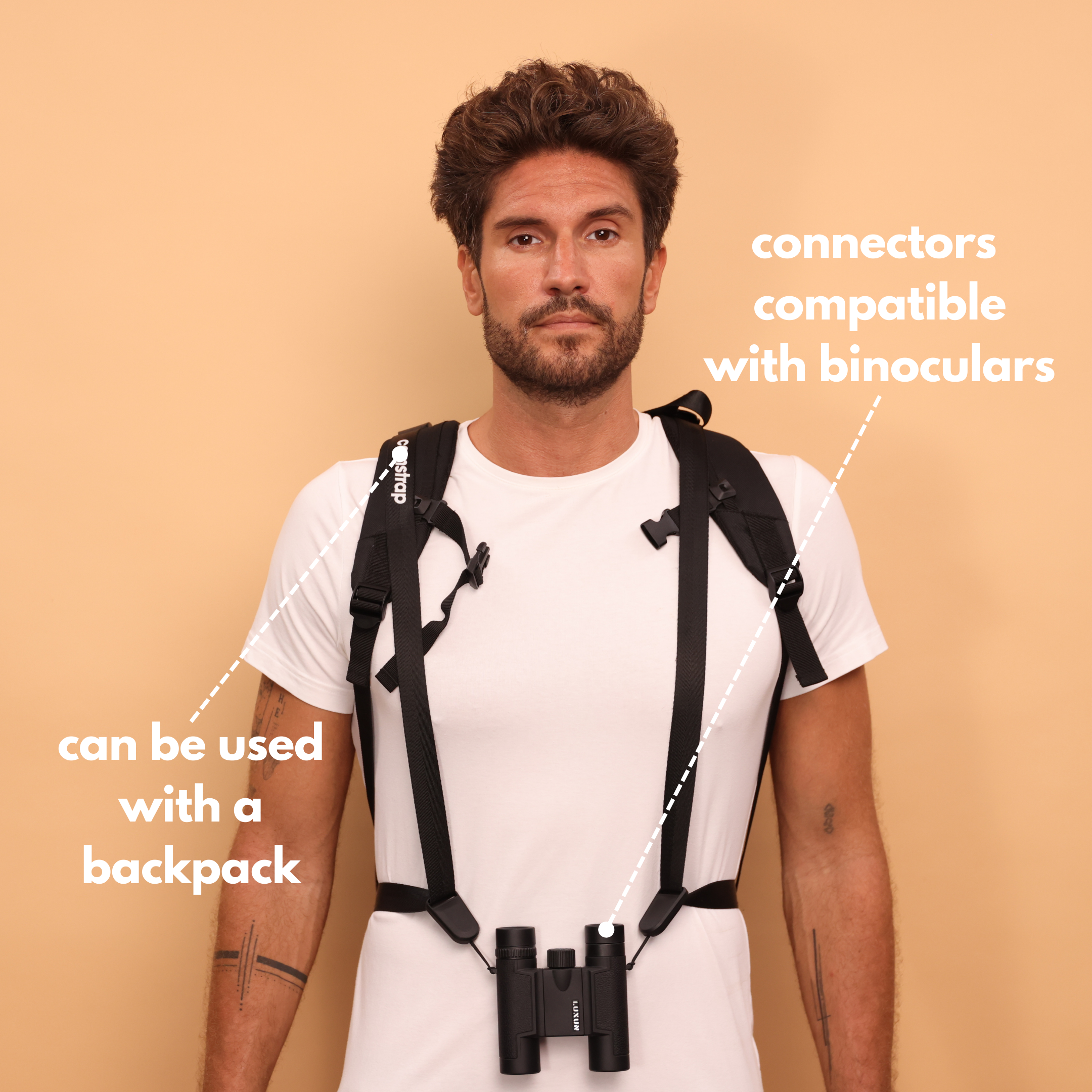
Riemen die je camera echt handbagage-klaar maken
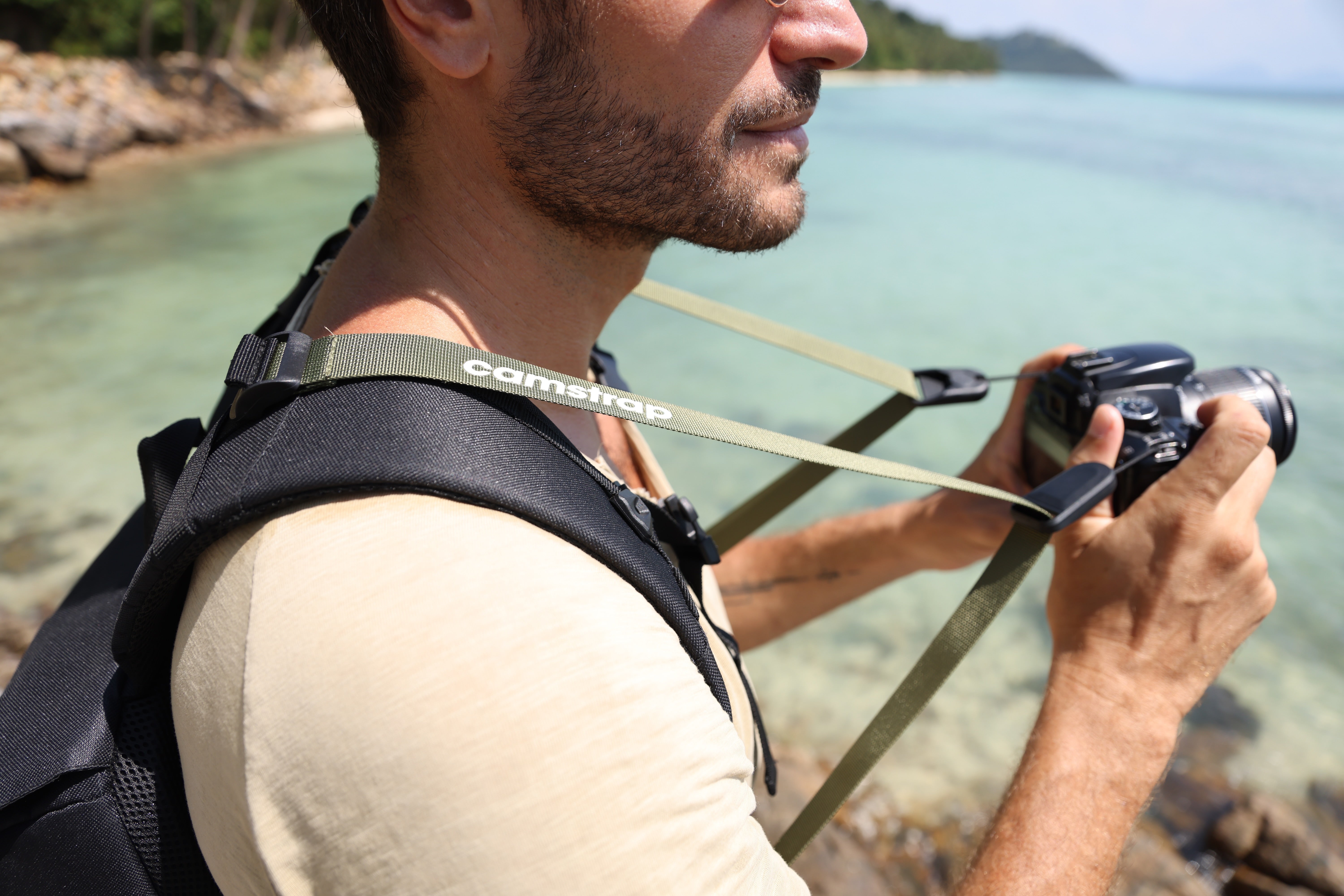
Een goede riem is een klein stukje uitrusting dat een groot verschil maakt. Met de juiste riem blijft je camera aan je lichaam, niet begraven in je tas. Dat betekent minder gemiste shots en minder stress op drukke plekken.
Veel reisfotografen stappen af van stijve standaardriemen. Ze kiezen moderne riemen die lichter, veiliger en comfortabeler zijn voor lange dagen. Hier valt Camstrap op, vooral voor mensen die zowel comfort als stijl in een handbagage-opstelling waarderen.
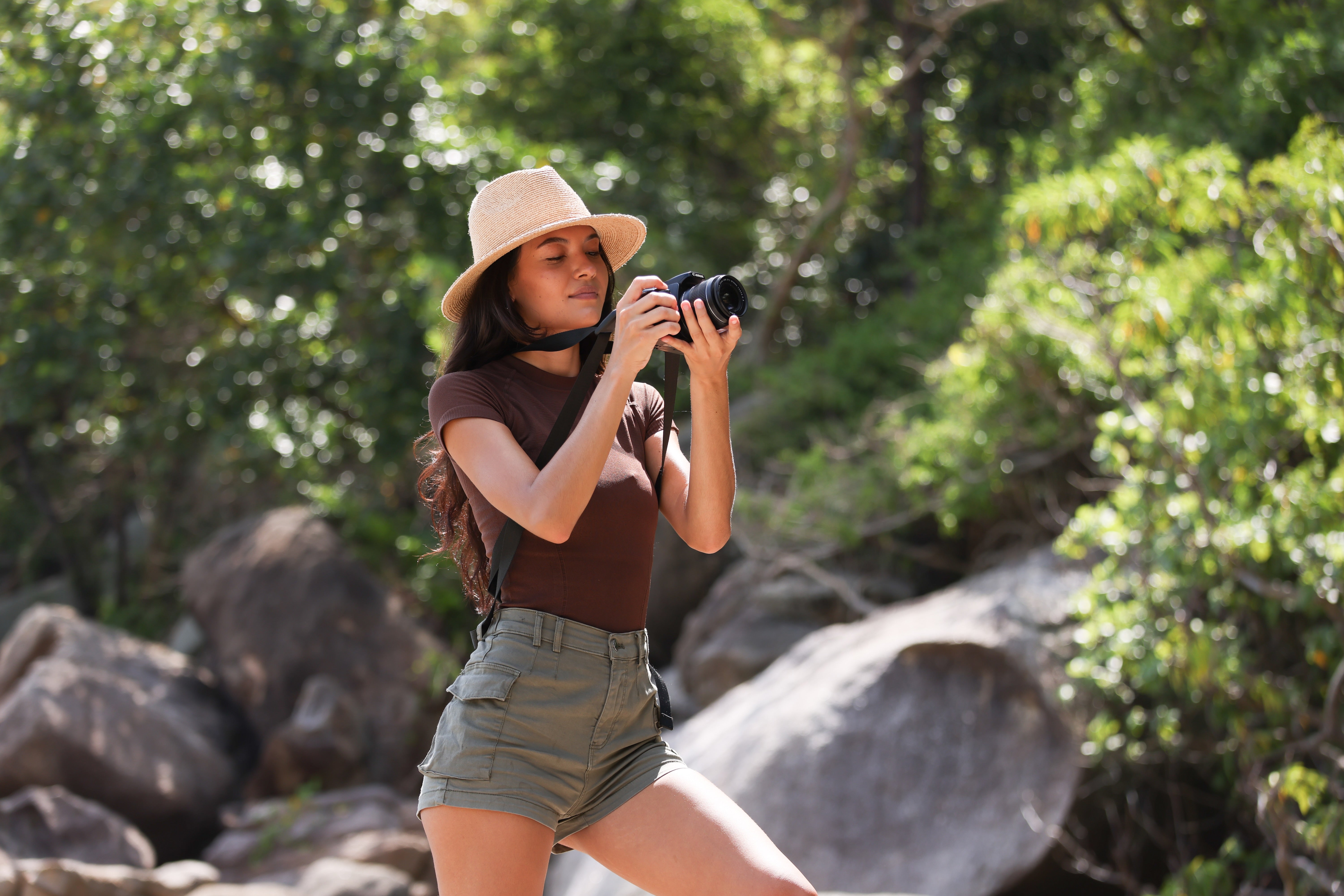
Waarom je riem belangrijk is voor minimalistisch reizen
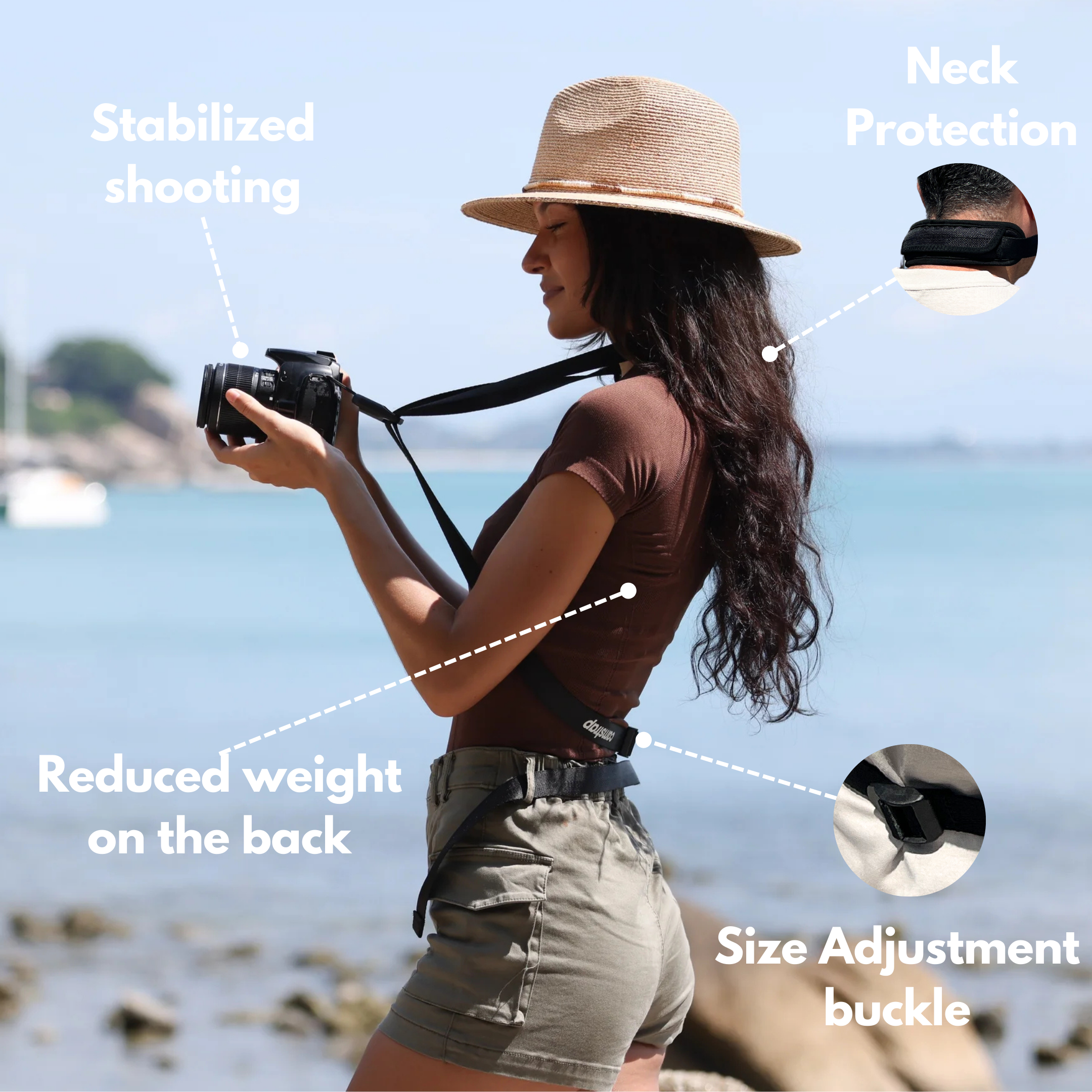
- Comfort: Een brede, zachte riem verdeelt het gewicht zodat nek en schouders fris blijven.
- Veiligheid: Sterke stiksels en betrouwbare hardware voorkomen dat de camera wegglijdt of losschiet.
- Snelheid: Snelle aanpassingen laten je de camera op je borst aanspannen in een menigte en weer losmaken om te schieten.
- Pakbaarheid: Een smalle, platte riem pakt vlak in je handbagage wanneer je de camera opbergt.
Camstrap: Frans vakmanschap en slim design voor reisfotografen
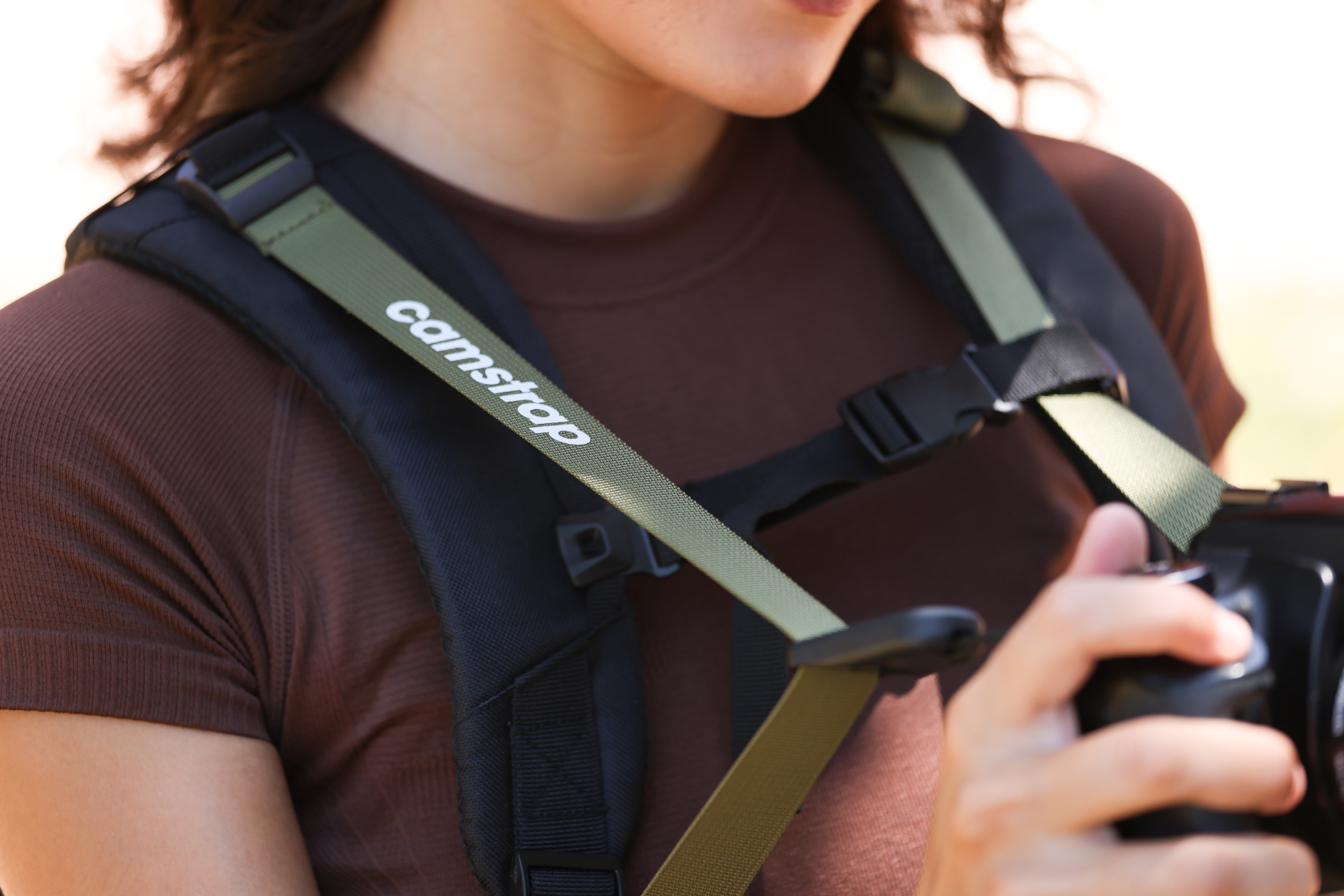
Camstrap lost een duidelijk probleem op. Het helpt je een camera te dragen op een manier die prettig aanvoelt en er elke dag verzorgd uitziet. Elke Camstrap wordt bedacht en geassembleerd in Frankrijk met aandacht voor webbing en stiksels. Dit spreekt reisliefhebbers aan die zowel kracht als design waarderen in een handbagage-klaar kit.
Camstrap biedt ook sterke service na bestelling. Je krijgt gratis verzending vanaf €70, een 30-dagen niet-goed-geld-terug belofte en 100% veilige betaling. Voor amateurfotografen die hun eerste serieuze riem online kopen, vermindert dit het risico en vergroot het vertrouwen. Het maakt de upgrade van een standaardriem makkelijk.
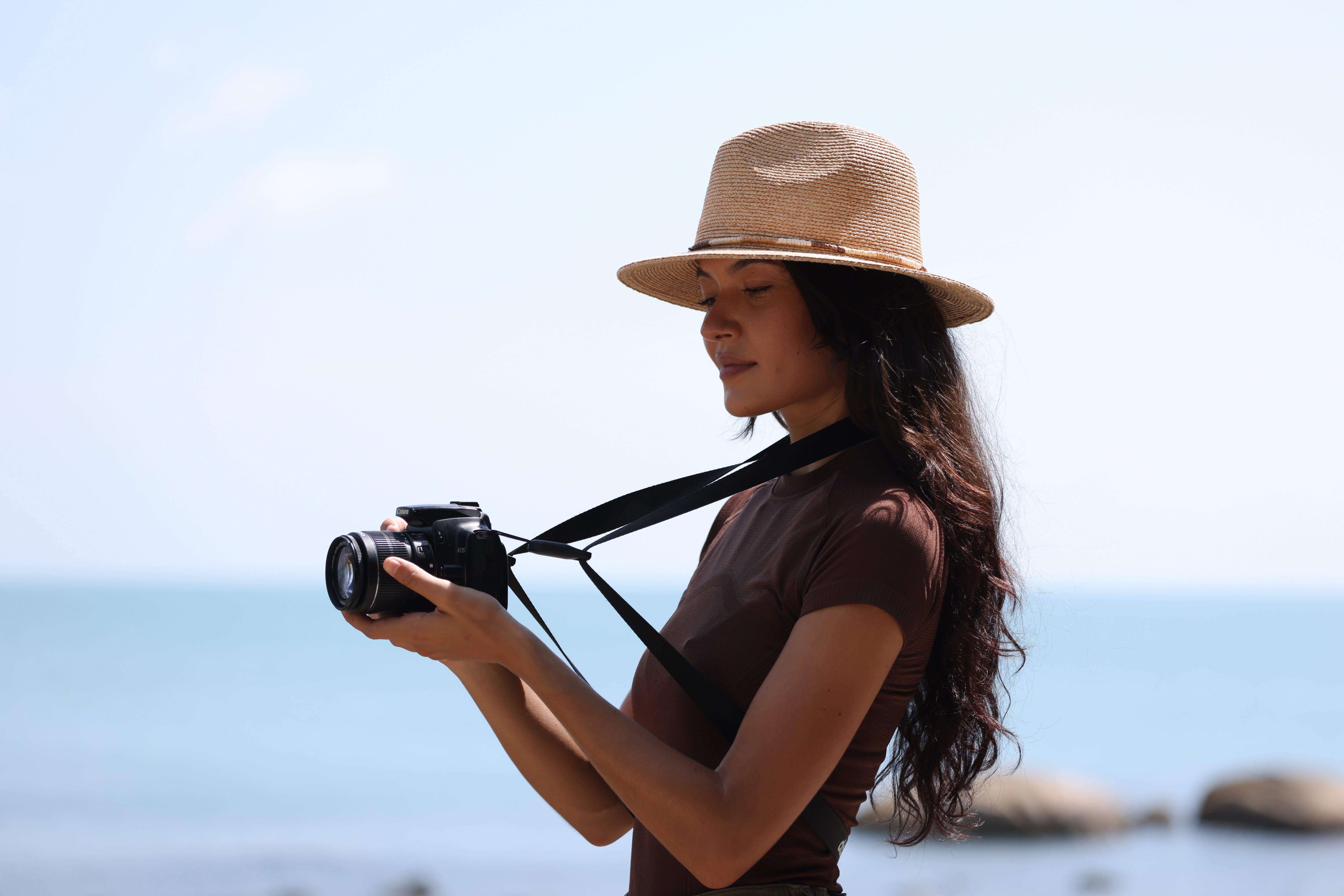
Welk Camstrap-model past in een minimalistische handbagage-kit?
Camstrap Voyager: Voor lange reisdagen
De Camstrap Voyager werkt goed als je je camera de hele dag draagt door luchthavens, treinen en lange wandelingen. Hij is gebouwd voor comfort en stabiliteit, zodat je camera dichtbij je lichaam blijft wanneer je snel beweegt met een carry-on rugzak. Dit past bij reisliefhebbers die op één dag tussen vluchten en straatverkenning schakelen.
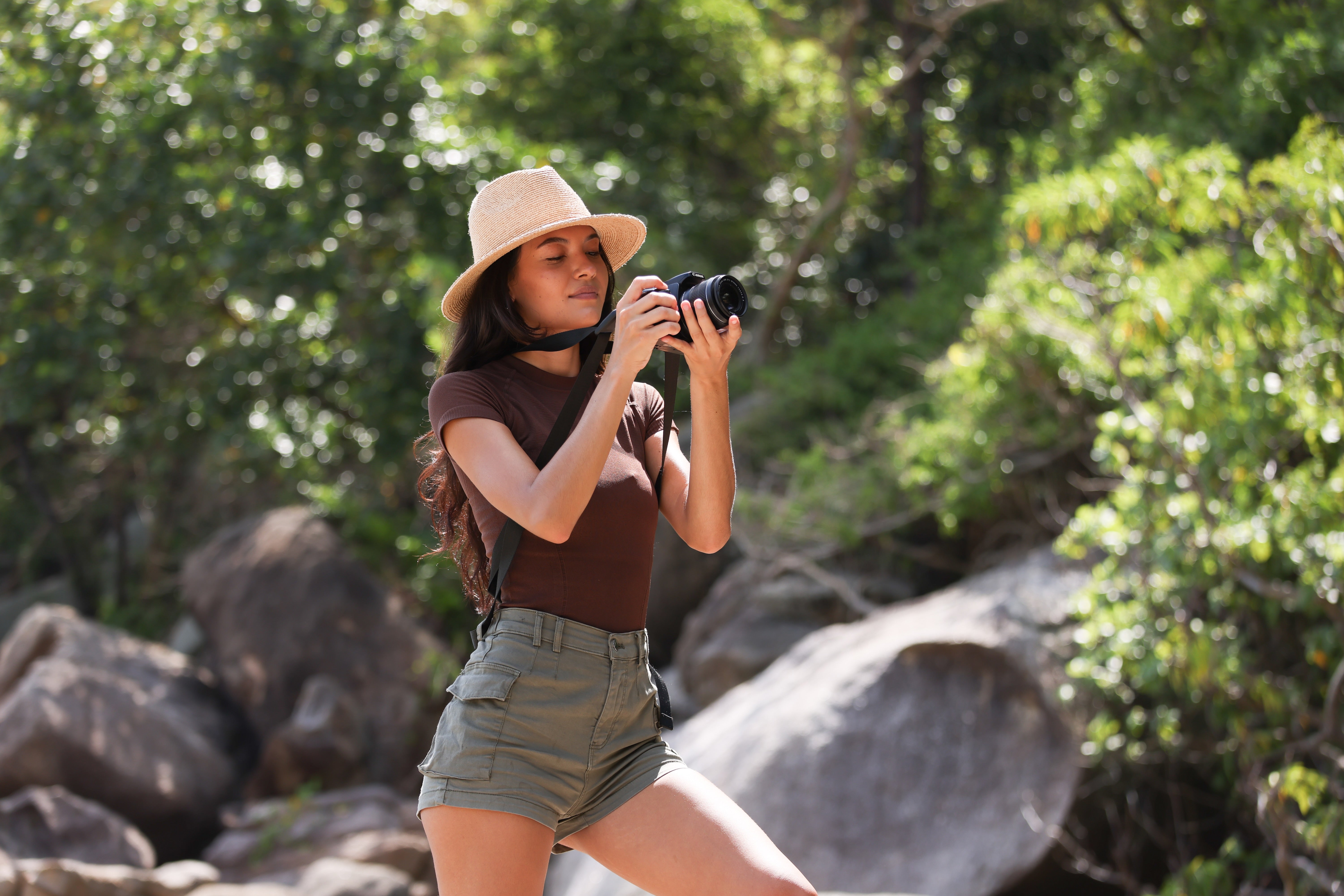
Camstrap Explorer: Voor buitenavontuurfotografen
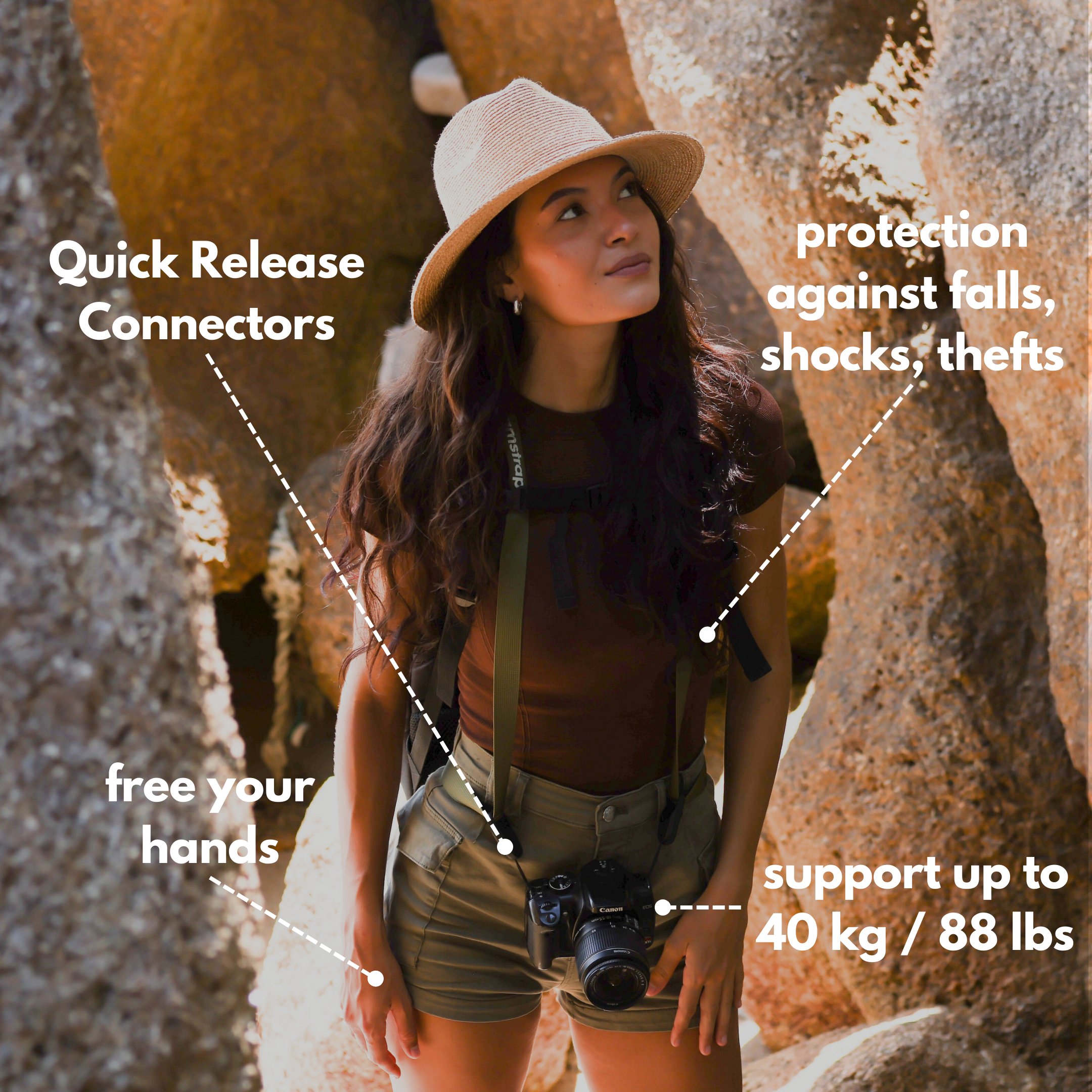
Voor wandelaars en buitenfotografen is de Camstrap Explorer gemaakt voor ruig gebruik. De riem is stevig en veilig, zodat je compacte camera of kleine DSLR op zijn plaats blijft tijdens klimmen of klauteren. Hij werkt goed met een handbagage-klaar kit omdat hij bijna geen extra volume toevoegt. Hij zorgt voor veel veiligheid op paden en kamlijnen.
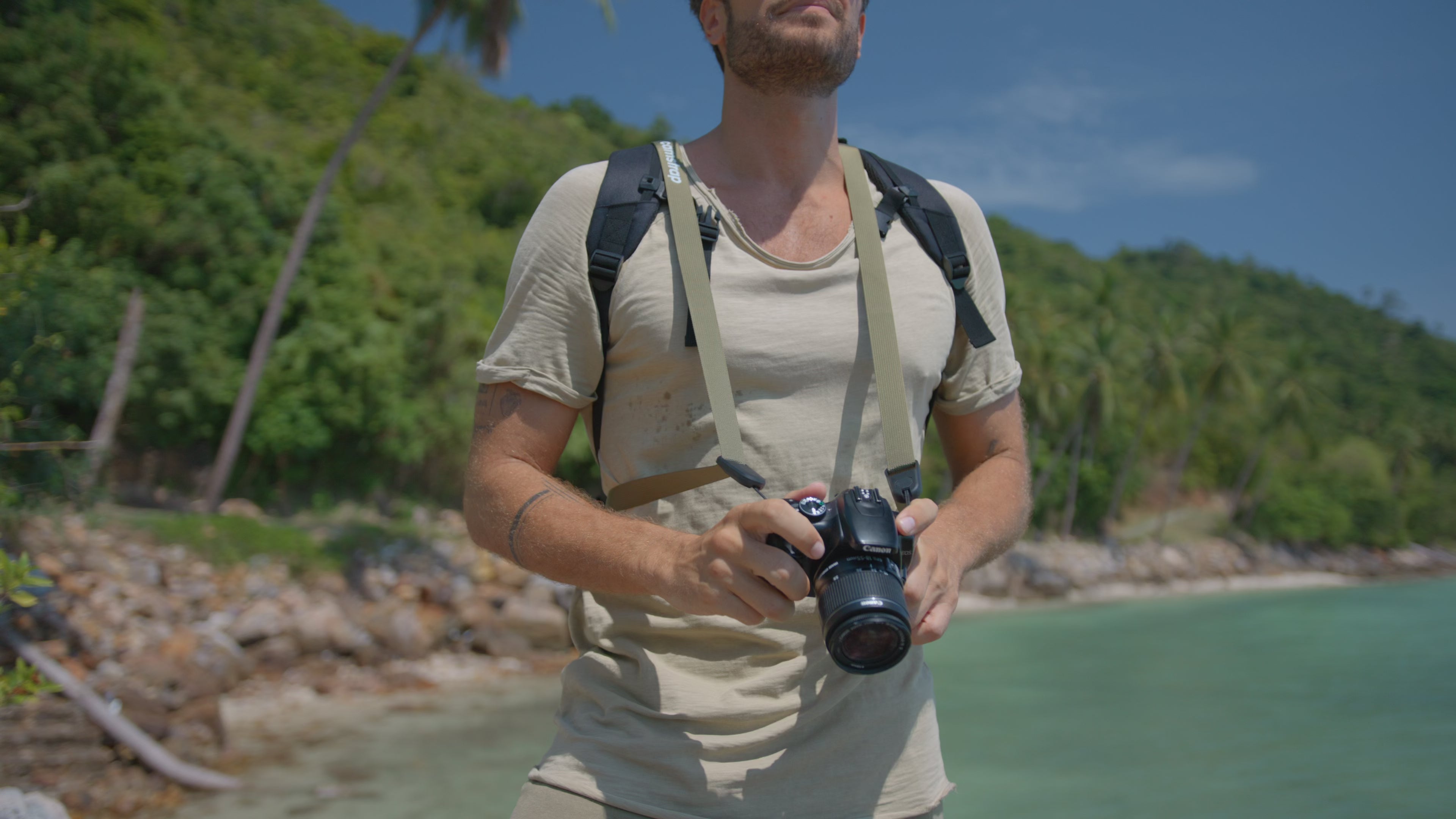
Camstrap Nomad: Voor dagelijks en stedelijk reizen
De Camstrap Nomad is ideaal voor stedentrips en dagelijks gebruik. Hij combineert sterkte met een strak, eenvoudig uiterlijk dat past in cafés, musea en stadsstraten. Amateurfotografen met instapmodellen zullen waarderen hoe de Nomad hun set een verfijnd gevoel geeft zonder zwaar of opzichtig te zijn in een kleine handbagage-tas.
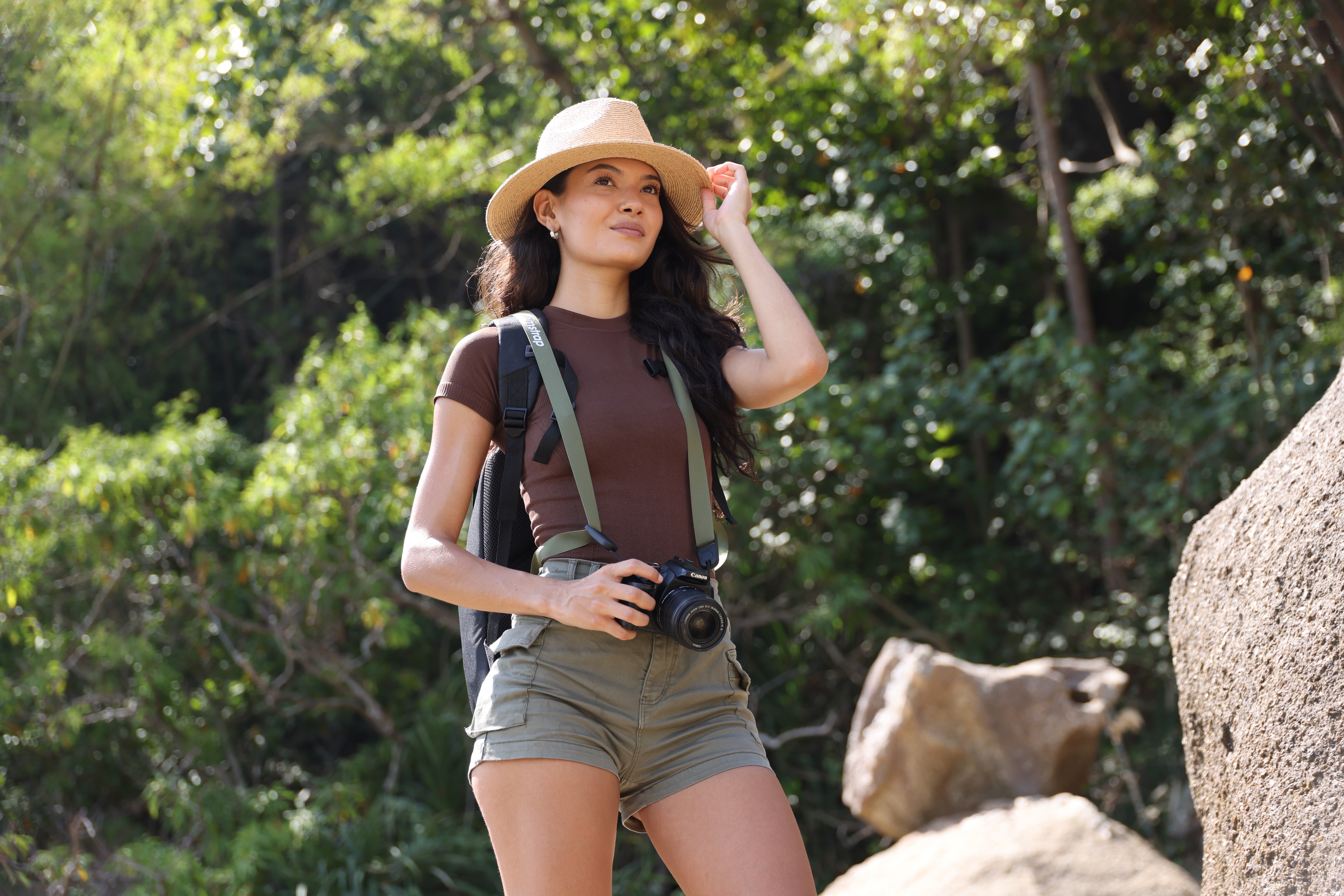
Camstrap MagClip: Snelle bevestiging voor minimalistische kits
Het Camstrap MagClip-systeem voegt snelle magnetische connectoren toe aan je riem. Dit is erg handig in een minimalistische handbagage-kit. Je kunt de riem bevestigen als je het hotel verlaat en hem eraf halen om de camera in een klein cubeje of hotelkluisje te leggen. Voor mensen die zowel een camera als een laptop in één tas meenemen, scheelt deze snelheid veel tijd.
Camstrap biedt ook een \"koop er één, krijg de tweede met 20% korting\"-actie. Veel fotografen combineren een hoofdriem zoals de Voyager met een tweede Nomad of Explorer. De ene riem blijft aan de hoofdcamera. De andere hangt aan een reservebody of blijft thuis aan een tweede camera.
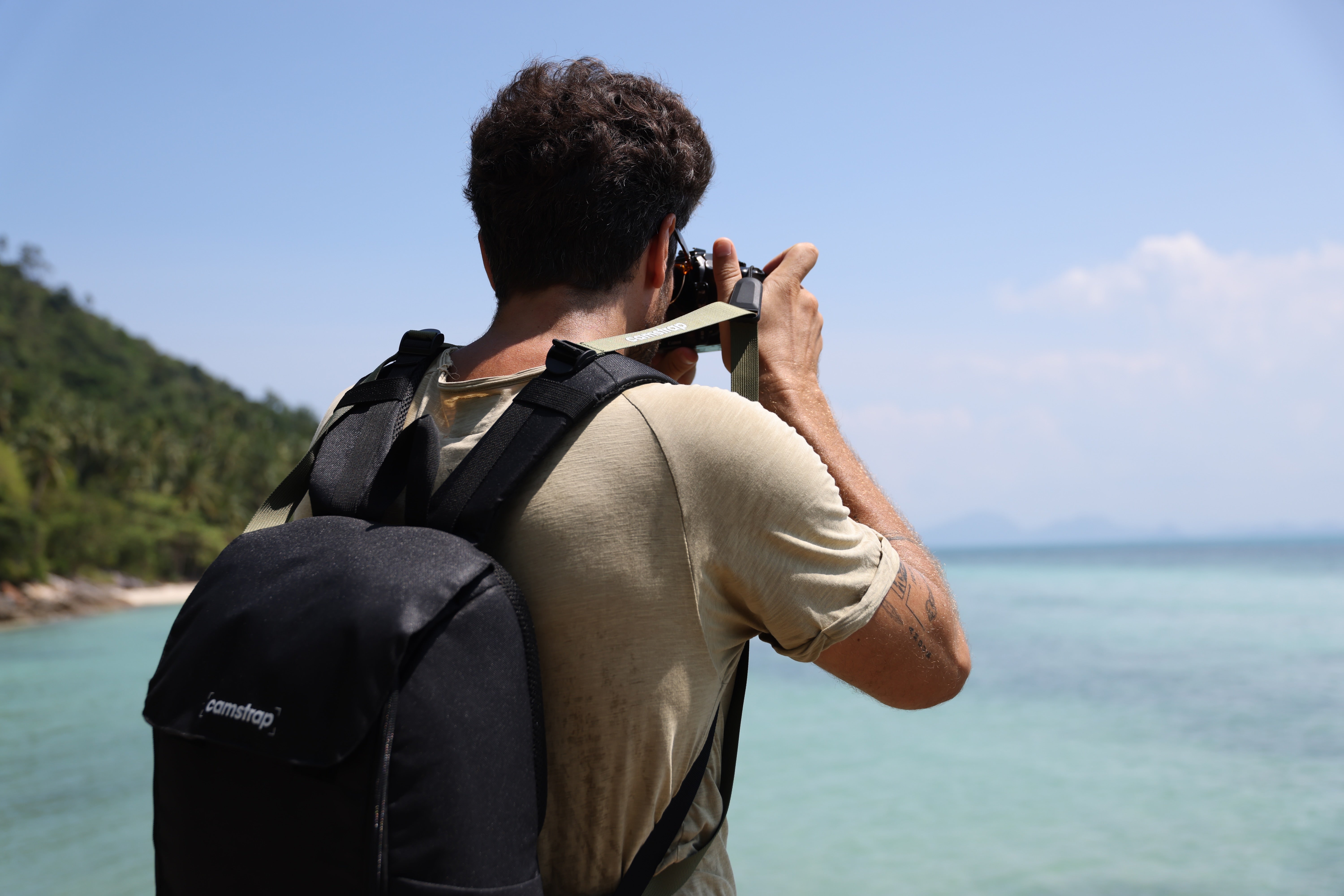
Je handbagage-kit inpakken: tassen en indeling
Zodra je je camera, lenzen en Camstrap hebt gekozen, heb je een slimme manier nodig om ze in te pakken. Een goede carry-on rugzak of sling houdt je kit veilig, netjes en binnen de regels van luchtvaartmaatschappijen. Reisgidsen laten zien dat veel professionals nu met één camerarugzak reizen die ook als dagrugzak fungeert.
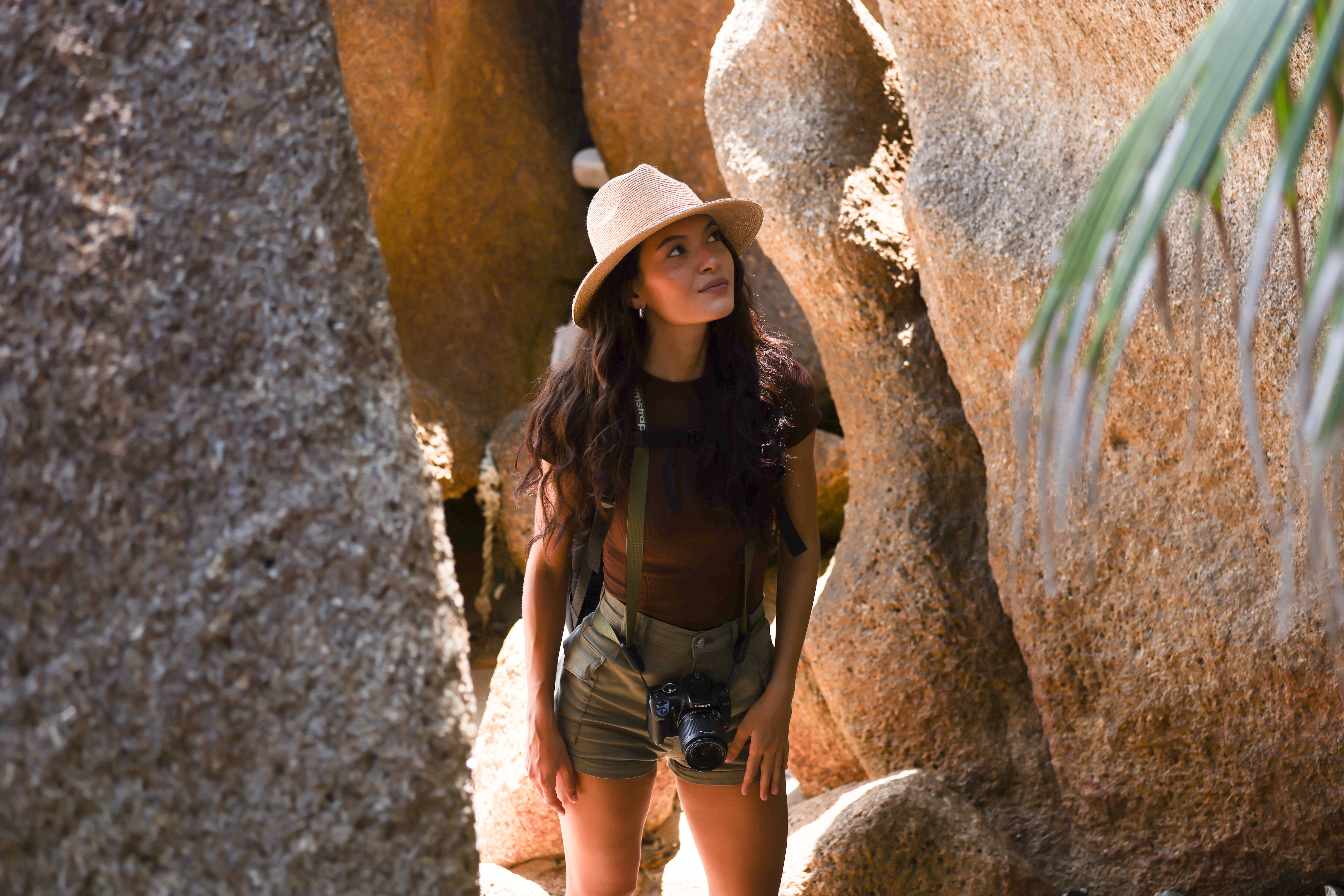
Een handbagage-vriendelijke cameratas kiezen
- Grootte: Controleer de persoonlijke item-limieten van je luchtvaartmaatschappij en stem daar nauw op af.
- Structuur: Gevoerde divideren beschermen je compacte camera en lenzen.
- Toegang: Zijdelingse of bovenste openingen laten je de camera pakken zonder te graven.
- Comfort: Gevoerde riemen en een goede rugplaat helpen tijdens lange wandelingen.
- Uiterlijk: Een eenvoudig, ingetogen design trekt minder aandacht op drukke plekken.
Veel goed beoordeelde tassen, zoals de WANDRD PRVKE of Atlas Adventure, laten zien hoe één carry-on rugzak een volledige reiskit plus kleding kan bevatten. Voor een meer minimalistische set kun je een kleine camera-cube in een normale reisrugzak gebruiken. Dit houdt je kit handbagage-klaar en flexibel voor treinen, bussen en vluchten.
Voorbeeldindeling voor een minimalistische handbagage-kit
- Hoofdvak: camerabody met zoomlens gemonteerd en een kleine prime ernaast.
- Boven- of zijvak: Camstrap Voyager of Nomad, plat opgerold.
- Klein etui: batterijen, SD-kaarten, reinigingsdoek en een simpele blaasbalg.
- Voorvak: paspoort, telefoon en een platte powerbank voor onderweg opladen.
Deze hele set past in een persoonlijk item onder de stoel bij de meeste luchtvaartmaatschappijen. In de bagagebak heb je nog ruimte voor kleding en schoenen. Dit werkt goed voor reizen met één tas en korte trips met alleen handbagage.
Essentiële accessoires die nog steeds in handbagage passen
Accessoires zijn gemakkelijk te veel in te pakken, dus wees streng. Voor een minimalistische handbagage-kit neem je alleen items mee die je vaak gebruikt. Focus op spullen die je camera beschermen of van stroom voorzien en je helpen meer te schieten.
Klein maar belangrijk
- Extra batterijen: Minstens één reserve, twee als je de hele dag schiet.
- Snelle SD-kaarten: 64–128 GB kaarten met goede schrijfsnelheid voor bursts en video.
- Microvezeldoek en blaasbalg: Houdt lenzen schoon bij stof en zeespray.
- Universele reisadapter: Je kunt in elk land opladen.
- Powerbank: Hiermee laad je camera of telefoon bij tijdens lange reisdagen.
Filters voor creatieve reisfoto's
Filters zijn dun en licht, dus passen goed in een handbagage-kit. Veel reisfotografen zweren bij twee sleuteltypes. Die geven je meer controle zonder echt gewicht toe te voegen.
- Circular polarizer (CPL): Vermindert schittering op water en glas en maakt luchten dieper.
- Neutral density (ND)-filter: Laat je lange sluitertijden maken van watervallen, golven en drukke straten.
Je hebt geen volledige filtersset nodig. Eén CPL en één ND die op je hoofdobjectief passen, zijn meestal genoeg. Ze schuiven in een klein etui en voegen vrijwel geen gewicht toe aan je handbagage-klaar kit.
Je handbagage-kit afstemmen op je reisstijl
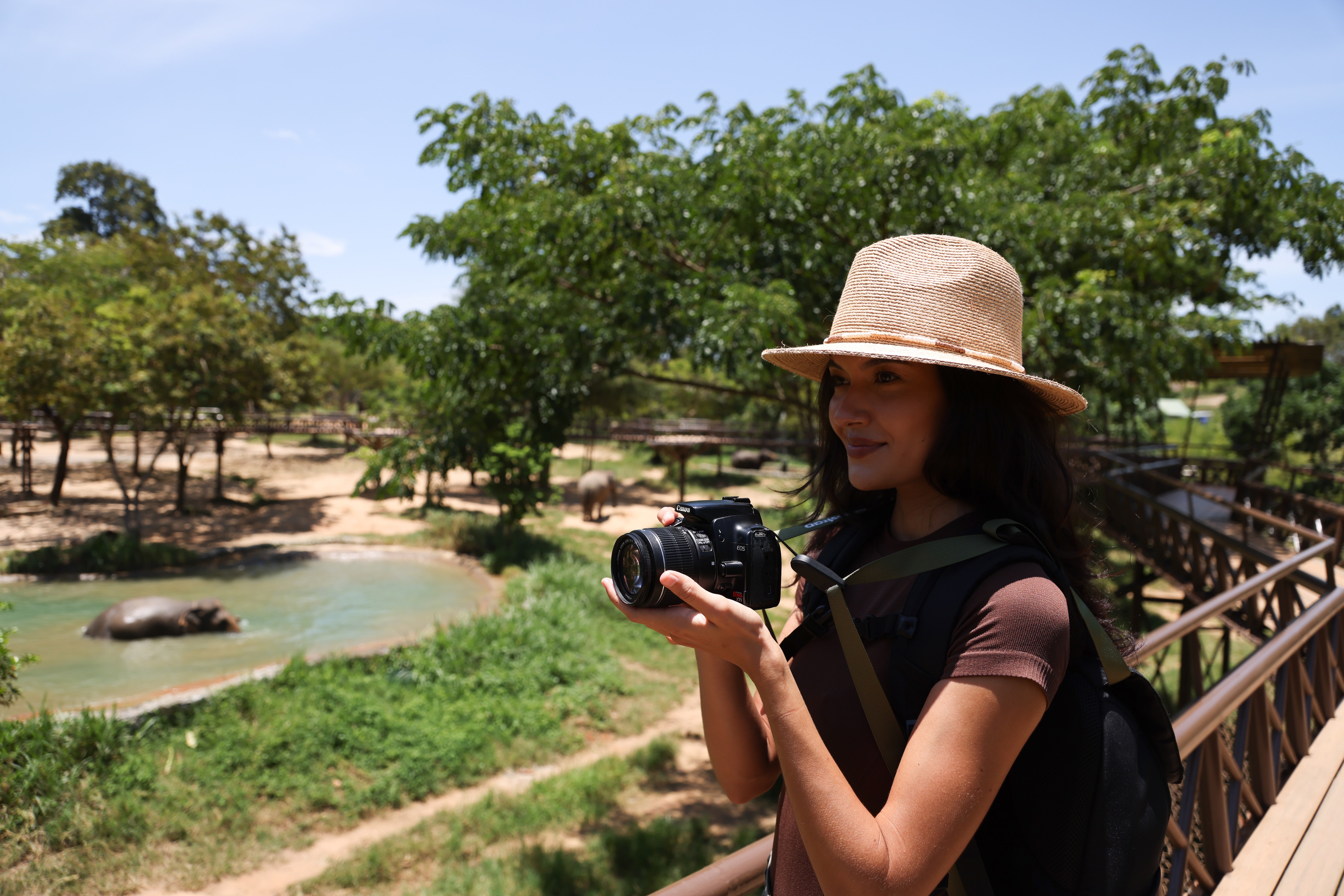
Zelfs met een minimalistisch plan moet je kit precies passen bij hoe jij reist en fotografeert. De behoeften van een backpacker in de bergen verschillen van die van een stedentrip. Stem je set daarom af op je stijl.
Voor reisliefhebbers
Reisliefhebbers bezoeken vaak nieuwe steden, verplaatsen zich tussen landen en hechten waarde aan comfort op luchthavens. Een goede handbagage-kit voor hen kan bevatten:
- Compacte APS-C mirrorless body met een 16–70mm zoom.
- Kleine prime voor cafés, markten en portretten.
- Camstrap Voyager voor lange reisdagen en wandeltochten.
- Één CPL-filter, twee SD-kaarten, twee batterijen en een lichte powerbank.
Deze hele kit past in een slanke rugzak met een laptop en een licht jasje. Met Frans gemaakte Camstrap-riemen en veilige betaalopties past het ook bij wensen voor kwaliteit en gemoedsrust. Je reist alleen met handbagage en voelt je toch goed uitgerust.
Voor buitenavontuurfotografen
Buitenfotografen dragen vaak iets meer gewicht, maar elke gram telt op een lange hike. Een slimme en toch minimalistische handbagage-kit voor hen kan zijn:
- Compacte DSLR of mirrorless body met sterke weersdichting.
- Wijde zoom, zoals een 16–35mm, voor toppen, sterren en smalle paden.
- Mid-range zoom, zoals een 24–70mm of 24–105mm, voor algemeen gebruik.
- Camstrap Explorer voor robuust comfort en veilige draagwijze op paden.
- Licht carbonfiber reisstatief aan de buitenkant van de rugzak bevestigd.
Deze kit past nog steeds in een carry-on rugzak, zodat je nooit breekbare apparatuur hoeft in te checken. Camstrap's focus op sterkte en buitengebruik maakt de Explorer hier een natuurlijke match. Je blijft licht, veilig en klaar voor slecht weer.
Voor amateurfotografen met een budget
Amateurfotografen reizen vaak met familie, letten op het budget en willen eenvoudige apparatuur die gewoon werkt. Een handbagage-kit voor hen kan omvatten:
- Instap mirrorless camera met een kit-zoomlens.
- Geen extra lens in het begin, of later één kleine prime.
- Camstrap Nomad voor comfort en een nettere uitstraling dan de standaardriem.
- Één extra batterij, één SD-kaart als backup en een basis reinigingsdoek.
Deze set is betaalbaar, licht en makkelijk te leren. Met Camstrap's \"koop er één, krijg de tweede met 20% korting\"-aanbod kan een stel allebei een riem krijgen. Ze verbeteren het gevoel van hun camera's zonder veel uit te geven en houden alles in handbagage.
Conclusie: Stel je eigen handbagage-klaar minimalistische kit samen
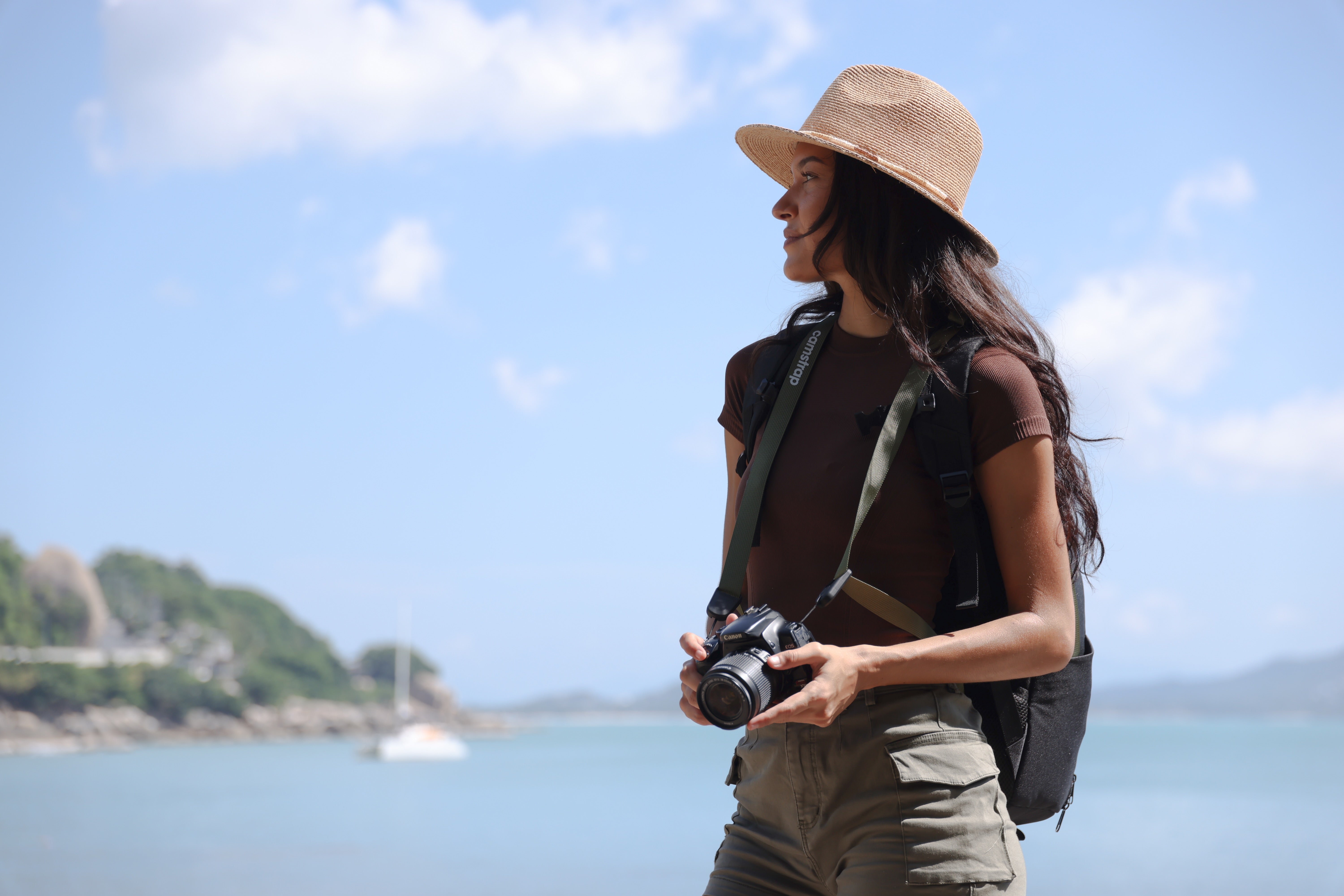
Een handbagage-klaar reisfotografie-kit in 2025 gaat niet over het bezitten van elk mogelijk hulpmiddel. Het gaat om het kiezen van een klein aantal compacte, betrouwbare onderdelen die je vertrouwt. Met één lichte camerabody, twee slimme lenzen, een sterke Camstrap en een paar belangrijke accessoires dek je bijna elke reissituatie.
Door te focussen op minimalistische keuzes vermijd je zware ingecheckte bagage en lange wachttijden bij de bagageband. Je voorkomt ook zere schouders en rommelige hotelkamers. Merken als Camstrap maken het plaatje compleet omdat ze je helpen de camera veilig en stijlvol te dragen. Kies de Voyager, Explorer, Nomad of voeg het MagClip-systeem toe om bij je behoeften te passen.
Denk na over hoe jij reist en kies de apparatuur die bij je stijl en budget past. Houd je kit klein genoeg om in je handbagage te blijven, of dat nu een rugzak of een sling is. Wanneer je setup licht en klaar is, let je minder op tassen en meer op de momenten voor je. Dan schitteren je reisfoto's echt en blijkt je handbagage-kit zijn waarde.


